

The complete guide
Choosing a Stratocaster Style Electric Guitar, A Practical Buyer's Guide
The problem with most first guitars
Plenty of people quit guitar in the first three months, and the instrument is often part of the reason. A guitar that will not hold its tuning, has strings sitting too high off the fretboard, or feels awkwardly chunky in the hand turns practice into a chore. You press down, it buzzes. You bend a note, the whole thing drifts flat. You spend ten minutes tuning for every twenty minutes of playing.
None of that has anything to do with talent. It is a hardware problem, and it is fixable by picking a better guitar at the start.
A Stratocaster style electric guitar solves most of it through design that has barely changed in seventy years because it works. The contoured body sits against your ribs instead of digging in. The neck joins the body where your hand naturally wants to be. The controls are where you expect them. When people describe a guitar as feeling familiar before they have ever touched one, this is usually the shape they mean.
What makes the hardtail version different
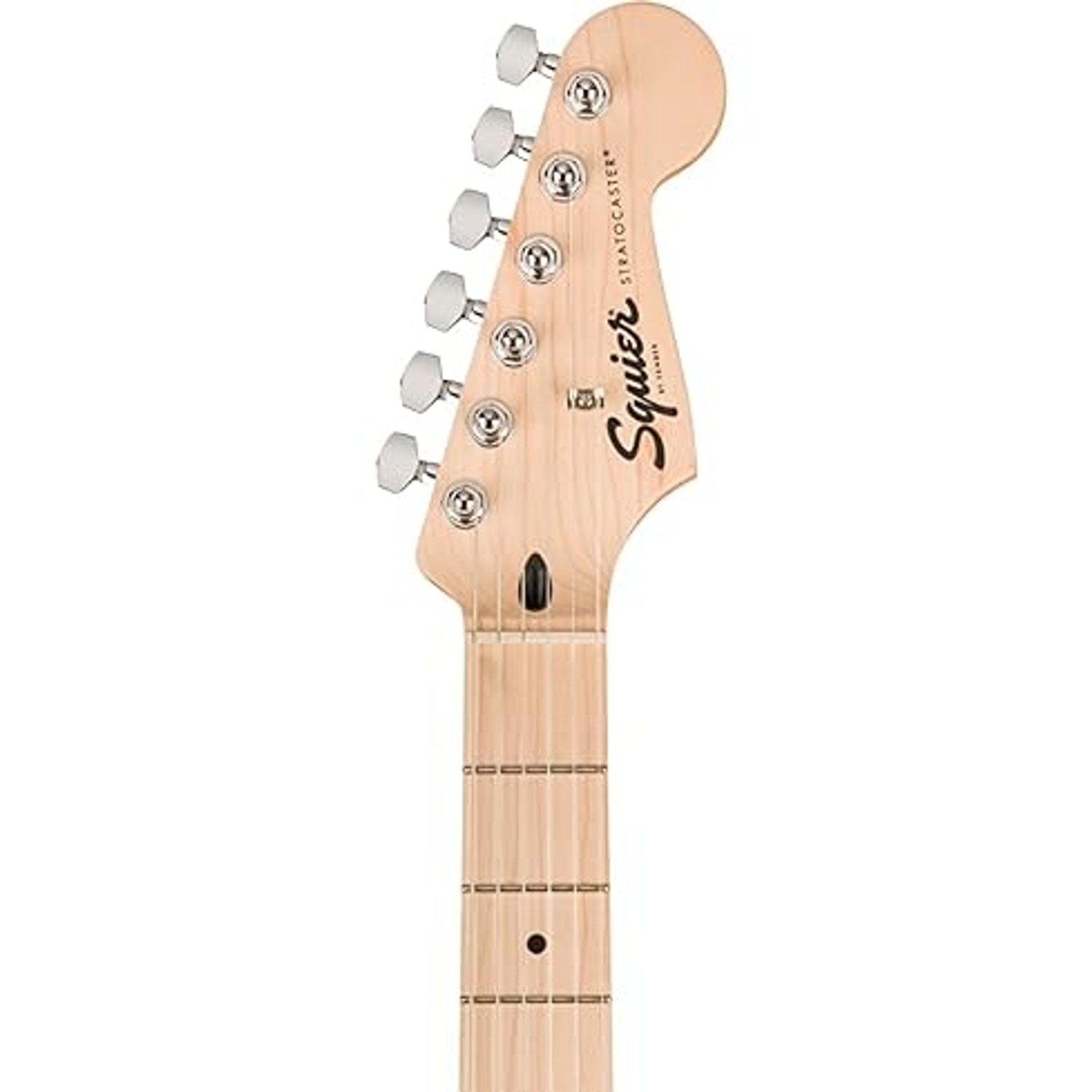
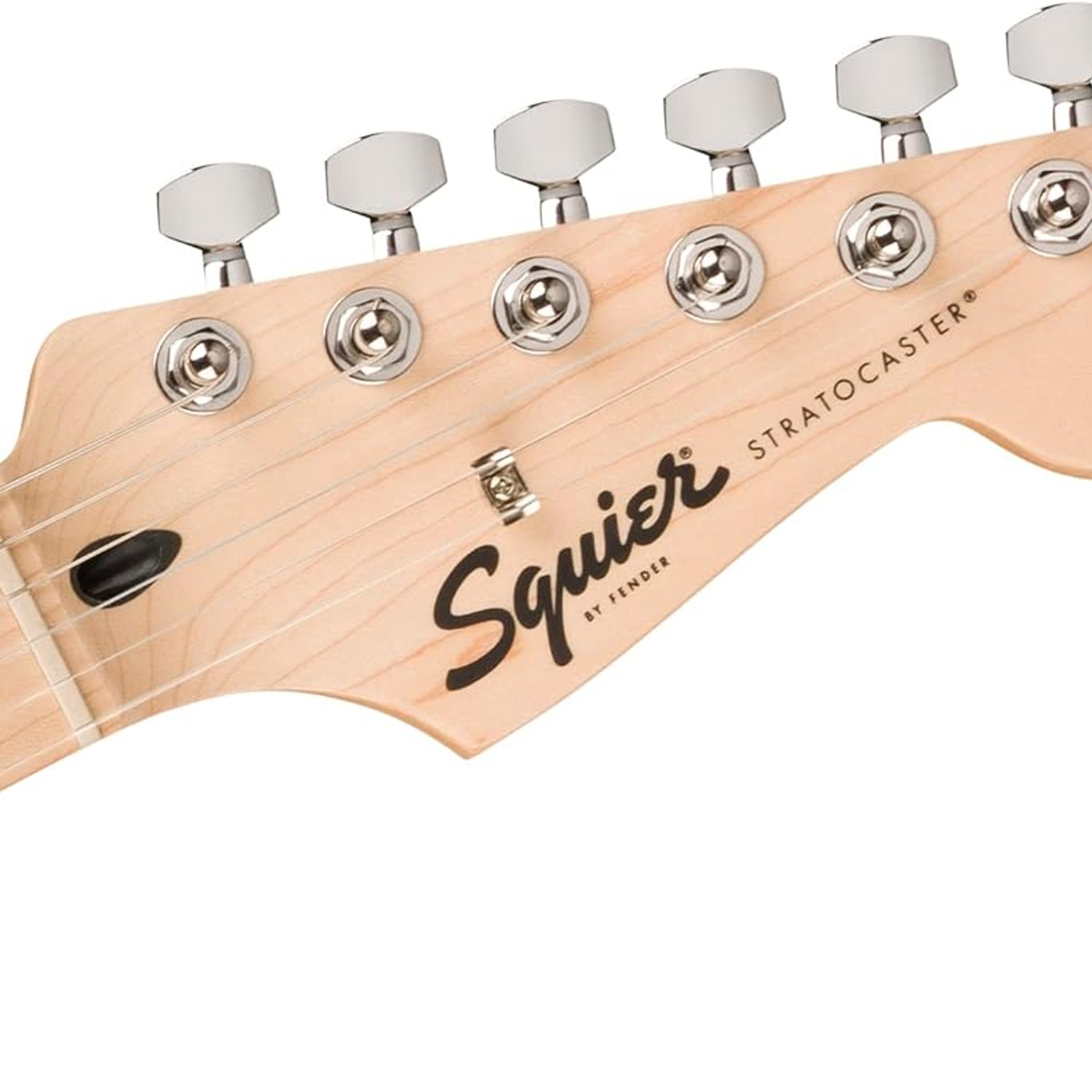
The Squier Sonic Stratocaster HT uses a fixed bridge rather than the floating tremolo that many Stratocasters have. HT stands for hardtail, and the difference matters more than the name suggests.
On a floating tremolo, the bridge is balanced between string tension on one side and springs on the other. Press the arm and the pitch drops. Let go and it should return. In practice, that balance is sensitive. Bend a string and the others go slightly flat. Break a string mid-song and everything collapses out of tune at once. Change string gauge and you need to rebalance the springs.
A hardtail electric guitar has none of that. The bridge is anchored to the body. Six individual saddles let you set intonation for each string so the guitar plays in tune all the way up the neck, and then they stay put. Bend as hard as you like. The neighbouring strings do not care.
You give up the whammy bar, which is a real loss if you love surf music or dramatic dive bombs. For everyone else, especially anyone still building hand strength and ear training, the trade is worth making. Less time tuning means more time playing, and more time playing is the only thing that actually builds skill.
How the three pickups shape your sound
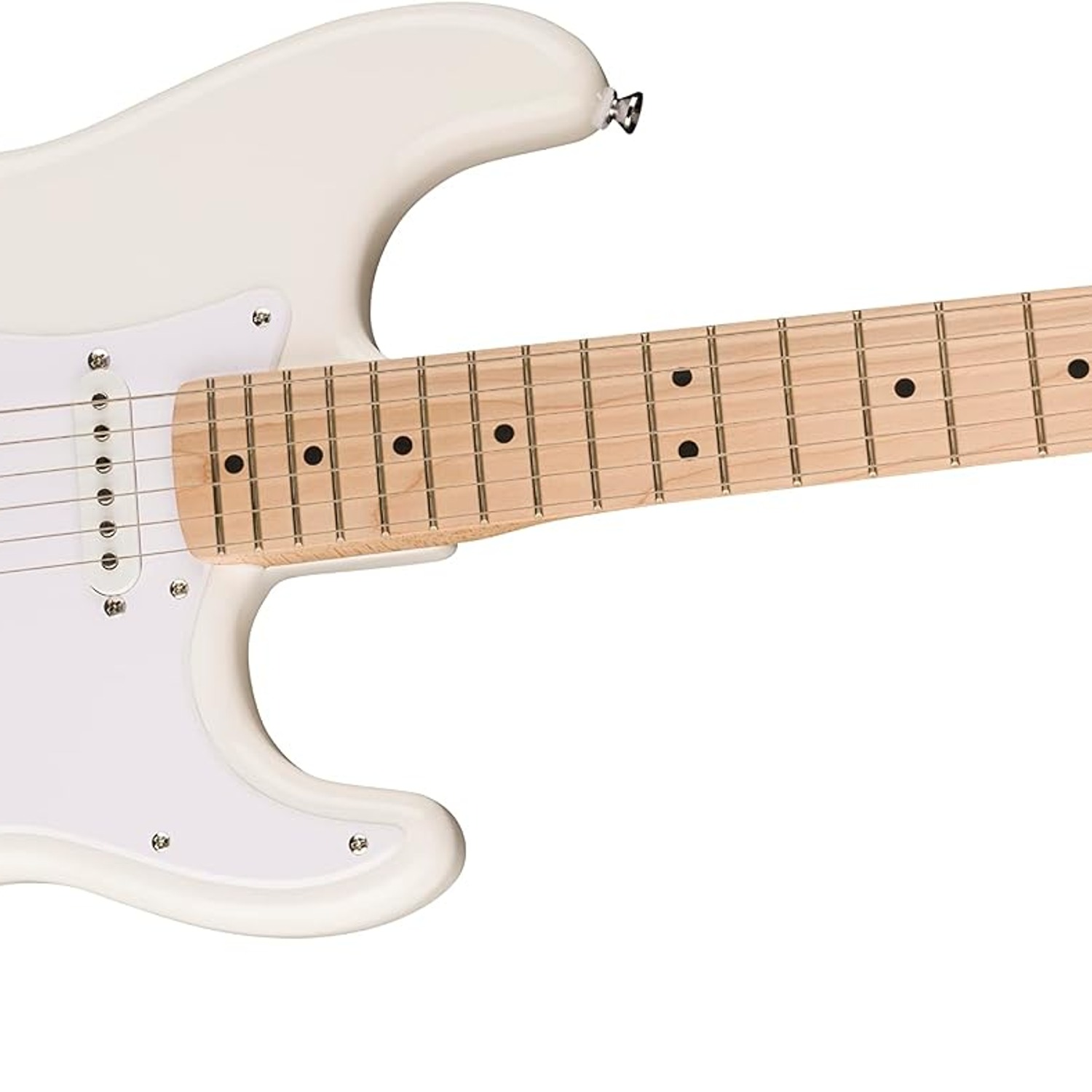
This guitar carries three single-coil pickups in the classic S-S-S layout, voiced in-house at Fender. A five-way switch selects between them.
Position one, nearest the bridge, is bright and sharp. It cuts through a band mix and suits rhythm work with a bit of bite. Position five, up at the neck, is warmer and rounder, the sound most people reach for when playing melodies or softer passages. Position three sits in the middle with a balanced character.
Positions two and four are the interesting ones. They blend two pickups together and produce that hollow, glassy quality often called quacky. It is the sound behind a great deal of funk rhythm playing and plenty of clean pop and blues tones.
Single-coils are described here as crisp and articulate with a wide variety of versatile tones, and that is a fair summary. They let individual notes inside a chord stay distinct rather than blurring together. The trade-off is that they can pick up background hum from lighting and screens, which is normal for this pickup type and usually solved by turning slightly away from the source.
Neck, scale and comfort
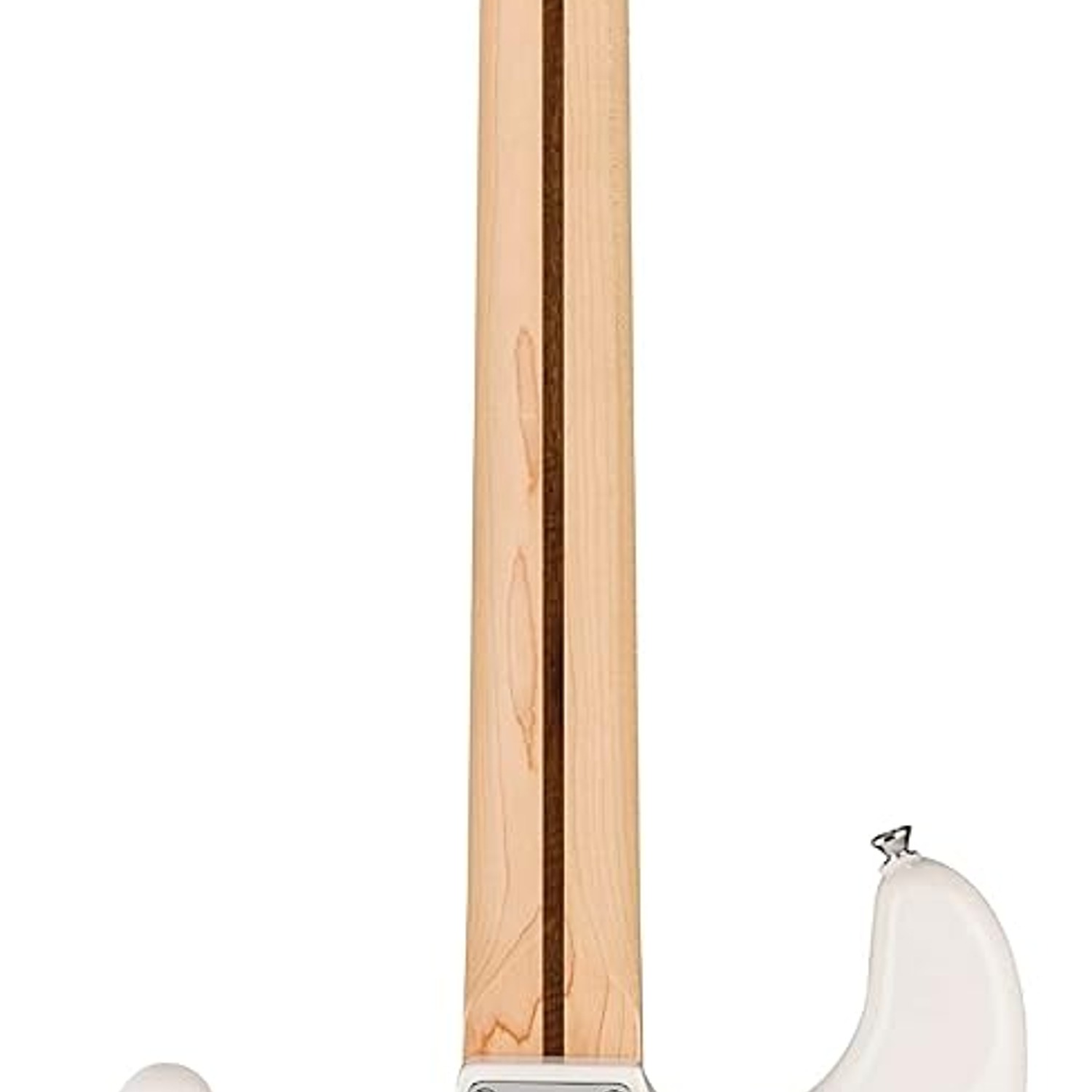
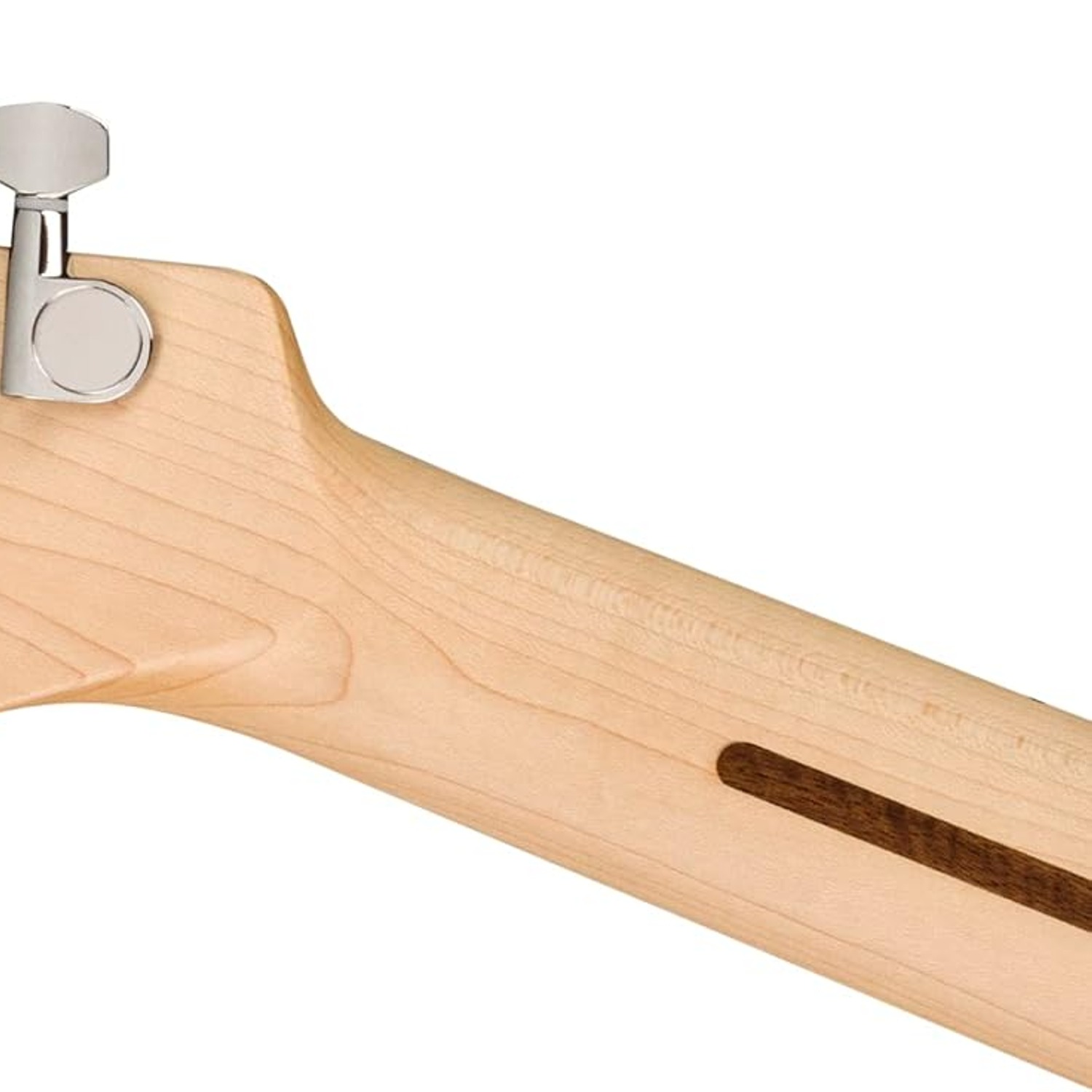
The neck has a slim C-shaped profile carved from maple, with a maple fretboard. C-shaped means the cross-section looks roughly like the letter C, a gentle curve that fills the palm without feeling like a baseball bat. It is the most widely used profile for a reason.
Scale length is 25.5 inches, the long-scale standard. That is the distance between nut and bridge, and it affects both string tension and the spacing between frets. Longer scale means slightly tighter strings and a clearer, more defined tone. It also means nearly every lesson video, chord chart and tab you find online was written with this spacing in mind.
Weight is 4.22 kg, which is comfortable territory. Heavy guitars can sound great but they punish your shoulder during a long standing session. A lighter poplar body with maple components keeps things manageable for practice that runs past the half hour mark.
Who this guitar actually suits
Beginners are the obvious group. Everything about the design, from the fixed bridge to the slim neck, removes obstacles.
Returning players are the second group, and a large one. If you played in your twenties, stopped, and now have a spare room and some free evenings, a guitar in this bracket gets you back without a serious outlay. The feel is familiar enough that muscle memory returns quickly.
Experienced players use these as utility instruments. A rehearsal guitar you do not mind throwing in the car. A single-coil option when your main guitar has humbuckers. A recording guitar for parts that need clarity rather than thickness. The stability of the hardtail makes it dependable in all three roles.
Young players can manage the full-size body from roughly age eleven or twelve, depending on build. Below that, a short-scale instrument is usually kinder.
What else you need
The guitar alone will not make a sound. Budget for these at the same time.
An amplifier is essential. A practice amp of ten to twenty watts is plenty for home use, and modern small amps often include built-in effects and a headphone output. You also need a 1/4 inch instrument cable, since the guitar uses a standard mono phone plug output.
A tuner, either a clip-on unit or a phone app, saves endless guesswork. A strap matters if you plan to stand up, and a stand keeps the guitar visible and reachable, which quietly increases how often you pick it up. A gig bag protects it if it ever leaves the house.
The included 30-day Fender Play subscription covers structured lessons for the first month, which is enough to learn open chords, basic strumming and a few songs.
Looking after it
Guitars are not fragile, but they do respond to their environment. Wood moves with temperature and humidity, and the neck is the part that shows it first.
Wipe the strings down with a dry cloth after every session. Sweat and skin oils are what kill strings, and thirty seconds of wiping can double their life. Give the body a wipe too, avoiding household cleaners on the finish.
Store it somewhere with stable conditions. A lounge room or bedroom is fine. A garage, shed or car boot is not, because the temperature swings are too wide. Direct sunlight through a window will also fade a finish over time.
Change strings when they look dull, feel rough under your fingers or stop holding tune. Every one to three months is typical. On a hardtail that job is straightforward, with no spring balance to worry about.
Once or twice a year, check that the action still feels right and the neck has not shifted. If something feels off, a basic setup at a local shop is inexpensive and transforms how a guitar plays.
The short version
If you want a Stratocaster style electric guitar that stays in tune, feels comfortable and covers a broad range of sounds, this hits the mark. The three single-coil pickups handle blues, pop, funk, country and classic rock without fuss. The hardtail bridge removes the most common tuning frustration. The slim C neck and 4.22 kg weight keep long sessions pleasant.
You will need an amp and a cable to get started, and a stand is worth adding. Beyond that, there is nothing standing between you and the first chord.