
The complete guide
How To Choose Your First Bass Guitar Starter Set
The problem with buying your first bass
Most people who want to learn bass do not stall because the instrument is hard. They stall at the shop. You find a bass you like, then discover you also need a cable to plug it in, a strap so you can stand up, something to carry it in, and a few picks. Each one is a small decision, and small decisions pile up. A fortnight later the enthusiasm has cooled and nothing has been bought.
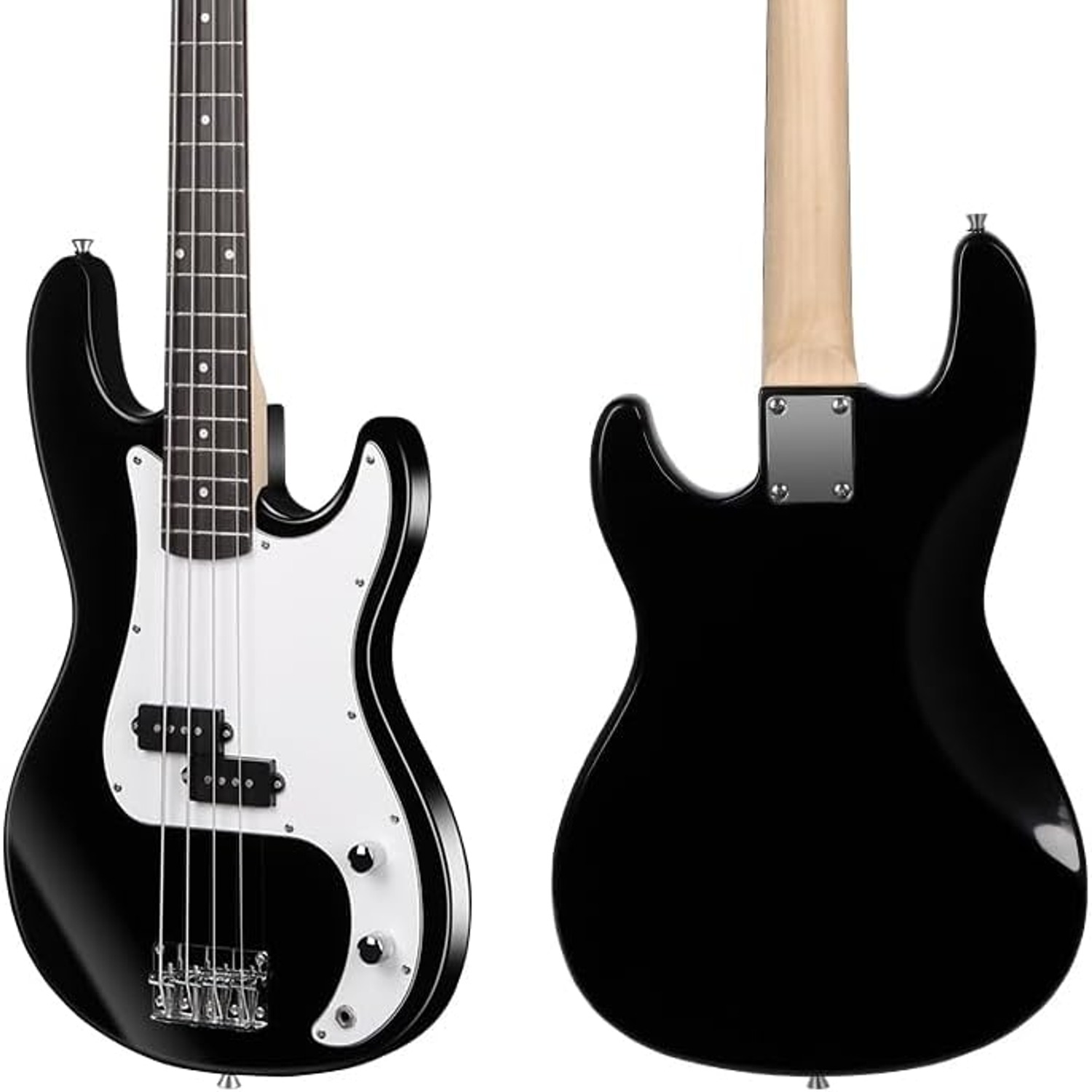
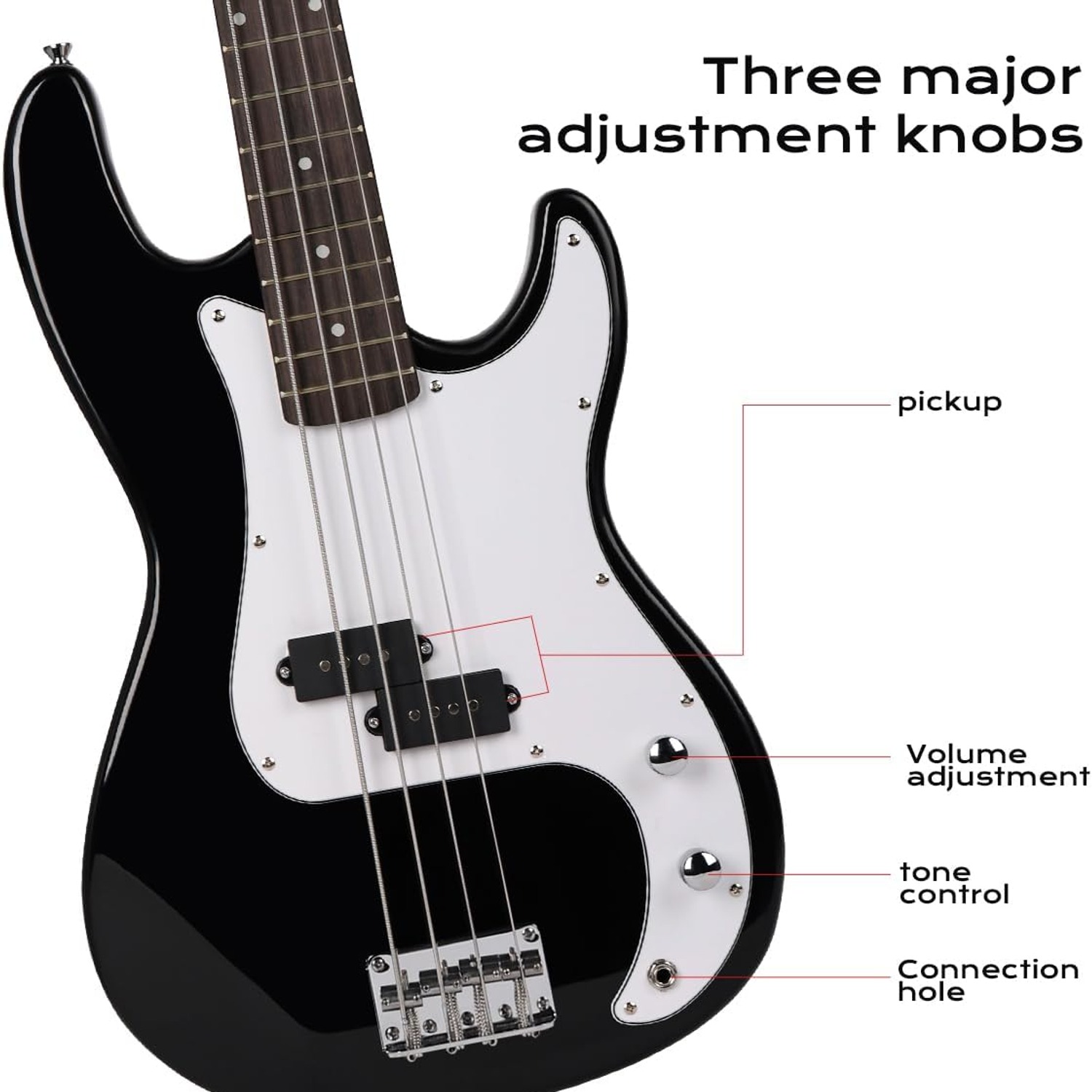
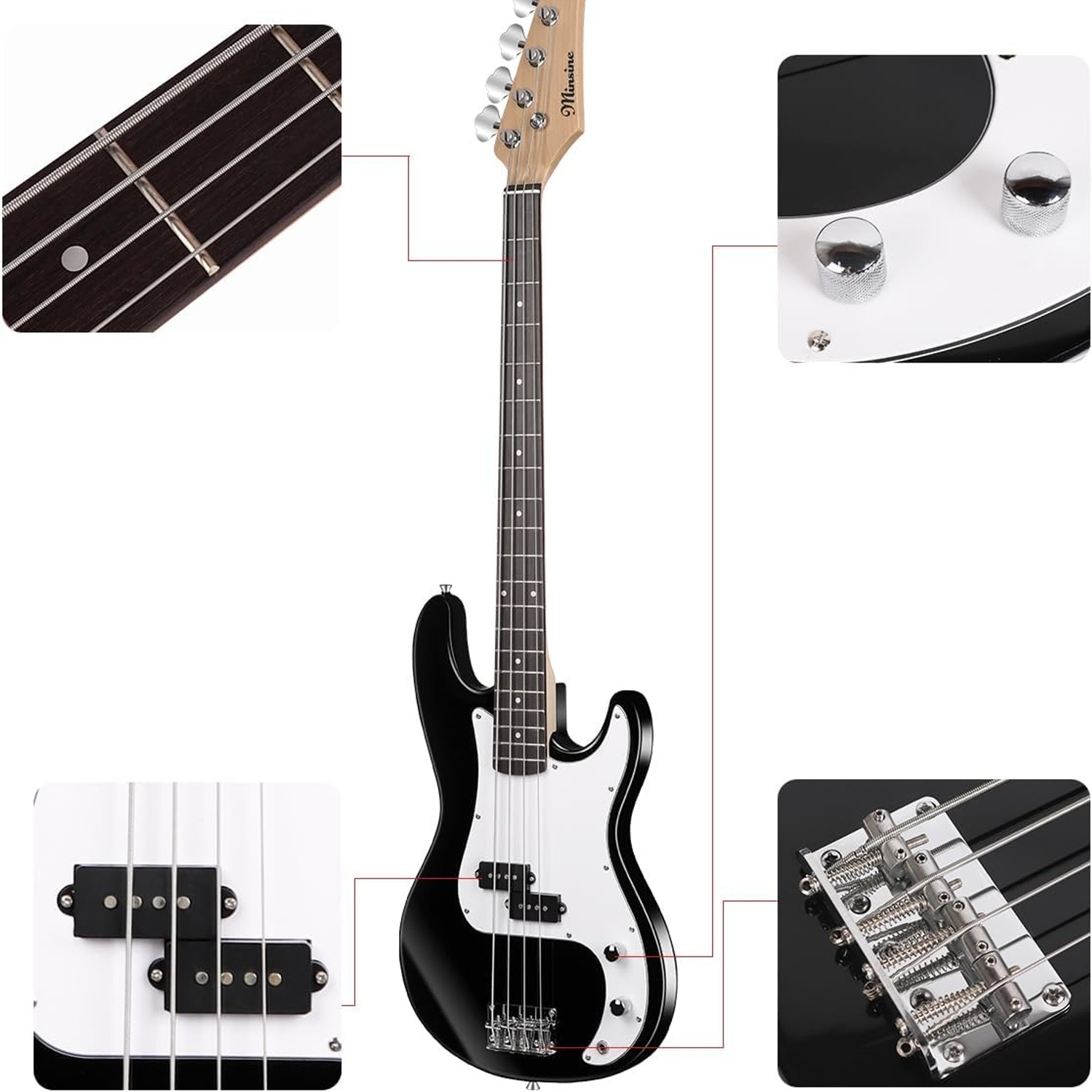
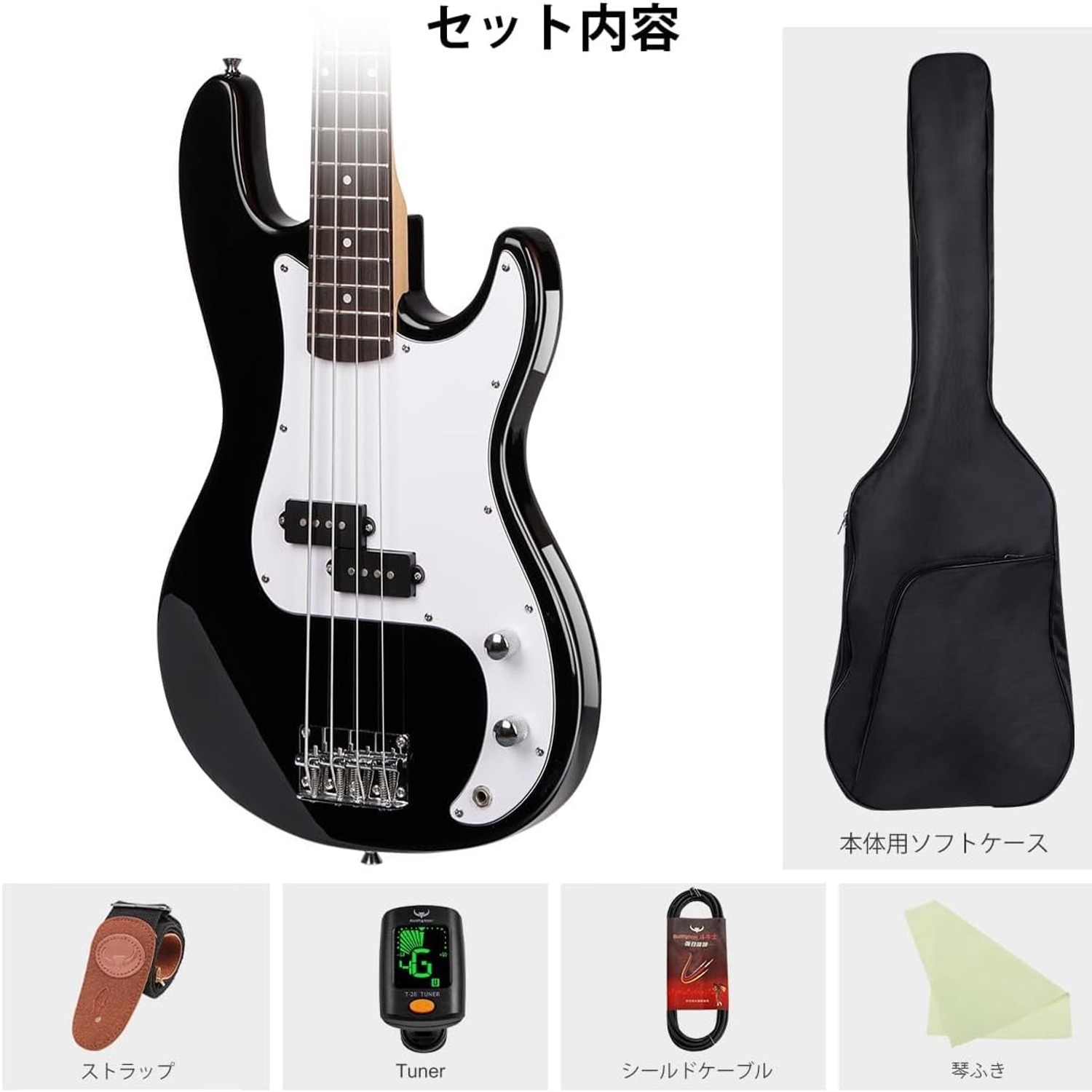
A bass guitar starter set solves that by putting the decisions in one box. This one includes the 4-string electric bass, a gig bag, an adjustable guitar strap, an instrument cable and bass picks. That covers the gear a beginner actually touches in the first month. The only extra worth planning for is something to hear yourself through, either a small amp or an audio interface with headphones.
What a bass actually does
If you have only ever noticed guitars, bass can seem like the quiet one. It is not. Bass is the hinge between the drums and everything melodic. The kick drum and the bass note land together, and that is what makes people move. In almost every song you like, the part that sits under the chorus and pushes it along is the bass.
Practically, that means bass is also one of the friendliest instruments to start on. You are usually playing one note at a time rather than a chord shape. A beginner can lock into a simple root-note pattern within days and actually sound like part of a band. The ceiling is high, but the floor is low, which is a great combination when you are new.
Four strings is the place to begin. Five and six string basses exist and have their uses, but nearly every lesson, tab and songbook assumes four. With a 4 string bass with accessories like this, nothing has to be translated.
What this set is made from
The materials listed here are the ones you see on a lot of straightforward, playable instruments. The body is poplar. That is a light timber, and weight is not a trivial detail when you are standing with a bass hanging off one shoulder for forty minutes. A heavy instrument gets put down early. A light one gets picked up again.
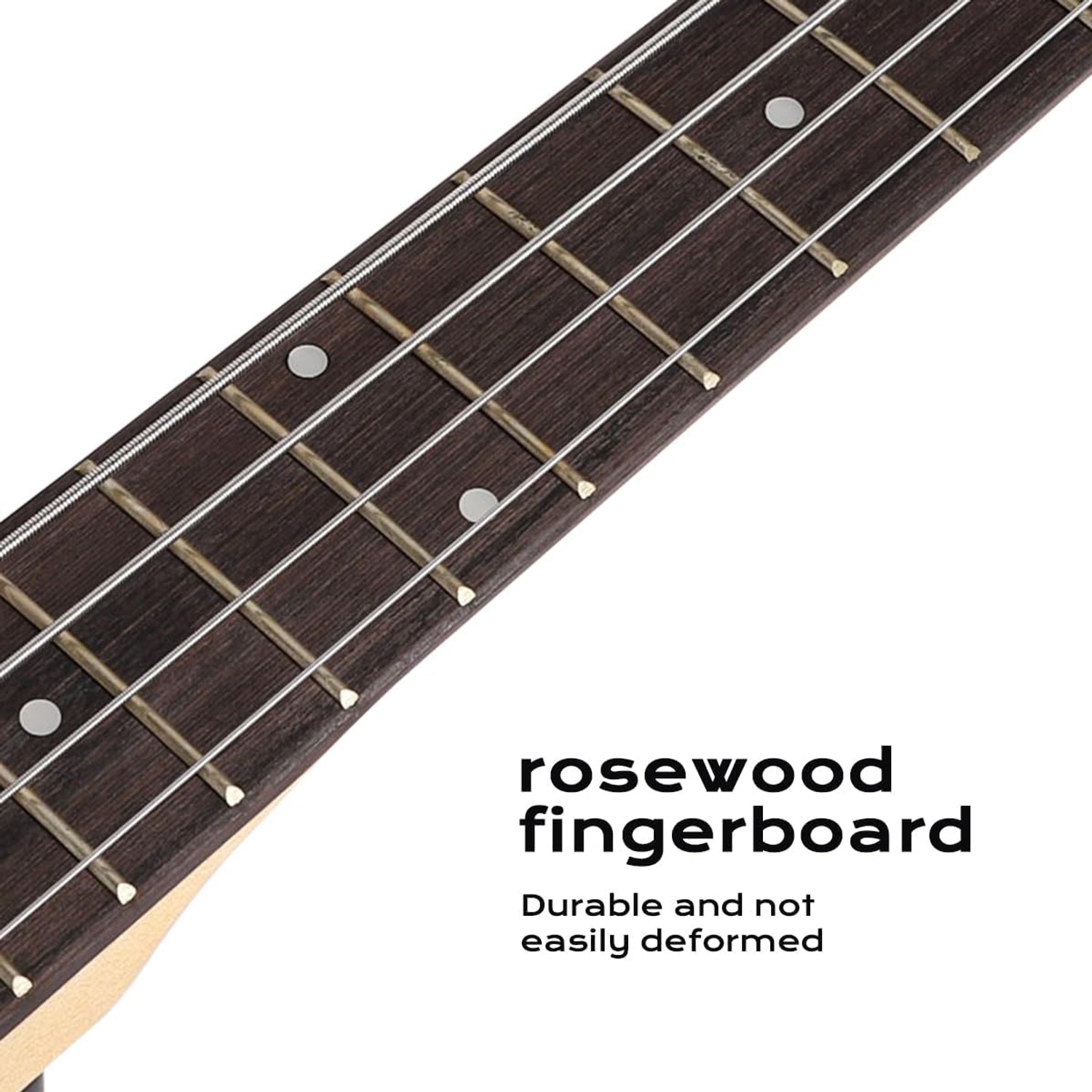
The neck is maple, and rosewood appears in the fingerboard materials, with maple and basswood also listed in the overall material types. Maple necks have a firm, stable feel. Rosewood under the fingertips feels smooth, which matters when you are still building calluses and your hand is doing unfamiliar work.
Strings are alloy steel, the normal choice for electric bass. The finish on this model is black. The manufacturer part number is FD, country of origin is listed as China, and a one year warranty is stated.
Who this suits
A complete beginner is the obvious fit. Someone who has never owned an instrument and wants to start without a research project gets everything in one delivery. The best beginner bass guitar kit is simply the one that removes excuses.
It also suits parents buying for a teenager. The strap is adjustable, the layout is standard, and the gig bag means the instrument survives being carried to a friend's house. If your child is taking lessons, their teacher will be working from exactly this kind of right-handed 4-string.
Adults returning to music after years away are a third group. If you played a bit at school and want to start again, a self-contained kit gets you back in the chair quickly. And for a school music room or a youth group, a set like this covers the shared-instrument role well, because the accessories do not wander off separately.
One thing to check: this is a full-size instrument with right-hand orientation. Very young children may find the reach to the lower frets awkward, and left-handed players need a left-handed instrument rather than this one.
How to choose between starter sets
Start with what is actually in the box. Plenty of listings call themselves a kit and then include a strap and nothing else. Compare the included components line directly. Here it reads bass guitar, gig bag, adjustable guitar strap, instrument cable and bass picks, which is a genuinely usable list.
Next, look at the body and neck timbers. Solid timber bodies and a maple neck with a rosewood board are a reasonable spec for a first instrument, and they tend to feel better under the hand than lighter composite alternatives. The best maple neck bass guitar choices at any price are the ones that stay comfortable over a long session.
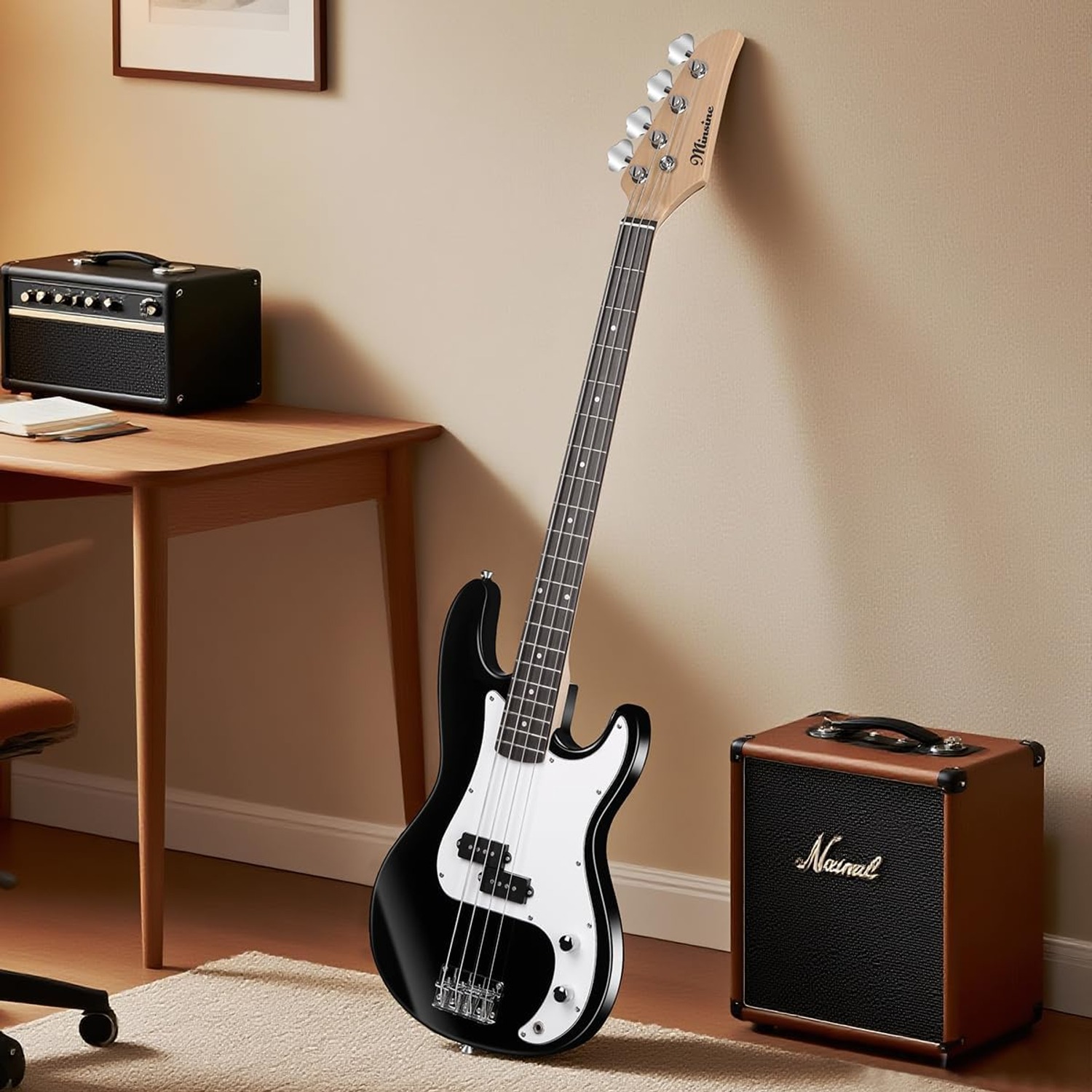
Then think about weight and size. The packed figures here are 110 x 32 x 6 cm and 5.28 kg, which tells you the parcel is long and flat. Measure the space where the bass will live, especially if you want it on a stand in a bedroom.
Finally, factor in the one thing not included. You need an amp or an interface to hear it. A small practice amp is cheap and does the job. An interface plus headphones is quieter, better for shared houses, and doubles as a recording setup.
Getting started in the first week
Unbox it, tune it, and do not worry about anything else on day one. Strings always shift during shipping, so tune before your first note, using a phone app or a clip-on tuner. Then clip on the strap, set it so the bass sits roughly at your waist, and get used to the weight standing up.
For the first few sessions, focus on one finger per fret and playing in time with something. A metronome at a slow tempo beats playing fast and sloppy. Fifteen minutes a day will take you further than one long session a week, because your hands need repetition rather than duration.
Try both fingers and the included picks. Fingers give a rounder, warmer note, a pick gives a harder, clearer attack. Most players end up using both depending on the song, and it is worth learning each from the start rather than choosing a side.
Looking after it
Bass maintenance is mostly habit, not expertise. Wipe the strings and body with a dry cloth when you finish playing, because finger oil is what dulls strings fastest. Put the bass back in the gig bag or on a stand instead of leaning it against a wall where it can slide.
Keep it away from direct sun, radiators and damp rooms. Wood responds to temperature and humidity, and a stable corner of a room is all the protection most instruments need. Unplug the cable from the bass when you stop, and coil it loosely rather than wrapping it tight around your hand.
Strings last a few months for a daily player. When they look grimy, feel rough or stop holding tune, replace them. If the action starts feeling high or notes buzz after a change of season, a local tech can do a basic setup quickly. That small service often makes an instrument feel noticeably easier to play.
The short version
This is a 4-string right-handed electric bass sold as a complete beginner package, with a gig bag, adjustable strap, instrument cable and picks included. The body is poplar, maple and rosewood appear in the neck and fingerboard, and the strings are alloy steel. The colour is black, the packed dimensions are 110 x 32 x 6 cm, the item weight is 5.28 kg, and a one year warranty is stated.
If you want to start playing bass without working through a shopping list first, this covers it. Add a small amp or an interface with headphones, tune up, and you are playing.