
The complete guide
Buying Your First Bass, A Practical Guide to Precision Style Electric Basses
Why the first bass matters more than people think
Most people who give up on bass do not give up because they lack talent. They give up because the instrument they bought made every session harder than it needed to be. A neck that is too chunky, strings sitting too far off the fingerboard, tuners that slip after ten minutes, a tone that sounds thin no matter what you do. Each of those is a small annoyance on its own. Stacked together over a few weeks, they turn practice into a chore.
A precision style electric bass avoids most of those problems by being simple. One pickup, two knobs, four strings, a fixed bridge. There is almost nothing to adjust and almost nothing to misunderstand. You plug in, turn up, and the sound that comes out is immediately recognisable as bass. That recognition matters, because hearing yourself sound like the records you love is what keeps you coming back to the instrument.
What makes a P-style bass sound the way it does
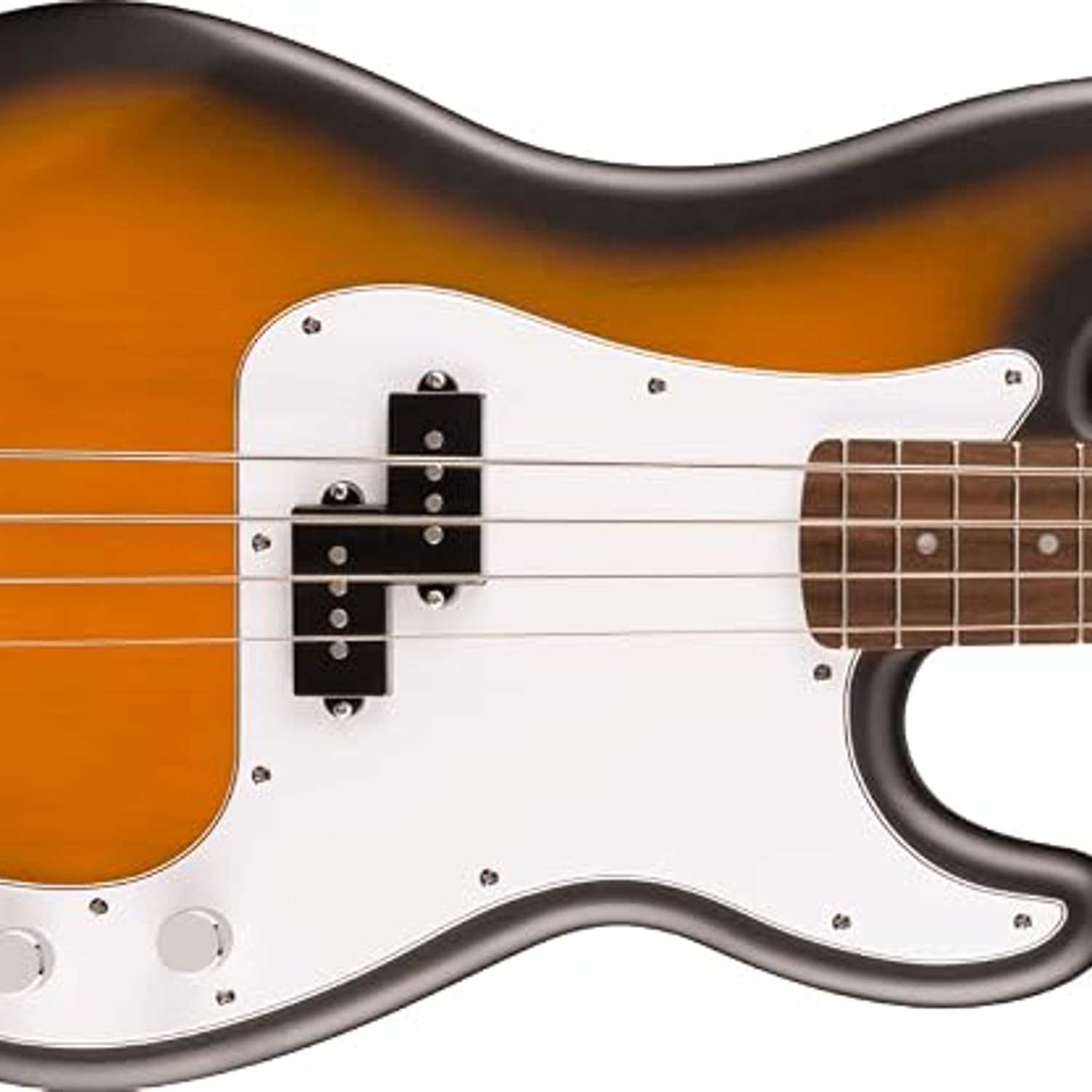
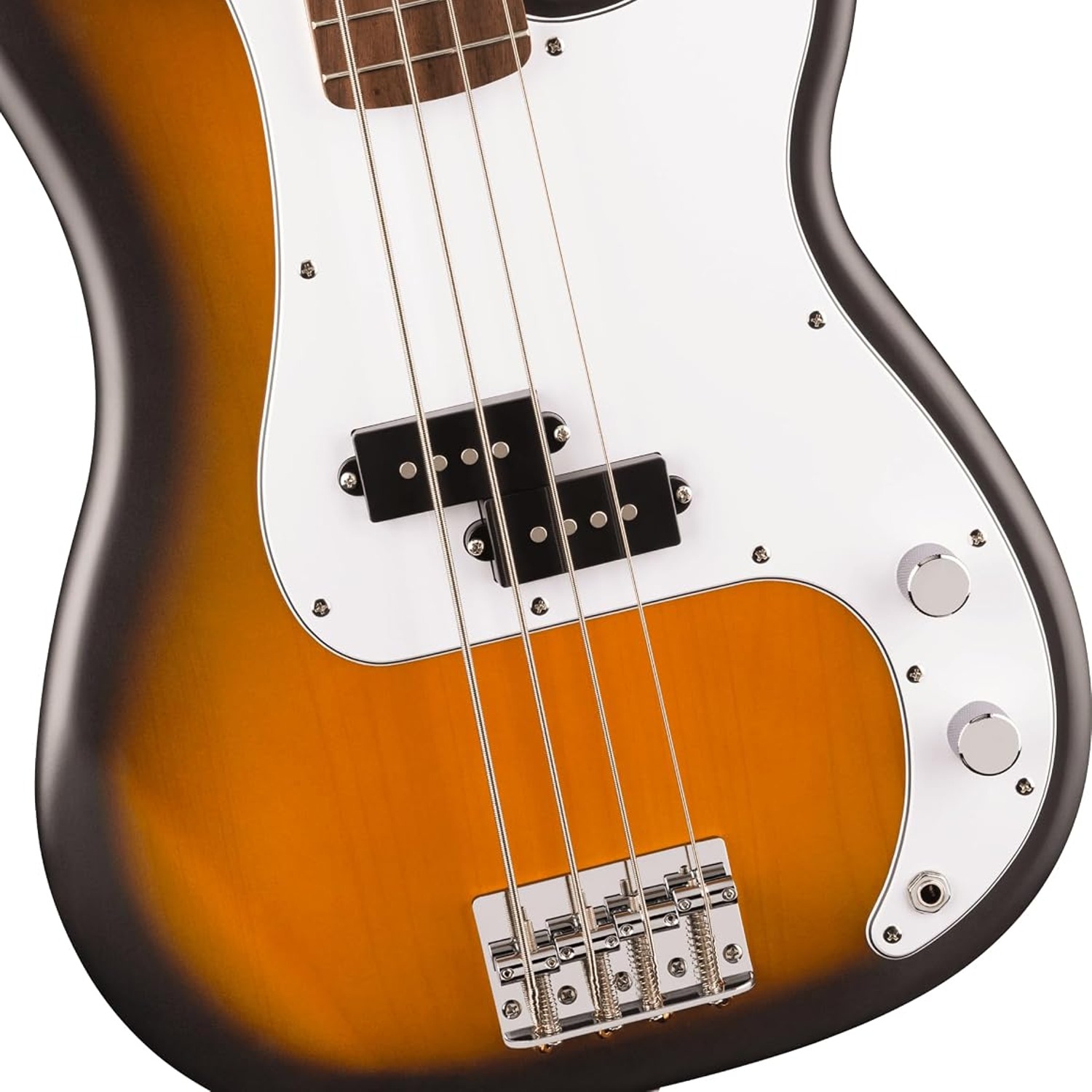
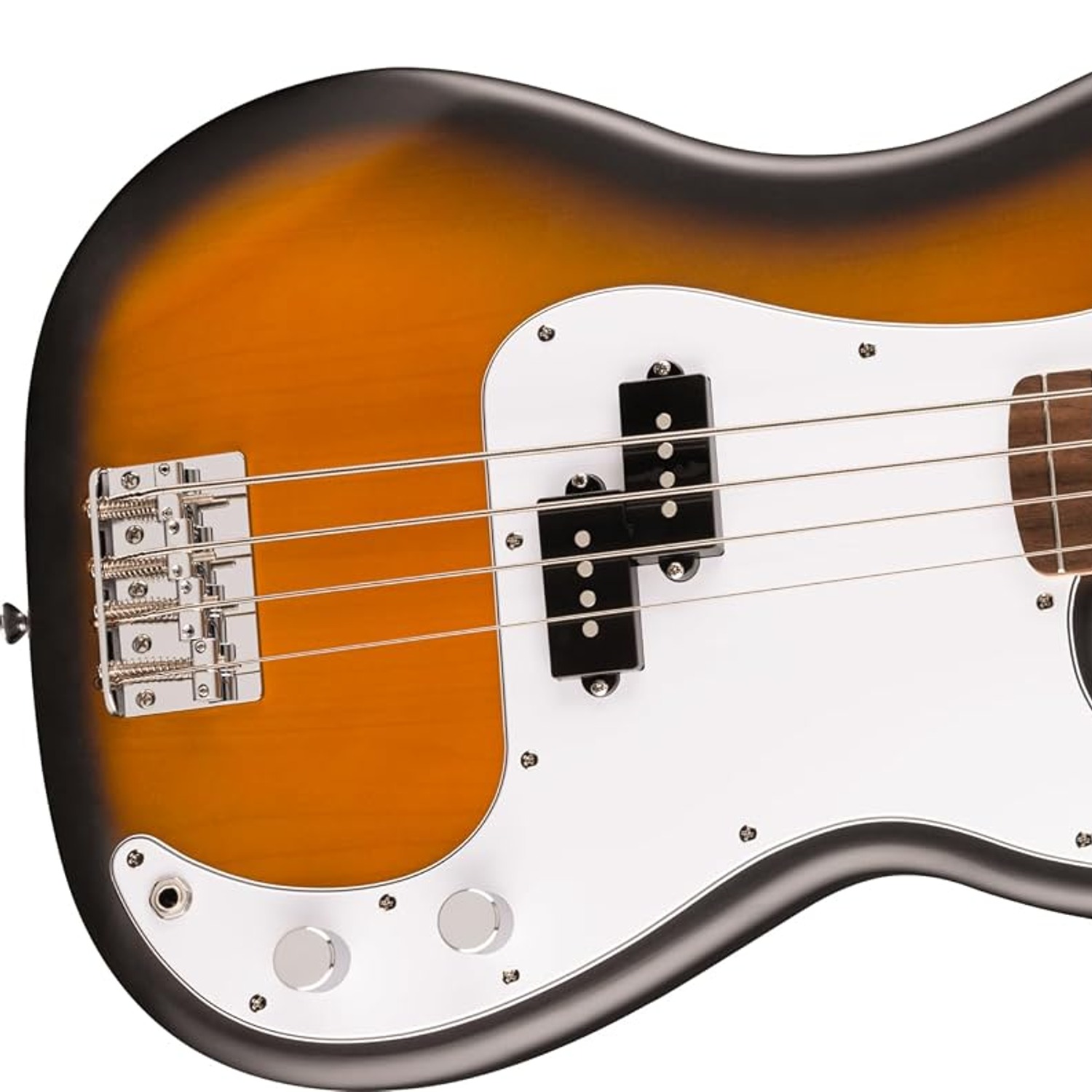
The defining feature is the split single-coil pickup. Instead of one long bar magnet under all four strings, the pickup is cut into two halves. One half sits under the E and A strings, the other sits under the D and G, and the second half is offset slightly towards the bridge. Wiring the two halves together cancels a good deal of electrical hum, which is why this design stays quiet near computer screens and dimmer switches where some other pickups buzz.
Tonally, the result is thick in the middle with a firm edge on the attack. Notes land with a bit of punch rather than just a soft thud, so the bass line stays audible in a mix without needing to be loud. That is the quality producers have been chasing for seventy years, and it is why this layout keeps turning up on recordings across genres that otherwise have nothing in common.
The tone control is a simple high-cut. Fully open, you get brightness and string noise, useful for pick playing and anything that needs attitude. Rolled all the way back, the top end softens and the sound becomes round and warm, closer to old soul and reggae records. Most players find a spot somewhere in between and leave it there, then adjust at the amp.
The neck is where comfort lives
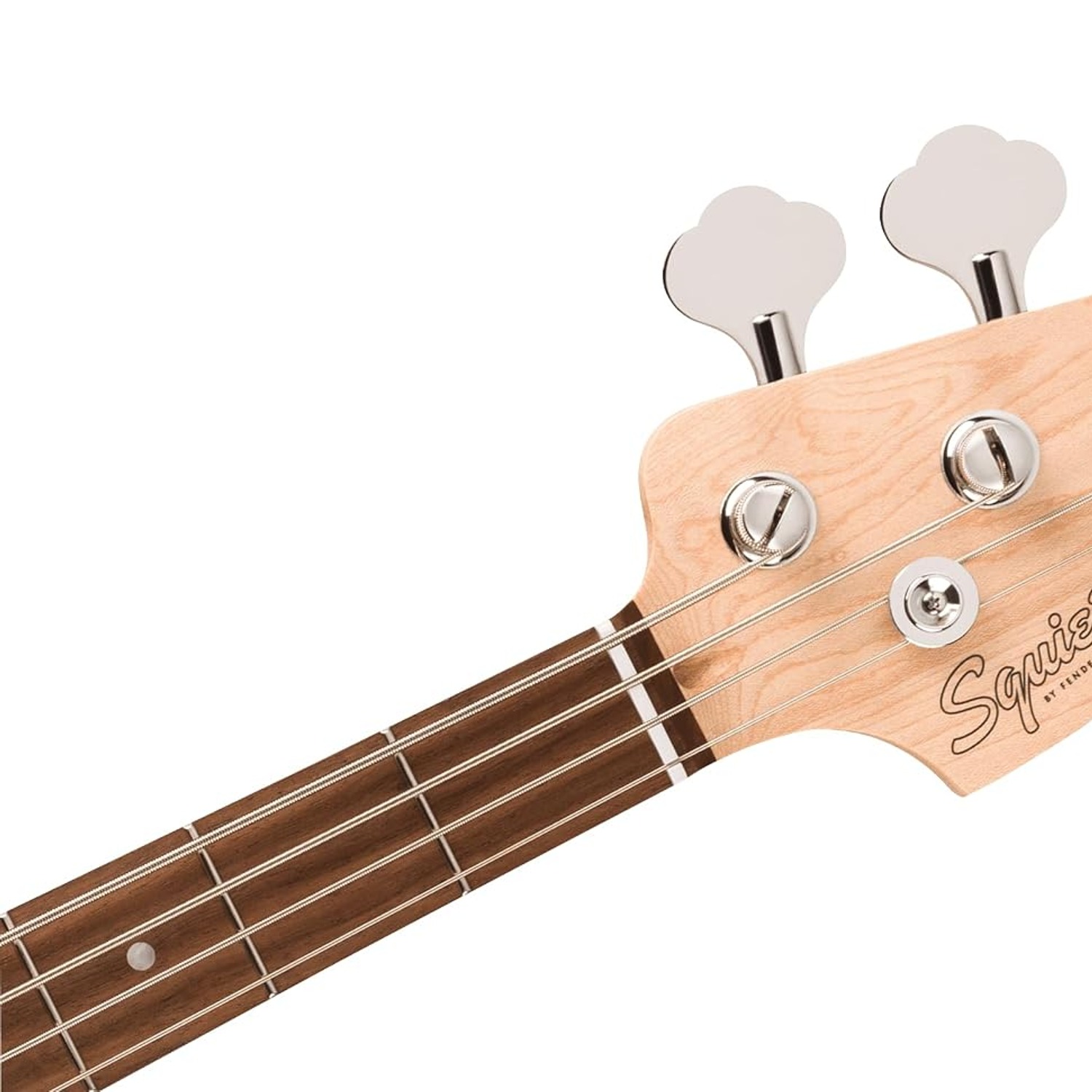
This model uses a slim C-shaped neck profile. The letter refers to the cross-section shape of the back of the neck. A C shape is a gentle, even curve, neither flat nor sharply peaked, which suits a wide range of hand sizes. Slim means the front-to-back depth is on the shallower side, so your thumb does not have to stretch as far around to let your fingers reach the strings.
For a beginner, this is the single most useful feature on the instrument. Bass strings are thicker and longer than guitar strings and they need real finger pressure. A neck that forces your wrist into a bent position tires you out in fifteen minutes. A slim profile lets you keep the wrist straighter, which means longer practice without aching.
The fingerboard is laurel, a close-grained hardwood that feels smooth under the fingertips and takes fret work well. It does not need any particular treatment beyond keeping it clean and not letting the instrument dry out in a hot room.
Hardware that keeps you in tune
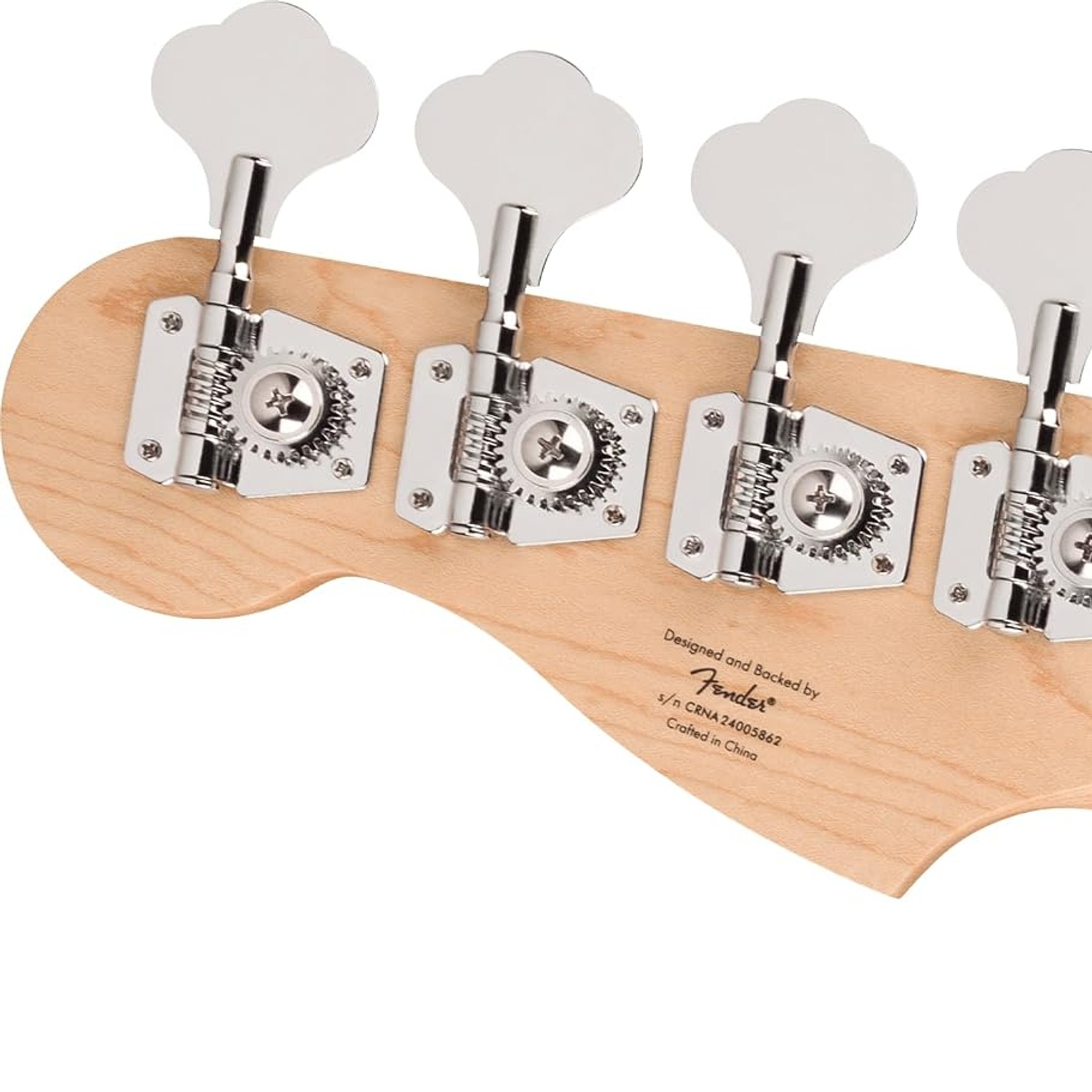
Two parts do most of the tuning work. The first is the set of open-gear tuning machines on the headstock, styled after the vintage originals. Open-gear simply means the gear teeth are visible rather than enclosed in a sealed housing. They turn smoothly and hold their position, and the visible gearing makes it easy to see if anything needs attention.
The second is the 4-saddle hardtail bridge. Hardtail means it is bolted solidly to the body rather than floating on springs, so string tension is constant. Four saddles means each string has its own small adjustable block. Moving a saddle forward or back changes the effective string length, which is how a technician sets intonation. Get that right and a note fretted at the twelfth fret matches the open string an octave up. Get it wrong and the bass sounds progressively more out of tune as you climb the neck.
All the hardware is chrome plated. That is partly about looks and partly about keeping sweat off the metal underneath.
Who this bass suits
Three groups get the most out of an instrument like this. Complete beginners, because nothing on it is confusing. Guitarists moving across to bass for a band or a recording project, because the layout is familiar and the tone is the default everyone expects. And players who already own something fancier and want a straightforward passive bass to leave at the rehearsal room.
If you are shopping for a teenager, check their reach against a full-size neck before ordering, since this is listed as a full size instrument. If you are shopping for yourself as an adult learner, the slim neck profile is the detail to focus on. Anyone searching for the best bass guitar for small hands should know that a slim C profile on a four-string is about as friendly as a full-size bass gets.
One thing to confirm before buying as a gift: this is a right-handed instrument. Left-handed players need a dedicated left-handed build.
What else you need to buy
The bass arrives with a Fender Play subscription included, which covers the lessons side. On the gear side, budget for three things.
An amplifier comes first. A small combo rated somewhere between 15 and 25 watts is enough for a bedroom and most will have a headphone socket for silent practice. Second, a cable with 6.35mm jacks on both ends, since that is the output socket on the bass. Third, a strap, even if you mostly sit. Standing changes your wrist angle, and it is better to get used to that early rather than discover it the first time you play with other people.
A clip-on tuner and a simple stand are both cheap and both earn their keep. A spare set of nickel strings is worth having in a drawer too, because strings always break at inconvenient moments.
Setup and care
Any new instrument benefits from a setup. A technician checks the neck relief, the string height at the nut and bridge, and the intonation at each saddle, then adjusts them to how you like to play. It usually costs less than a set of strings and it transforms how an entry-level bass feels. If you only do one thing after buying, do this.
Day to day care is easy. Wipe the strings and the body with a dry cloth when you finish playing, because sweat and skin oils are what kill strings and dull hardware. Keep the bass on a stand or in a case, away from windows, heaters and damp corners. Wood responds to temperature and humidity, and most neck problems trace back to an instrument living somewhere uncomfortable. If you are putting it away for months, slacken the strings a little first.
The short version
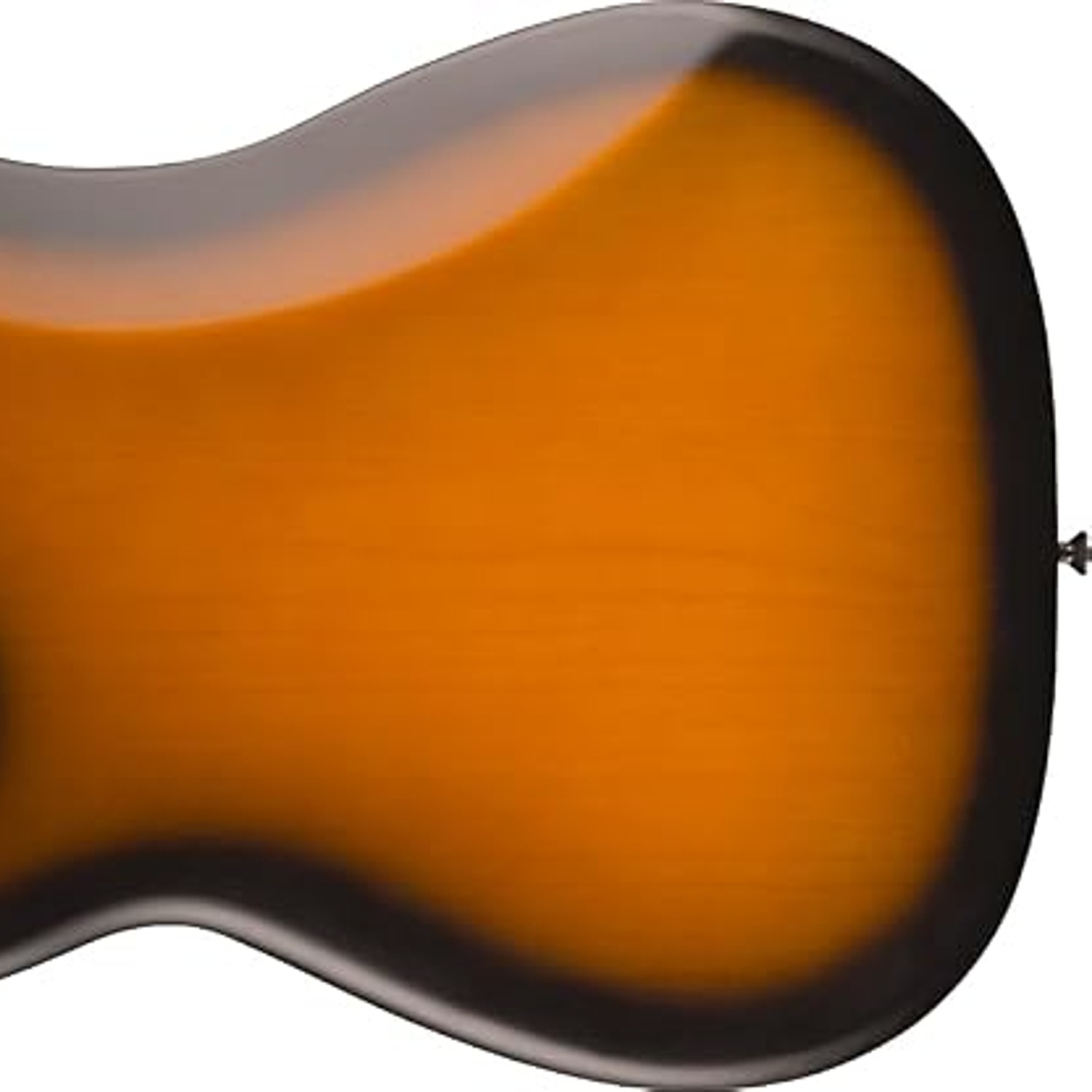
A precision style electric bass is the sensible starting point for almost anyone learning the instrument. This one gives you a split single-coil pickup with volume and tone, a slim C-shaped neck with a laurel fingerboard, a 4-saddle hardtail bridge, open-gear tuners and chrome hardware, in a shiny Sunburst finish. It is a full-size, right-handed, four-string instrument weighing 4.5 kg as listed, with a standard 6.35mm output jack and a two-year limited warranty.
Add a small amp, a cable and a strap, get it set up properly, and you have everything you need to learn bass lines that sound like the ones you already love.