
The complete guide
Choosing a Soprano Recorder, A Buyer's Guide
The problem with a bad first instrument
Ask most adults about the recorder and you get a grimace. The memory is usually the same: a squealing plastic tube, a room full of noise, and the feeling that they personally were no good at it. The uncomfortable truth is that a lot of those children were not bad at music. They were handed badly made instruments.
A recorder is a simple thing, but it is not easy to make well. The bore has to be shaped accurately, the windway has to be cut to the right taper, the finger holes have to be drilled in exactly the right spots at exactly the right sizes. Get any of that wrong and the instrument fights the player. Notes come out sharp or flat no matter how carefully the fingers are placed, the high register squeals at the slightest breath, and the low notes refuse to speak at all. The child blames themselves, loses interest, and that is the end of their time with music.
A properly made soprano recorder removes that problem. When a note sounds wrong, it is because of something the player did, and that is useful information. They can fix finger placement. They can slow the air down. They learn cause and effect, which is the whole point of practising.
What this instrument actually is
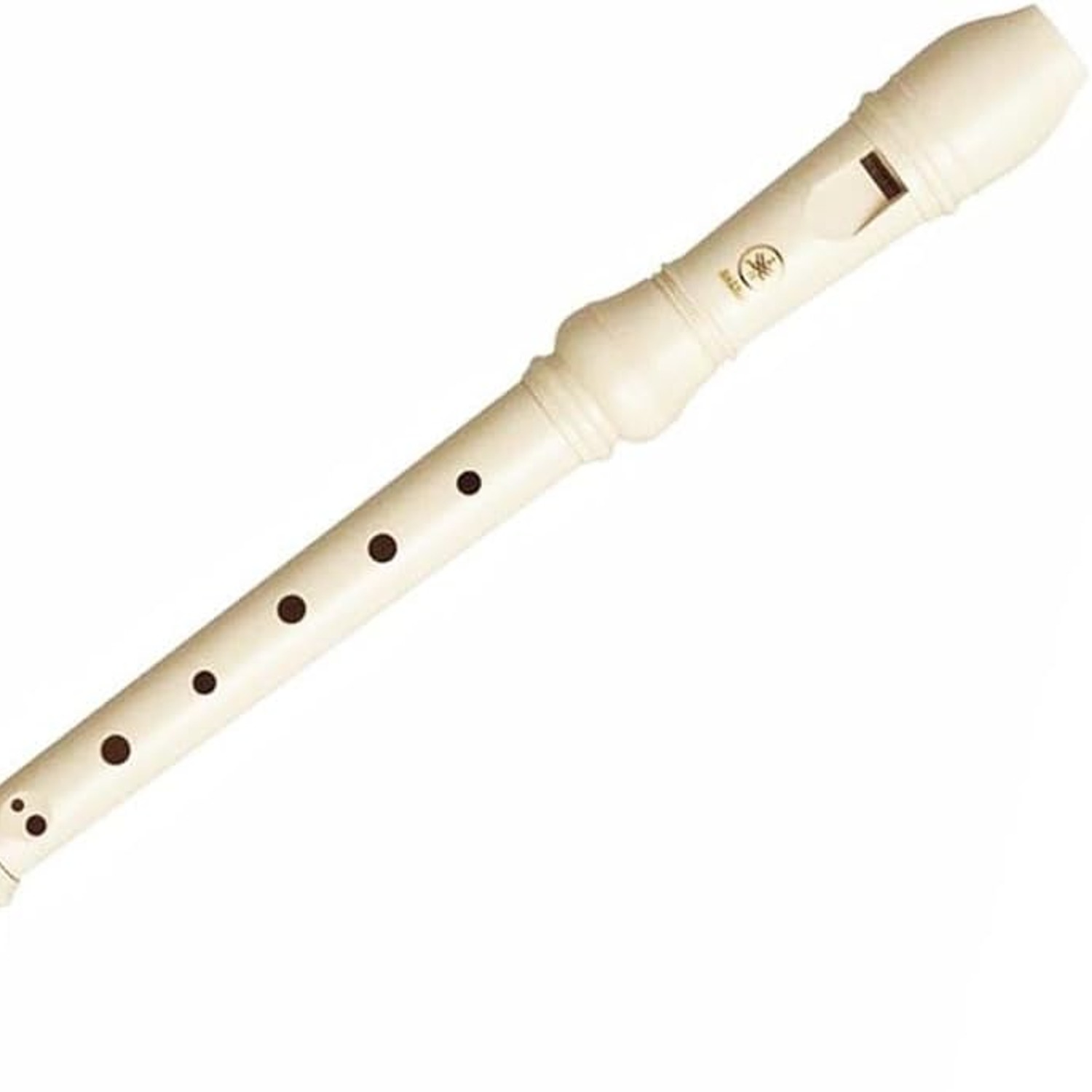
The Yamaha YRS-24B is a soprano recorder, also called a descant, pitched in the key of C. That is the standard classroom size and the standard classroom pitch. If a school supply list asks for a descant recorder in C, this is what they mean.
It is moulded from resin in an ivory colour with a polished finish, weighs 95 g, and measures 5 x 2 x 36 cm. It separates into joints for cleaning and storage, and it ships with a cotton carry case. The manufacturer is Yamaha Corporation, it is made in Indonesia, and the warranty description is one year.
That is the complete picture of what you are buying. There is no mystery to it, and that is part of the appeal.
Why resin beats wood for a first recorder
Wooden recorders are lovely instruments. They are also demanding ones. A new wooden recorder needs breaking in slowly, a few minutes a day for weeks, so the wood adapts to the moisture of your breath. It needs oiling. It can crack if it gets cold, or hot, or dries out after being played wet. It does not forgive being left in a car boot or forgotten in a school bag over a long weekend.
Resin does not care about any of that. You can play it hard on day one. You can wash it under the tap. Humidity does not move its tuning the way it moves wood. If a seven year old drops it on a hard floor, which they will, it bounces rather than splits.
Is there a difference in sound? Yes, a small one. A good wooden recorder in skilled hands has a slightly warmer, more complex colour. At beginner and intermediate level, with a learner still working on breath control and clean fingering, that difference is swamped by everything else going on. Serious players who want wood can buy it later. For a first instrument, a resin body is the practical answer and the one most teachers recommend.
Air resistance, and why it matters more than you think
Here is the bit nobody explains when you buy a school recorder. Every recorder has a certain amount of resistance, meaning a push back against the air you blow into it. You feel it as the instrument having a sweet spot, a pressure where the note sits cleanly.
Instruments with too little resistance go sharp and thin as soon as the player gets enthusiastic, which children always do. Instruments with too much resistance are exhausting for a small set of lungs, and the low notes simply will not sound. The sweet spot is somewhere in the middle, with enough resistance that the player can feel where the note lives but not so much that they run out of air after four bars.
This is the quality that separates a good classroom recorder from a bad one, and it is the one you cannot see in a photograph. It shows up the moment someone blows into it. Balanced resistance is the reason a child can hold a long note on their first attempt, and holding a long note is the first thing that makes a beginner feel like a musician rather than a nuisance.
Who this suits
It suits a child starting a school music programme, which is the biggest group by far. It suits a parent who has been handed a supply list and wants to buy the right thing once instead of the cheap thing twice. It suits an adult who always meant to learn an instrument and wants something that costs less than a dinner out to find out if they enjoy it.
It also suits a household where the instrument will get a hard life. If your child is the type who throws their bag across the room, resin and a cotton case are the right combination.
It is less suited to a player who already reads music well and wants a tonal upgrade. That person is ready for a wooden instrument or a higher grade model, and they usually know it.
Choosing the right size
The recorder family runs from sopranino up through soprano, alto, tenor and bass. Nearly all beginners start on soprano. It fits small hands, the finger stretches are comfortable, and all the standard teaching books are written for it.
Alto recorders are pitched in F, are noticeably bigger, and need longer fingers. They are a second instrument for most people, picked up after a year or two on soprano. If a school list specifies alto or treble, check twice before ordering, because it is a different instrument.
The other thing to confirm is the fingering system. Recorders use either baroque or German fingering, and the two differ on a handful of notes. Schools pick one and stick to it, and a child with the wrong system will be a step behind every lesson. Ask the teacher which they teach before you order, since this record does not specify the fingering system for this model.
Looking after it
The whole care routine takes a minute. After playing, pull the joints apart and wipe the inside dry with a soft cloth. Leave the pieces out until the moisture is gone rather than zipping a wet instrument into a bag, because trapped damp is what makes a recorder smell.
Every few weeks, or whenever it needs it, wash the parts in lukewarm water with a drop of mild dish soap, rinse well and air dry. Never hot water, never a dishwasher. Heat can warp resin, and a warped recorder plays out of tune permanently.
If a joint gets stiff, a dab of cork grease sorts it out. Twist gently when assembling, never force it, and do not leave the instrument on a sunny windowsill or in a hot car.
If a breathy, gurgling sound starts mid-tune, that is condensation in the windway. Cover the window with your palm and give one sharp blow to clear it. Warming the head joint in your hands before you start reduces how often it happens.
The short version
A first instrument should get out of the player's way. This one does. It is made to a consistent standard, it is tuned where it should be, the air resistance suits a beginner's lungs, and the resin body handles the realities of daily school life.
Check the fingering system your school teaches, confirm they want soprano rather than alto, then buy it and let the learning happen. The cotton case is in the box, there is a one year warranty, and the whole thing weighs less than a bar of soap.