

The complete guide
Choosing a Kids Electronic Drum Pad That Actually Gets Played
The problem with buying a child their first drum kit
Children who want to drum make this very clear. They drum on the dinner table, the car dashboard, the back of the sofa, a cereal box, your shoulder. The urge is real and it is worth encouraging, because rhythm is the one musical skill that everything else sits on top of.
The trouble starts when you look at what to buy. A proper acoustic kit costs real money, swallows a corner of a room, and makes a noise that travels through walls and floors. Plastic toy drums go the other way. They are cheap and loud, they have three or four surfaces, no pedals, and no connection to how a drum kit is actually laid out. Six weeks later they are in the cupboard.
A roll-up electronic drum pad sits in the gap. It gives a child the layout of a real kit, keeps the noise under control, and folds away when the session ends. That combination is why these have become the default first instrument for a lot of families.
How a roll-up drum pad works
Under each pad is a sensor. When a stick hits the surface, the sensor triggers a stored drum sound, which plays through the built-in speakers or out through headphones. The pads themselves are soft and flexible, so the only acoustic noise is a light tap.
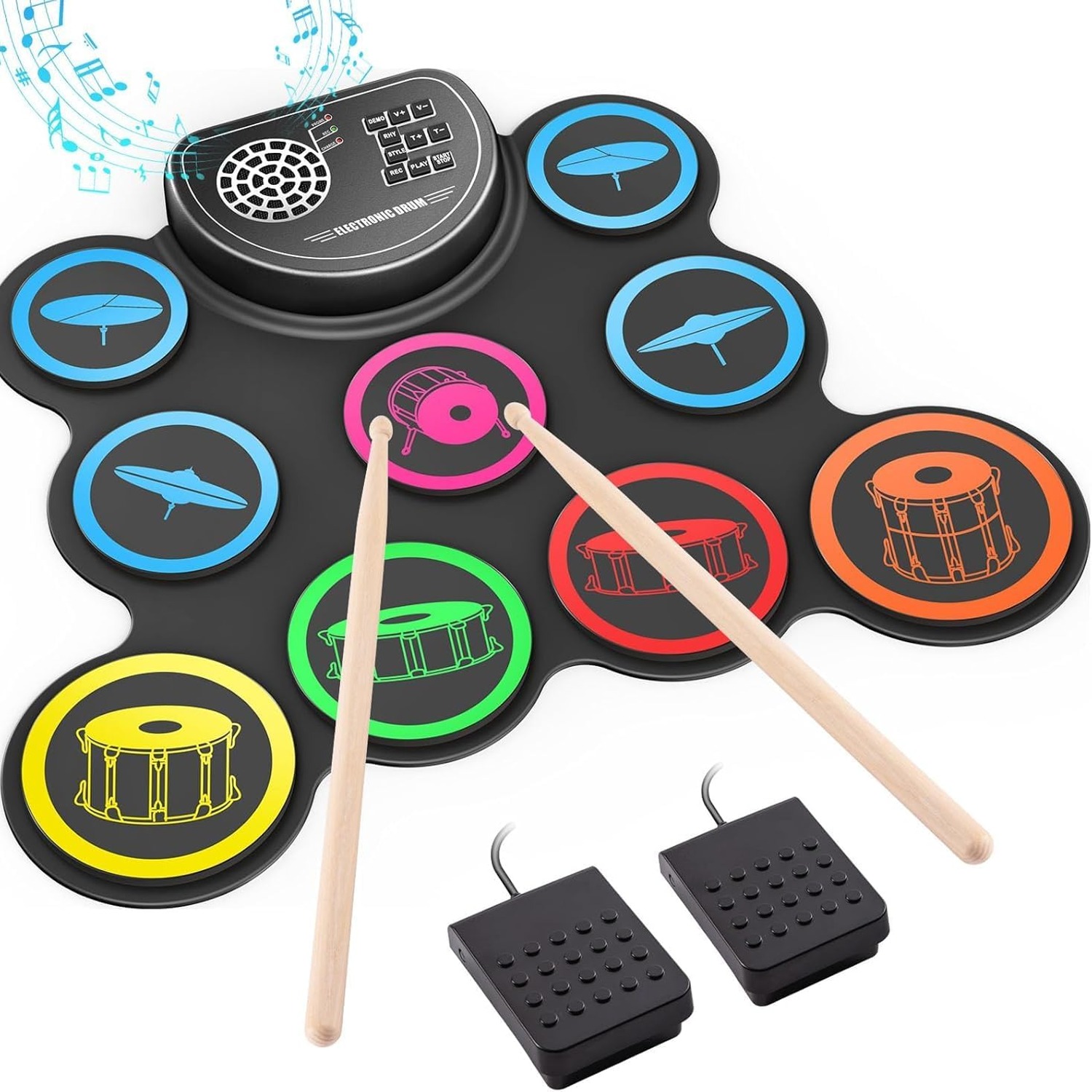
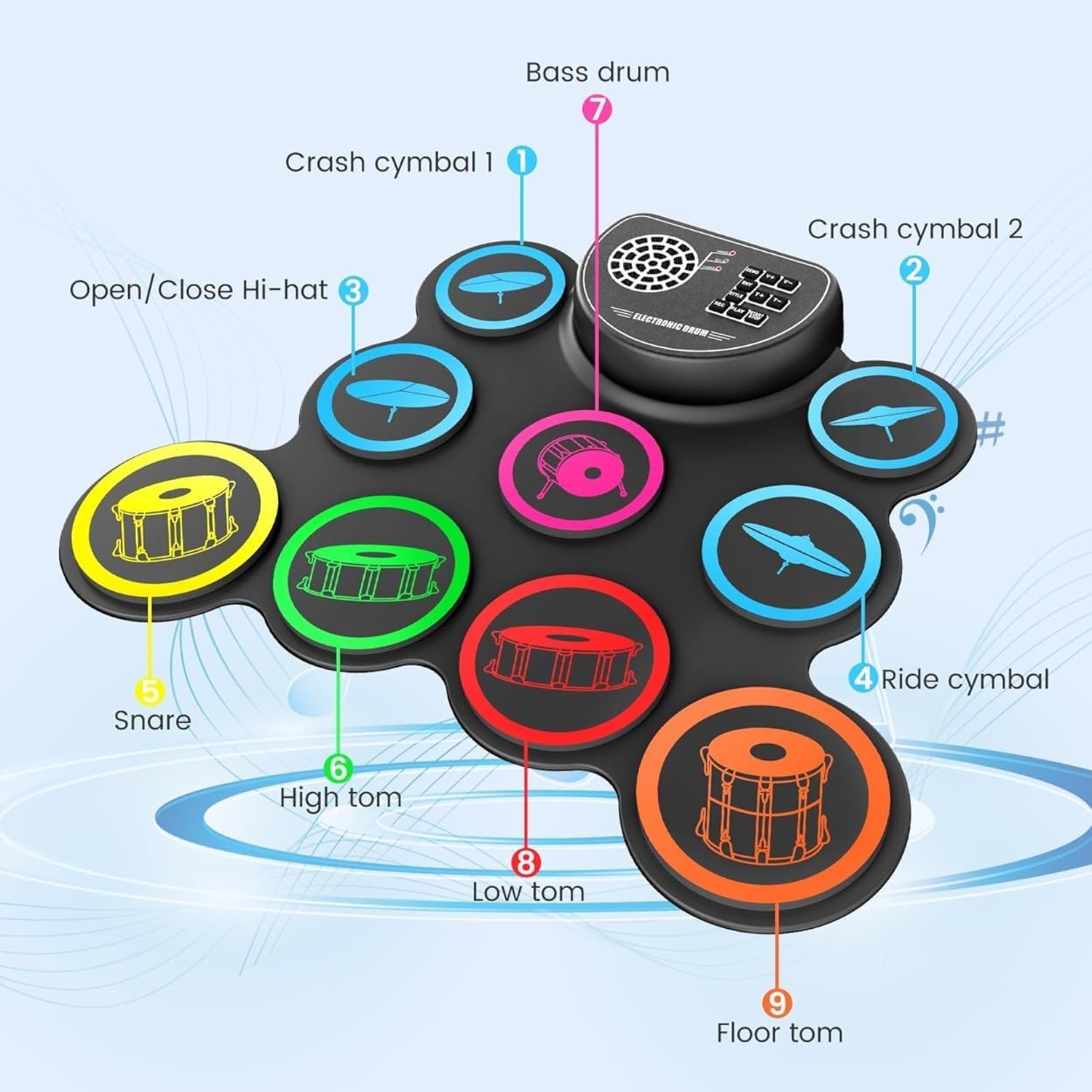
This kit has nine pads. Three toms, a snare, a bass drum, a hi-hat, a ride cymbal and two crashes. That is not a random number. It is the core of a standard five-piece kit with cymbals, so the hand movements a child learns here are the same ones they will use on a school kit or a friend's acoustic set.
The two foot pedals are the part that separates a real practice tool from a toy. One works the bass drum, one works the hi-hat. Drumming is a four-limb activity, and a kit without pedals teaches only half the skill. A child who starts with pedals from day one finds the transition to a full kit far less awkward.
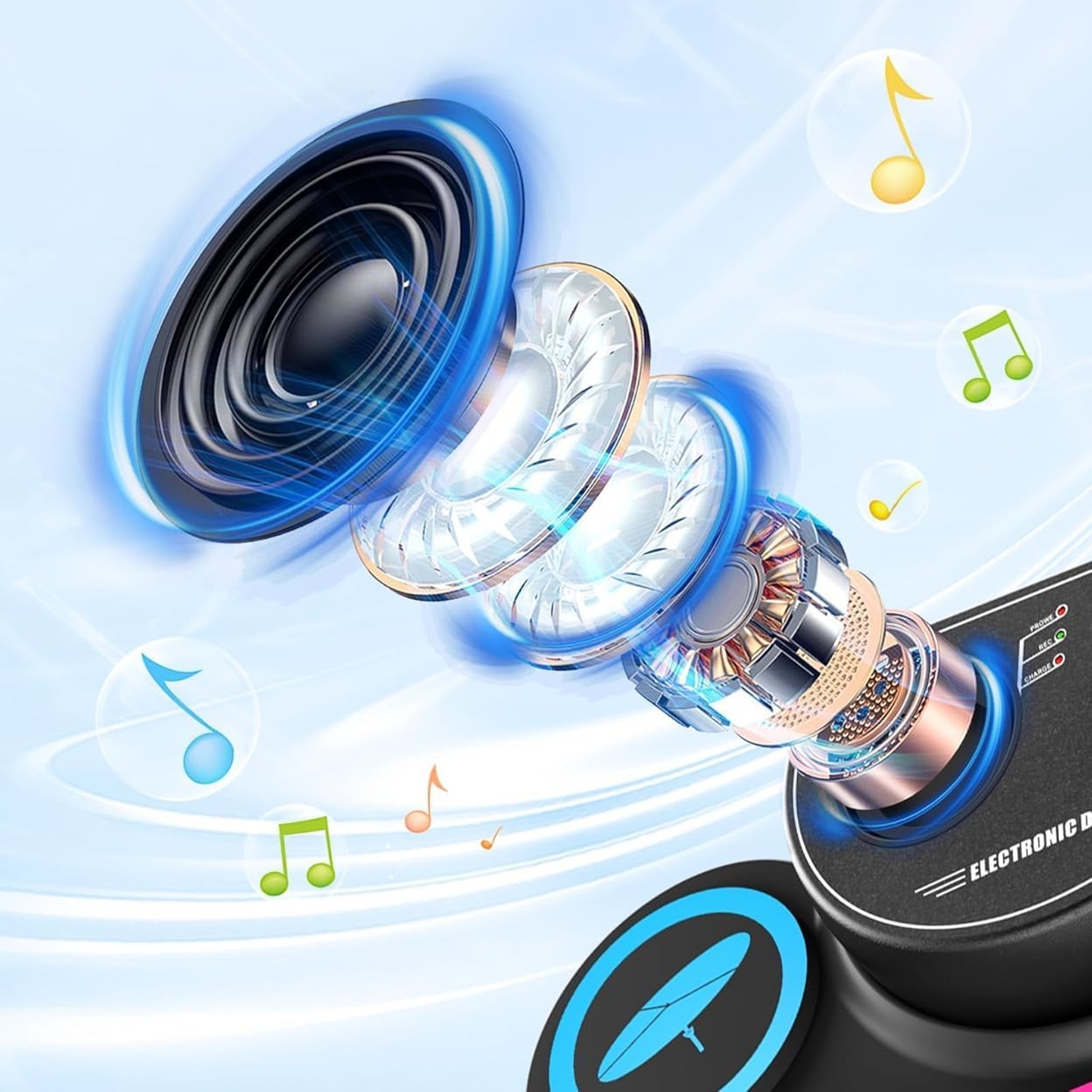
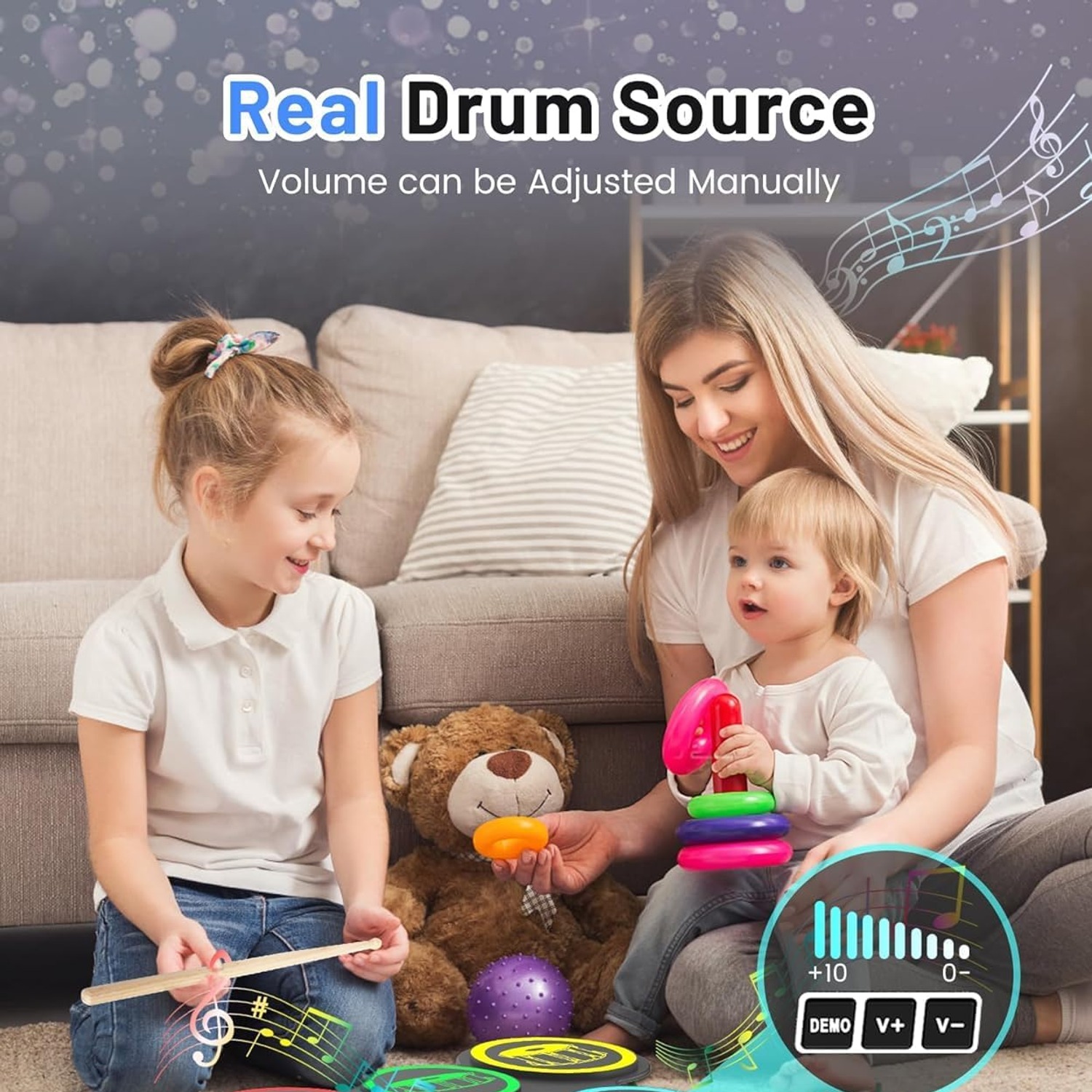
Sound is handled by stereo speakers with ten volume levels. Seven timbres change the overall character of the sounds. Nine built-in rhythms and ten demo songs give a beginner something to play along to, and nine tempo settings let them slow everything down while they work a pattern out.
Who this suits
The kit is aimed at children from about three years and up, and that span covers a few quite different uses.
A three or four year old will treat it as a sound toy, which is fine. Banging pads and hearing different drums respond is genuine early musical learning, and the pedals turn into a game fairly quickly.
A six to ten year old is the sweet spot. They are old enough to follow a demo song, hold a simple beat, and get frustrated in the useful way that makes people practise. The recording function matters most at this age, because hearing yourself back is honest feedback in a way that a parent saying "that was great" is not.
An older child taking lessons will use this as a quiet practice option between sessions, especially for rudiments and timing work. It will not replace the feel of an acoustic kit, but a best kids electronic drum pad in this bracket is about practice hours, and practice hours only happen if the kit is allowed to be used.
Adults buy these too, usually for travel or for a flat where a real kit is out of the question. The feel is compact, so it works better for warm-ups than for serious playing.
What to look at when comparing kits
Pad count and layout. Four or five pads look fine in a photo but leave out the cymbals and toms that make a beat sound like a beat. Nine pads covering the standard positions is the point where a child can play actual patterns rather than approximations.
Pedals, not just pads. Plenty of cheap roll-up kits skip the pedals entirely. If the kit has no kick pedal, a child will build habits they later have to unlearn. Two pedals is the minimum worth buying.
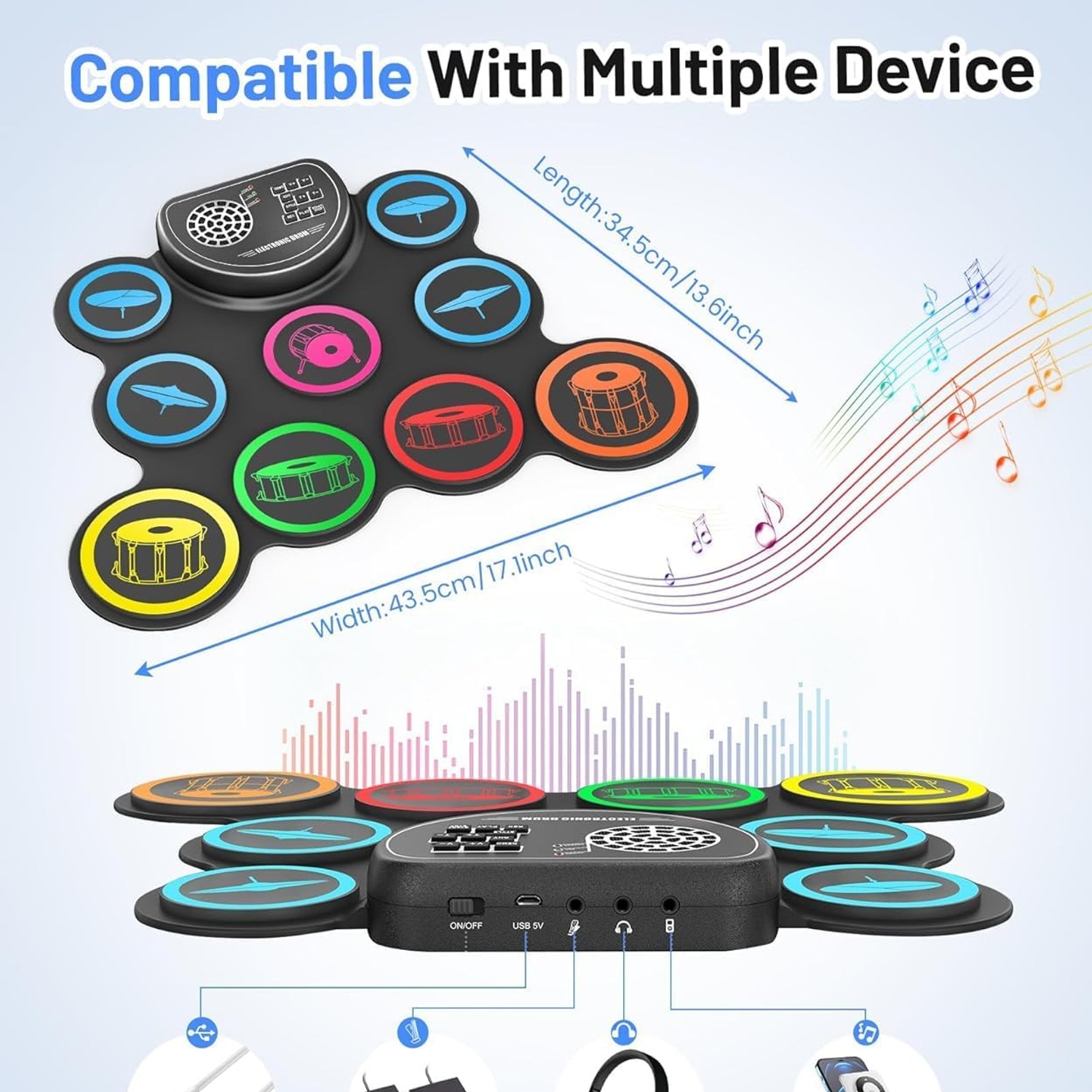
Headphone output. This is the feature that decides whether the kit gets used on a Tuesday evening or only on weekend afternoons. A headphone jack means practice can happen at any hour, and that single fact usually doubles how much a child plays.
AUX input. Being able to drum along with a favourite song is far more motivating for most kids than a built-in demo track. An AUX jack costs the manufacturer very little and makes a noticeable difference to how long the novelty lasts.
Power. Built-in rechargeable batteries are better than endless AAs. This kit charges from a 5V 2A adapter, which is not included, so check your existing phone charger before the first use. One AA battery is supplied separately for the kit's requirements. A charge runs up to around ten hours, which is realistically several weeks of practice for a child.
Weight and packability. At 1.01 kg, this rolls into a backpack. If a drum pad only ever lives on the lounge floor, it will eventually be in the way. If it packs for a weekend at grandparents' house, it keeps getting played.
Setting it up so it gets used
Pick a spot and leave it there, at least for the first month. Instruments that have to be fetched from a cupboard get played a third as often as instruments that are already out. A rug in a bedroom corner is ideal, because the pedals stay put and the pad does not slide.
Sort out the headphones early. Get a pair that fits a child's head properly and leave them next to the kit. Half the complaints about drum toys come down to volume, and this kit solves that in one step.
Set the volume ceiling together. Showing a child the ten volume levels and agreeing on a maximum gives them ownership of it, which works much better than taking the kit away later.
Use the AUX jack in the first week. Let them plug in their own music and drum along badly for twenty minutes. That is the moment most kids decide a drum pad is theirs rather than something they were given.
Looking after it
Care is simple. Wipe the pads and the control panel with a soft, slightly damp cloth, then dry them. Keep drinks and snacks off the surface, and keep it away from sand and grit, which can work into the seams.
When you roll it, roll it loosely. Tight creases put stress on the same spot every time and that is where flexible pads eventually fail. Store it flat or gently rolled, somewhere dry, out of direct sun and away from radiators.
Unplug the charger once the battery is full rather than leaving it connected for days. When you disconnect the pedal leads, pull the plug and not the cable. Small habits, long life.
The short version
A kids electronic drum pad is the practical answer to a child who wants to drum and a house that cannot absorb an acoustic kit. This one gives you nine pads in the standard layout, two foot pedals, seven timbres, nine rhythms, ten demo songs, ten volume levels and nine tempos. Add stereo speakers, a headphone jack for silent practice, an AUX input for playing along with real music, and a 180 second recorder.
It weighs 1.01 kg and rolls up, so it travels and it stores. One AA battery is included, and you will need a 5V 2A adapter for the rechargeable battery, which is not in the box. There is no manufacturer warranty stated, though your consumer rights apply as normal.
If you have a child who drums on everything in the house, this gives them somewhere better to do it.