
The complete guide
How to Choose a Beginner Flute That Will Not Hold You Back
The problem with buying a first flute
Most people buying a first flute have never played one. That is the awkward part. You are asked to judge pad seal, key action and intonation on an instrument you cannot test, usually because a school letter came home with a deadline on it.
The result is that a lot of first flutes are bought on price alone, and a share of those end up in a cupboard within six months. Not because the student lost interest, but because the instrument made the early weeks harder than they needed to be. A flute that leaks air, or whose keys stick, teaches a beginner that the instrument is impossible. It is not. It is just faulty.
So the real question is not which flute sounds best in the hands of a professional. It is which flute gives a beginner the least to fight against.
Why closed hole matters so much at the start
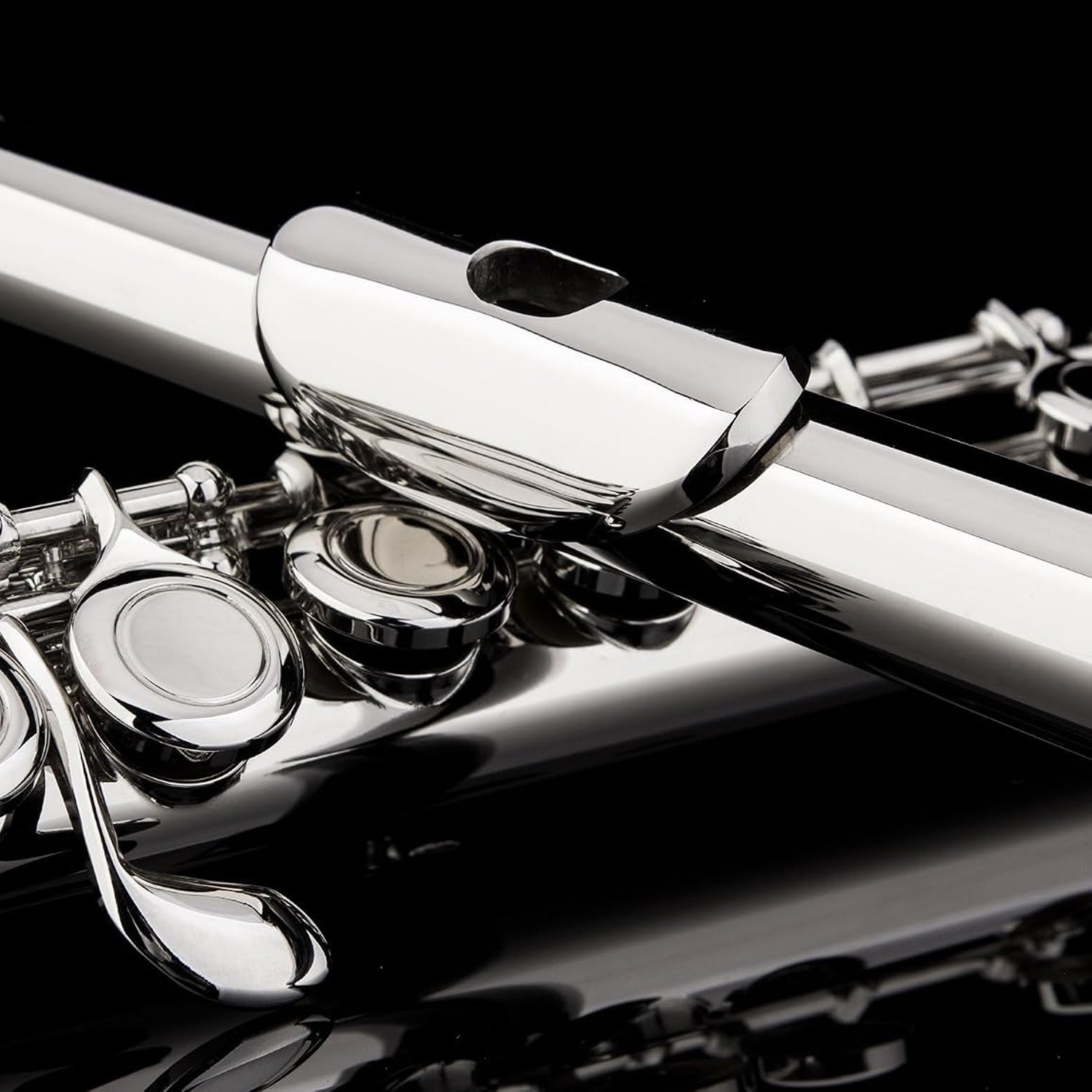
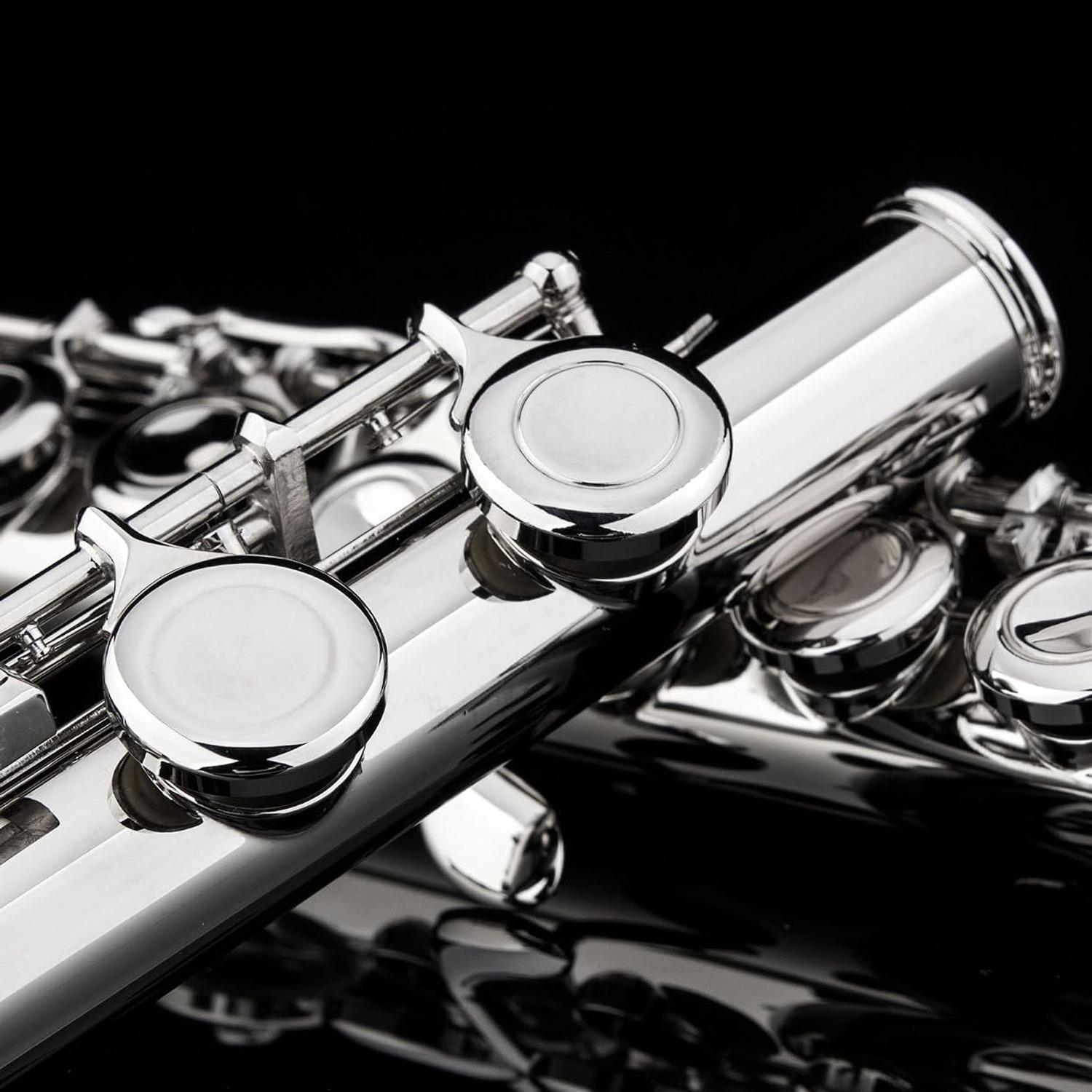
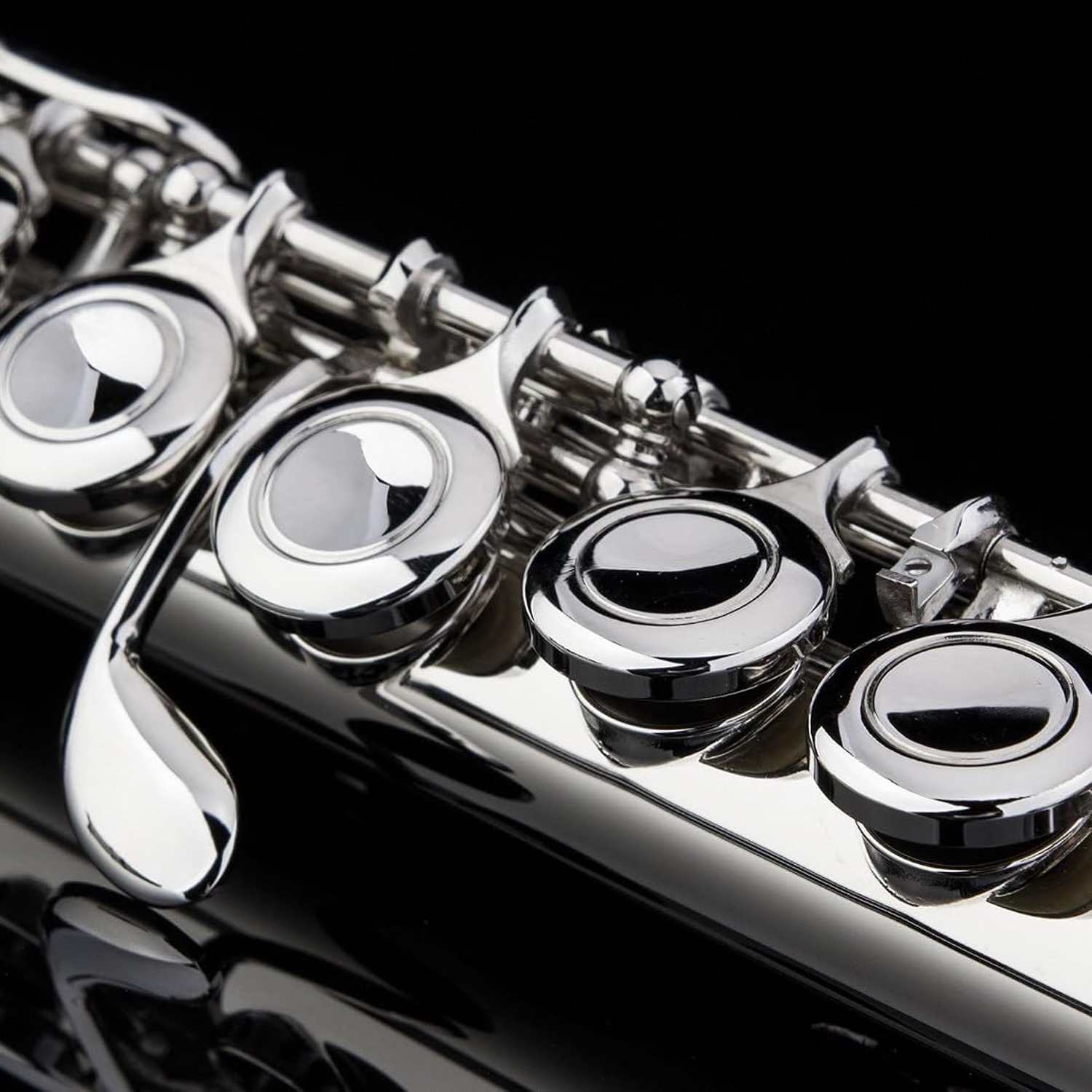
Flutes come in two broad styles. Open hole models have rings in five of the keys, with a gap in the middle that the fingertip must cover. Closed hole models, sometimes called plateau keys, have solid cups that seal the hole no matter where on the key your finger lands.
For an experienced player, open holes allow a few extra techniques, including pitch bending and some alternative fingerings used in modern repertoire. For a beginner, they are mostly a source of silent, invisible leaks. You press the key, you blow, and nothing comes out, and you have no idea whether the fault is your breath, your lip or your finger.
Closed hole removes that whole category of problem. Press the key and the hole is covered. That is why nearly every teacher recommends a closed hole C flute for a student, and why the vast majority of school band instruments are built this way. Moving to open holes later is easy. Starting on them is not.
This instrument uses a 16-key closed hole layout, which is the standard student arrangement. Any beginner fingering chart, tutor book or lesson video will map straight onto it.
What pitched in C actually means for you
Flutes are described by the key they are built in. This one is in C Major, which is standard concert pitch. In practice that means the written note matches the sounding note, so a part written for flute in a band folder plays correctly with no mental transposition.
If you have seen alto or bass flutes mentioned, those are pitched differently and sit in specialist territory. They are not what a school band or a beginner book expects. Unless a teacher has specifically told you otherwise, a C flute is what you want.
The parts that quietly decide how it plays
Three things inside a flute matter more than the shiny bit on the outside.
The pads are first. Each key cup has a pad that must press down and seal the tone hole perfectly. If even one pad seats unevenly, air escapes and the notes below it go thin or disappear entirely. This flute uses leather pads, which hold up to the moisture that builds inside any flute during practice. A dry, well seated pad is what gives you clean low notes.
The springs are second. Needle springs are the thin wires behind the mechanism that push each key back up when you release it. Weak or badly fitted springs make the action feel slow and vague. Good ones make it feel crisp, which matters as soon as a student starts playing anything quicker than crotchets.
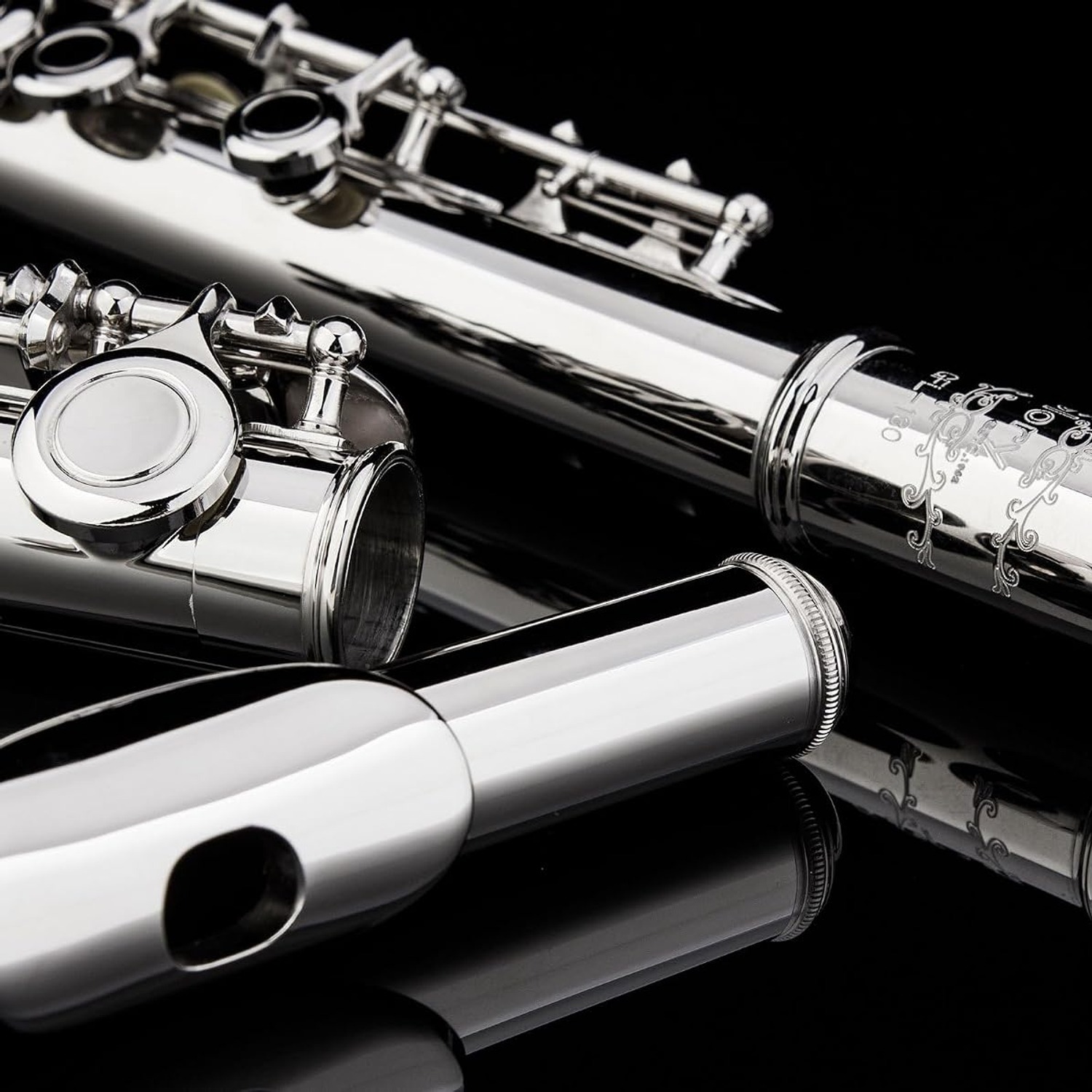
The body material is third. This instrument is brass with a nickel finish, giving the bright silver-toned look most people picture when they think of a flute. Brass is the common choice for student instruments because it is durable and holds its shape through the knocks of daily school life.
Who this suits, and who it does not
It suits a student starting flute for the first time, whether that is at school, with a private teacher or through online lessons. It suits an adult picking up the instrument after years away, since the fingering is identical to anything they played before. It suits a household that wants one box to arrive with everything needed to start.
It is less suited to two groups. One is a very young or very small child who cannot comfortably reach the foot joint keys. For them, a model with a curved head joint shortens the reach and is worth asking about. The other is an advancing player who has been told by a teacher that they specifically need open holes for their repertoire. If nobody has told you that, you almost certainly do not need them yet.
What arrives with it
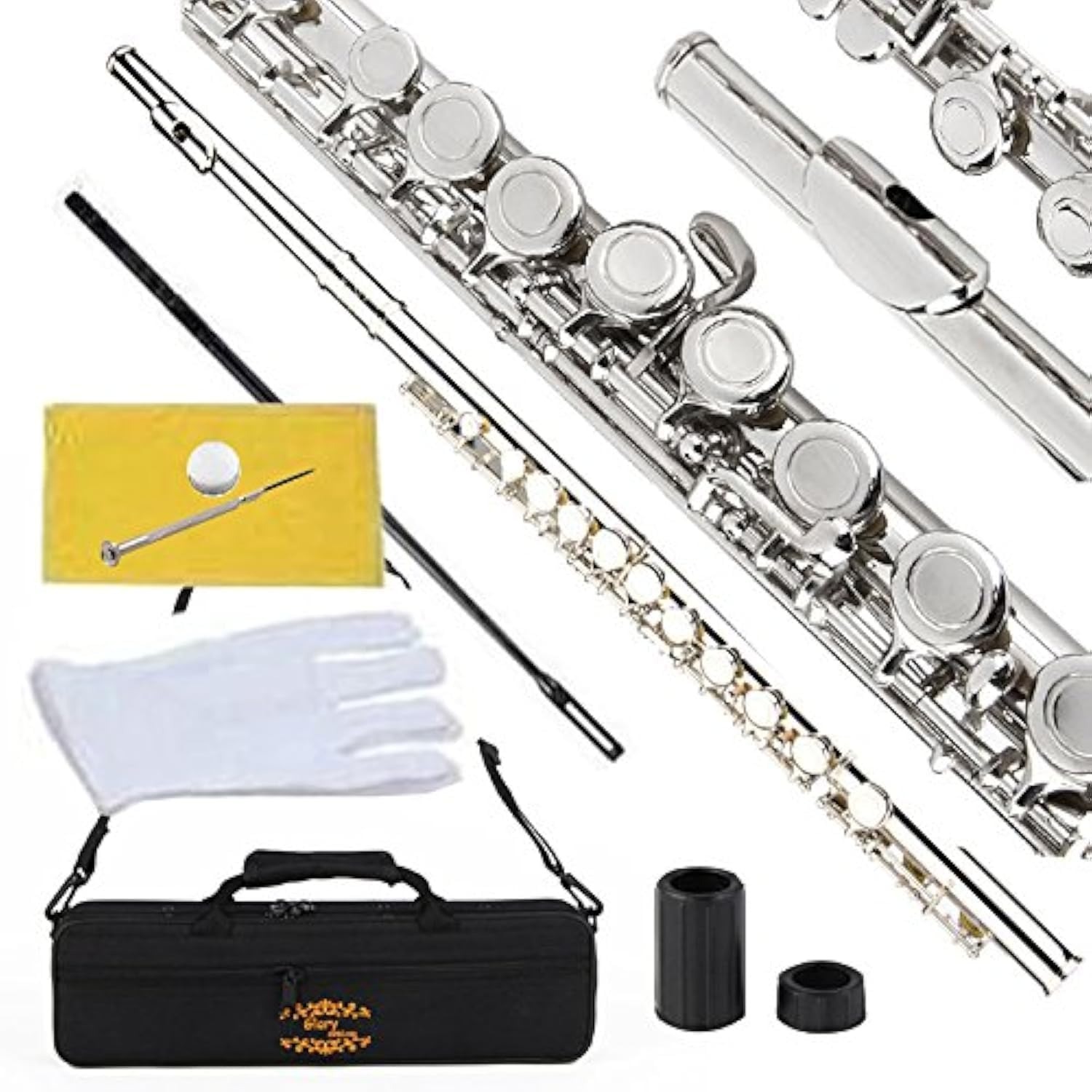
The package includes a case, a tuning rod, a cleaning cloth and gloves. That is a meaningful list, because each item solves a real problem.
The case protects the three joints in transit, which is where most student flutes get damaged. A bent key rod from a schoolbag is a repair bill, not a scratch.
The tuning rod is the slim metal stick with a slot in one end. You thread the cloth through the slot and push it down the inside of each joint to dry it after playing. This is the single habit that extends pad life more than anything else. The rod also carries a mark used to check head joint cork position, which a technician will explain if it ever drifts.
The gloves keep fingerprints off a nickel surface. Not essential to playing, but it keeps the instrument looking cared for, and students tend to look after things that look cared for.
Setting it up and keeping it right
Assembly is a twist, never a shove. Hold each joint near the body tubing rather than wrapping your hand around the keys, then twist gently as you push the pieces together. The embouchure hole on the head joint lines up roughly with the centre of the body keys, and the rod on the foot joint points towards the main key line. Small adjustments to that alignment are personal, and a teacher will help you find yours.
Tuning happens by sliding the head joint. Push it further in to raise the pitch, pull it out to lower it. A cold flute plays flat, so warm it with a few minutes of playing before you judge the tuning with an app or clip-on tuner.
Daily care is short. Take it apart, swab the inside of all three joints, wipe the outside dry, put it back in the case. Two minutes. Never run water through it, never use household cleaner on the keys, and never leave it in a hot car or on a radiator. Heat and damp are the two things that wreck pads.
Once a year, book a service with a repair technician. They will check pad seating, key alignment and spring tension, and catch small problems while they are still small.
Troubleshooting the first fortnight
Almost nobody gets a note in the first ten minutes. That is normal. The head joint alone, played like blowing across a bottle top, is the fastest way to find the embouchure, and plenty of teachers start students there for a week before assembling the whole instrument.
If low notes are weak but high notes work, check that every key is closing fully and that the joints are pushed home. If a key feels sticky, it is usually moisture on the pad, which a sheet of cigarette paper under the closed key will lift. If something sounds wrong across the entire range after a drop or knock, stop guessing and get it looked at.
The short version
A beginner flute should be forgiving, complete and in standard pitch. This one is a closed hole C flute with 16 keys, a brass body with nickel finish, leather pads and needle springs, supplied with a case, tuning rod, cloth and gloves at 902 g.
That combination covers what a student actually needs in the first year or two. The closed hole keys take the guesswork out of finger placement. The included kit means care starts on day one rather than whenever the accessories turn up. And being pitched in C means the player can walk into a rehearsal and join in.
If you are unsure whether the player's hands are big enough, or whether a teacher has asked for something specific, ask us before ordering. We would rather point you to the right instrument than sell you the wrong one.