Music Instruments
Company
Shop By Category
T&Cs
Shop Online
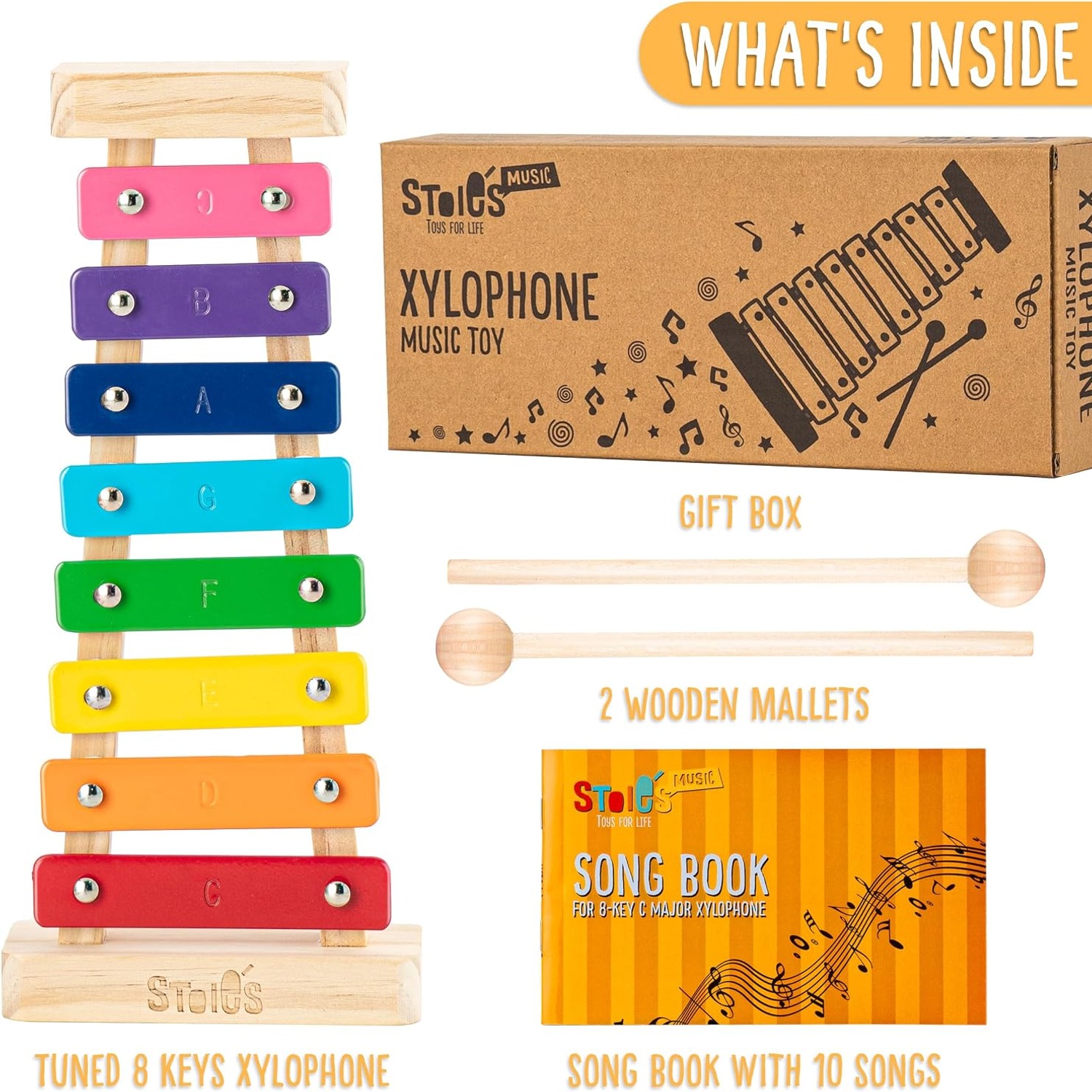
  • Box contents listed
  • Free tracked Australia-wide delivery over $150
  • 14-day returns

Kids xylophone | 8 note wooden xylophone | toddler xylophone with mallets

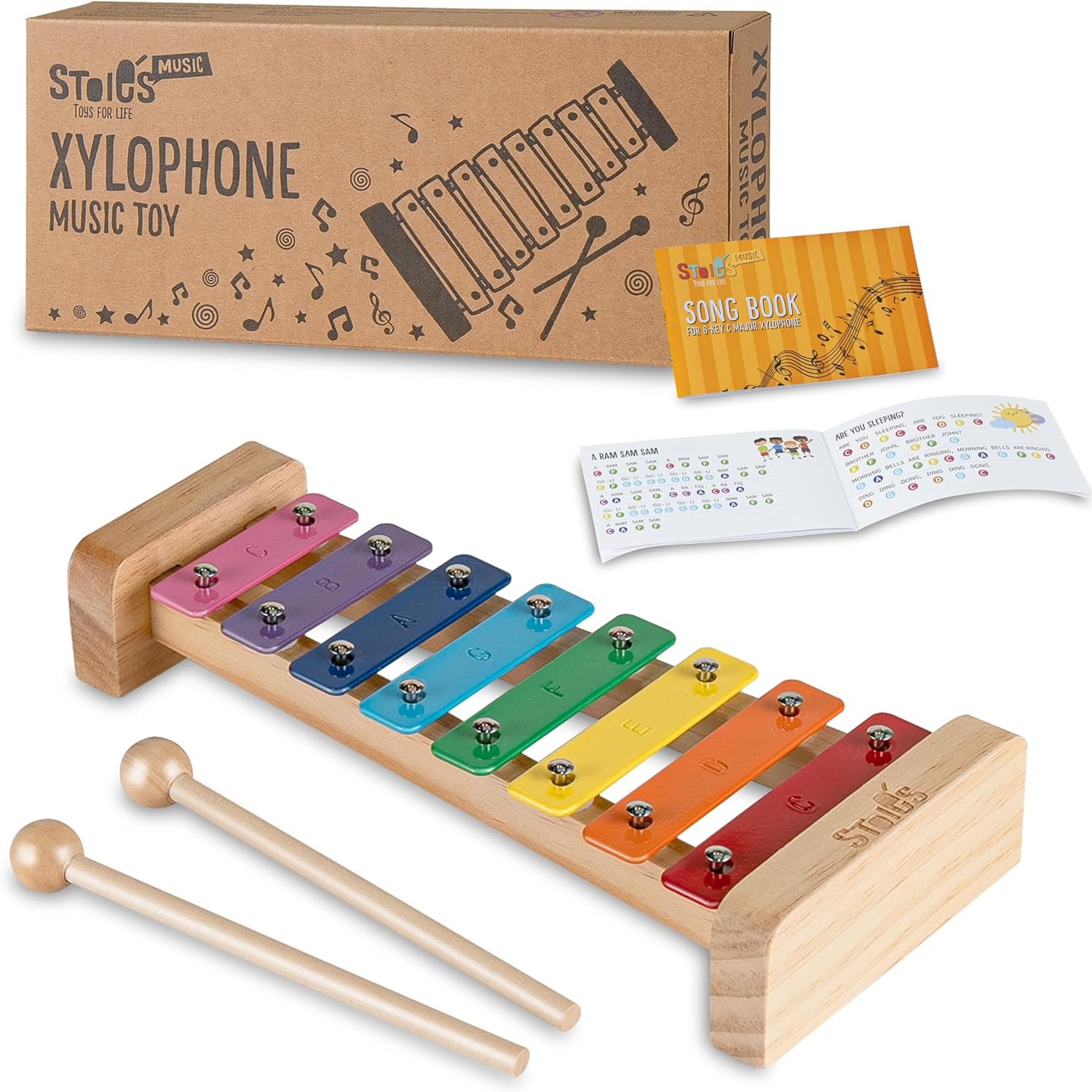
Stoie's 8-Note Rainbow Wooden Kids Xylophone with Mallets

$49.99 $59.99 Save $10
  • Eight Tuned Keys
  • Colour Coded Notes
  • Wooden Build
  • Light And Portable

Price: $49.99 $59.99

  • Free tracked Australia-wide delivery on orders $150+, otherwise a flat $15
  • Pay by card or PayPal, handled by the payment provider
  • 14 days to change your mind, plus your statutory rights
Product specifications
BrandStoie's
InstrumentXylophone
Number Of Keys8 (C-major scale)
ColourRainbow
MaterialWood
Recommended Age3 years and up
Age Range DescriptionToddler
SizeMini
Item Dimensions25 x 12 x 5 cm
Item Weight200 g
Number Of Items1
Included ComponentsTambourine, trumpet, xylophone, triangle, hand bell
Assembly RequiredNo
Operation ModeManual
Power SourceManual (no batteries)
Model NumberSX-0002
Manufacturer Part NumberSX-0002
ManufacturerStoie's
ThemeRainbow
Educational ObjectiveDevelop musical skills and creativity
Country Of PublicationChina
Weight200 g
Shipping & returns

Tracked delivery anywhere in Australia. It is free on orders of $150 or more, and a flat $15 below that.

If it is not right for you, send it back within 14 days of delivery in resaleable condition and we refund the price you paid, including standard delivery. That is a voluntary policy we offer on top of your legal rights. You cover the cost of returning it unless the item is faulty.

If it arrives faulty, damaged or not as described, we put it right at no cost to you under the Australian Consumer Law and the Competition and Consumer Act 2010, return postage included.

Shipping details · Refunds and returns

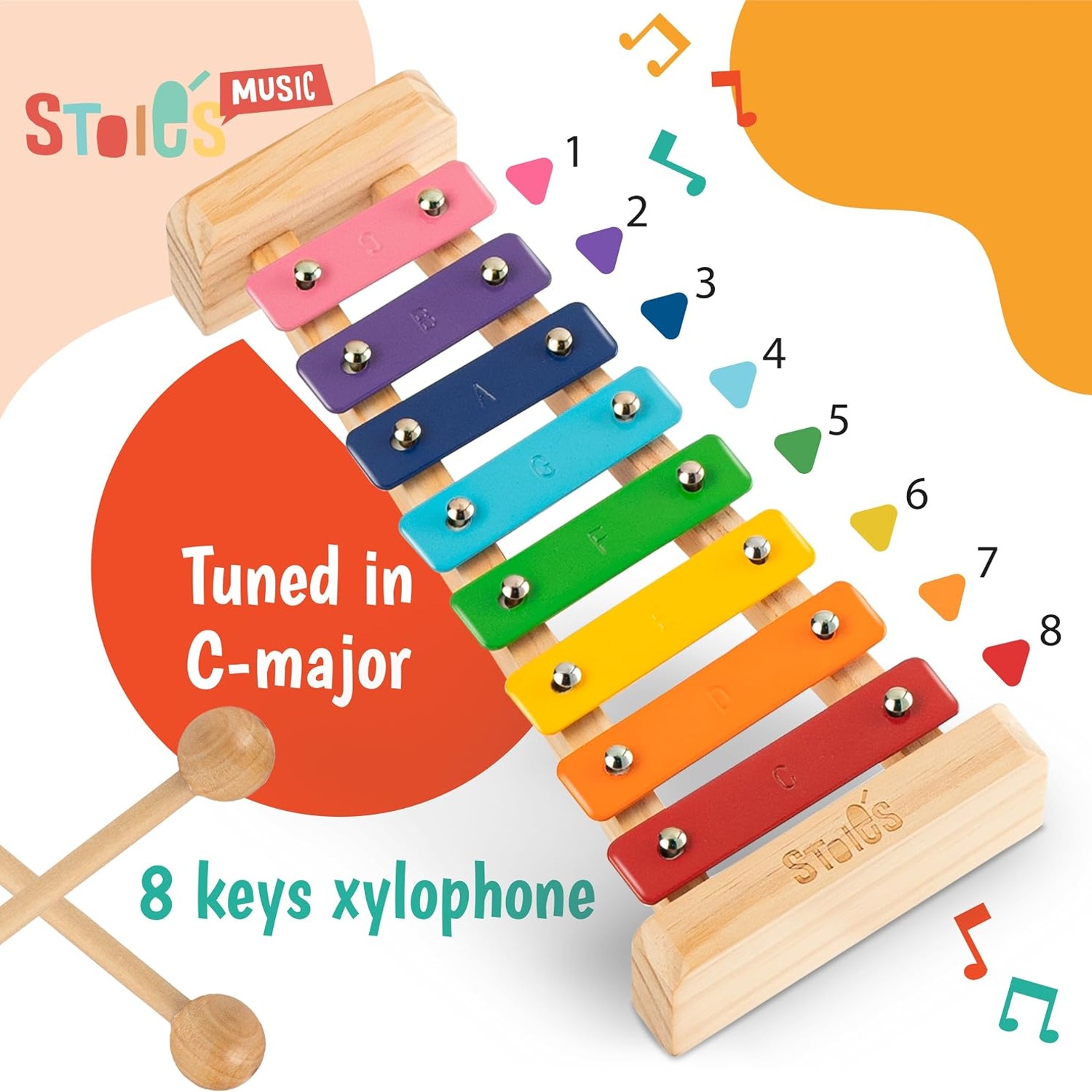
Eight Tuned KeysTuned to the C-major scale so simple songs sound right from the first tap.
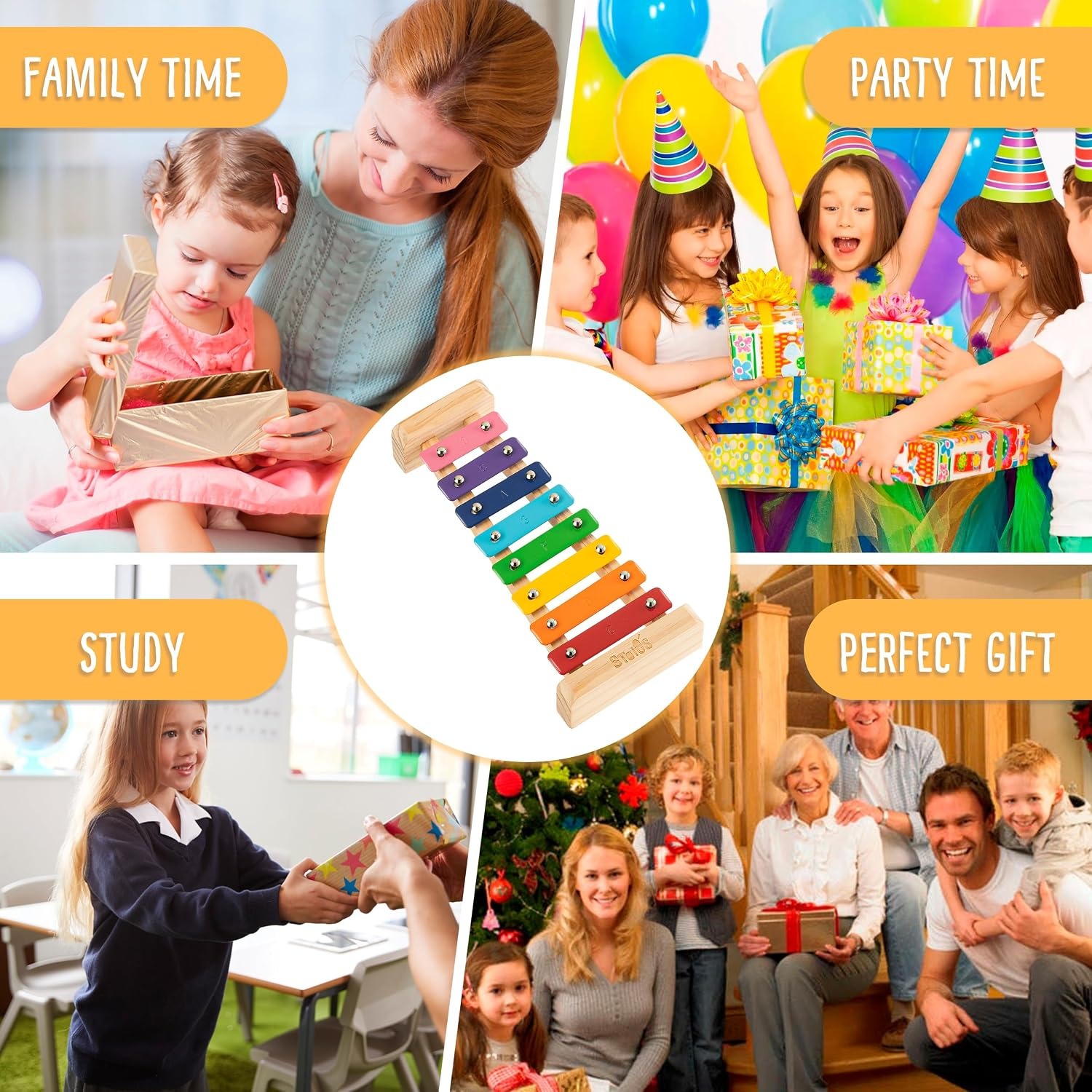
Colour Coded NotesRainbow keys help small children match a colour to a note while they play.
Wooden BuildMade from wood with smooth, rounded edges that suit enthusiastic little hands.
Light And PortableJust 200 g and 25 cm long, so it travels to grandma's house without fuss.

Give a child their first real instrument with a kids xylophone that sounds as good as it looks.

Eight rainbow wooden keys tuned to the C-major scale, a light 200 g body and smooth rounded edges make this a simple, sturdy starting point for little musicians aged three and up.

A wooden kids xylophone with 8 keys tuned to the C-major scale, so the notes a child plays actually belong together.

The rainbow colour coding gives little players a visual anchor for each note, which makes copying a simple tune far easier.

At 25 x 12 x 5 cm and 200 g, it sits on a lap, a rug or a classroom table and packs into a day bag without thought.

Wood construction with smooth, rounded edges stands up to the kind of playing a three year old calls "gentle".

No batteries, no charging, no app. Pick up a mallet and the instrument works, which is exactly what a first instrument should do.

Stoie's 8-Note Rainbow Wooden Kids Xylophone with Mallets

Most toys aimed at toddlers make noise. Very few make music. A kids xylophone sits in a different category because the sound it produces is organised, and a child can hear the difference almost immediately. Tap a key, hear a clear note. Tap the one next door, hear a note that is higher or lower by a predictable step. That simple cause and effect is the whole foundation of musical learning, and it happens without a single instruction from an adult.

Stoie's 8-Note Rainbow Wooden Kids Xylophone with Mallets

This model has 8 keys tuned to the C-major scale. In plain terms, that means the keys run from one C up to the next C, covering the notes most nursery songs are built from. A child who taps keys at random still lands on notes that sound pleasant together, which keeps the experience encouraging rather than grating. When they are ready to copy a tune, the notes they need are all present and in order from left to right.

Stoie's 8-Note Rainbow Wooden Kids Xylophone with Mallets

The rainbow colour coding does more work than it first appears. Small children cannot read note names yet, but they can absolutely match "red, red, yellow" to a pattern they have just been shown. That turns a xylophone into a memory and sequencing game as much as a music toy, and it is one reason this style of instrument turns up so often in Montessori and preschool settings.

Stoie's 8-Note Rainbow Wooden Kids Xylophone with Mallets

Build matters when the player is three. This is a wooden instrument with smooth, rounded edges, weighing 200 g across a 25 x 12 x 5 cm footprint. It is light enough for a child to carry to another room, small enough to sit on a lap, and it needs no assembly out of the box. There is nothing to charge, no batteries to replace, and nothing that stops working when a software update arrives.

Stoie's 8-Note Rainbow Wooden Kids Xylophone with Mallets

The listed included components for this item are a tambourine, trumpet, xylophone, triangle and hand bell. If you are buying for a classroom or a group, that variety spreads the play around so more than one child can join in at once. At home, it gives a child somewhere to go next once the xylophone has become familiar.

Not sure yet? That is fine.

An instrument has to suit the player, and you cannot always judge that from a photograph. If it is not right for you, send it back within 14 days of delivery in resaleable condition and we refund the price you paid, including standard delivery. That is on top of your Australian Consumer Law rights if anything arrives faulty.

If it turns up faulty, damaged or not as described, that is on us. The Australian Consumer Law and the Competition and Consumer Act 2010 covers you, and we pay the return postage. Read the full detail on our refunds and returns page, or ask us anything before you order.

Frequently Asked Questions

What exactly is this product?

It is a wooden kids xylophone with 8 keys, finished in rainbow colours, supplied with mallets for playing. It is a manual acoustic instrument, so there are no batteries or electronics involved. The brand is Stoie's and the model number is SX-0002.

How many notes does it have?

Eight. The keys are tuned to the C-major scale, which runs from one C up to the C above it. That gives a child the full set of notes used in most simple nursery and folk tunes.

What does "tuned to C-major" actually mean for a beginner?

It means the eight keys follow the standard do-re-mi sequence rather than being random pitches. Notes played together or in sequence tend to sound agreeable, so a child experimenting freely still produces something musical. It also means an adult can play along on a piano or guitar in the same key.

What age is it suitable for?

The manufacturer recommends 3 years and up, and the age range description is toddler. Younger children can enjoy the sound with close supervision, but the stated minimum age is the one to follow. For the best first instrument for toddlers, three is generally when copying simple patterns starts to click.

How big is it?

The item dimensions are 25 x 12 x 5 cm. That is roughly the length of a school ruler, so it sits comfortably on a lap, a rug or a small table.

How much does it weigh?

200 g. A three year old can pick it up and carry it between rooms without help, which is part of what makes it travel well.

What is it made from?

The material type is listed as wood. The brand describes smooth, rounded edges on the body. Specific wood species is not listed by the maker.

Does it need assembly?

No. Assembly required is listed as "No", so it comes ready to play straight out of the box.

Does it need batteries?

No. Operation mode and power source are both listed as manual. You strike the keys with a mallet and the wood and metal do the rest.

Are the mallets included?

Yes, this is a toddler xylophone with mallets. Keep them stored with the instrument, because mallets are the part most likely to go missing under a couch.

What else is included?

The listed included components are a tambourine, trumpet, xylophone, triangle and hand bell. That makes it useful as a small set for group play rather than a single instrument on its own.

Is it loud?

It produces a clear, bright tone rather than an amplified blast, since there is no speaker involved. Volume depends entirely on how hard your child swings the mallet. Softer taps still sound clean, which is worth demonstrating early.

Can two children play at once?

With eight keys across a 25 cm frame it is really built for one player at a time, but the extra components in the set give a second child something to play. For classrooms, several sets spread the activity around far better than one.

Is it a good choice for a classroom or playgroup?

Yes. It is light, needs no setup, and the colour coding makes group instructions easy to give. Many early-years rooms look for the best preschool instrument that works without power and survives daily handling.

Will it help my child learn real music?

It teaches the groundwork, which is pitch, rhythm, sequence and the habit of listening. The stated educational objective is developing musical skills and creativity. It is not a substitute for lessons, but children who have played one tend to find a first piano or recorder lesson less foreign.

How does the colour coding work?

Each key has its own colour, so a pattern can be taught as a sequence of colours instead of note names. A child who cannot read yet can still follow "blue, blue, green, green" and play a recognisable phrase. It is one of the main reasons a rainbow xylophone is such a common first instrument.

Can adults play it too?

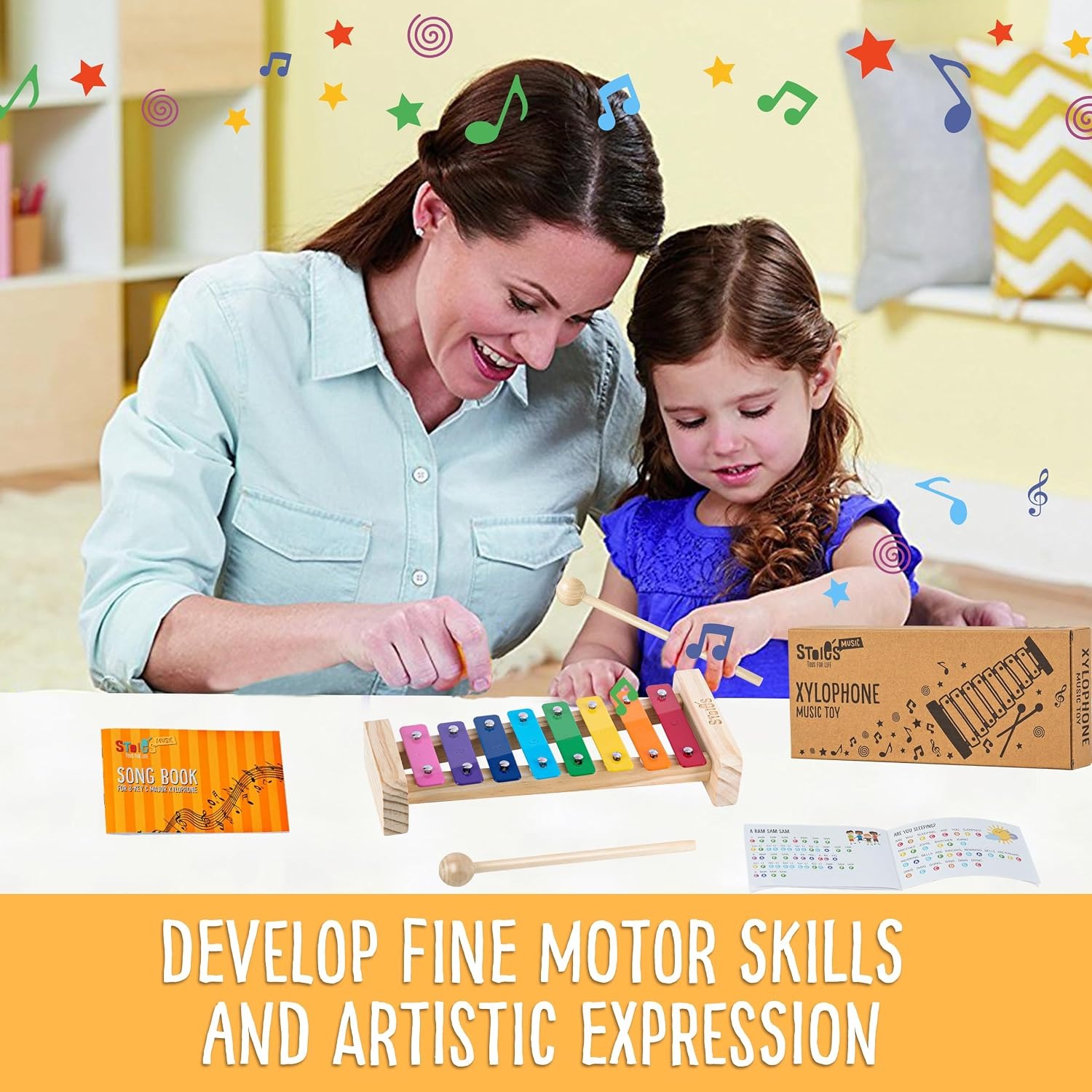
Yes, and it is worth doing. Children copy what they see, so a parent picking out a tune for thirty seconds is often all it takes to spark an hour of experimenting.

Is it a Montessori-style toy?

It fits the general pattern, being a simple wooden object with a clear purpose, self-correcting feedback and no electronics. Whether a given classroom counts it as a Montessori material depends on their own approach.

How do I clean it?

Wipe the keys and frame with a dry or barely damp cloth, then dry it immediately. Do not soak it or put it in a dishwasher, as water is the main enemy of wooden instruments.

Can it be used outdoors?

On a dry day in the shade, yes. Do not leave it outside overnight or in the rain, because damp and direct sun can affect wood and tuning over time.

Will the tuning drift?

Metal-keyed xylophones hold pitch well under normal use. Dropping it on a hard floor repeatedly or leaving it in damp conditions is what causes problems. Checking that key fixings are snug now and then is the only real maintenance.

What if a key sounds dull?

Usually it is a loose or overtightened fixing, or something resting on the key and damping it. Clear anything sitting on the keys first, then gently check the fixings. A key should be able to vibrate freely.

Is it safe for a child who still mouths toys?

The recommended age is 3 years and up, which is partly about mallets and small parts. A child who still puts everything in their mouth needs direct supervision, or should wait until they are past that stage.

Does it come with any song sheets?

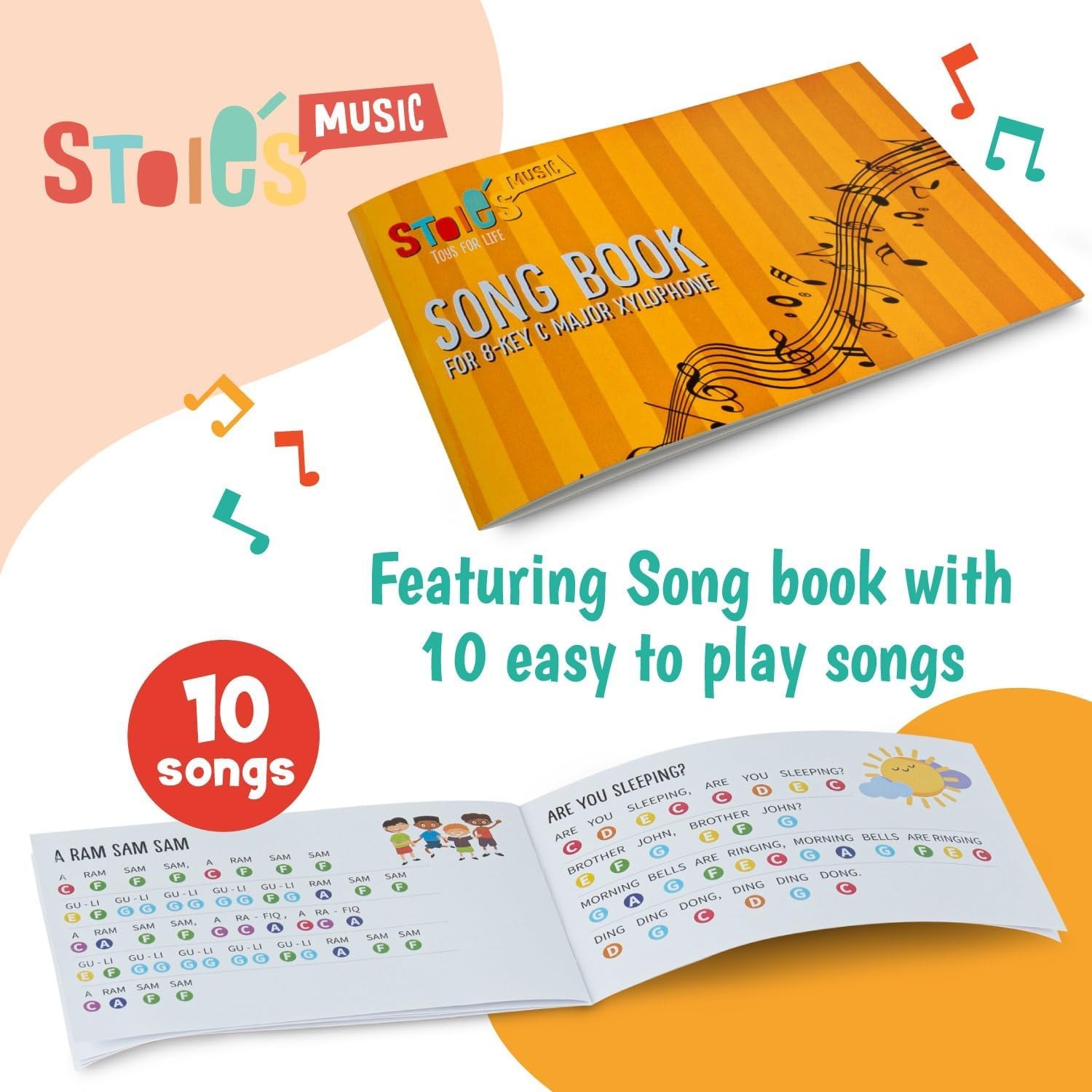
Song material is not confirmed in the maker's listing. Simple nursery tunes are easy to find for free online, and most of them fit inside an eight note C-major range.

Is it a good gift?

It is one of the easier gifts for a three to five year old, because it needs no batteries, no setup and no instructions. It also wraps neatly at 25 x 12 x 5 cm. Parents hunting for the best gift for a 3 year old often land on a wooden instrument for exactly those reasons.

How is it packaged?

It arrives as a single item ready to play, with no assembly required. Packaging details beyond that are not listed by the maker.

How long does delivery take?

We deliver anywhere in Australia with a tracked courier. Most orders arrive within 3 to 7 working days of the order date, a little longer to regional and remote addresses. Delivery is free on orders of $150 or more and a flat $15 under that. You get a tracking link by email as soon as the parcel is on its way.

Can I return it if my child is too young for it?

Yes, within the 14 day change-of-mind window counted from delivery, provided the item is in resalable condition. Keep the packaging until you are sure it is a fit. If you are buying ahead for a birthday, order with enough lead time to check it.

What is the difference between this and a plastic toy xylophone?

Wood and metal keys generally produce a cleaner, more sustained tone than moulded plastic, and the build tends to last longer. Many parents comparing options for the best wooden xylophone for toddlers choose wood specifically for the sound quality. Plastic versions are lighter and cheaper, but they rarely hold a convincing pitch.

What if it is not right when it arrives?

Contact us with your order number and tell us what is wrong, including a photo if something is damaged. We will arrange a replacement or a refund under the returns policy shown at checkout. You do not need to argue your case; a clear description is enough.

Choosing a Kids Xylophone, A Parent's Buying Guide

6 min read Music Instruments

The problem with most "musical" toys

Walk down the toy aisle and you will find dozens of things that make sound. Press a button, hear a pre-recorded jingle. Press it again, hear the same jingle. The child learns one thing from this, which is that pressing the button produces noise. That is useful for about four minutes.

A real instrument works differently. The sound comes from the child's own action, and the quality of the sound changes with how they act. Tap softly, get a soft note. Tap harder, get a louder one. Move one key to the right and the pitch rises. None of that needs explaining. A three year old works it out in under a minute, and then spends the next twenty minutes testing the rules.

That is the gap a kids xylophone fills. It is one of the few instruments simple enough for a toddler to succeed at immediately and musical enough to be worth keeping.

How an 8-note xylophone works

The eight keys on this model are tuned to the C-major scale. If you picture a piano, that is the white keys from one C to the next, the sequence most people learned as do-re-mi-fa-so-la-ti-do. Every note belongs to the same family, so they fit together.

This matters more than it sounds. On an untuned toy, a child banging away produces clashing noise that adults quickly ask them to stop. On a C-major instrument, the same random banging produces something that resembles music. Nobody asks them to stop, so they keep going, and the time spent playing is where the learning happens.

The keys are graduated in length. Longer keys vibrate more slowly and produce lower notes; shorter keys vibrate faster and produce higher ones. Children notice this visually before anyone tells them, and it is a neat first lesson in how sound actually behaves.

The rainbow colouring adds another layer. Before a child can read, they can match colours. A parent can play "red, red, blue, blue" and a four year old can repeat it. That is pattern recognition, working memory and sequencing all at once, dressed up as a game. It is why colour-coded instruments are standard equipment in so many early-years rooms.

Who this suits

The recommended age is 3 years and up, with the age range described as toddler. That lines up with what the instrument asks of a child, which is the hand control to hold a mallet and aim it at a key roughly 3 cm wide.

It works well for:

  • A first instrument before any formal lessons, where the goal is interest rather than technique.
  • Preschool and kindergarten rooms that need something that works without power and survives daily handling.
  • Homes trying to cut back on screens, where a toy needs to be genuinely engaging on its own.
  • Grandparents' houses, holiday homes and anywhere a 200 g toy that needs no charger earns its space.

It is less suitable for a child still at the stage of putting everything in their mouth. The mallets and the stated minimum age both point that way. Wait a few months rather than supervising every second.

How to choose between the options

If you are comparing xylophones, a few things separate a good one from a disappointing one.

Key material and tone. Metal keys over a wooden frame give a clear, ringing note that holds pitch. Moulded plastic keys are cheaper and lighter but usually sound dull and vague. This model is listed with wood as the material type, and the tone is one of the main reasons parents go that way.

Number of keys. Eight is the sweet spot for small children. It covers a full octave, so almost every simple song is playable, but it is not so wide that little arms cannot reach across it. Five-key versions run out of notes fast. Thirteen-key versions are harder for a toddler to aim at.

Size and weight. At 25 x 12 x 5 cm and 200 g, this one is genuinely portable. A child can carry it themselves, which quietly matters, because a toy a child can fetch independently gets played with more than one an adult has to set up.

Edges and finish. Rounded, smooth edges are not a luxury on a toy that gets dropped, sat on and occasionally used as a hat. The brand describes smooth, rounded edges on this model.

Batteries. None here. Operation and power source are both manual. That means no flat batteries on Christmas morning and no sudden silence halfway through a car trip.

This set also lists a tambourine, trumpet, triangle and hand bell among its included components, which is worth knowing if you are buying for a group. One child on the xylophone and two more on percussion is a far better outcome than three children waiting for a turn.

Getting the most out of it in the first week

The first session usually looks like pure chaos, and that is fine. Let them explore. Once the novelty settles, try a few things.

Play a two-note pattern and ask them to copy it. Then three. Most children can hold four or five in a row by the time they are four.

Name the colours as you play rather than the notes. "Red, red, orange" is something a three year old can act on; "C, C, D" is not, yet.

Try the loud and soft game. Ask for the quietest possible note, then the loudest. It teaches control, and it gives you a tool for later when the household needs a quieter session.

Play along. Sing a nursery rhyme while they hit any key they like. They will start landing on notes that fit, because on a C-major instrument most of them do.

Leave it out where they can see it. Instruments put away in cupboards get played rarely. An instrument sitting on a low shelf gets picked up on the way past.

Looking after it

Wooden instruments are not fragile, but they do dislike two things: water and heat.

Wipe the keys and frame with a dry or slightly damp cloth, then dry them straight away. Never soak the instrument and never put it in a dishwasher. If it gets rained on outside, bring it in and dry it properly before storing it.

Keep it out of direct sun and away from radiators. Wood moves as it dries out, and a frame that shifts can affect how the keys sit.

Check the key fixings every few months. They should hold the keys in place while still letting them vibrate. A key that sounds dead is usually one that has been pinched too tight or has something resting on it.

Store the mallets with the instrument. A xylophone without mallets ends up being played with a wooden spoon, which works but sounds worse and marks the keys over time.

The short version

An eight-key wooden xylophone tuned to C-major is about as good a first instrument as you can hand a three year old. The notes sound right together, the colours give a pre-reader a way in, and at 200 g it goes wherever the family goes. There is nothing to charge and nothing to assemble.

If you want a toy that still gets used in six months, and that teaches something real while it is being used, this is a sensible place to start. Hand over the mallets and stand back.

Browse the shop

Ready to hand over the mallets?

Order the rainbow 8-note kids xylophone today and let the first tune happen this week.

Ask us a question

Page summary

The Stoie's kids xylophone (model SX-0002) is a wooden 8-key xylophone tuned to the C-major scale, finished in rainbow colours and recommended for children aged 3 years and up. It measures 25 x 12 x 5 cm and weighs 200 g, requires no assembly, and is played manually with no batteries or power source. The listed included components are a tambourine, trumpet, xylophone, triangle and hand bell. The stated educational objective is developing musical skills and creativity. Material type is listed as wood and the theme is rainbow; country of publication is listed as China. Country of origin, specific key material and any safety certifications are not listed by the maker. No customer rating or review count is recorded here.