
The complete guide
How To Choose A Half Size Classical Guitar For A Young Beginner
The problem with starting on the wrong guitar
Walk into any school music room and you will see it. A child with a full size guitar on their lap, right shoulder hiked up to get their arm over the body, left hand stretching sideways to reach the third fret. They last about four minutes before they put it down.
That is not a motivation problem. It is a geometry problem. Guitars are built around adult arm length and adult hand span, and a seven year old has neither. Ask them to learn on one anyway and they will conclude, quietly and permanently, that they are not a guitar person.
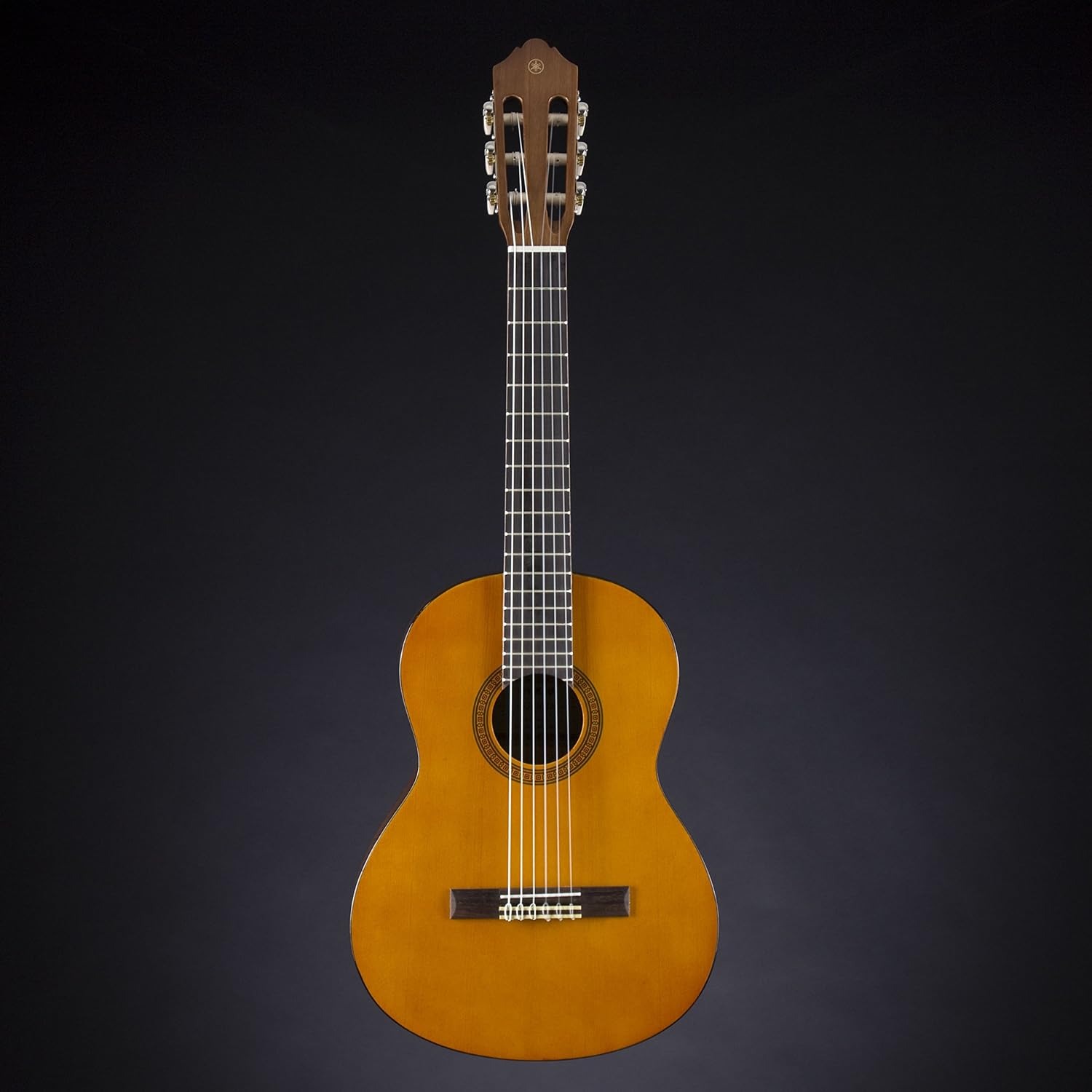
A half size classical guitar fixes the geometry first and lets the learning happen second. The body is narrower, so the strumming arm hangs naturally. The scale length here is 535 mm, meaning the frets are packed closer together and a small hand can cover a chord shape without a stretch. At 1.3 kg the whole thing is light enough to hold, carry and put back on the stand without help.
What the half size actually changes
Scale length is the number that does the work. It measures the vibrating section of string between the nut at the top of the neck and the bridge at the body. On a full size classical guitar that figure is around 650 mm. Here it is 535 mm.
Two things follow. Fret spacing shrinks, so the distance a finger travels between a first fret note and a third fret note gets noticeably shorter. And string tension drops slightly at the same tuning, so the strings press down more easily. Both of those make the first month far less discouraging.
The body shrinks in proportion. Packed, this guitar measures 85.8 by 31 by 8.4 cm. In practice that is an instrument a child can tuck under one arm on the walk to a lesson, which sounds trivial until you have carried a full size guitar for a kid three days a week.
Why nylon strings matter more than people think
New players quit because of their fingertips. Steel strings cut into soft skin, and it takes a few weeks of regular practice before calluses build up. Many children never get that far.
Nylon strings sit at lower tension and have a wider, softer surface. They still take some getting used to, but the pain is mild rather than sharp. A child who can practise for fifteen minutes without wincing will practise again tomorrow, and that is how progress actually happens.
Nylon also sounds different. It is warm and round rather than bright and metallic, which is the sound of classical and Spanish guitar music. If your child is heading toward classical lessons, school ensembles or fingerstyle playing, that is the sound they will be learning to make anyway.
One warning worth repeating. Never fit steel strings to a classical guitar. The body and neck are built for nylon tension, and steel can pull the bridge up or bow the neck. Replacements should always be nylon classical sets.
The woods and what they do
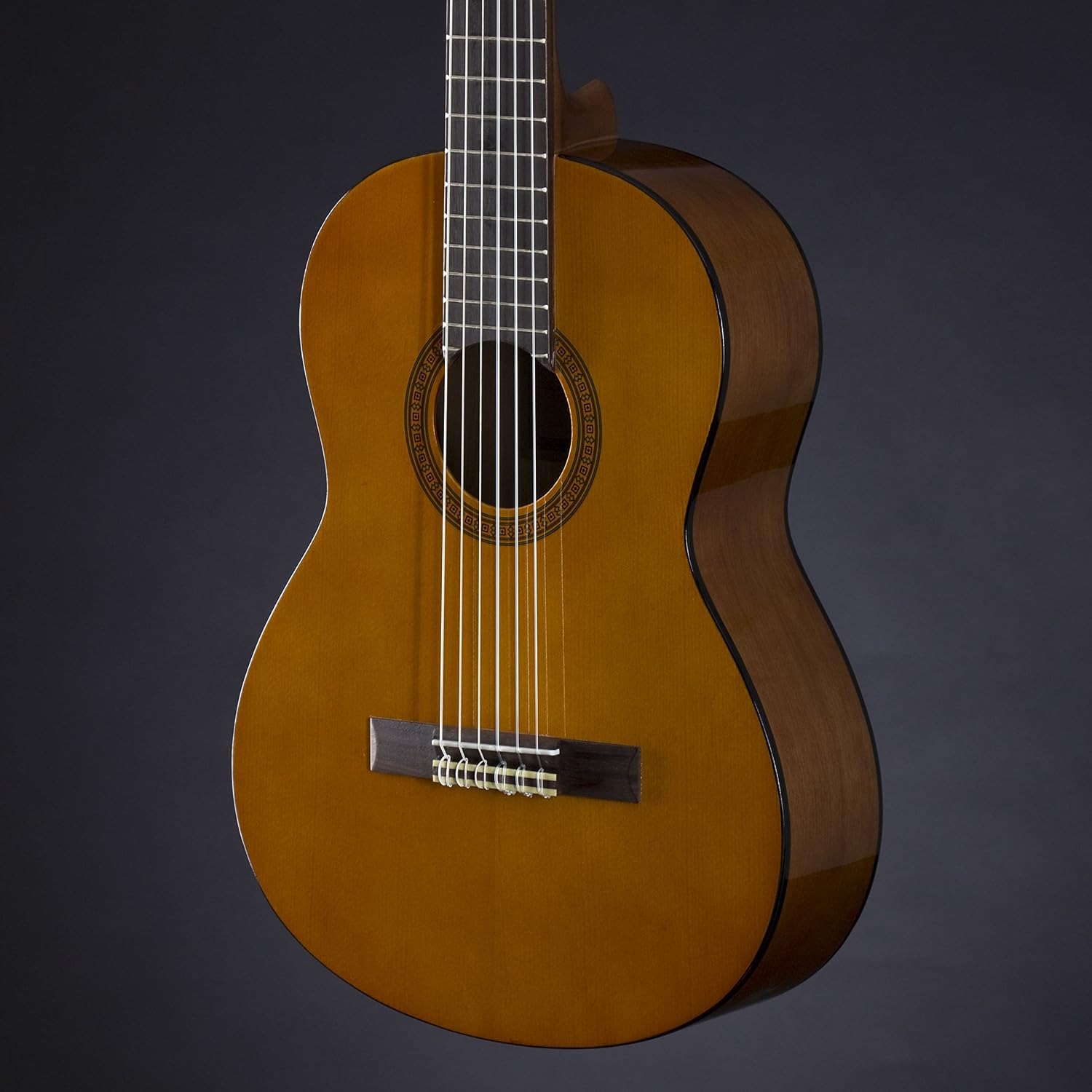
The top of this guitar is spruce. The top is the panel that vibrates and pushes air out through the soundhole, so it sets most of the character of the sound. Spruce is used on expensive classical guitars because it responds quickly and projects well, and seeing it on a student instrument is a good sign.
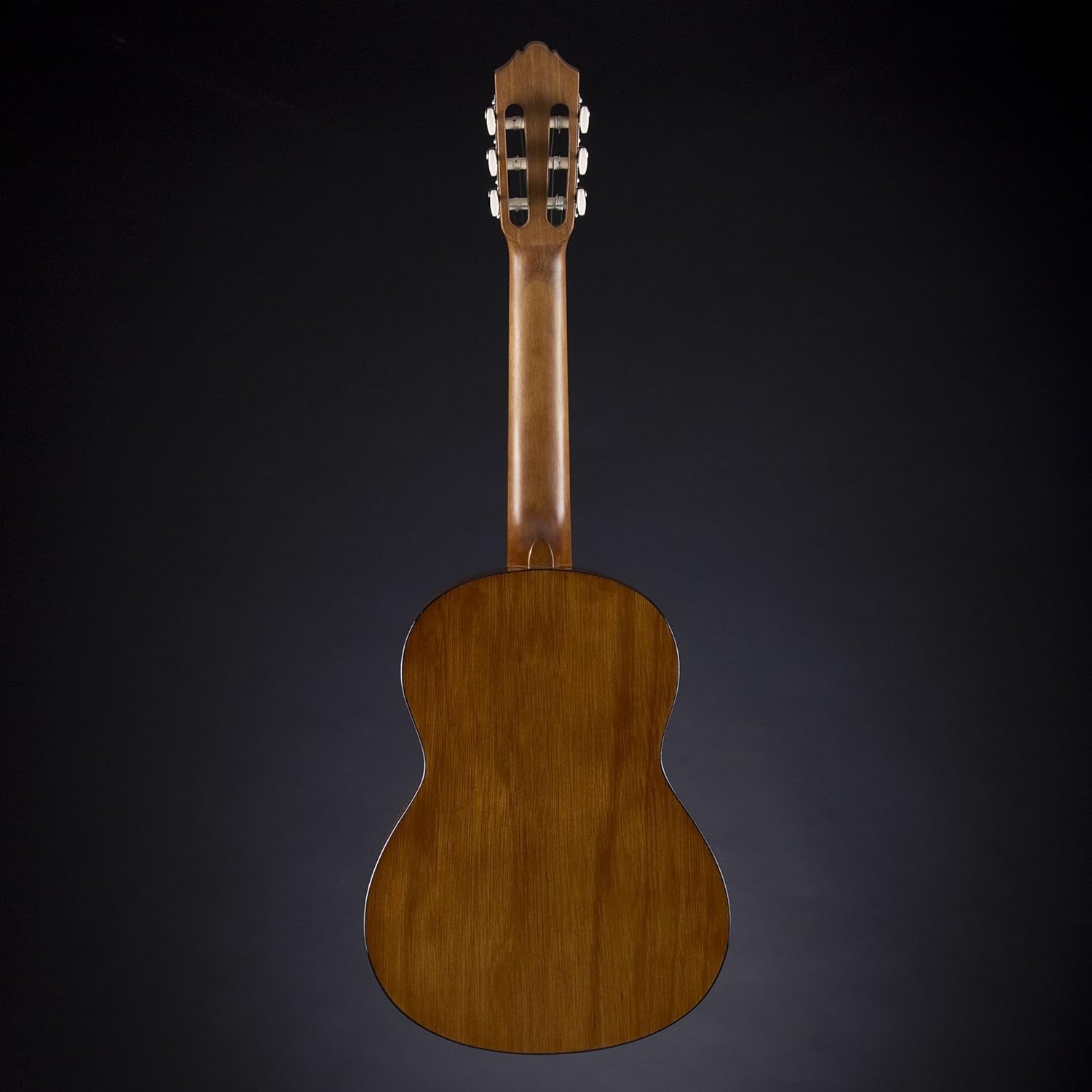
Back and sides are meranti, and the back material is listed as meranti wood as well. Meranti is a stable, affordable tonewood that reflects sound back through the body without adding harshness. The combination gives what the maker describes as a full tone, which is the main thing separating this from the thin, boxy sound small guitars often make.
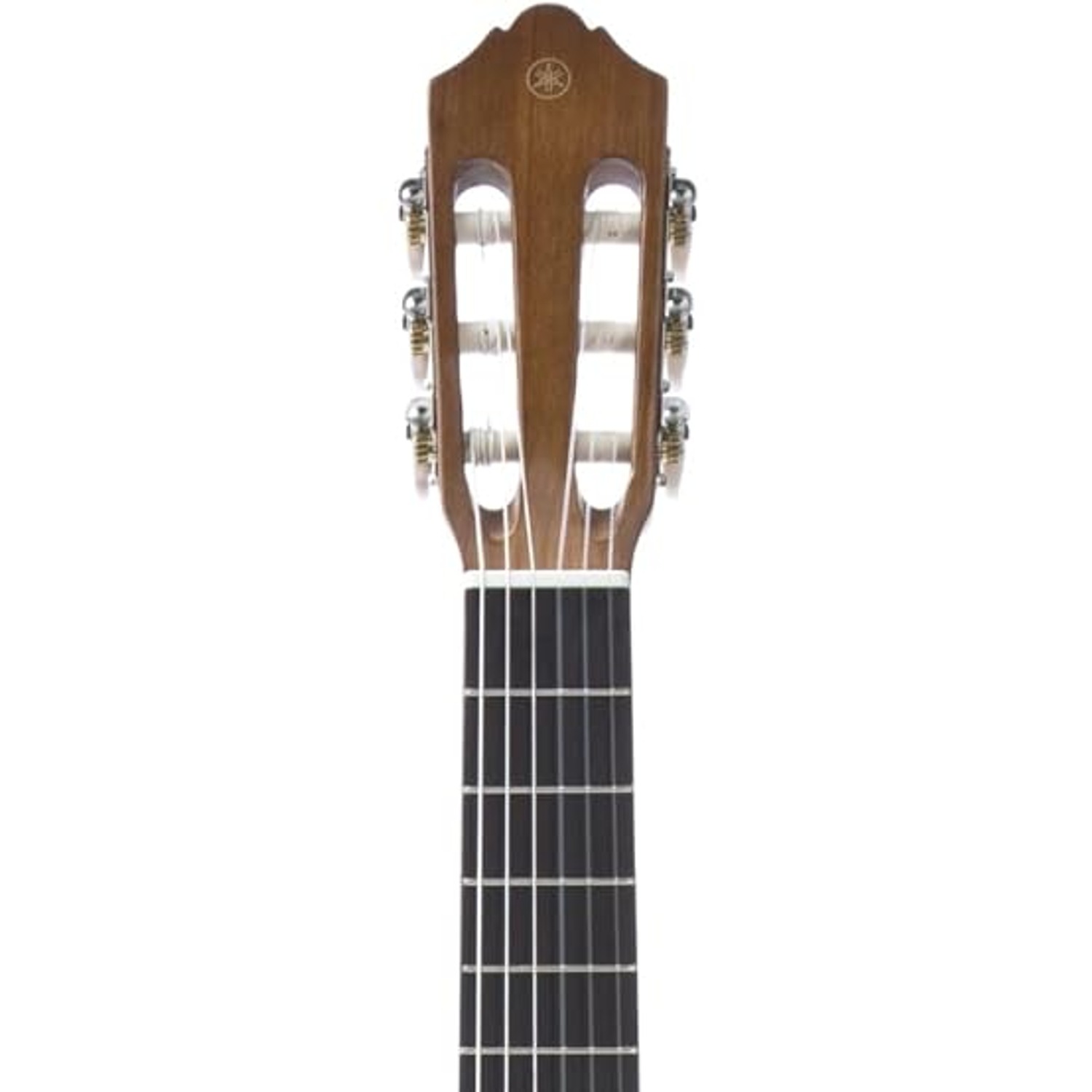
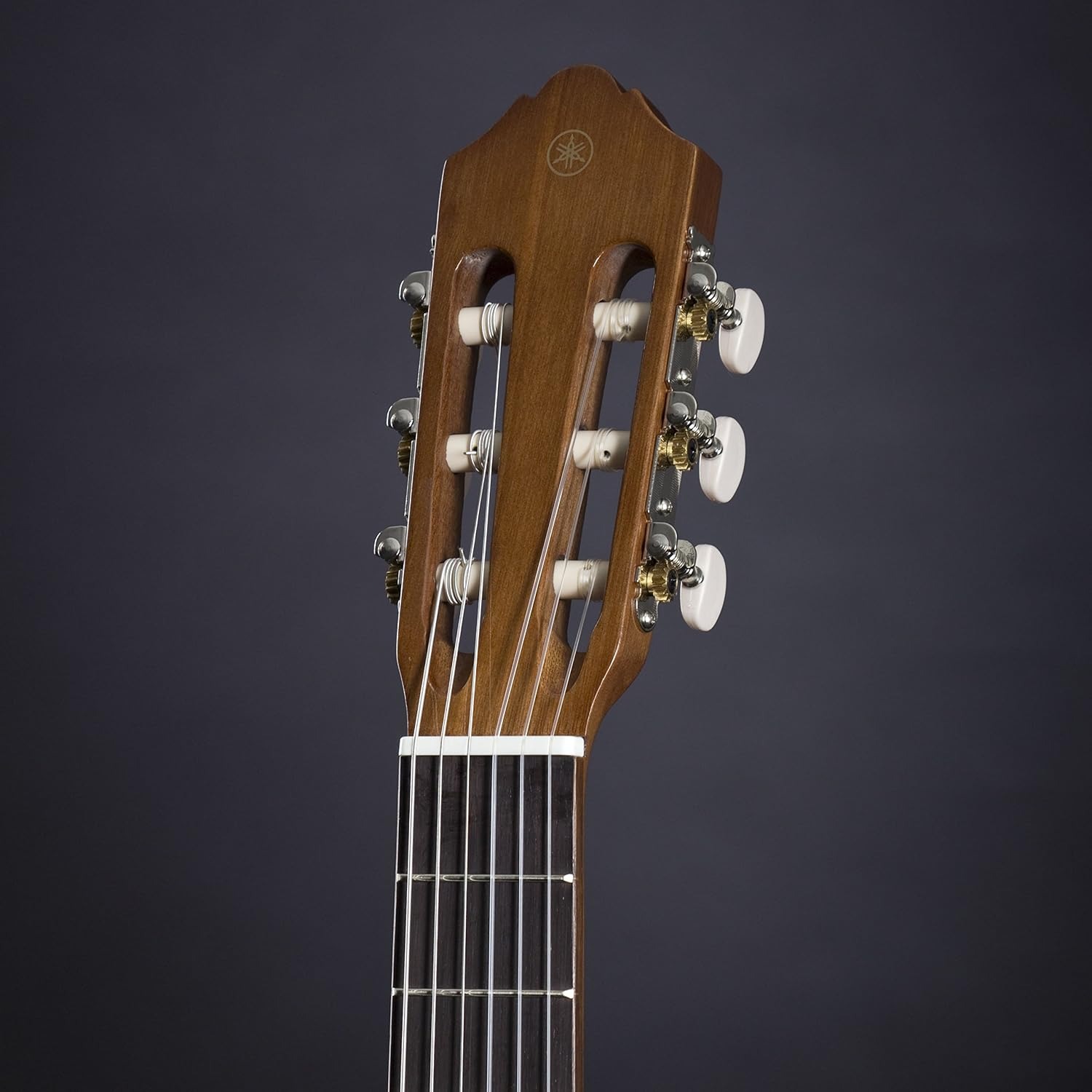
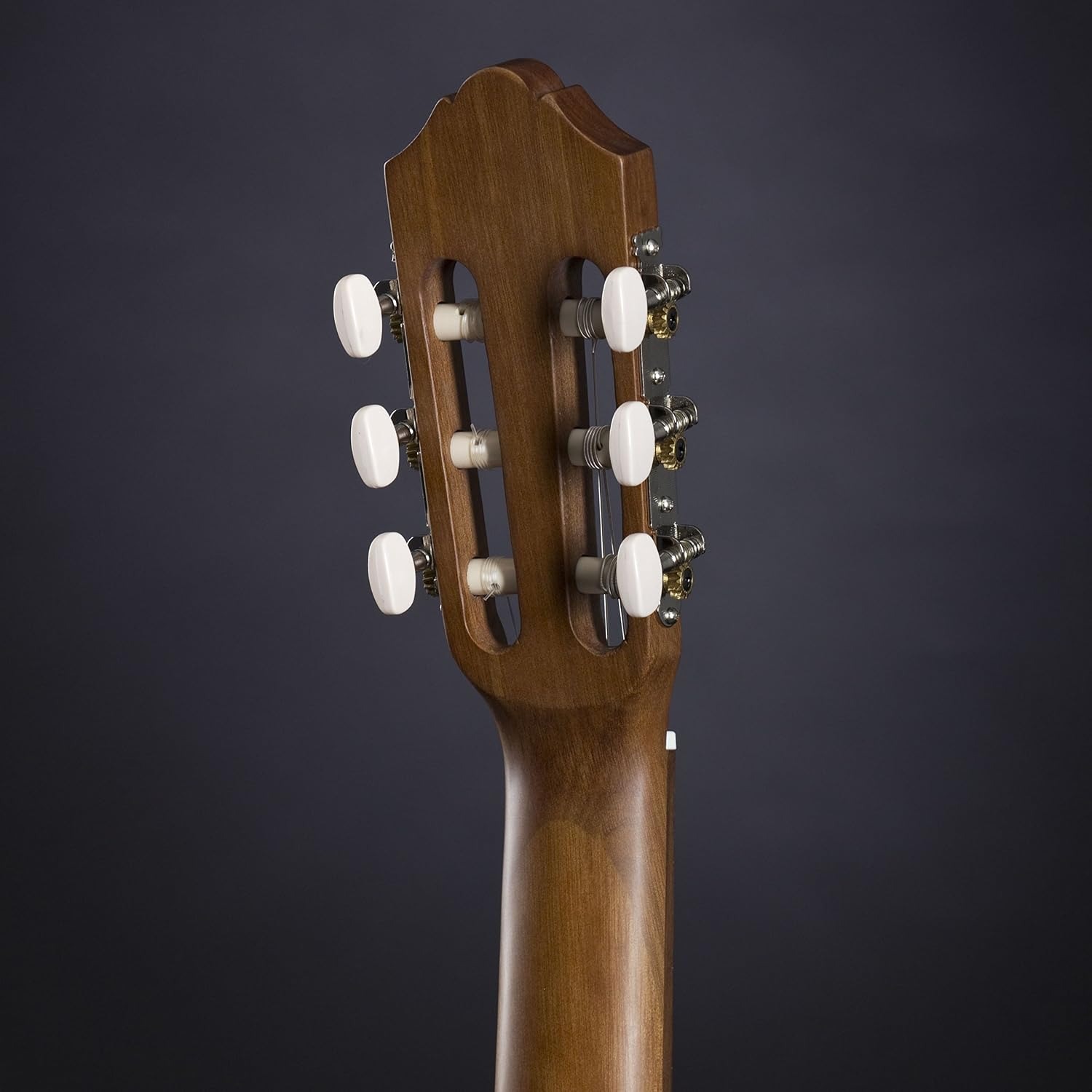
The neck and fretboard are both rosewood. Fretboards take all the wear from fingers sliding up and down, and rosewood handles that for decades. The overall material description is locally sourced tonewood, and the instrument is made in Indonesia under model number GCGS102AII.
Fit, and how to check it in thirty seconds
Sit the child down with the guitar on the right thigh, in the normal position. Then look at three things.
Their right shoulder should stay relaxed, not raised, as the forearm comes over the body. The fretting hand should be able to reach the first fret of the low string without the elbow swinging out behind them. And the whole instrument should feel balanced on the leg rather than tipping forward.
If all three check out, the size is right. If the elbow rides high and the fingers feel cramped between frets, they have outgrown it and a 3/4 size is next. Most children sit in half size territory from around five to eight, then move up. Height and arm length decide it, not age.
A note for smaller adults. This is a genuinely small guitar, and most adults will find it cramped for serious study. Some people do keep one as the best travel size classical guitar for holidays and campsites, and that is a fair use. For regular adult learning, go full size.
Setting it up for an easy first month
Two things make the biggest difference in week one.
First, tuning. Nylon strings stretch a lot when they are new, so expect to retune at the start of every session for the first week or two. A tuner is listed among the included components, which saves you buying one straight away. After the strings settle, daily tuning is enough.
Second, action. The action is how high the strings sit above the frets, and lower action means less finger pressure. This guitar has an adjustable bridge, so that height can be tweaked. If the strings feel stiff, a music shop can lower the action in a few minutes. It is a small job with a big effect on whether a beginner enjoys playing.
A guitar support or small footstool also helps. It lifts the left thigh slightly so the guitar sits at the correct angle, which makes the fretting hand position much more natural. Many teachers will recommend one in the first lesson anyway.
Looking after it
Wood responds to heat and moisture, so storage matters more than cleaning. Keep the guitar out of direct sun, away from heaters and air conditioning vents, and never leave it in a car. A case or a stand in a normal living room is ideal.
After playing, wipe the strings and body with a dry, soft cloth. Finger oils dull nylon strings faster than anything else. Skip household polishes, especially on the fretboard, since a cloth is all it needs.
Change strings once or twice a year for a student practising a few times a week, or sooner if the tone goes flat and lifeless. If the guitar is going into storage for months, slacken the strings a little to take some load off the neck. And if you live somewhere very dry, a simple case humidifier is cheap protection.
What you are and are not getting
Be clear on the specification. This is an acoustic instrument with no pickup fitted, so it is for lessons, practice and playing at home rather than plugging into an amp. Hand orientation is right. The included components listed are a tuner, so a case, strap, stand and spare strings are separate purchases if you want them.
Nothing beyond that is specified in the maker's listing, including any warranty terms. If you need a particular accessory bundled, buy it alongside rather than assuming it is in the box.
The short version
If you are buying for a child between roughly five and eight, a half size classical guitar is the sensible starting point. The 535 mm scale puts every fret within reach, the nylon strings are kind to new fingertips, and 1.3 kg is light enough to carry anywhere.
The spruce top and meranti body give it a warmer, fuller sound than most small guitars manage, and the rosewood neck and fretboard plus the adjustable bridge mean it behaves like a proper instrument rather than a novelty. Check the fit using the shoulder and elbow test, get the action set low, keep it out of the sun, and tune it often in the first fortnight.
Do that and the guitar stays out of the cupboard, which is the only measure of a first instrument that really counts.