Music Instruments
Company
Shop By Category
T&Cs
Shop Online
  • Box contents listed
  • Free tracked Australia-wide delivery over $150
  • 14-day returns

21 key kalimba | thumb piano | acacia koa kalimba

Moozica 21-Key Solid Koa Kalimba Thumb Piano

$119.99 $143.99 Save $24
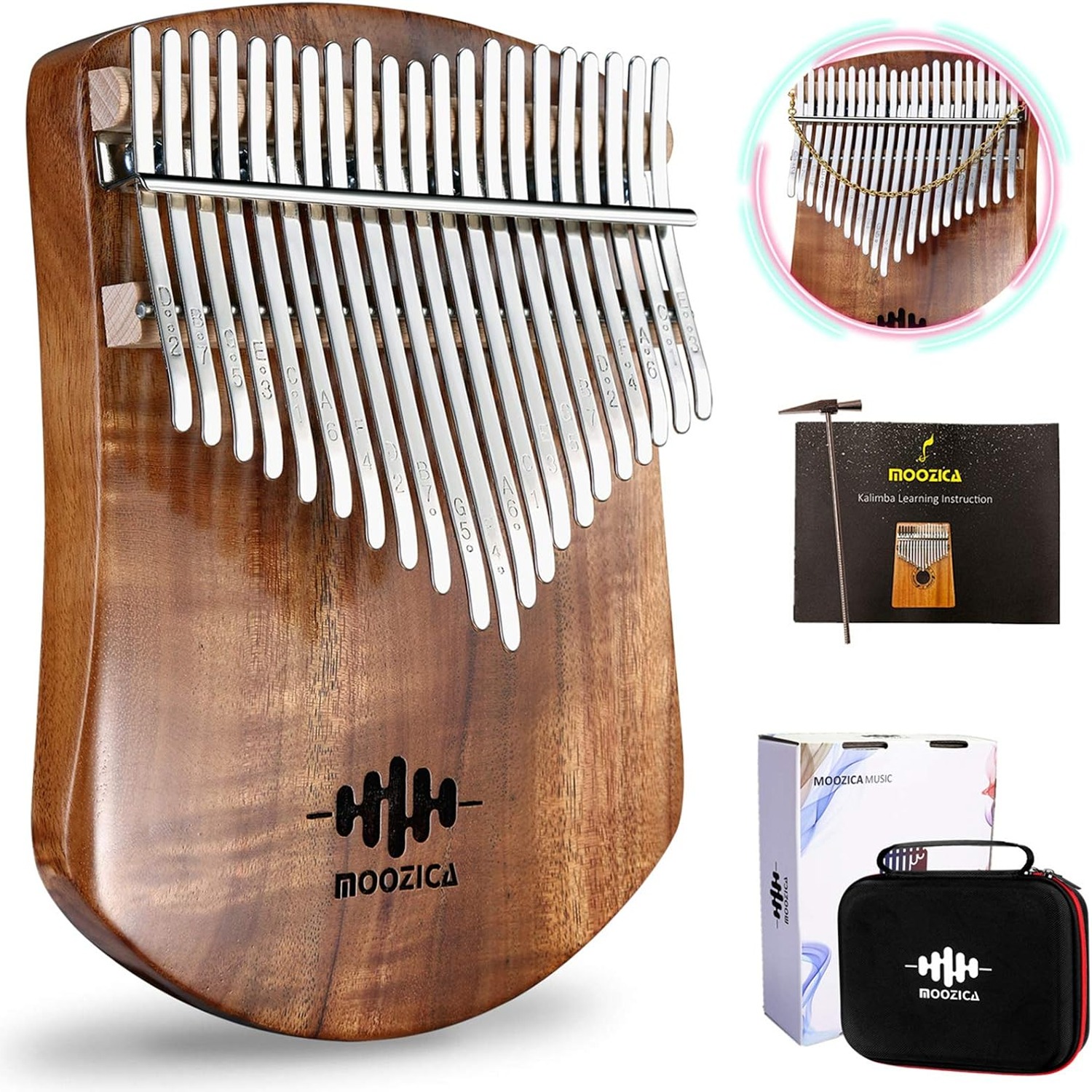
  • Solid Koa Board
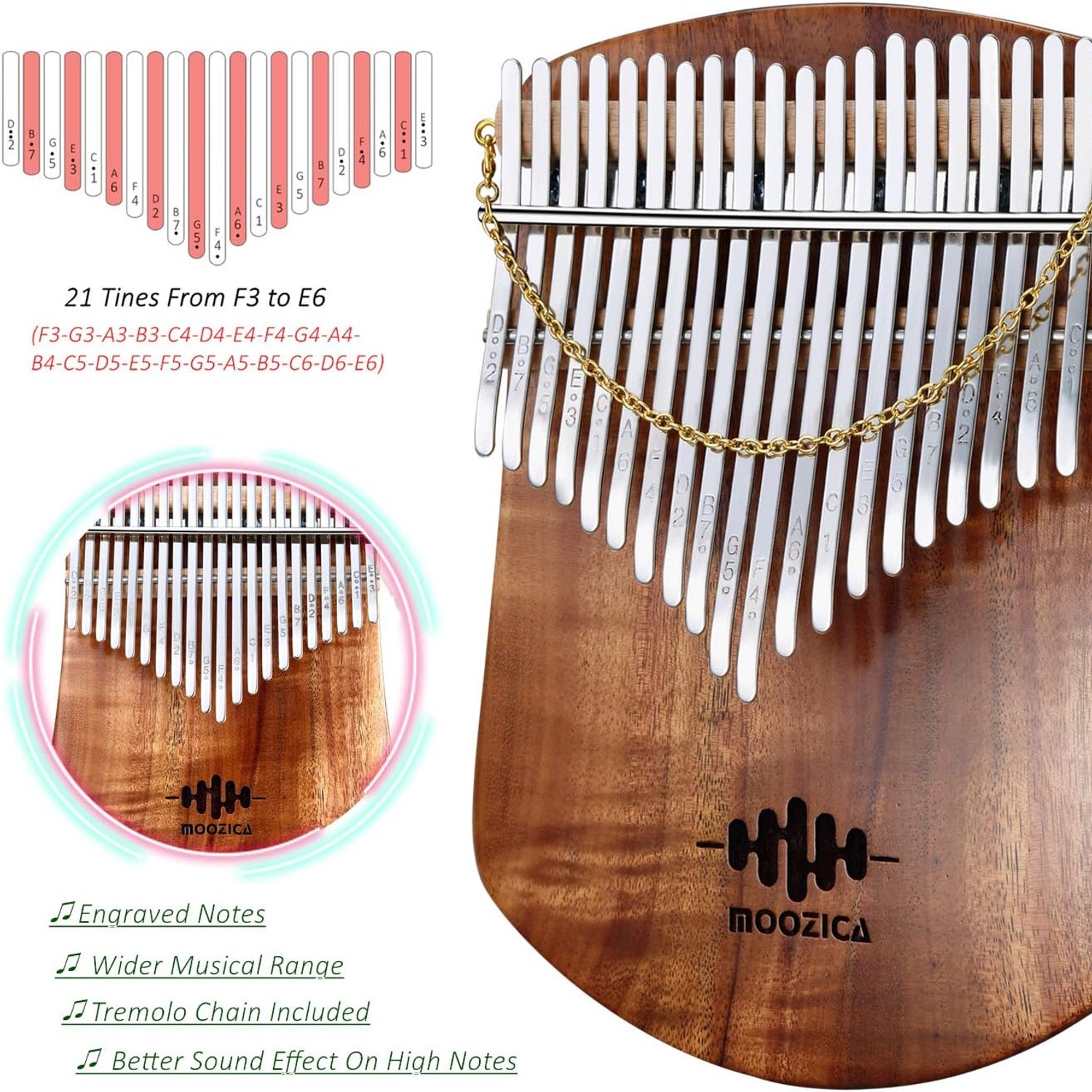
  • 21 Tuned Tines
  • Case Included
  • Polished Finish

Price: $119.99 $143.99

  • Free tracked Australia-wide delivery on orders $150+, otherwise a flat $15
  • Pay by card or PayPal, handled by the payment provider
  • 14 days to change your mind, plus your statutory rights
Product specifications
BrandMoozica
Model NameMOOZICA-K21KS
Model NumberK21KS
Part NumberK21KS02
ManufacturerMOOZICA
ColourK21KS
Body MaterialAcacia Koa Wood
MaterialWood
Finish TypePolished
Sound ProfileBrighter and purer sound
Number Of Keys21 tines
Hand OrientationAmbidextrous
Included ComponentsCase
Number Of Items1
Number Of Packs1
Unit Count1 count
Item Dimensions18.2 x 13.8 x 1.8 cm
Item Weight889 g
UPC020064011545
Weight889 g
Shipping & returns

Tracked delivery anywhere in Australia. It is free on orders of $150 or more, and a flat $15 below that.

If it is not right for you, send it back within 14 days of delivery in resaleable condition and we refund the price you paid, including standard delivery. That is a voluntary policy we offer on top of your legal rights. You cover the cost of returning it unless the item is faulty.

If it arrives faulty, damaged or not as described, we put it right at no cost to you under the Australian Consumer Law and the Competition and Consumer Act 2010, return postage included.

Shipping details · Refunds and returns

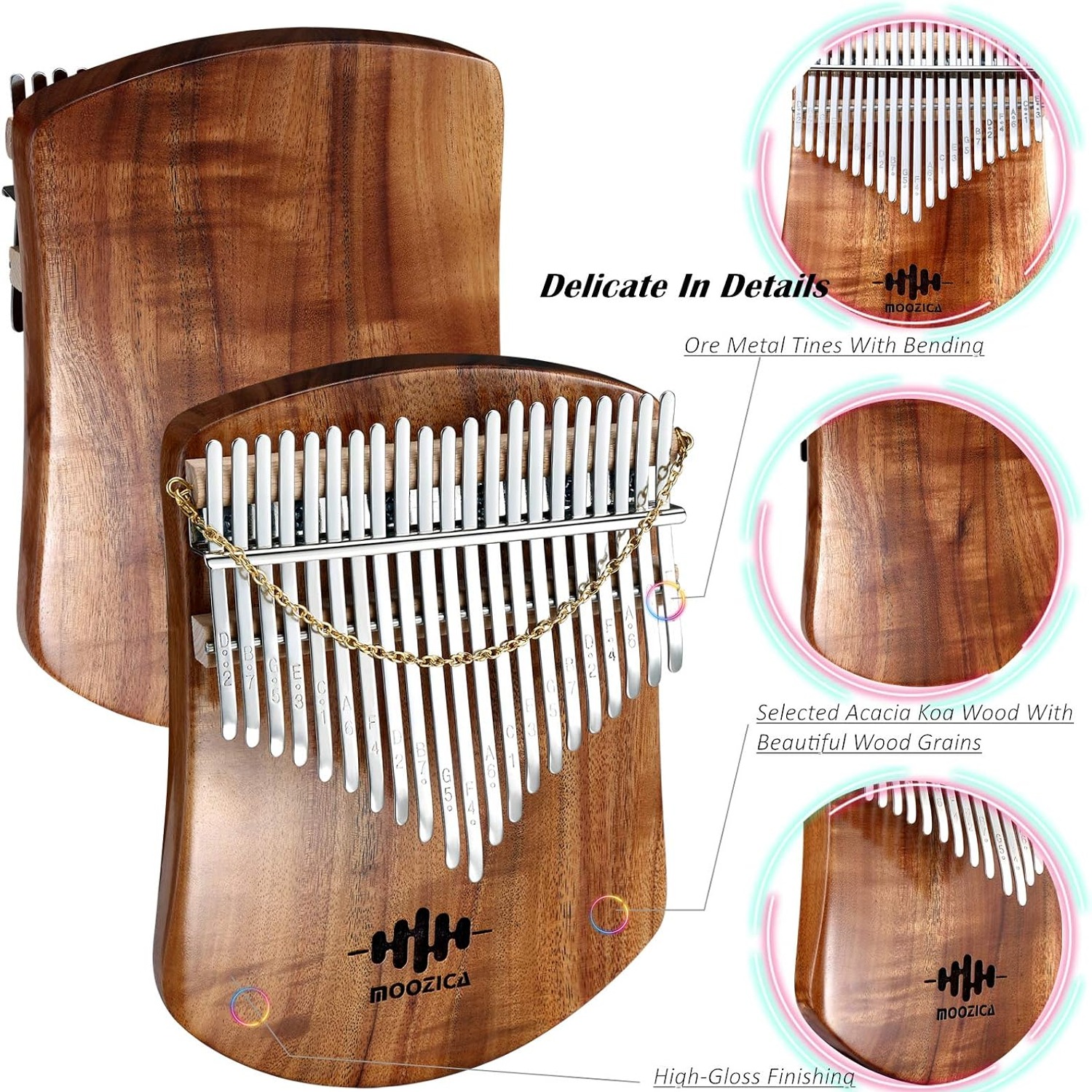
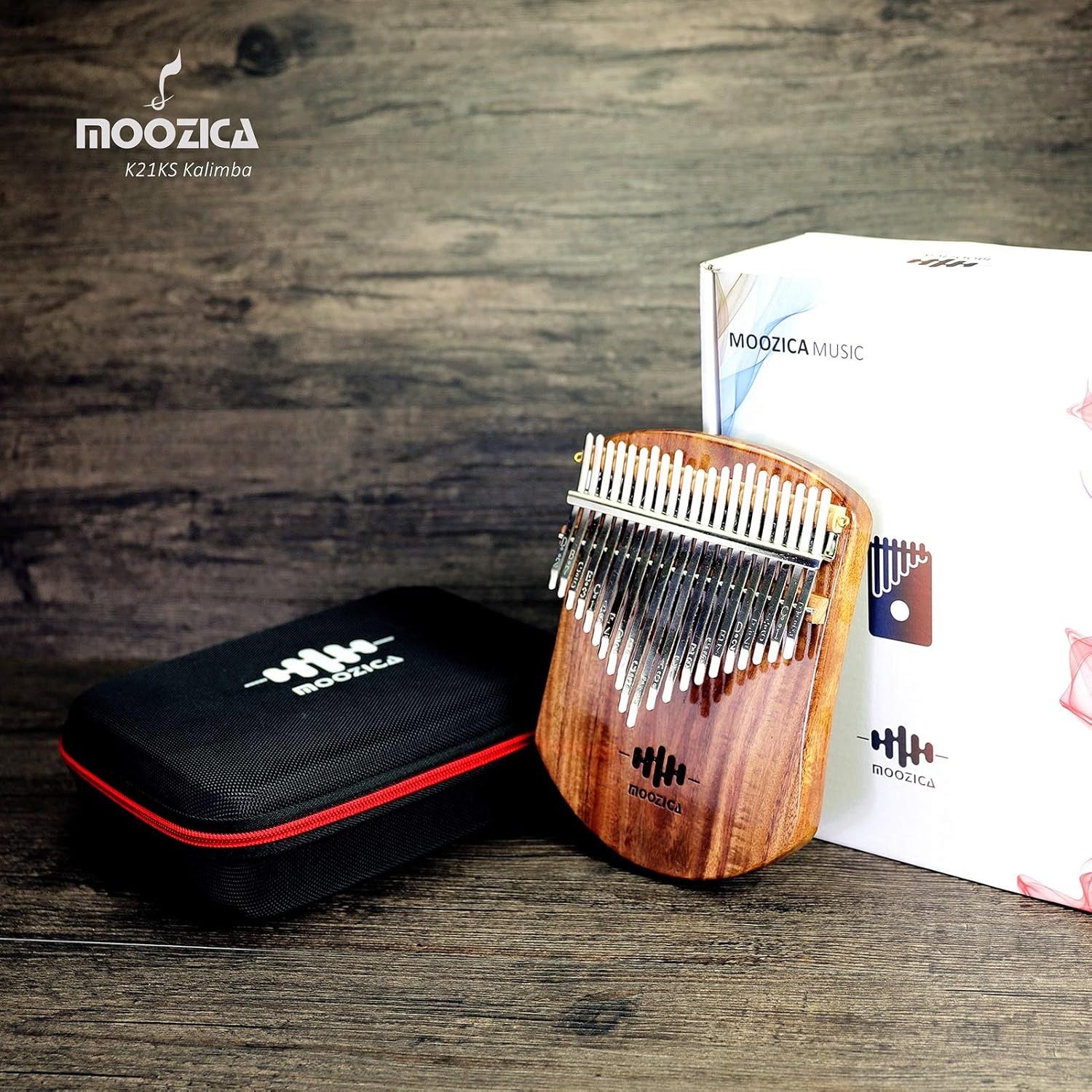
Solid Koa BoardCut from a single piece of acacia koa tonewood.
21 Tuned TinesC major range from F3 to E6 for more chords and songs.
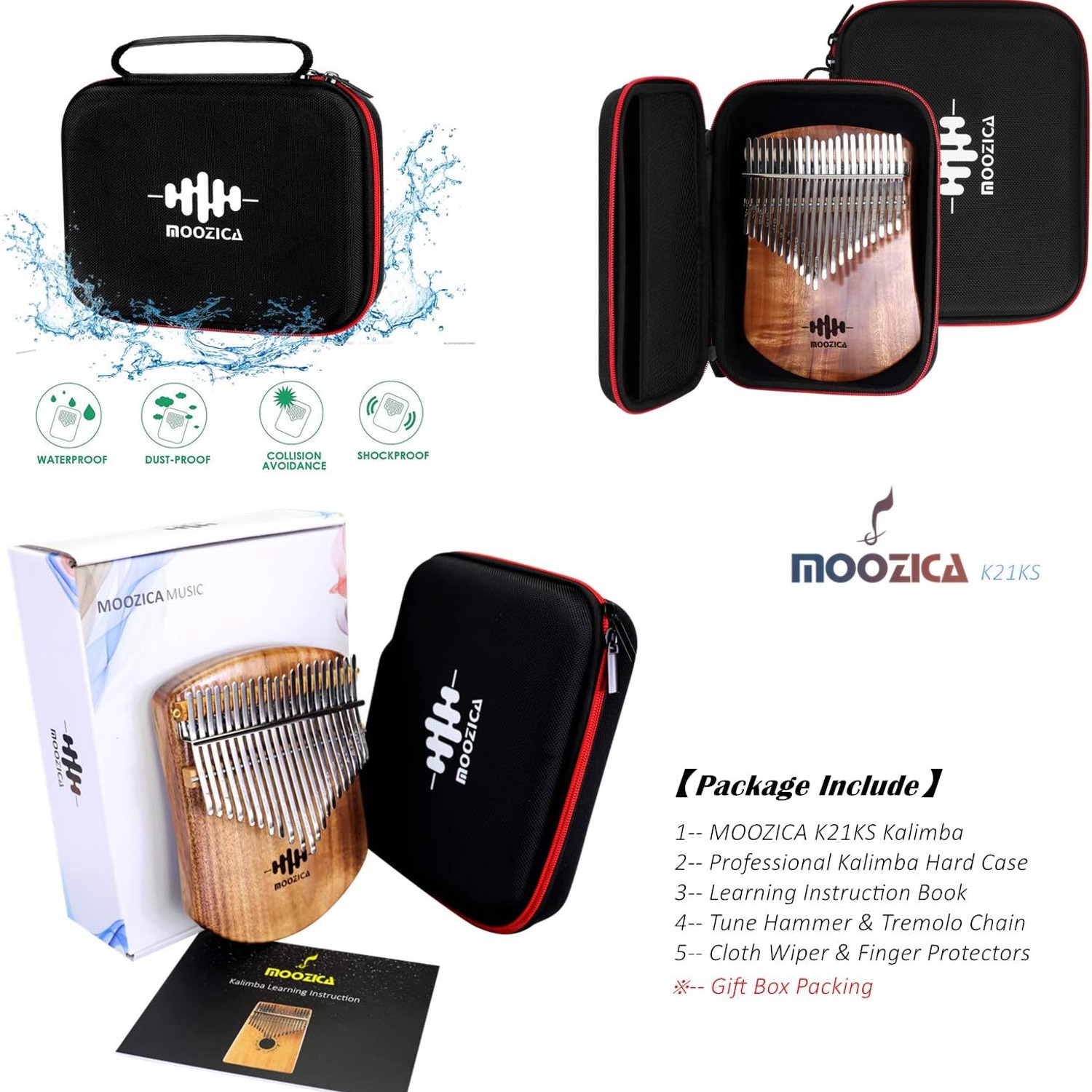
Case IncludedShips with a carrying case and learning instructions.
Polished FinishHigh-gloss finish that shows the koa grain.

A 21 key kalimba cut from a single board of acacia koa, so your first note sounds as clear as your hundredth.

Twenty-one polished tines, a solid wood board body for a bright and pure tone, and a carrying case plus learning instructions in the box.

This 21 key kalimba is built on a single solid board of acacia koa rather than a hollow resonance box, which gives it a brighter and purer voice.

Twenty-one tines are tuned in C major across F3 to E6, so you have room for melodies and chords without running out of notes.

The high-gloss polished finish shows off the koa grain and feels smooth under your thumbs through a long practice session.

A carrying case and learning instructions come in the box, so you can start playing the day it arrives.

At 889 g and 18.2 x 13.8 x 1.8 cm, it slips into a backpack and travels well.

Moozica 21-Key Solid Koa Kalimba Thumb Piano

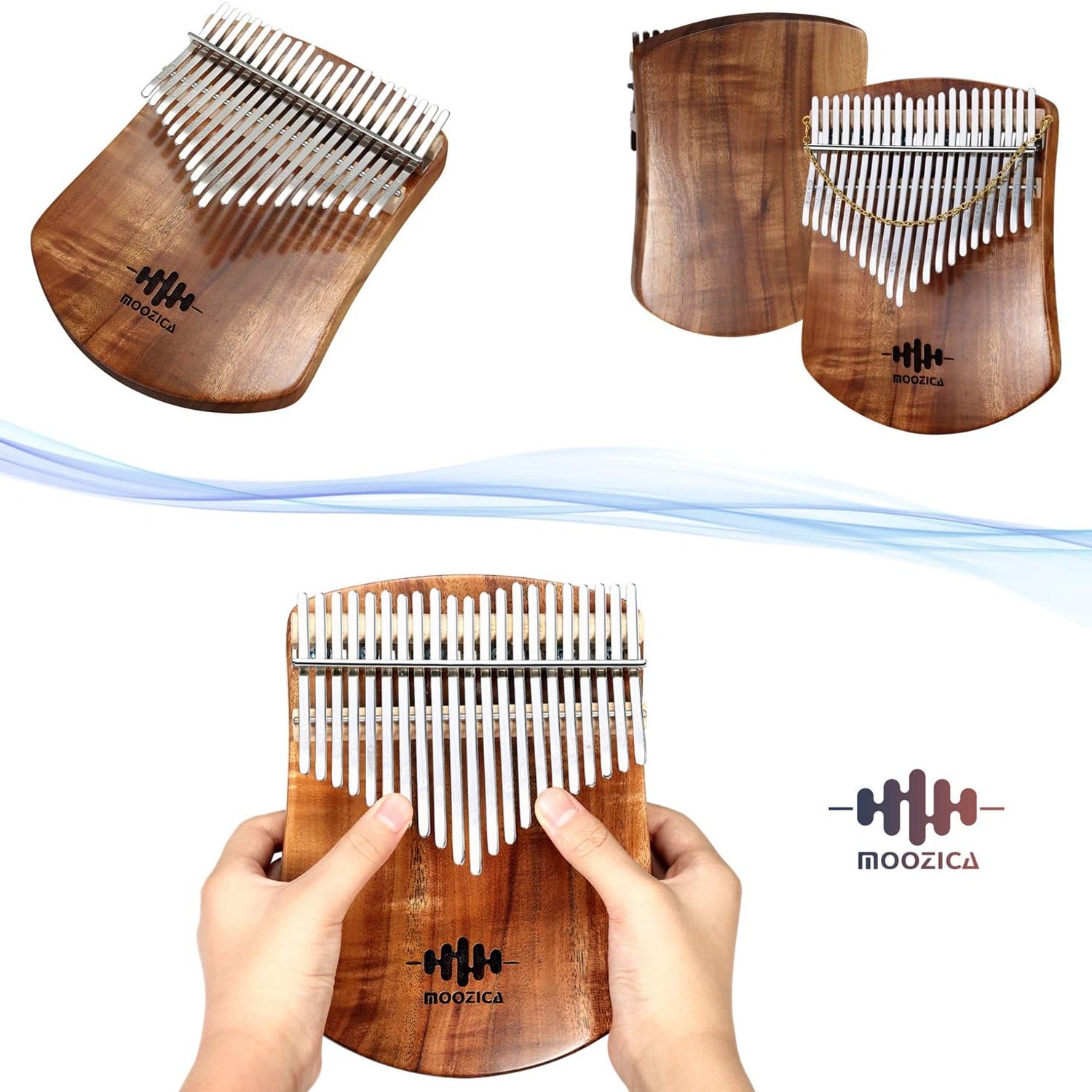
A kalimba is one of the few instruments you can pick up with no training at all and still make something that sounds good. You hold it in both hands, rest your thumbs on the metal tines, and pluck. There is no bow technique to learn, no embouchure, no barre chords. That is why so many people reach for a thumb piano when they want music in their life without a year of lessons first.

Moozica 21-Key Solid Koa Kalimba Thumb Piano

This Moozica model is built around a single solid board of acacia koa. Most budget kalimbas use a hollow box underneath the tines to push volume. A solid board works differently. The whole piece of wood vibrates as one, and the result is a brighter and purer sound, with the higher notes coming through more clearly. It is not as loud as a box kalimba, so it suits quiet rooms, recording, and late-night playing far better than busking.

Moozica 21-Key Solid Koa Kalimba Thumb Piano

Twenty-one tines is a meaningful step up from the common 17-key layout. The range runs F3 to E6 in C major, which means more room for chords, more songs you can play in their original key, and fewer awkward transpositions. If you have outgrown a smaller instrument or you simply want headroom from the start, the extra four tines earn their place.

Moozica 21-Key Solid Koa Kalimba Thumb Piano

The build is finished to a high gloss, and the koa grain is part of the appeal. Koa is a dense tonewood with visible figure, so no two boards look quite the same. The polished surface is smooth under the thumbs, which matters more than you would think when you are playing for twenty minutes straight.

Moozica 21-Key Solid Koa Kalimba Thumb Piano

In the box you get the instrument, a carrying case, and learning instructions. The case is the part people underestimate. Tines are exposed metal, and a kalimba rattling loose in a bag will drift out of tune and pick up scratches. Keeping it cased between sessions is the simplest way to protect both the tuning and the finish.

Not sure yet? That is fine.

An instrument has to suit the player, and you cannot always judge that from a photograph. If it is not right for you, send it back within 14 days of delivery in resaleable condition and we refund the price you paid, including standard delivery. That is on top of your Australian Consumer Law rights if anything arrives faulty.

If it turns up faulty, damaged or not as described, that is on us. The Australian Consumer Law and the Competition and Consumer Act 2010 covers you, and we pay the return postage. Read the full detail on our refunds and returns page, or ask us anything before you order.

Frequently Asked Questions

What is a kalimba?

A kalimba is a small handheld instrument with tuned metal tines mounted on a wooden body. You hold it in both hands and pluck the tines with your thumbnails. It is also called a thumb piano or finger piano, and it descends from the African mbira.

How many notes does this one have?

It has 21 tines, tuned in C major across a range of F3 to E6. That is four more notes than the common 17-key layout, which opens up extra chord shapes and lets you play more songs in their written key.

What is it made from?

The body is acacia koa wood, cut as a single solid board. The tines are metal. The finish is high-gloss polished, which shows the natural figure in the koa grain.

What does solid board mean compared with a resonance box?

A box kalimba is hollow underneath, which amplifies the sound and makes it louder. A solid board has no cavity, so the whole piece of wood vibrates together. The trade-off is less volume but a brighter, purer tone with better clarity in the higher notes.

Is this a good first instrument?

Yes. A thumb piano is one of the easiest instruments to make a pleasant sound on within minutes. Each tine is already in tune with the others, so there are no wrong notes to stumble into while you learn.

Do I need to read music to play it?

No. Most kalimba music is written in tablature that simply tells you which tine to pluck and when. Many players never read standard notation at all. Learning instructions are included in the box to get you started.

Is 21 keys harder to play than 17?

Not really. The extra tines sit at the outer edges, so the centre of the instrument plays the same way. Beginners often find that having the extra range means fewer songs are out of reach, which keeps practice more interesting.

How loud is it?

It is a quiet instrument by design. The solid board structure trades volume for tonal clarity, so it is well suited to a bedroom, a studio desk, or a living room. If you need to fill a large space, you would want amplification or a box-style model.

Can I record with it?

Yes, and the solid board suits recording well. A quiet, clean tone with clear high notes picks up nicely on a condenser microphone placed a short distance in front. Many people choose this type specifically because it lacks the boomy low end of a box kalimba.

What size is it?

It measures 18.2 cm long, 13.8 cm wide and 1.8 cm thick, and weighs 889 g. That makes it comfortable to hold in two hands and small enough to fit in a daypack or large handbag.

Does it come with a case?

Yes, a carrying case is included. Using it between sessions protects the exposed tines from knocks and helps the instrument hold its tuning. This is one of the main reasons people look for a kalimba with case rather than the bare instrument.

What else is in the box?

The instrument, the carrying case, and learning instructions. Accessory contents beyond those listed components are not listed by the maker, so check the packaging on arrival.

How do I tune it?

Tuning is done by tapping a tine forward to lower its pitch or back to raise it, using a small tuning hammer and a chromatic tuner or tuner app. Work in very small taps and recheck as you go. Most owners only need to adjust it occasionally.

How often will it need tuning?

Far less often than a guitar. A kalimba can hold tune for weeks or months if it is stored properly. Big swings in temperature or humidity are the usual cause of drift, so a stable room helps.

Does it stay in tune in humid weather?

Wood responds to humidity, so very damp or very dry conditions can shift things slightly over time. Keeping it in the case and away from bathrooms, radiators and sunny windowsills is the best protection. A quick check with a tuner app sorts out any small drift.

Is it suitable for children?

It suits older children and teens who can handle an instrument carefully. The tines are metal and the finish scratches if treated roughly. For a younger child, adult supervision at first is sensible while they learn how firmly to pluck.

Do I need long fingernails to play?

Not strictly, but a little nail helps produce a crisper attack. Many players use the edge of a short nail, and some use small stick-on thumb picks. Playing with the pad of the thumb gives a softer, warmer sound that some people prefer.

Will it hurt my thumbs?

Not with normal playing. Beginners sometimes press too hard in the first few sessions and get a little tenderness. Easing off the pressure fixes it, since volume comes from a clean release rather than force.

Can left-handed players use it?

Yes. The hand orientation is ambidextrous, and the tine layout alternates from the centre outwards, so both thumbs share the work equally. Left-handed players use it exactly the same way as right-handed players.

What music can I play on it?

Plenty. Folk tunes, film themes, pop melodies and simple classical pieces are all common. With 21 tines you also have enough range for arpeggios and layered chords, which is where a 21 key thumb piano pulls ahead of smaller models.

Is it the same as an mbira?

They are related. The mbira is a traditional African instrument and the kalimba is a modern, standardised descendant of it, usually tuned to a Western scale. People often use the terms loosely, so an mbira thumb piano and a kalimba are frequently listed side by side.

How do I clean it?

Wipe the wood and tines with a dry, soft cloth after each session to lift finger oils. Avoid household cleaners, solvents, and water. If the tines look dull, a dry microfibre cloth is usually enough.

How should I store it?

In the supplied case, in a room with stable temperature and humidity. Do not leave it in a car, near a heater, or on a sunny windowsill. Those conditions are the main cause of wood damage and tuning drift.

Does it need any extra accessories?

Not to start with. A tuner app on your phone is useful, and some people add thumb picks or a small stand later. Nothing extra is required to make music on day one.

Does it make a good gift?

It is one of the easier musical gifts to give well. It arrives tuned and ready, the case makes it feel finished, and the recipient can produce a nice sound within minutes rather than needing weeks of lessons. That combination makes a kalimba gift set popular for birthdays and holidays.

Is it quiet enough for an apartment?

Yes. The solid board design is noticeably softer than a box kalimba, which is exactly why some players pick it. It is comfortable to practise in a shared home or late in the evening without carrying through walls.

Can I travel with it?

Easily. At 889 g and under 2 cm thick, it packs flat in a bag with the case on. A travel kalimba of this size handles car trips and flights fine, though you should keep it in hand luggage rather than checked bags where possible.

What is koa wood and why does it matter?

Koa is a dense tonewood valued for its figured grain and warm response. In a solid board kalimba the wood is the whole resonating structure, so the choice of timber shapes the tone more directly than it would on an instrument with a separate soundbox.

How does delivery and returns work?

We deliver anywhere in Australia with a tracked courier. Most orders arrive within 3 to 7 working days of the order date, a little longer to regional and remote addresses. Delivery is free on orders of $150 or more and a flat $15 under that. You get a tracking link by email as soon as the parcel is on its way. If you change your mind, you have 14 days from delivery to return it in resaleable condition for a full refund. If it arrives faulty or damaged, the Australian Consumer Law covers you and we pay the return postage.

What if it is not right for me?

Get in touch and tell us what is not working, whether that is the tone, the size, or a fault with the instrument. If it is unused and in its original packaging, we will arrange a return or an exchange under our returns policy. If it arrived damaged or faulty, send a photo and we will replace it rather than asking you to live with it.

Choosing a 21 Key Kalimba, A Practical Buyer's Guide

6 min read Music Instruments

Why people pick up a kalimba in the first place

Most instruments make you earn the first good sound. A violin squeaks for weeks. A trumpet takes a month before anything resembling a note comes out. A guitar leaves your fingertips sore and your chords buzzing.

A kalimba is different. You hold it, you pluck a tine, and it sings. Every tine is already tuned in relation to the others, so there is no such thing as a wrong note. That is a small thing technically and a large thing psychologically. People who thought they were not musical discover in ten minutes that they are.

That is the gap this instrument fills. It is for the person who wants music in their hands without signing up for a year of lessons, and for the experienced player who wants something quiet and portable to write with.

What a solid board actually changes

Walk through a list of kalimbas and you will see two broad types. One has a hollow box under the tines. The other is a single flat piece of wood.

The hollow box works like the body of an acoustic guitar. Air moves inside it and pushes the sound out louder. If you want to be heard across a room or play alongside other instruments, that extra volume helps.

A solid board has no cavity. The whole piece of wood vibrates together as one unit. You lose some volume, and there is no getting around that. What you gain is clarity. The notes come out brighter and purer, and the high register in particular speaks more clearly instead of getting swallowed by low-end rumble.

This model is the solid board type, cut from a single piece of acacia koa. If you are choosing between the two, think about where you will actually play. A bedroom, a desk, a sofa, a microphone: the solid board wins. A park, a classroom, a jam with friends: a box model will serve you better.

Why 21 tines instead of 17

The most common kalimba sold is a 17-key. It is a fine starting point, and plenty of people are happy with one for years.

But 17 notes runs out faster than you expect. You find a song you want to play, you work out the melody, and then one note sits outside the range. The usual fix is transposing the whole piece, which is fiddly and often makes it sit awkwardly for the thumbs.

Twenty-one tines covers F3 to E6 in C major. Those four extra notes sit at the outer edges, so the familiar middle of the instrument plays exactly as it would on a smaller model. What changes is headroom. More songs fit without compromise, chord voicings have more room to spread, and arpeggios have somewhere to go.

For a beginner this matters less on day one and a lot by month three. Buying the wider range up front saves you buying twice.

Who this suits

People starting from zero. You do not need to read music. Kalimba tablature just tells you which tine to hit. Learning instructions come in the box, and there is a deep well of free tabs online for anything you might want to play.

Players in shared housing. The quiet voice of a solid board instrument is a genuine advantage here. You can play at eleven at night without a neighbour noticing.

Songwriters and home recordists. A clean tone with strong high notes sits beautifully in a mix. It records with very little fuss, usually just a microphone a short distance in front.

Gift buyers. This is a rare thing, a musical present that the recipient can actually use the same day. No lessons required, no extras to buy, and the carrying case makes it feel like a complete item rather than a bare instrument in a bag.

How to choose between models

A few things separate one kalimba from the next, and price is only loosely connected to them.

The wood. Koa is a dense tonewood with visible figure. On a solid board instrument the timber is the entire resonating structure, so what it is made of has a direct effect on how it sounds. Cheaper instruments often use laminates or unspecified hardwood.

The tines. Look at how evenly they are spaced, how smooth the ends are, and whether the finish is clean. Rough tine ends are the fastest way to a sore thumb.

The finish. A high-gloss polish is not just about looks. A smooth surface is more comfortable over a long session, and it seals the wood against moisture.

What comes with it. A case is the accessory that matters most. Tines are exposed metal, and a kalimba loose in a bag will get knocked out of tune and picked up scratches. Learning material in the box is useful too, especially for a complete beginner.

This model covers all four. Single board koa, polished finish, 21 tines, case and instructions included.

Getting started in your first week

Unbox it, check the tuning against a free tuner app, and get used to the shape in your hands. Rest it on your palms with your thumbs sitting naturally over the centre tines.

Pluck with the edge of your thumbnail rather than the pad if you want a crisper attack. A short nail is plenty. If you prefer not to grow nails, the pad gives a softer and warmer sound that suits slow pieces well.

The most common beginner mistake is pressing too hard. Volume on a kalimba comes from a clean release, not from force. If your thumbs feel tender after ten minutes, you are pushing rather than plucking. Ease off and the tone usually improves at the same time.

Start with a simple scale up and down to learn the layout. The tines alternate outward from the centre, which feels strange for a day and then becomes automatic. After that, pick one short tune and stick with it until it flows.

Looking after it

Wood and metal both respond to their environment, so a little care goes a long way.

Wipe the tines and body with a dry soft cloth after you play. Finger oils are the main thing that dulls a polished finish over time.

Keep it in the case between sessions. This is the single most useful habit, because it protects the tines from knocks and slows down tuning drift.

Avoid extremes. Direct sun, a hot car, a spot above a radiator, or a damp bathroom are all bad news for a wooden instrument. A normal living room is fine.

If a tine does slip out of pitch, a small tuning hammer and a tuner app will sort it. Tap the tine forward to lower the note, back to raise it, and work in tiny increments. It takes a few minutes and you will probably only do it a handful of times a year.

The short version

If you want an instrument you can play on the day it arrives, a thumb piano is about as close as it gets. This one is a solid koa board rather than a hollow box, so it is quieter but clearer, with high notes that really ring.

Twenty-one tines across F3 to E6 gives you more songs without transposing and more room for chords. The case and learning instructions mean nothing extra to buy. At 889 g it travels easily.

Choose the box style if you need volume for a room full of people. Choose this one if you want tone, clarity, and something you can play quietly in a flat at midnight.

Browse the shop

Ready to start playing?

Add the 21 key kalimba to your cart and it arrives tuned, cased, and ready for your first song.

Ask us a question

Page summary

The Moozica K21KS is a 21-key kalimba, also called a thumb piano, built from a single solid board of acacia koa wood rather than a hollow resonance box. The 21 tines are tuned in C major spanning F3 to E6, giving a wider range for chords and melodies than common 17-key models. The solid board construction produces a brighter, purer tone with clearer high notes, though it is quieter than box-style kalimbas. The finish is high-gloss polished. It measures 18.2 x 13.8 x 1.8 cm and weighs 889 g. A carrying case and learning instructions are included. Colour, specific material finish colour, and country of origin are not listed by the maker, and no warranty term is stated.