Music Instruments
Company
Shop By Category
T&Cs
Shop Online
  • Box contents listed
  • Free tracked Australia-wide delivery over $150
  • 14-day returns

37 key portable keyboard | mini keyboard for beginners | battery powered keyboard

Yamaha PSS-F30 37-Key Portable Keyboard

$177.99 $213.99 Save $36
  • Light To Carry
  • Two Power Options
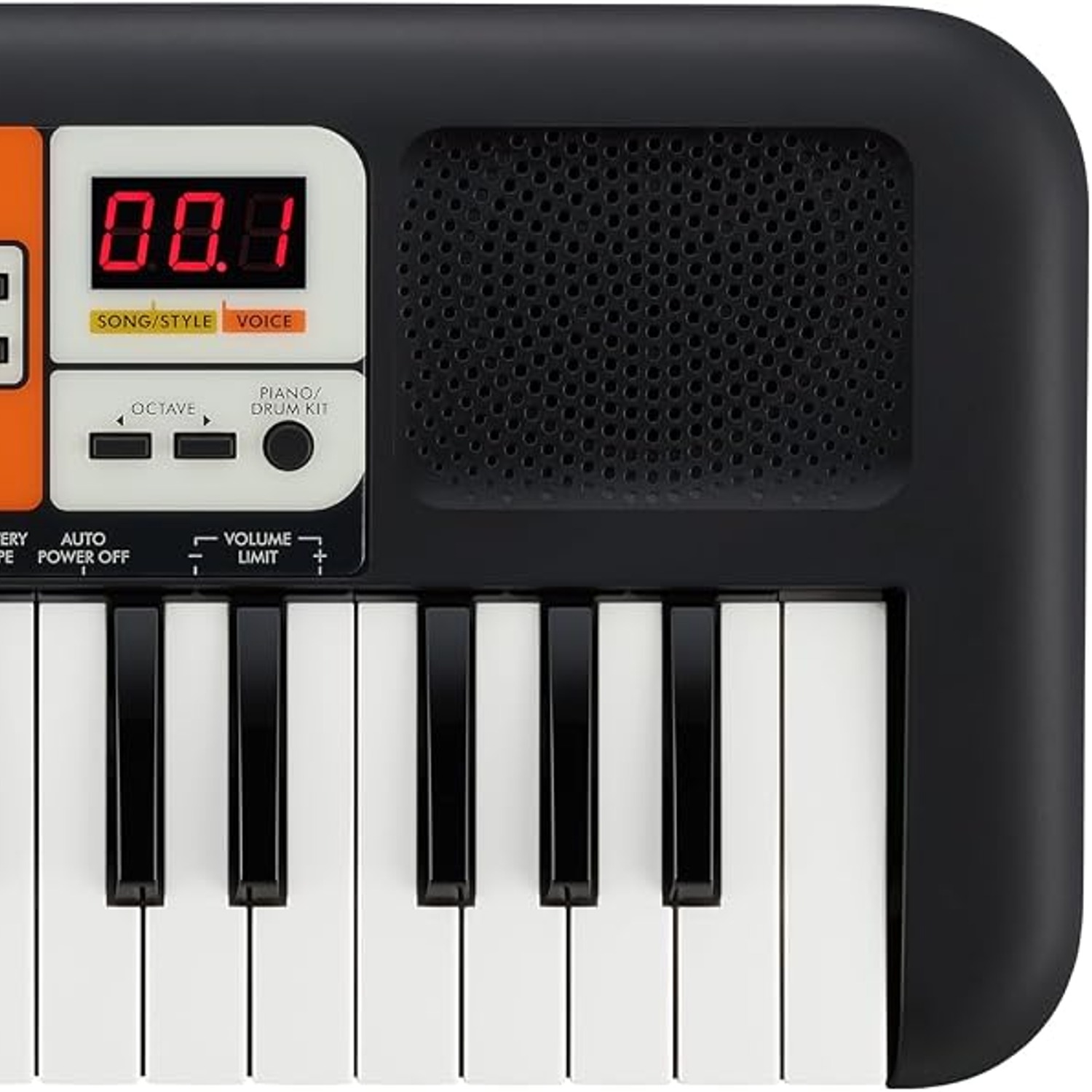
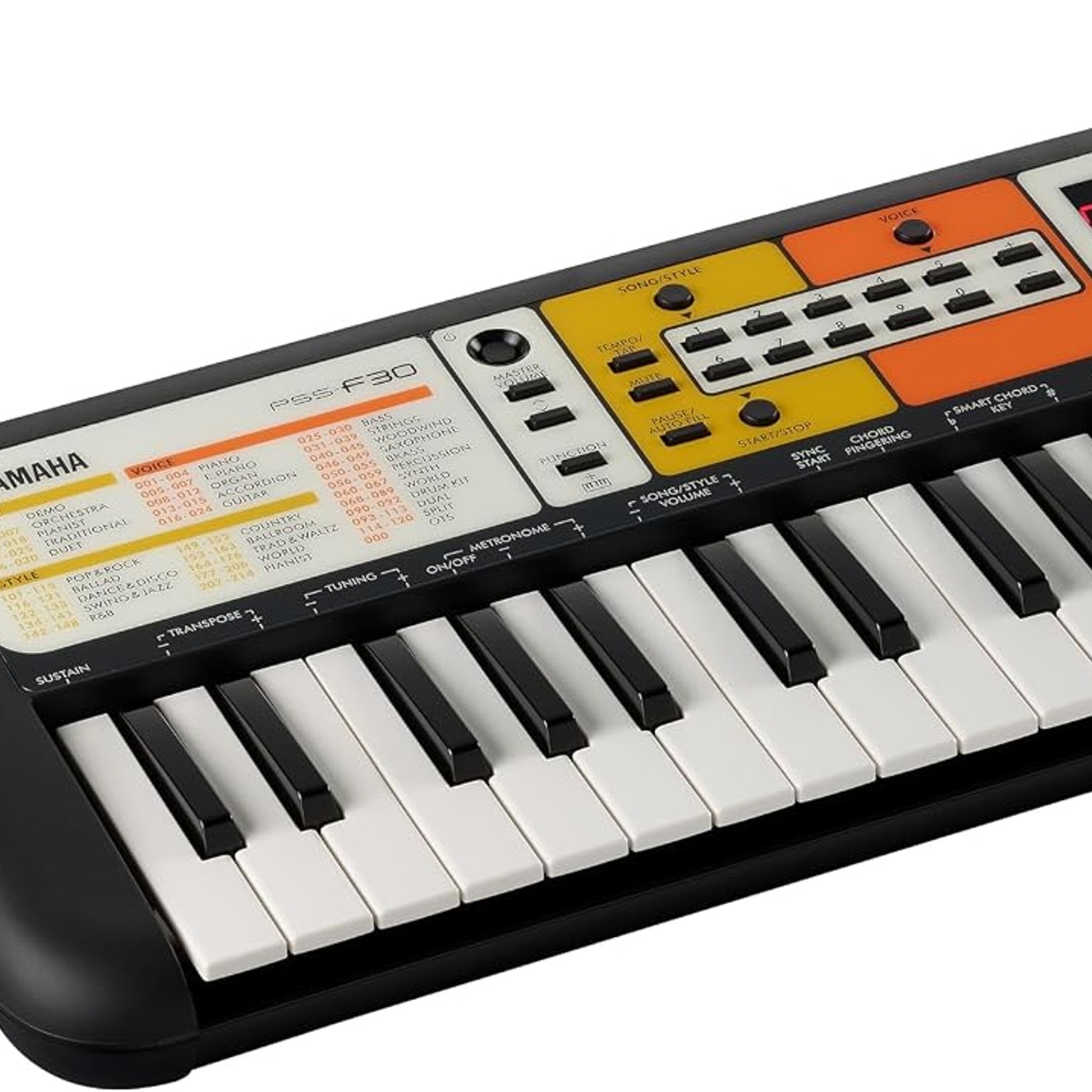
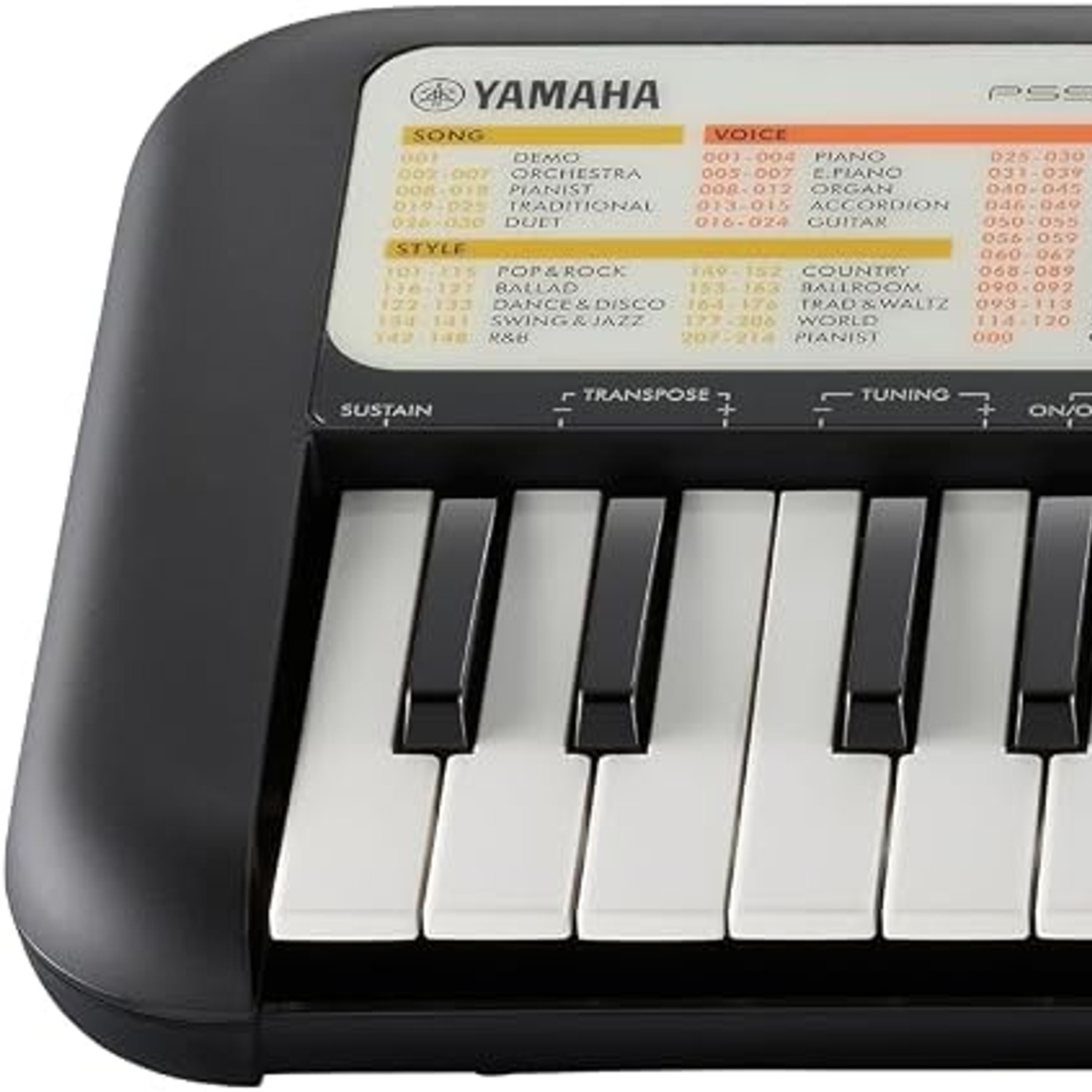
  • 120 Voices, 114 Styles
  • Quiet Practice

Price: $177.99 $213.99

  • Free tracked Australia-wide delivery on orders $150+, otherwise a flat $15
  • Pay by card or PayPal, handled by the payment provider
  • 14 days to change your mind, plus your statutory rights
Product specifications
Model NamePSS-F30
BrandYAMAHA
Number Of Keys37 (mini keys)
Skill LevelBeginner
Instrument TypeElectronic keyboard
Voices120
Styles114
Power Source4 x AA batteries or USB bus power
Connector TypeUSB Type A
Headphone Jack3.5 mm
Included ComponentsUSB cable, 3.5 mm audio cable
Item Weight1.2 kg
Item Dimensions (D x W x H)20 x 50 x 5.4 cm
Packaged Dimensions54.6 x 23.1 x 9.7 cm
ColourMulticolour
StyleModern
Age Range DescriptionAdult
Model NumberVAC4300
Manufacturer Part NumberPSSF30
Country Of OriginChina
Weight1.2 kg
Shipping & returns

Tracked delivery anywhere in Australia. It is free on orders of $150 or more, and a flat $15 below that.

If it is not right for you, send it back within 14 days of delivery in resaleable condition and we refund the price you paid, including standard delivery. That is a voluntary policy we offer on top of your legal rights. You cover the cost of returning it unless the item is faulty.

If it arrives faulty, damaged or not as described, we put it right at no cost to you under the Australian Consumer Law and the Competition and Consumer Act 2010, return postage included.

Shipping details · Refunds and returns

Light To CarryAt 1.2 kg it fits in a backpack or on a car seat.
Two Power OptionsRuns on four AA batteries or USB bus power.
120 Voices, 114 StylesPlenty of sounds and backing styles to explore.
Quiet PracticeA 3.5 mm jack lets you play without disturbing anyone.

A 37 key portable keyboard light enough to carry anywhere and simple enough to play on day one.

Mini keys, 120 voices, 114 styles, a smart chord function, a built-in metronome and sustain, plus the choice of four AA batteries or USB power.

A 37 key portable keyboard with mini keys sized for small hands and casual players.

It carries 120 voices and 114 accompaniment styles, so one instrument covers a lot of ground.

The smart chord function lets you trigger full backing chords with a single finger.

Power it from four AA batteries or over USB, which means it works on a table, a train or a picnic rug.

A built-in metronome, sustain and a 3.5 mm headphone jack cover the basics a beginner actually needs.

Yamaha PSS-F30 37-Key Portable Keyboard

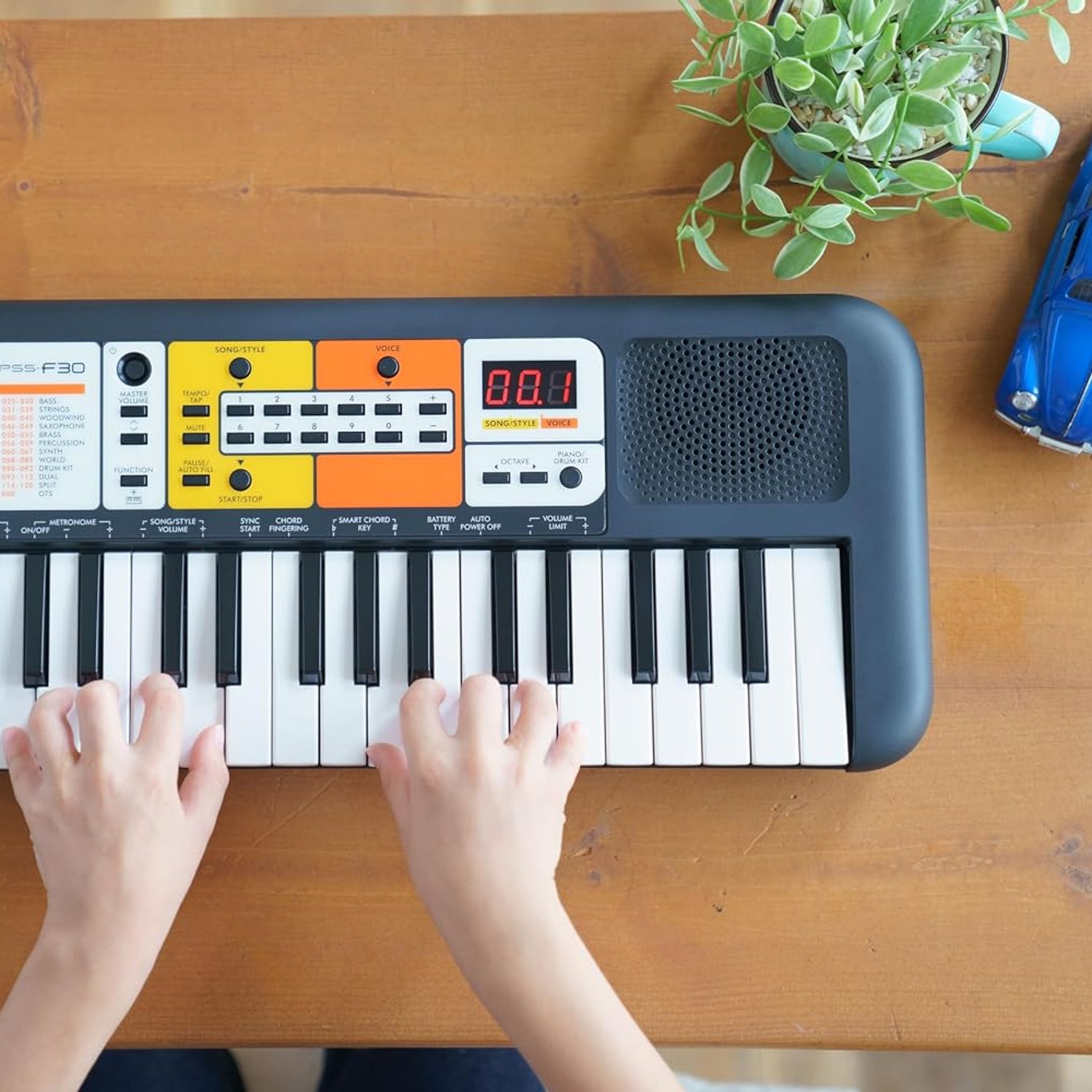
The Yamaha PSS-F30 is built around a simple idea. Most people who want to learn an instrument never start because the instrument is too big, too heavy, too loud or too complicated. This 37 key portable keyboard removes all four of those excuses. It weighs 1.2 kg, measures roughly 50 cm across the playing surface, runs on batteries and switches on into a sound you can actually use straight away.

Yamaha PSS-F30 37-Key Portable Keyboard

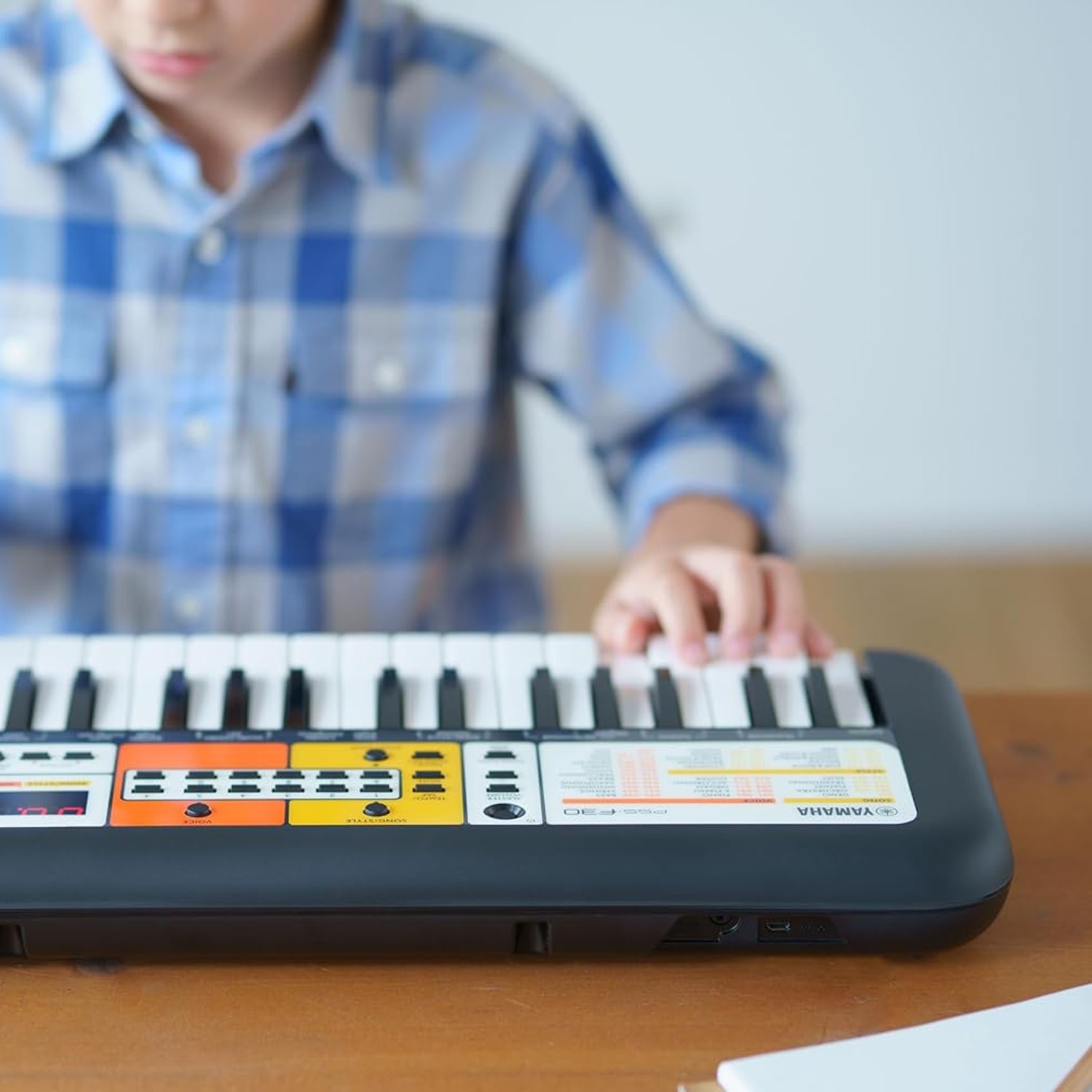
The keys are mini keys, which means they are narrower than full-size piano keys. That is a deliberate choice. Smaller hands reach more notes without stretching, and a 37 note span still gives you three full octaves, enough for melodies, simple two-hand playing and most beginner song books. If you have been put off by the reach of a full keyboard, this one feels a lot friendlier under the fingers.

Yamaha PSS-F30 37-Key Portable Keyboard

Inside there are 120 voices and 114 accompaniment styles. Voices are the sounds, from pianos and organs to strings, brass and a pile of odd ones that children tend to find first. Styles are backing patterns in different genres, so you can play a melody over a rhythm section instead of in silence. The smart chord function means one finger on a key produces a correct, full-sounding chord in the backing, which is a genuine shortcut while you are still learning chord shapes.

Yamaha PSS-F30 37-Key Portable Keyboard

Power is flexible. Drop in four AA batteries and the keyboard is completely untethered, so it can live on a kitchen bench, go in the car or sit in a tent. Plug in the supplied USB cable instead and you can run it from a USB power adapter or a USB battery pack, which is handy for longer sessions at a desk. A 3.5 mm headphone jack keeps practice private, and the included 3.5 mm audio cable lets you feed music in from a phone and play along.

Yamaha PSS-F30 37-Key Portable Keyboard

A metronome and sustain are built in, along with preset songs chosen from tunes most people already know. Yamaha publishes a downloadable song book to match. None of this is complicated. You can hand the keyboard to a child and they will be making noise in thirty seconds, and you can hand it to an adult who has always meant to learn and they will have a working practice setup for the price of a night out.

Not sure yet? That is fine.

An instrument has to suit the player, and you cannot always judge that from a photograph. If it is not right for you, send it back within 14 days of delivery in resaleable condition and we refund the price you paid, including standard delivery. That is on top of your Australian Consumer Law rights if anything arrives faulty.

If it turns up faulty, damaged or not as described, that is on us. The Australian Consumer Law and the Competition and Consumer Act 2010 covers you, and we pay the return postage. Read the full detail on our refunds and returns page, or ask us anything before you order.

Frequently Asked Questions

What exactly is the Yamaha PSS-F30?

It is a 37 key portable keyboard made by Yamaha, model PSS-F30. It uses mini keys, carries 120 voices and 114 accompaniment styles, and runs on either four AA batteries or USB power. It is designed as a first instrument rather than a stage keyboard.

How many keys does it have and how many octaves is that?

It has 37 keys, which works out to three full octaves. That is enough range for most beginner song books, nursery tunes, pop melodies and simple two-hand arrangements. Pieces written for a full 88-key piano will need some adapting.

What are mini keys and do they feel strange?

Mini keys are narrower than standard piano keys, so your hand covers more notes without stretching. Most people adjust within a few sessions. They are one of the main reasons this is often picked as the best mini keys keyboard for children and for adults with smaller hands.

Is this suitable for a complete beginner?

Yes, that is the point of it. The smart chord function, preset songs and built-in metronome give you a working practice setup with no extra gear. Many buyers looking for the best beginner music keyboard choose a compact model like this precisely because there is less to learn before you can play something.

How heavy is it?

It weighs 1.2 kg. That is light enough for a child to carry and light enough to slip into a backpack without thinking about it, which is why it is a common pick as the best lightweight keyboard for travel.

What size is it?

The item measures roughly 20 cm deep, 50 cm wide and 5.4 cm high. The packaged dimensions are 54.6 x 23.1 x 9.7 cm. It will sit comfortably on a dining table, a desk or across your knees.

How is it powered?

Two ways. You can use four AA batteries for cord-free playing, or run it over USB bus power from a USB power adapter or a USB battery pack. This dual option is what makes it a practical battery powered keyboard for places without a socket.

Are batteries included?

The listed included components are a USB cable and a 3.5 mm audio cable. Batteries are not listed as included, so plan on buying four AA cells if you want to use it away from a power source.

What is the smart chord function?

It lets you play a full accompaniment chord by pressing a single key. The keyboard works out the rest of the chord for you, so you can play along with a style before you have learned proper chord shapes. It is one of the fastest routes into sounding like a whole band.

What are the 114 styles for?

Styles are backing patterns in different musical genres, complete with rhythm and accompaniment. You pick a style, play a melody or a chord over the top, and the keyboard fills in the rest. It makes practice far more fun than playing single notes in silence.

What kinds of voices does it include?

There are 120 voices in total, covering the usual families like pianos, organs, strings, brass and percussion, plus a range of novelty sounds. The exact voice list is not detailed in the maker's listing, so check the Yamaha documentation for the full breakdown.

Can I practise without disturbing other people?

Yes. There is a 3.5 mm headphone jack, so you can plug in headphones and play silently. That matters in flats, shared houses and late at night, and it is a big reason people rate it among the best keyboard with headphone jack options at this size.

Can I play along with music from my phone?

A 3.5 mm audio cable is included, which is intended for connecting an external audio source. Exact routing behaviour is not specified in this record, so check the Yamaha manual for how the audio input works on your unit.

Does it have touch-sensitive keys?

Touch sensitivity is not listed by the maker. If velocity response is essential for you, confirm it against the Yamaha specification sheet before ordering.

Is there a sustain function?

Yes, sustain is built in, along with a metronome. These are the two features a beginner reaches for first, and having both on board means you do not need to buy anything extra to start practising properly.

What are the preset songs?

The keyboard includes a set of preset songs drawn from well-known tunes. Yamaha also offers a downloadable song book so you can play along rather than just listen. The exact track list is not detailed here.

Is it a good keyboard for a child?

It suits children well. The mini keys fit small hands, the weight is manageable, battery power means it can be used anywhere in the house, and the sounds and styles keep interest up. It is a frequent choice as the best first keyboard for kids.

Is it only for children?

No. The listed age range description is adult, and plenty of grown-ups buy it as a travel instrument, a songwriting sketchpad or a low-commitment way to find out whether they enjoy playing. The best travel keyboard is usually the one you will actually pack.

Can I use it for music lessons?

It works for early lessons, scales, chords and simple pieces. For formal piano exams you will eventually want 61 or 88 full-size keys with weighted action. Many teachers are happy for a student to start here and upgrade later.

Does it connect to a computer or tablet?

The connector type is USB Type A and the connectivity technology is listed as USB. The USB connection is used for bus power. MIDI-over-USB behaviour is not listed by the maker, so check the Yamaha manual if you plan to use it with music software.

Can I plug it into an amplifier or speaker?

There is a 3.5 mm jack on board. Using it with external speakers depends on the jack configuration described in the Yamaha manual, which this record does not specify in full. Headphone use is the clearly stated function.

How loud is it on its own speakers?

Speaker output is not listed by the maker. In practice, a compact keyboard of this type is built for personal practice in a room rather than filling a hall, and headphones are there when you need more volume in your ears.

Where is it made?

The country of origin is listed as China. The brand is Yamaha and the model number is VAC4300, with manufacturer part number PSSF30.

How do I clean it?

Wipe the keys and body with a soft, dry or barely damp cloth. Avoid household sprays and solvents, and keep drinks away from the keybed. A dust cover or the box it arrived in works well for storage.

Should I take the batteries out when I am not using it?

Yes, if it will sit unused for several weeks. Batteries left in any device for months can leak and damage the contacts. Taking them out is a thirty second job that protects the keyboard.

Does it come with a stand?

A stand is not listed among the included components. The included items are a USB cable and a 3.5 mm audio cable. The keyboard is small and light enough to use on a table, a desk or your lap.

Does it make a good gift?

It is a strong gift for a curious child, a teenager, or an adult who has talked about learning for years. It arrives ready to play, needs no setup knowledge and is one of the most giftable options when people search for the best keyboard gift for a child.

How long does delivery take?

We deliver anywhere in Australia with a tracked courier. Most orders arrive within 3 to 7 working days of the order date, a little longer to regional and remote addresses. Delivery is free on orders of $150 or more and a flat $15 under that. You get a tracking link by email as soon as the parcel is on its way.

What is your returns policy?

You can return the keyboard within the 14 day change-of-mind window counted from delivery, provided it is unused and in its original packaging. Contact us first and we will send instructions so the parcel comes back to the right place.

What if it turns out not to be right for me?

Tell us what went wrong. If the keys feel too small, if you needed more range, or if the item arrived damaged, get in touch within the returns window and we will arrange a return, an exchange or a refund. We would rather sort it out than have an instrument sitting in a cupboard unplayed.

Choosing a 37 Key Portable Keyboard, A Practical Buyer's Guide

6 min read Music Instruments

The real reason most people never learn an instrument

It is almost never talent. It is logistics. A piano takes up a wall. A full-size digital keyboard needs a stand, a power point, a bench and a corner of a room nobody else wants. By the time you have set all that up, the enthusiasm that made you want to play in the first place has quietly packed up and left.

A 37 key portable keyboard flips that around. It lives on the kitchen table or in a backpack. It runs on batteries. You can pick it up during an ad break, play for four minutes, and put it down again. That sounds trivial, but short, frequent practice beats rare long sessions every single time. The instrument that is within arm's reach is the one that gets played.

What 37 keys actually gives you

Thirty-seven keys is three octaves. That is the range of a decent recorder-and-then-some, and it covers the vast majority of beginner material. Nursery tunes, folk melodies, pop hooks, simple hymns, early classical pieces, most of it sits comfortably inside three octaves.

What you give up is the extremes. Deep bass notes and the very top of the piano range are not there. For advanced classical repertoire or two-handed arrangements written for a full piano, you will eventually feel the limit. That is fine. Almost nobody needs 88 keys in their first year, and people who do need them generally already know it.

The keys on the PSS-F30 are mini keys, narrower than standard piano keys. If you have small hands, or you are buying for a child, this is a plus rather than a compromise. Reaching a fifth or an octave stops being a stretch. Adults with large hands take a session or two to adjust, then stop noticing. Anyone planning to move to a full-size instrument later should know that the spacing will feel different when they do, but the musical knowledge transfers perfectly. Notes, chords, rhythm and reading do not change size.

How the sounds and styles work

There are two separate things going on inside this keyboard and it helps to understand both.

Voices are the sounds the keys make. There are 120 of them. Pick a grand piano, play, and it sounds like a piano. Pick a brass section, play the same notes, and it sounds like brass. Beginners tend to flick through all 120 in the first ten minutes, settle on four or five favourites, and use those forever. That is normal and healthy.

Styles are backing tracks that respond to you. There are 114. Choose a style, and the keyboard produces a rhythm and accompaniment in that genre. Play a melody over the top and suddenly you are not practising alone in a quiet room, you are playing with a band that never gets bored and never rushes.

The bridge between the two is the smart chord function. Normally, driving a backing style means knowing chord shapes, which takes weeks. Smart chord lets one finger on one key trigger the whole chord. A child can press a key and hear a full, correct harmony. That early sense of "this sounds like real music" is what keeps people coming back, and it is the single feature that makes this one of the best keyboard for learning chords picks at the entry level.

Power, and why two options matter

The PSS-F30 takes four AA batteries or USB bus power. People skim past that line, but it changes how the instrument gets used.

On batteries, there is no cable at all. It goes in the car, out to the garden, into a caravan, onto a hotel bed. Children can carry it to their own room without an adult hunting for an extension lead. That freedom is a large part of why a good battery powered keyboard gets played far more often than a mains-only one.

Over USB, you can run it from a wall adapter or from a USB power bank. A power bank is the quiet trick here. It gives you battery freedom without feeding AA cells into the thing every few weeks.

Both options are included in the design, and a USB cable comes in the box along with a 3.5 mm audio cable.

Who this keyboard actually suits

It suits a child who has shown interest in music and whose parents are not ready to commit to a piano. It suits a teenager who wants to write songs on something they can shove in a bag. It suits an adult who has said "I always wanted to learn" for fifteen years and wants to find out whether they will stick with it. It suits anyone who travels and misses having keys under their fingers.

It is less suited to a student preparing for graded piano exams, a performer who needs weighted action, or anyone who already plays well and wants an expressive main instrument. If that is you, look at 61 and 88 key models instead. There is no shame in being honest about it, and a mismatch is the most common reason an instrument ends up unused.

Practising without annoying anyone

The 3.5 mm headphone jack deserves more credit than it usually gets. Learning an instrument involves repeating the same four bars until they stop sounding wrong. That is hard on housemates, neighbours and younger siblings. Headphones make the whole thing private, so you can practise at eleven at night in a flat with thin walls and nobody is any the wiser.

It also helps the player. With headphones on, you hear detail you miss through small speakers, which makes timing and evenness easier to notice and fix. If you are comparing models and one has a headphone jack and one does not, take the one that does.

Getting the best from the first month

Start with the metronome, even though it is annoying. Rhythm is the thing beginners quietly skip and later regret. Set it slow, play a scale, and let it be boring for a week.

Use the preset songs as targets. There is a downloadable song book from Yamaha that matches them, so you can read along rather than guess. Learning a tune you already know is far more motivating than learning an exercise written to teach a technique.

Then pick one style and one voice and stay with them for a few days. Flicking through 120 sounds is fun on day one and a distraction on day four. Depth beats novelty once the novelty wears off.

Looking after it

This is simple gear and it asks very little. Wipe the keys with a soft, dry cloth. Keep drinks off the table it sits on, because liquid in a keybed is the one failure that is genuinely hard to fix. Do not leave it in direct sun on a window sill or in a hot car all summer.

If it is going to sit unused for a month or more, take the AA batteries out. Leaky cells ruin contacts, and the fix is more trouble than the thirty seconds of prevention. Store it flat, ideally in the box it came in or under a cloth, so dust does not settle between the keys.

The short version

The Yamaha PSS-F30 is a 1.2 kg, 37 key portable keyboard with 120 voices, 114 styles, smart chord, a metronome, sustain and a headphone jack, running on AA batteries or USB. It is a first instrument, not a last one, and it is good at exactly that job.

If you want something a beginner will pick up often because it is always within reach, this is a sensible buy. If you need full-size weighted keys for exams or performance, spend more and get those instead. Choose by who is playing and where, and the answer usually makes itself obvious.

Browse the shop

Not sure if 37 keys is enough?

Tell us who will be playing and what they want to learn, and we will say honestly whether this keyboard fits or whether you need something bigger.

Ask us a question

Page summary

The Yamaha PSS-F30 is a 37-key portable electronic keyboard with mini keys, aimed at beginners. It includes 120 voices, 114 accompaniment styles, a smart chord function that plays full chords from one finger, preset songs, a metronome and sustain. Power comes from four AA batteries or USB bus power, and a USB cable plus a 3.5 mm audio cable are included. There is a 3.5 mm headphone jack for silent practice. The unit weighs 1.2 kg, with item dimensions of 20 x 50 x 5.4 cm and packaged dimensions of 54.6 x 23.1 x 9.7 cm. Colour is listed as multicolour, model number VAC4300, made in China. Touch sensitivity and speaker output are not listed by the maker.