Music Instruments
Company
Shop By Category
T&Cs
Shop Online
  • Box contents listed
  • Free tracked Australia-wide delivery over $150
  • 14-day returns

61 key beginner keyboard | lighted key keyboard piano | learn to play keyboard

Diodonica 61-Key Lighted Beginner Keyboard Piano

$199.99 $239.99 Save $40
  • Light-Up Key Guides
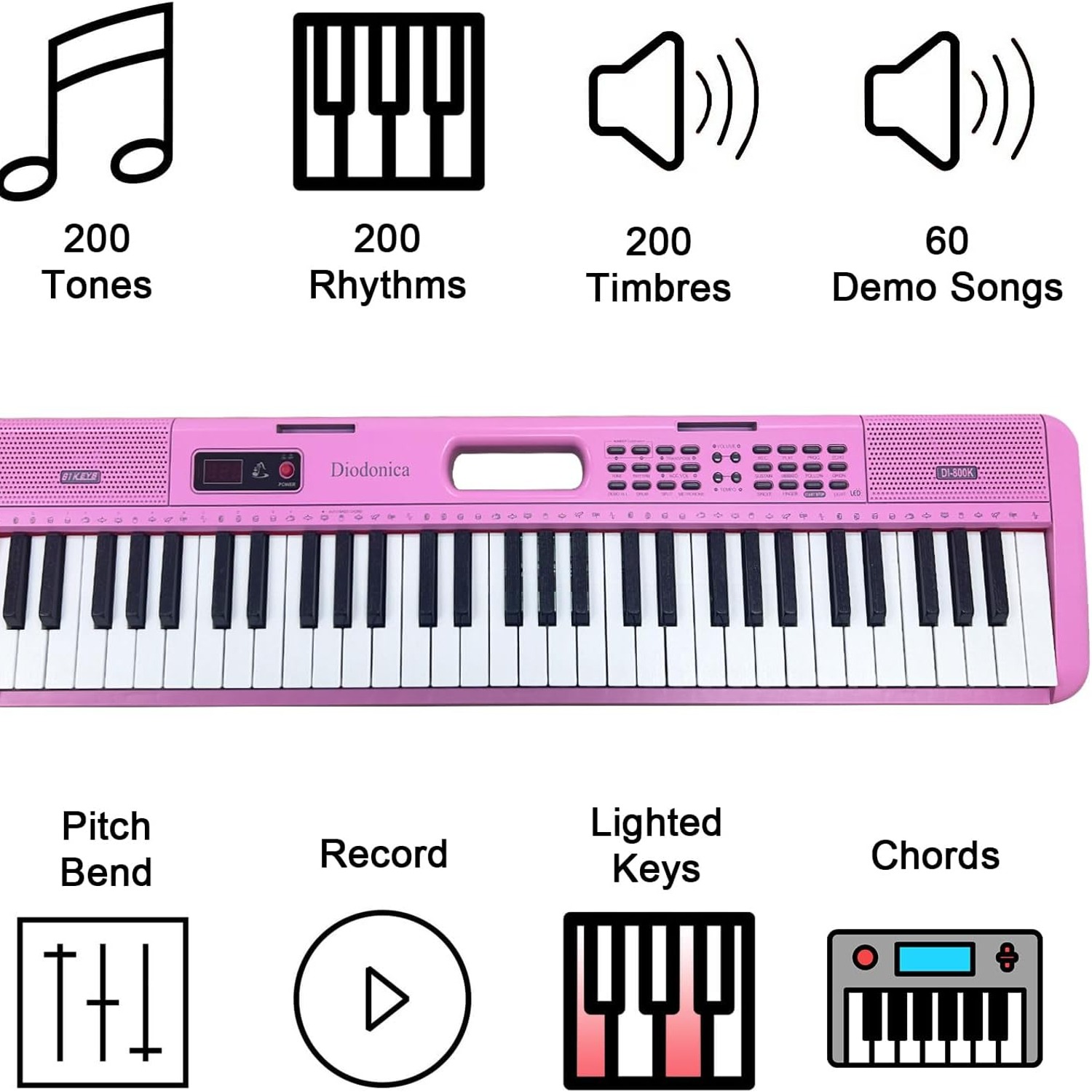
  • 200 Tones, 200 Rhythms
  • Plug Or Battery
  • Accessories Included

Price: $199.99 $239.99

  • Free tracked Australia-wide delivery on orders $150+, otherwise a flat $15
  • Pay by card or PayPal, handled by the payment provider
  • 14 days to change your mind, plus your statutory rights
Product specifications
Number Of Keys61
Skill LevelBeginner
Special FeatureLighted Keys
Connector Type3.5mm Jack, MIDI
Connectivity TechnologyAuxiliary
Headphone Jack3.5mm Jack
Instrument TypeElectronic keyboard
Item Dimensions25.4 x 86.4 x 7.6 cm
Item Weight3.18 kg
ColourPink
StyleContemporary
Age RangeAdult
BrandDiodonica
Model NameDI-800K-PK
Model NumberDI-800K
ManufacturerDiodonica
Country Of OriginChina
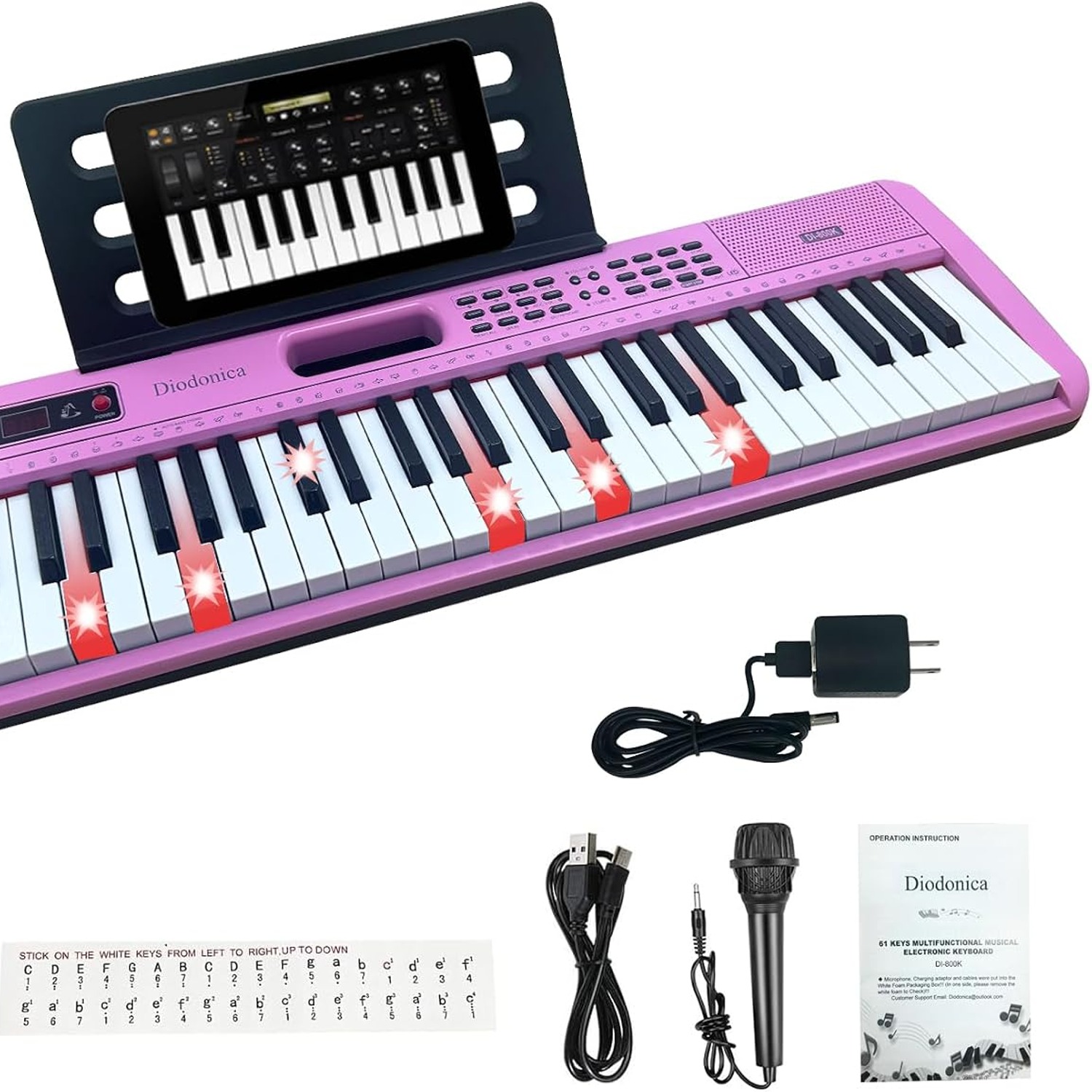
Included ComponentsSheet music stand, mic, key stickers, charging plug, AUX audio cable, manual, 3.5mm jack cable, MIDI cable
Weight3.18 kg
Shipping & returns

Tracked delivery anywhere in Australia. It is free on orders of $150 or more, and a flat $15 below that.

If it is not right for you, send it back within 14 days of delivery in resaleable condition and we refund the price you paid, including standard delivery. That is a voluntary policy we offer on top of your legal rights. You cover the cost of returning it unless the item is faulty.

If it arrives faulty, damaged or not as described, we put it right at no cost to you under the Australian Consumer Law and the Competition and Consumer Act 2010, return postage included.

Shipping details · Refunds and returns

Light-Up Key GuidesThe keys illuminate to show you which note to press next.
200 Tones, 200 RhythmsSwap voices and backing beats to keep practice interesting.
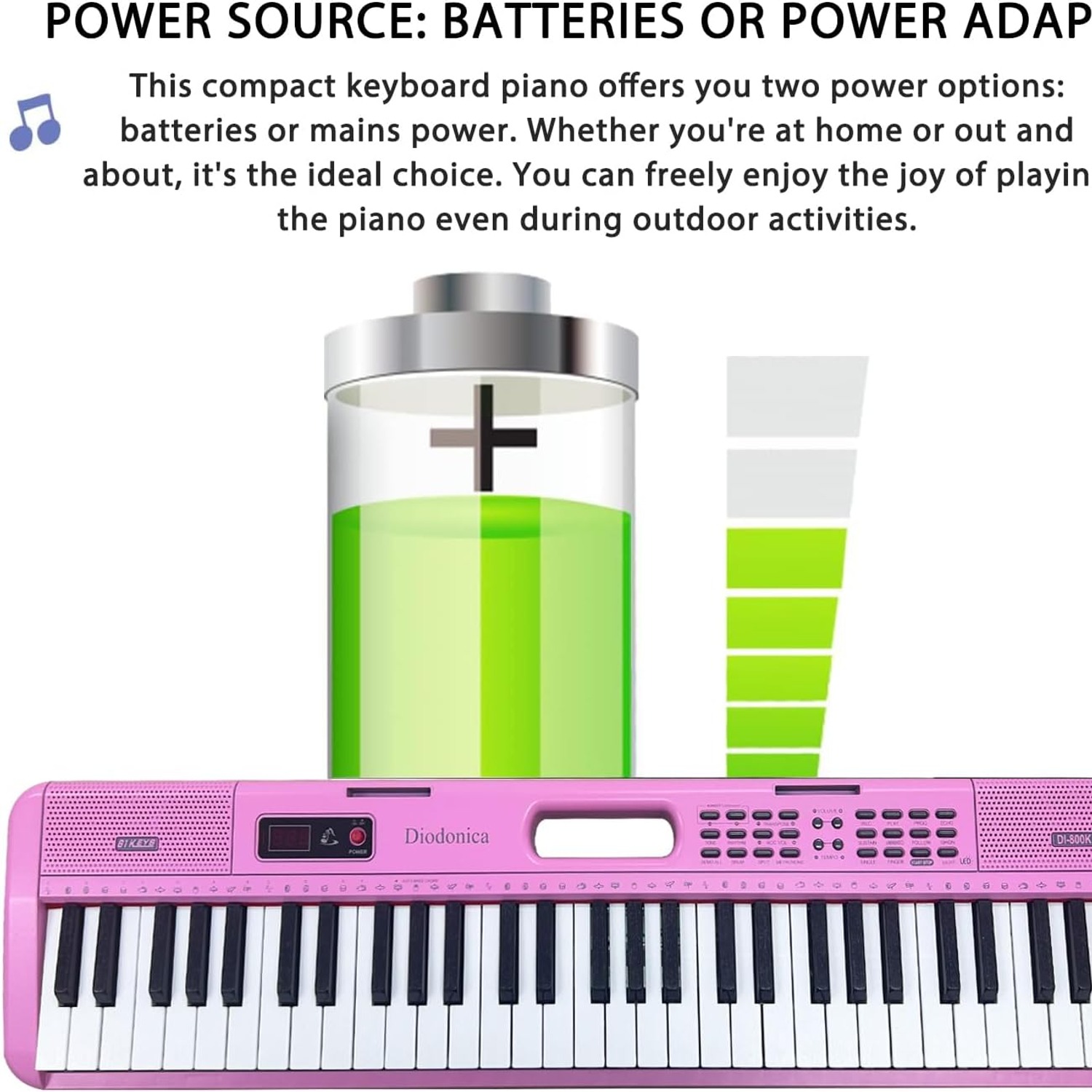
Plug Or BatteryRuns from the mains adapter or 4 x AA batteries for play anywhere.
Accessories IncludedMusic stand, mic, key stickers, AUX and MIDI cables all in the box.

Sit down, switch it on, and let a 61 key beginner keyboard show you exactly which note comes next.

Lighted keys, 200 tones, 200 rhythms and 60 demo songs come packed with a music stand, mic, key stickers and cables, so the first practice session starts the day it arrives.

A full-size 61 key beginner keyboard built for people starting from zero, with lighted keys that point out the next note instead of leaving you to guess.

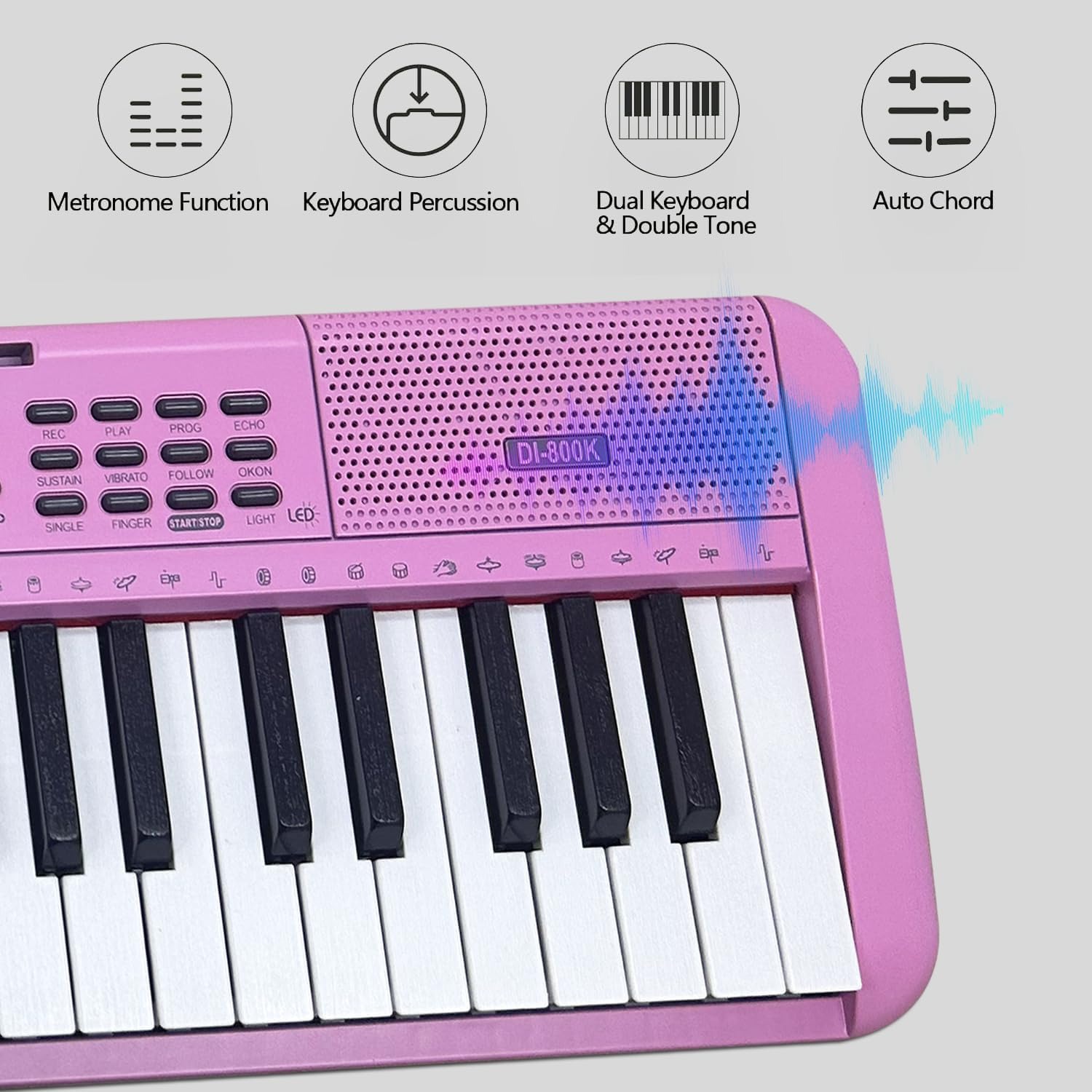
Interactive teaching modes let you slow the tempo down or practise one hand at a time until the part sits comfortably under your fingers.

200 tones, 200 rhythms and 60 demo songs give you plenty to explore once the basics click.

Dual power means it works on a desk at home or on a picnic rug with four AA batteries.

The box includes a sheet music stand, microphone, key stickers, charging plug, AUX audio cable, 3.5mm jack cable, MIDI cable and manual.

Diodonica 61-Key Lighted Beginner Keyboard Piano

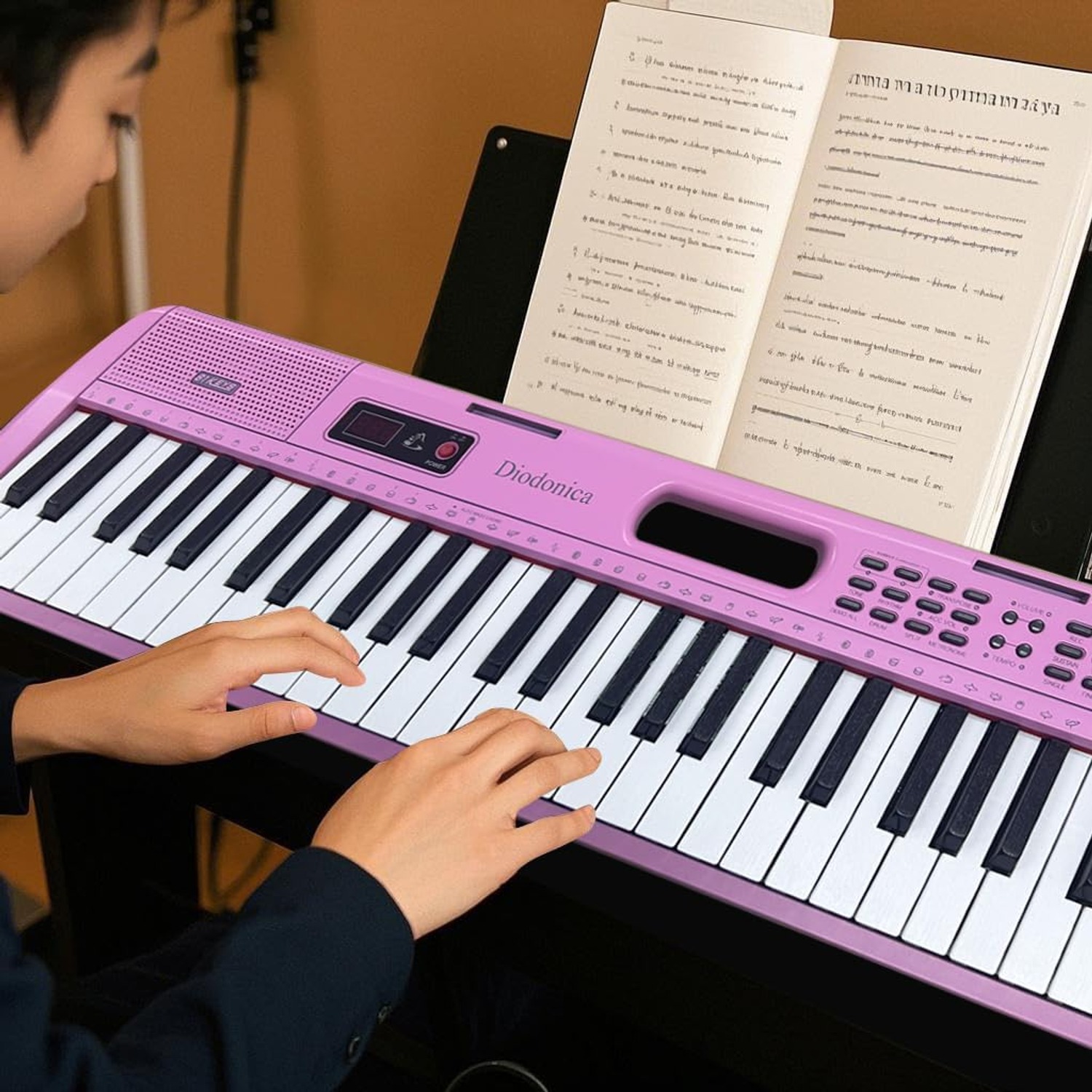
Most people who want to play piano stall in the same place. They sit down at an instrument, look at eighty-eight identical keys, and have no idea where to put their hands. A lighted key keyboard piano removes that first wall. The key you need lights up, you press it, and the next one lights. You are making music in the first five minutes rather than reading theory for a fortnight.

Diodonica 61-Key Lighted Beginner Keyboard Piano

This Diodonica model has 61 keys, which is the size most teachers suggest for a first instrument. It covers five octaves, enough for nearly all beginner and intermediate sheet music, without taking up the whole desk. The white keys are full width, so the hand shapes you learn here carry straight over to an acoustic piano later. At 3.18 kg it is light enough to move between rooms with one hand.

Diodonica 61-Key Lighted Beginner Keyboard Piano

The teaching side goes further than the lights. You can slow the tempo down so a tricky run becomes manageable, then speed it back up as your fingers catch on. You can also practise one hand at a time, which is how most people untangle a piece that uses both. Sixty built-in demo songs give you something to copy, and 200 tones plus 200 rhythms mean the same simple melody can sound like a piano, a strings section or a pop track with a drum loop behind it.

Diodonica 61-Key Lighted Beginner Keyboard Piano

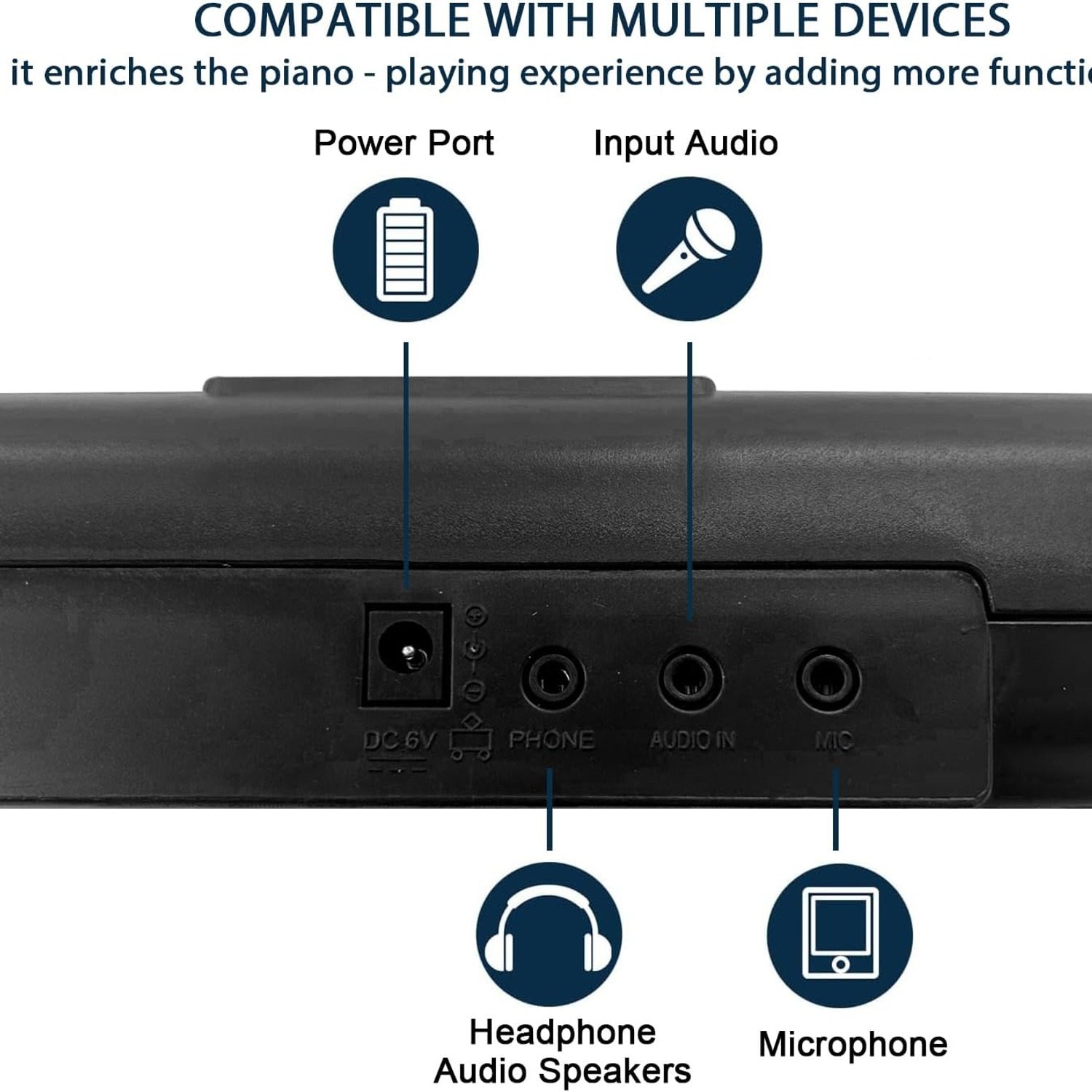
Power is flexible. Use the included charging plug at home, or drop in four AA batteries and take it to a friend's place, a holiday house or the backyard. There is a 3.5mm headphone jack for silent practice, which matters more than people expect in shared housing or when someone else is asleep. A MIDI cable is in the box too, so you can connect the keyboard to music software on a computer once you are curious about recording.

Diodonica 61-Key Lighted Beginner Keyboard Piano

Everything needed to start is packed in. The sheet music stand clips on, the microphone lets you sing along, and the key stickers help you match note names to keys while you are still learning the layout. Packaging includes a foam compartment on the side to hold the mic and cables, so nothing rattles loose in transit. It arrives as a complete kit rather than a keyboard with a shopping list attached.

Not sure yet? That is fine.

An instrument has to suit the player, and you cannot always judge that from a photograph. If it is not right for you, send it back within 14 days of delivery in resaleable condition and we refund the price you paid, including standard delivery. That is on top of your Australian Consumer Law rights if anything arrives faulty.

If it turns up faulty, damaged or not as described, that is on us. The Australian Consumer Law and the Competition and Consumer Act 2010 covers you, and we pay the return postage. Read the full detail on our refunds and returns page, or ask us anything before you order.

Frequently Asked Questions

What exactly is this product?

It is a 61 key beginner keyboard, an electronic keyboard piano made by Diodonica under model number DI-800K. It is designed for people who are starting out, with lighted keys and teaching modes built in. The listed colour is pink.

How do the lighted keys actually work?

The keys illuminate in sequence to show you which note to play next. You follow the lights rather than reading sheet music, which lets you play a recognisable tune on day one. It is one of the simplest ways to learn to play keyboard without a tutor sitting beside you.

Is 61 keys enough to learn on?

For a first instrument, yes. Sixty-one keys gives you five octaves, which covers almost all beginner and intermediate pieces. A full acoustic piano has 88 keys, but most learners do not reach the far ends of the keyboard for a long while.

Are the keys full size?

The white keys are described as full-size at 2.3 cm wide, with black keys at 1 cm. That matters because finger spacing you learn here transfers directly to a standard piano. Mini-key instruments do not give you that.

Is this suitable for adults or just children?

The listed age range description is adult, and the full-size keys suit adult hands. That said, the lighted-key system and demo songs work well for younger players too. It is one of the better options if you want the best beginner keyboard piano for a mixed-age household.

What comes in the box?

A sheet music stand, microphone, key stickers, charging plug, AUX audio cable, manual, 3.5mm jack cable and MIDI cable. Everything needed to start playing is included. The packaging has a side foam compartment to hold the mic and cables safely.

Can I use headphones?

Yes, there is a 3.5mm headphone jack. Plug in a set of headphones and you can practise late at night without disturbing anyone. This is one of the most-used features on any beginner keyboard.

How is it powered?

It runs from the included charging plug or from 4 x AA batteries. Batteries are not listed as included. The dual option makes it one of the best battery powered keyboard choices for taking outdoors or on holiday.

How many sounds does it have?

There are 200 tones and 200 rhythms, plus 60 demo songs. Tones change the instrument voice, rhythms add a backing beat. Together they give you a lot of variety from one simple melody.

What are the teaching modes?

You can adjust the tempo to slow or fast, and practise hands separately rather than both at once. Slowing a passage down until it is clean, then speeding it up, is the standard way musicians learn difficult parts. The best keyboard with teaching mode makes that process easy rather than fiddly.

How big is it?

The item measures 25.4 x 86.4 x 7.6 cm. That fits on most desks, dining tables and sideboards. It is a sensible pick if you want the best keyboard for small spaces.

How heavy is it?

It weighs 3.18 kg. You can carry it one-handed and move it between rooms without strain. It also makes it realistic to take to lessons or a friend's house.

Does it have weighted keys?

Weighted action is not specified in the product record. Keyboards in this category typically use unweighted or lightly sprung keys, which are easier for new fingers. If weighted hammer action is essential to you, check before ordering.

Can I connect it to a computer?

Yes, it has MIDI connectivity and a MIDI cable is included. That lets you link it to music software for recording or app-based lessons. It makes a reasonable starting point if you want the best MIDI keyboard for beginners on a modest budget.

What is the AUX cable for?

The 3.5mm AUX audio cable lets you feed audio in or out depending on your setup. A common use is playing backing tracks from a phone through the keyboard. The connectivity technology is listed as auxiliary.

What is the microphone for?

The included mic lets you sing while you play. Kids especially enjoy this, and it turns practice into something closer to a performance. It is a nice extra for anyone looking for the best keyboard with microphone included.

What are the key stickers for?

They sit on the keys to show note names while you are still learning the layout. Once you know where middle C sits and can find your way around, you peel them off. They are a temporary crutch, not a permanent fixture.

Do I need a stand?

A stand is not included, only the sheet music stand that holds your pages. The keyboard sits fine on a table or desk at the right height. Many people add a proper X-stand later if they want to play standing.

Is there a sustain pedal?

A pedal is not listed among the included components. Check the connection options on arrival if you plan to add one. For early practice a pedal is not necessary.

Can two people play at once?

There is no split-keyboard duet feature listed in the maker's listing. With 61 keys, two people can sit side by side in a pinch, though it is tight. For teaching, most people take turns.

How long does it take to learn a song?

Using the lighted keys, most people stumble through a simple melody in the first session. Playing it smoothly with both hands usually takes a few weeks of short, regular practice. Fifteen minutes a day beats two hours once a week.

How do I clean it?

Wipe the keys and body with a soft, dry or barely damp cloth. Keep sprays, solvents and liquids away from the keybed. Unplug the adapter first and remove batteries before any cleaning.

How should I store it?

Keep it flat in a dry place, out of direct sun and away from heaters. If it will not be used for months, take the batteries out so they cannot leak. Coil cables loosely instead of bending them tightly at the plug.

Where is it made?

The country of origin is listed as China. The brand and manufacturer are both Diodonica, with manufacturer part number DI-800K.

Does it come with a warranty?

No warranty terms are specified in the maker's listing. If you need the details before ordering, contact us and we will check with the supplier. Your statutory consumer rights apply as normal.

Is this a good gift?

It works well as a gift because everything needed is in the box. There is nothing extra to buy before the recipient can play. Among beginner instruments it is a strong pick for the best keyboard gift for beginners.

Can I take it travelling?

Yes. At 3.18 kg with battery power as an option, it is genuinely portable. It is one of the more practical choices if you want the best portable electronic keyboard for holidays or a caravan.

Will it help if I already play a little?

If you can already read music and play with both hands, the teaching features will matter less, but the 200 tones and 200 rhythms still give you plenty to work with. The 61-key range may feel limiting on advanced classical pieces. For casual playing and songwriting it is fine.

How long does delivery take?

We deliver anywhere in Australia with a tracked courier. Most orders arrive within 3 to 7 working days of the order date, a little longer to regional and remote addresses. Delivery is free on orders of $150 or more and a flat $15 under that. You get a tracking link by email as soon as the parcel is on its way.

What if it is not right for me?

If the keyboard is not what you hoped for, contact us and we will walk you through the return process. Keep the original box and the foam insert, since the accessories travel safely in it. Tell us what did not work and we can point you at something that fits better.

How To Choose Your First Keyboard (And Actually Stick With It)

6 min read Music Instruments

The real reason most people quit piano

It is almost never lack of talent. It is the gap between sitting down at an instrument and making a sound you recognise. That gap can last weeks if you are learning from a book, and most people run out of patience before they get through it.

A 61 key beginner keyboard with lighted keys closes the gap on day one. The key lights, you press it, the next one lights. Within a few minutes you are playing something that sounds like a song. That early win is what keeps people coming back to the stool, and coming back is the only thing that actually builds skill.

This guide walks through what matters when you pick a first keyboard, what the specs mean in plain terms, and how to set yourself up so the instrument gets used instead of gathering dust behind the couch.

How a lighted key keyboard piano works

The idea is simple. Each key has a small light underneath it. When you select a demo song or a teaching mode, the keyboard lights the keys in the order you need to play them. You follow along, pressing what glows.

On this Diodonica model there are 60 demo songs loaded in, so there is a decent library to work through before you need external sheet music. The teaching modes let you change the pace. Slow the tempo right down and the lights wait for you. Speed it up once the pattern is in your fingers.

There is a second feature that gets less attention but does a lot of work. You can practise one hand at a time. Most beginner pieces have a melody in the right hand and chords in the left, and trying to coordinate both at once is where people freeze. Learn each hand separately, then put them together. The keyboard supports that properly rather than making you figure it out alone.

Then there are the sounds. Two hundred tones means the same melody can be a grand piano, an organ, a flute, a synth lead. Two hundred rhythms adds a backing beat underneath you. It sounds like a gimmick until you realise how much it helps with timing. Playing along to a drum pattern teaches you to hold a steady tempo far faster than counting out loud ever will.

Why 61 keys is the right number to start

A full acoustic piano has 88 keys. People sometimes assume that means anything smaller is a toy. It does not.

Sixty-one keys gives you five full octaves. Look at the sheet music for almost any beginner or intermediate piece, pop song, hymn or folk tune and the notes will sit comfortably inside that range. The very top and bottom octaves of a grand piano are used sparingly, mostly in advanced classical writing.

What matters much more than key count is key width. If the keys are narrow, the hand shapes and finger stretches you learn do not transfer to a real piano, and you end up relearning everything. This keyboard uses 2.3 cm white keys and 1 cm black keys, which is standard width. The muscle memory you build here carries over.

The other advantage of 61 keys is physical. At 25.4 x 86.4 x 7.6 cm and 3.18 kg, this one fits on a desk, a dining table or a shelf. It does not demand a dedicated corner of the room. Instruments that are easy to reach get played. Instruments that need setting up get ignored.

Who this suits

Complete beginners. If you have never played anything, the lighted keys and teaching modes do the job a tutor would do in the first few lessons. You can always add a teacher later once you know you enjoy it.

Adults coming back to it. Plenty of people had lessons as a child, stopped at twelve, and want to pick it up again at forty. Full-size keys and a headphone jack make that realistic without annoying the household.

Families. The microphone, the demo songs and the rhythm patterns turn it into something the whole house can mess about with. Kids will sing. Adults will pretend they are not enjoying the drum beats.

Anyone tight on space or budget. It is a sensible stepping stone. If you commit to playing seriously in a year or two, you move up to a weighted 88-key instrument knowing it was worth the money.

Who it suits less well is the player who already reads music fluently and wants hammer action under their fingers. Weighted key action is not specified for this model, and the 61-key range will feel short on advanced classical repertoire. Be honest with yourself about where you are.

What to check before you buy any beginner keyboard

Power options. This one runs from the included charging plug or 4 x AA batteries. Battery power sounds like a minor detail until you want to play in the garden or take it on holiday. It widens where the instrument gets used.

Headphone jack. Non-negotiable in a shared home. The 3.5mm jack here means late-night practice is possible without a single complaint from anyone.

Connectivity. MIDI matters more than people expect. It lets you plug the keyboard into music software on a computer, which opens up app-based lessons and basic recording. A MIDI cable is included here, along with an AUX audio cable and a 3.5mm jack cable.

What is actually in the box. A lot of keyboards arrive and then you discover you need a music stand, a cable and something to hold your phone. This one ships with the sheet music stand, mic, key stickers, charging plug, AUX cable, 3.5mm jack cable, MIDI cable and the manual. The packaging has a foam compartment on the side so the mic and cables travel without rattling around.

Setting it up so you actually practise

Put it somewhere you walk past. Honestly, this is the single biggest predictor of whether a beginner keeps playing. If it lives in a cupboard, it stays in the cupboard.

Get the height right. The keybed should sit roughly at elbow level when you are seated with your feet flat. A dining chair and a standard table often work out close enough. If your wrists are bent upward to reach the keys, the table is too high.

Use the key stickers at first, then remove them. They are there to get you oriented, not to be a permanent map. Most people peel them off after a few weeks and find they already know where everything is.

Keep sessions short. Fifteen focused minutes every day will take you further in a month than a single long Sunday session. Short and frequent is how fingers learn.

Looking after it

Keyboards are not fragile, but they do not like liquid or dust. Wipe the keys and the body with a soft cloth, dry or barely damp. Skip the spray cleaners and solvents.

Unplug the power adapter before cleaning. If you are not going to play for a few months, take the AA batteries out so there is no chance of a leak inside the compartment.

Store it flat, somewhere dry, away from a sunny window or a heating vent. Heat and direct sun are harder on electronics and plastics than most people realise. Coil the cables loosely rather than winding them tight around the plug, which is where cables usually fail first.

The short version

A 61 key beginner keyboard with lighted keys solves the problem that stops most people before they start. You press the key that glows and you are playing. Teaching modes let you slow things down and work one hand at a time, which is how real progress happens.

Five octaves covers nearly everything a beginner will want to play. Full-width keys mean the skills transfer to an acoustic piano later. At 3.18 kg with battery power and a headphone jack, it fits into an ordinary home and an ordinary schedule.

Everything you need arrives in the box, including the music stand, mic, stickers and cables. Put it somewhere visible, play fifteen minutes a day, and in a month you will surprise yourself.

Browse the shop

Not sure if 61 keys is enough?

Tell us what you want to play and we will tell you honestly whether this keyboard covers it.

Ask us a question

Page summary

The Diodonica DI-800K is a 61-key electronic keyboard aimed at beginners, listed under model name DI-800K-PK in pink. It features lighted keys, interactive teaching modes, 200 tones, 200 rhythms and 60 demo songs. Connectivity includes a 3.5mm jack and MIDI, with an auxiliary connection type and a 3.5mm headphone jack. It measures 25.4 x 86.4 x 7.6 cm and weighs 3.18 kg. Power can come from the included charging plug or 4 x AA batteries. Included components are a sheet music stand, microphone, key stickers, charging plug, AUX audio cable, manual, 3.5mm jack cable and MIDI cable. Country of origin is China. Material, GTIN and warranty terms are not specified in the maker's listing.