
The complete guide
Buying Your First Lyre Harp - A Practical Guide
The problem with starting an instrument
Most people who want to learn an instrument stall at the same point. Not at practice, but at the shopping. You look at guitars and realise you also need a tuner, a strap, picks, a case and a capo. You look at a piano and there is nowhere to put it. You look at a concert harp and the price makes you close the tab.
A lyre harp sidesteps all of that. It is a frame, a soundboard and a row of strings. You hold it, you pluck, and it makes a sound you recognise immediately. There is no fretting hand to coordinate, no embouchure to build, no bow technique that takes months before it stops squeaking. The first note you play on a lyre is already in tune and already pleasant, and that matters more than people admit. Instruments that sound good on day one get practised. Instruments that sound bad on day one get put in a cupboard.
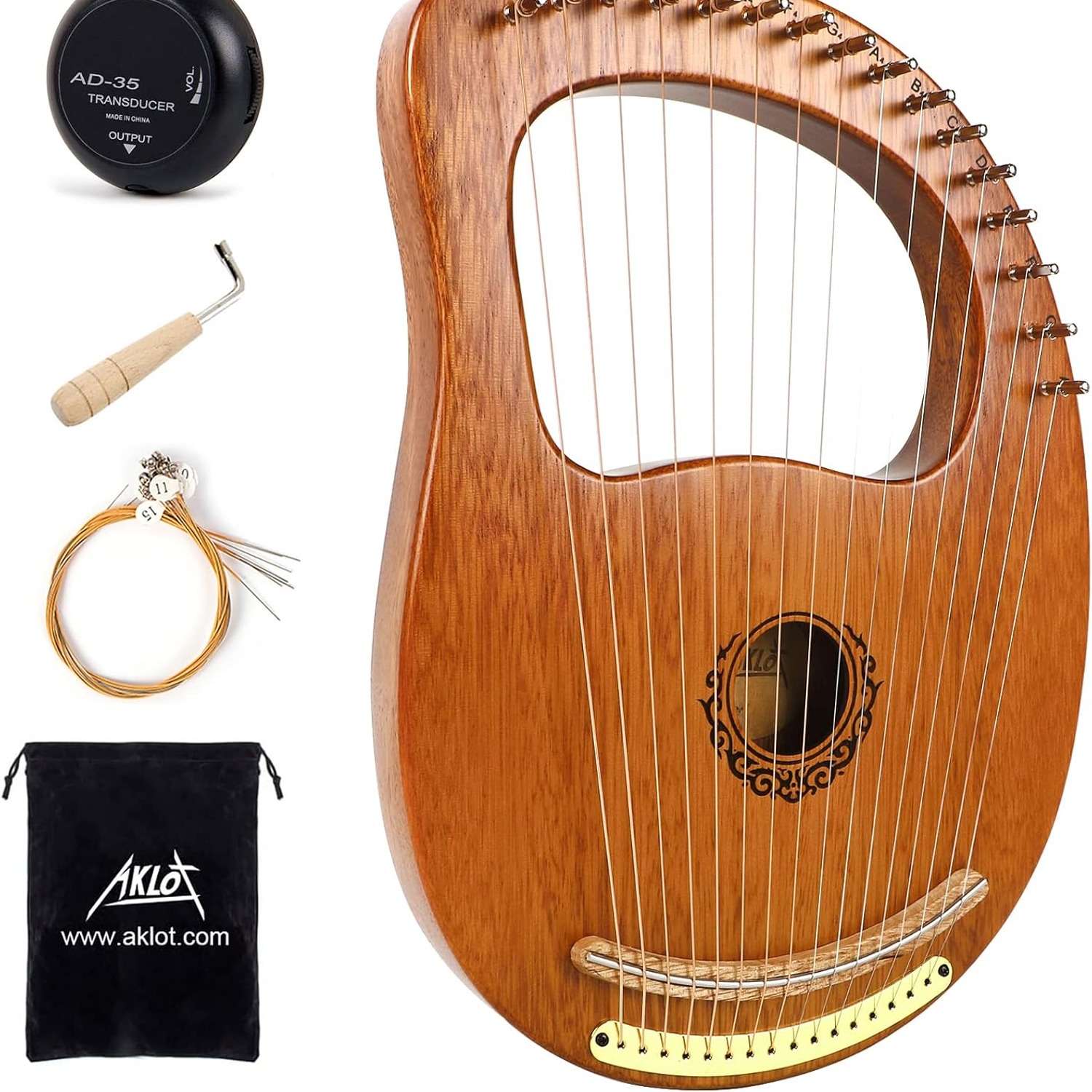
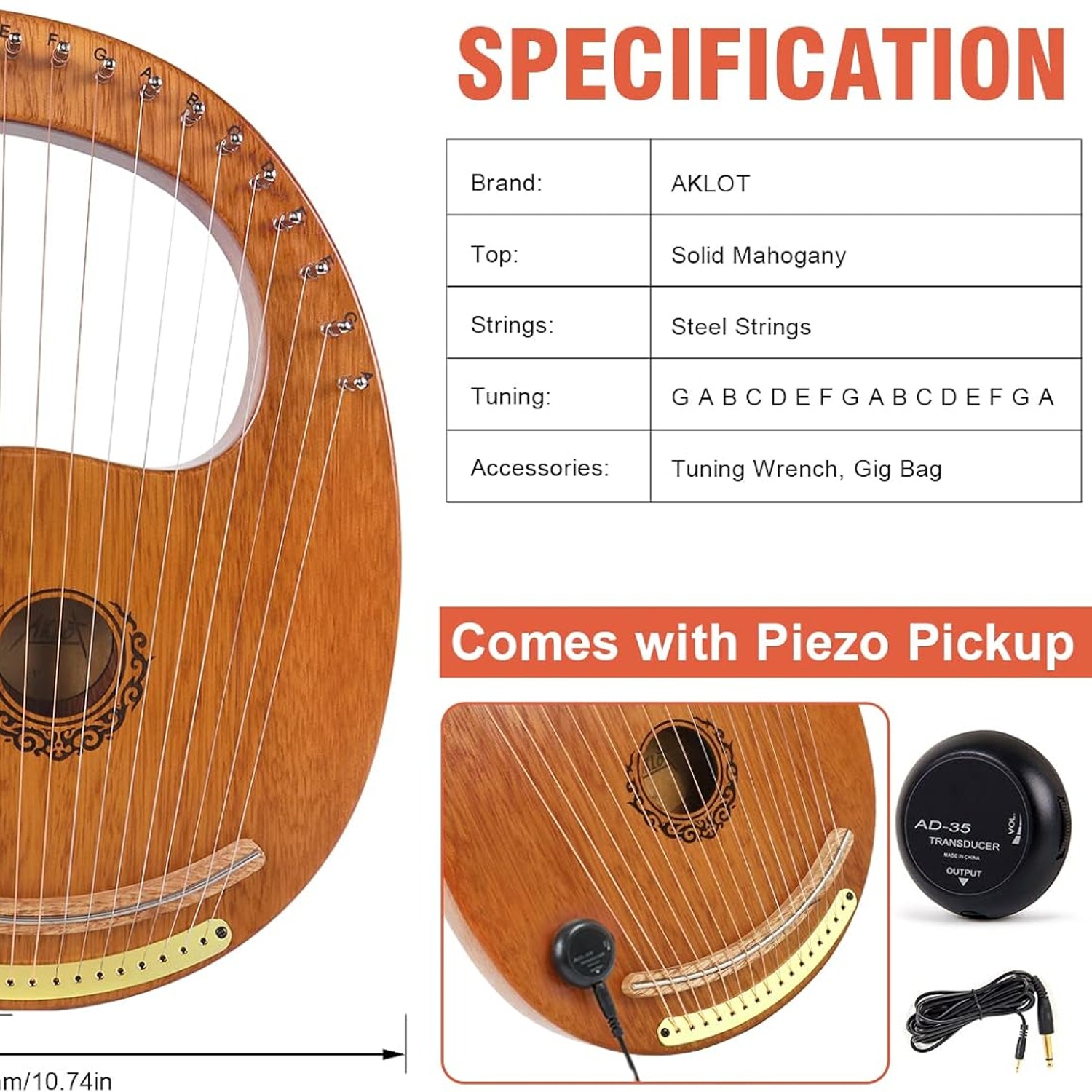
This particular model is a 16 string lyre harp from AKLOT, with a mahogany top and back, a maple body, and metal strings. It weighs 1.33 kg. It comes with a tuning wrench, spare strings, a pickup and a black gig bag.
How a lyre harp actually works
Every string on a lyre plays exactly one note. There are no levers, no pedals, no mechanism of any kind. The pitch of each string depends on how long it is and how tightly it is stretched, which is why the strings fan out from short to long across the frame. Shorter strings are higher and sit under more tension. Longer strings are lower and feel looser under the finger.
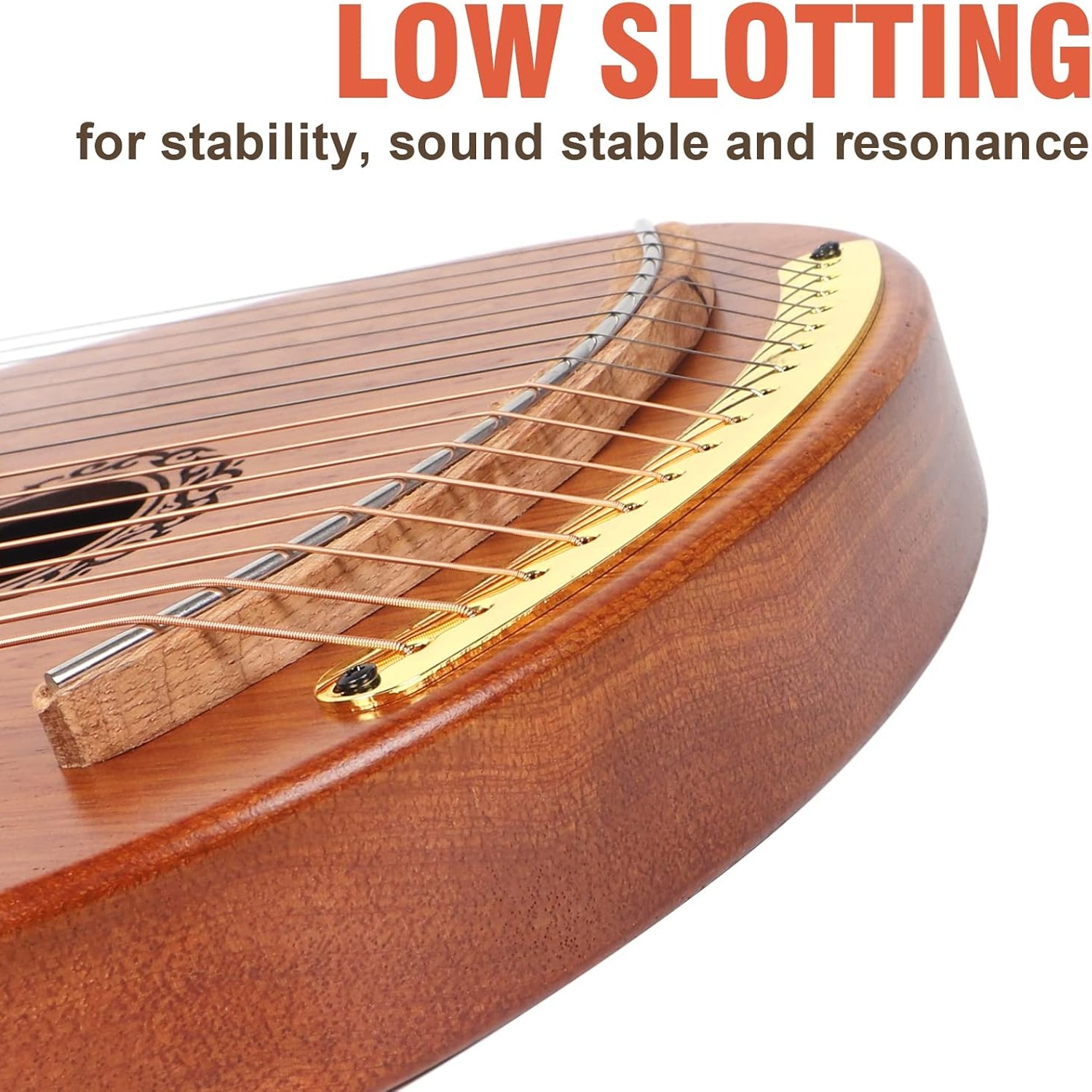
The strings here are metal with a loop end. That loop seats against a metal fitting rather than pressing directly into the timber, and it is a small detail with a real benefit. Over months of playing, the constant pull of sixteen strings would otherwise wear into the wood at every anchor point. Spreading that load through metal keeps the instrument stable and helps it stay in tune.
When you pluck, the string vibrates and that vibration passes into the soundboard. The board moves a much larger volume of air than the string could on its own, and that is where the sound you hear comes from. Dense timber like mahogany transmits that energy cleanly, which is part of why this harp is described as warm voiced with a ringing tone rather than thin or boxy. The notes hang in the air for a moment after you let go, and that slight overlap between notes is what gives harp music its particular shimmer.
Who this suits
Adult beginners are the biggest group. If you played something as a child and want back in without a long rebuild of technique, a lyre is forgiving. If you have never played anything, it is one of the gentlest starts available.
Singers find it useful too. The volume sits naturally under a voice, so you can accompany yourself with simple broken chords without drowning out the melody. People searching for the best lap harp for beginners usually end up on something like this, because it rests comfortably against the chest or across the knees and leaves your posture open for singing.
It also suits people who want an instrument they can carry. At 1.33 kg in a soft bag, it fits in hand luggage, in a car boot, on a bike. Instruments that travel get played in more places, and that variety tends to keep people going. If portability is high on your list, this sits in the same conversation as the best travel lyre harp options.
Teenagers do well with it, as do older children with a bit of adult help on tuning days. The edges are rounded, so holding it for twenty or thirty minutes does not leave a mark on the forearm.
Who might want something else? If you already read music fluently and want to play full classical repertoire with key changes mid piece, you will eventually want a lever harp with a wider range. Sixteen strings is a generous beginner range, not a complete one.
Choosing between lyres
Once you start shopping you will notice a wide price spread across similar looking instruments. A few things separate them.
Timber is the first. Plywood or composite bodies exist at the bottom of the market and they do sound duller, partly because the layers absorb vibration instead of passing it on. Solid hardwood costs more and sounds better. This model uses mahogany for the top and back with maple in the body, and the record lists the material type as solid mahogany.
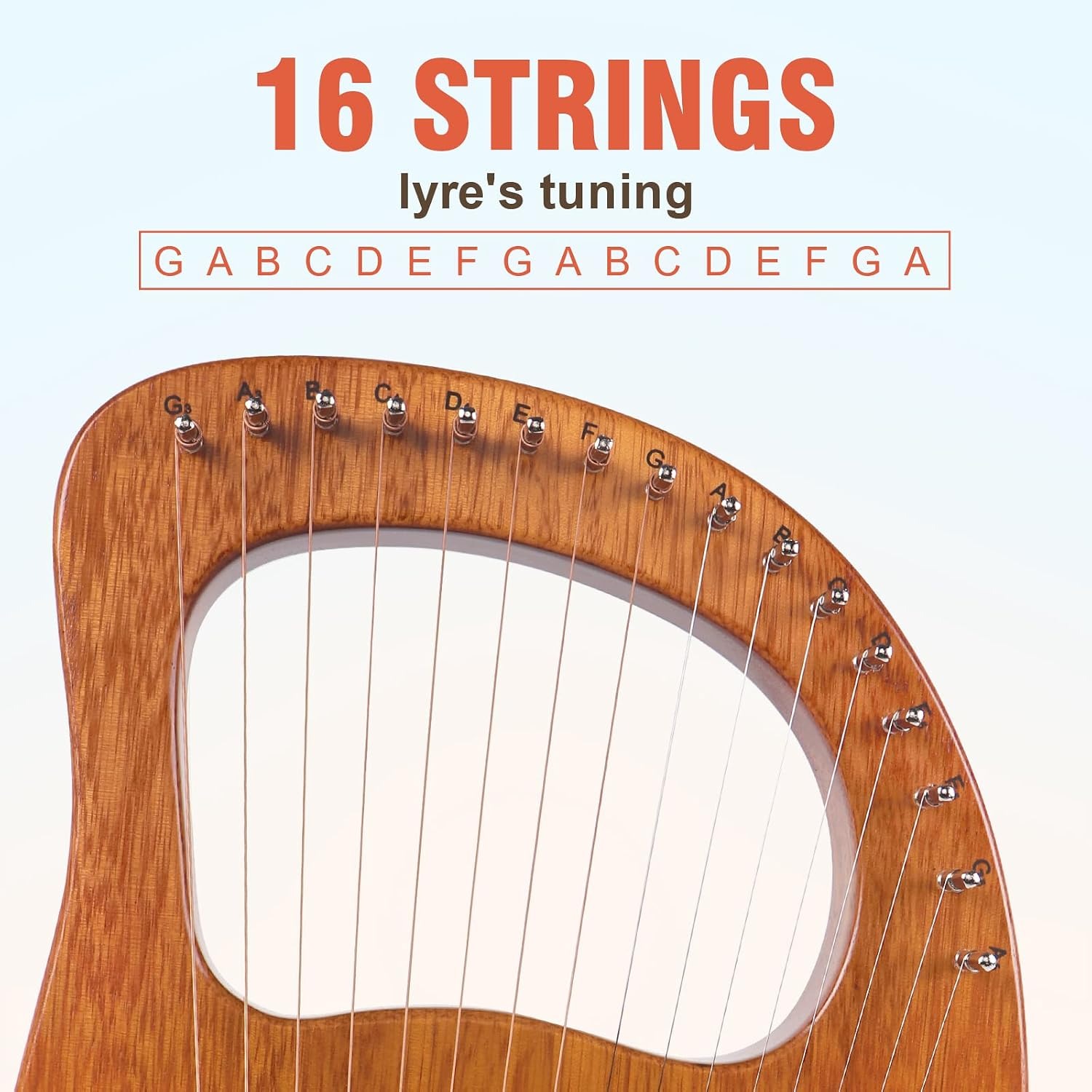
String count is the second. Seven and ten string lyres are cheaper and genuinely fun, but you run out of notes quickly on anything beyond a simple melody. Sixteen gives you more than two octaves to work with, which covers most folk songs and hymns without transposing. Anyone comparing the best 16 string lyre harp options against smaller models usually finds the extra strings worth the small jump in size.
What is in the box is the third, and it is underrated. A tuning wrench is not optional, it is how the instrument works. Spare strings matter because a string will break eventually, usually at an inconvenient moment. A bag protects the finish. Buying those three separately costs more than you would expect, so a complete kit is better value than the headline price suggests.
Getting set up on day one
Unpack the harp and let it sit in the room for an hour or so, especially if it has come in from the cold. Timber and metal both move with temperature, and tuning something that is still settling is wasted effort.
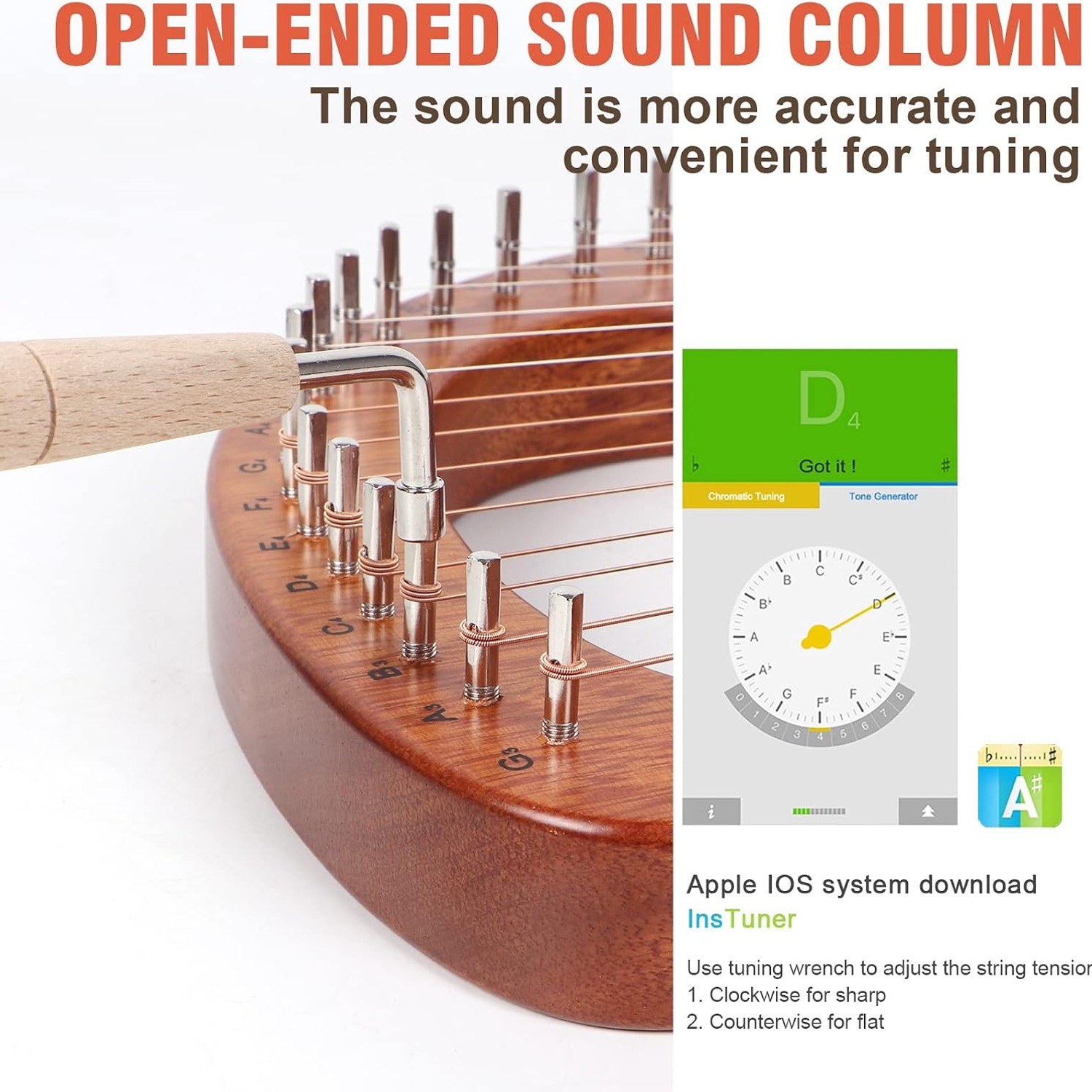
Then tune it. Clip a tuner to the frame or open a tuning app on your phone. Fit the wrench onto the first pin, pluck the string, and turn the wrench a small amount. Clockwise raises the pitch, counterclockwise lowers it. Go slowly. The most common beginner mistake is a big confident turn that snaps a new string.
Expect to repeat this daily for the first week or two. New strings stretch, and there is nothing wrong with your harp when it drifts flat overnight. After the stretch settles, a quick check before each session is all it needs.
Your fingertips will feel it in the first few days with metal strings. Short sessions, ten or fifteen minutes a few times a day, build the skin far more comfortably than one long stretch.
Looking after it
A dry soft cloth over the strings and body after playing removes the oils from your fingers, which is the main cause of dull strings and dull finish over time. Keep the harp away from radiators, sunny windowsills and damp rooms. Stable humidity and temperature do more for tuning stability than anything else you can do.
Store it in the gig bag between sessions. That keeps dust out of the string spacing and stops the polished surface picking up scratches from whatever else is on the table.
When a string does break, thread the replacement through, seat the loop end on its fitting, and bring it up to pitch over a minute or two rather than all at once. Give it a day or two to stop drifting.
Using the pickup
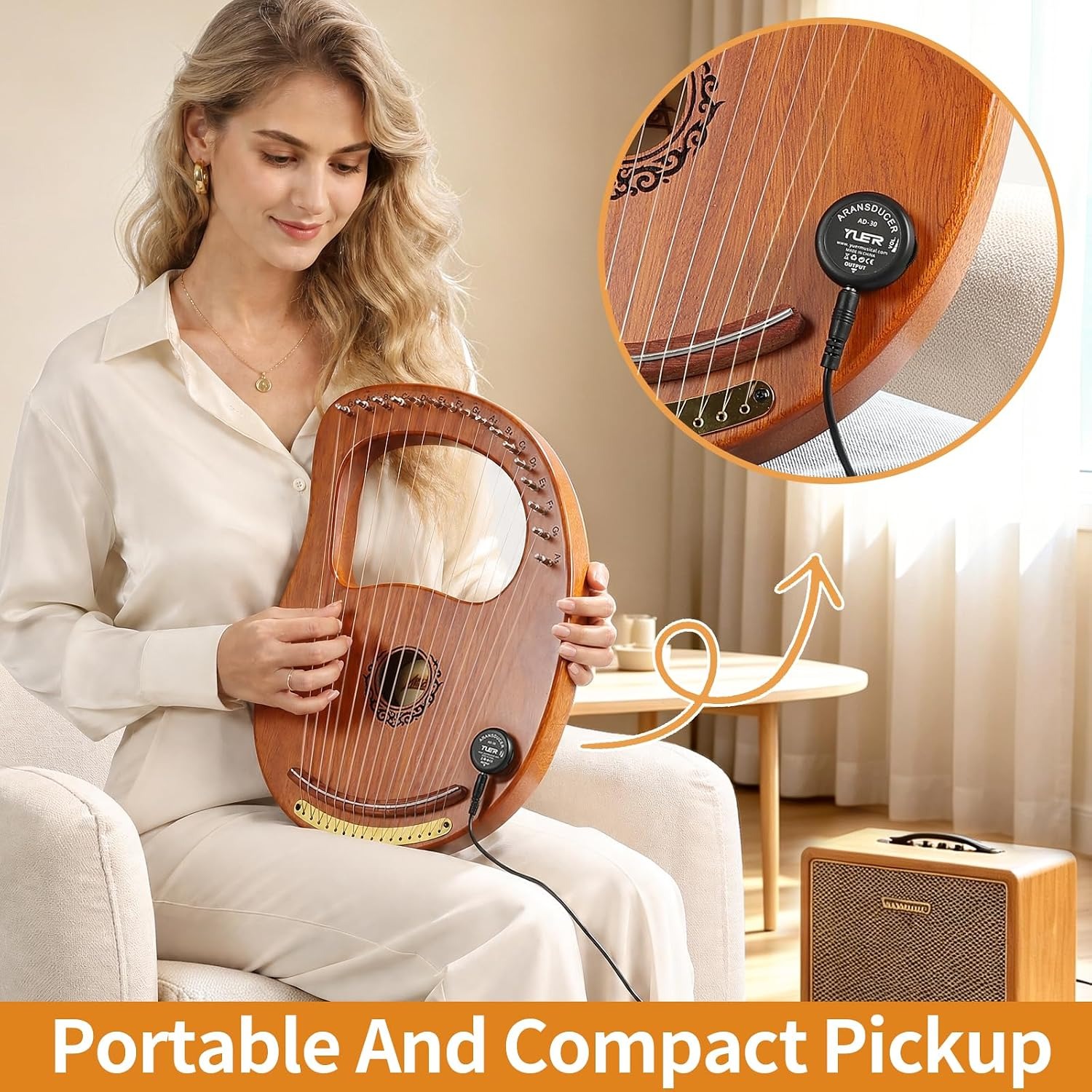
The pickup in the kit is there for the day you want more volume. Plug into a small amp for an outdoor gathering, into a PA for a service or a recital, or into an interface to record at home. A lyre records beautifully because the sound is clean and uncluttered, and having a pickup already included means you can try it without buying anything else first. For normal practice at home, leave it in the bag.
The short version
This is a solid mahogany 16 string lyre harp with metal strings, a polished finish and a warm, ringing voice. It weighs 1.33 kg, it comes with a tuning wrench, spare strings, a pickup and a padded black gig bag, and it is aimed at beginners who want a real wooden instrument rather than a toy.
If you want to start making music this week without a shopping list as long as your arm, this is a sensible place to begin. Tune it, hold it, pluck a string, and you are already playing.