
The complete guide
Choosing a 32 Key Melodica, A Practical Buyer's Guide
The problem with starting an instrument
Most people who want to learn music stall at the same place. Piano means finding space and money for a keyboard. Guitar means weeks of sore fingertips before a chord sounds clean. Flute and clarinet need an embouchure that takes patience to build. By the time a learner gets a recognisable tune out of any of them, the early excitement has often worn off.
A melodica removes that stall. Press a key, blow, and you have a clear note. No reed to position, no fingering chart to memorise, no tuning to check. Within an hour most beginners can play a simple melody from start to finish. That first real tune matters more than people admit. It is the thing that makes someone pick the instrument up again tomorrow.
What makes the melodica more than a toy is what happens next. Because the sound only exists while you are blowing, you are forced to think about breath from the very first note. Long phrases need planning. Loud and soft are under your direct control. Where a keyboard lets a beginner thump out correct notes with no shape at all, a melodica will not. It teaches phrasing by making phrasing unavoidable.
How a melodica actually works
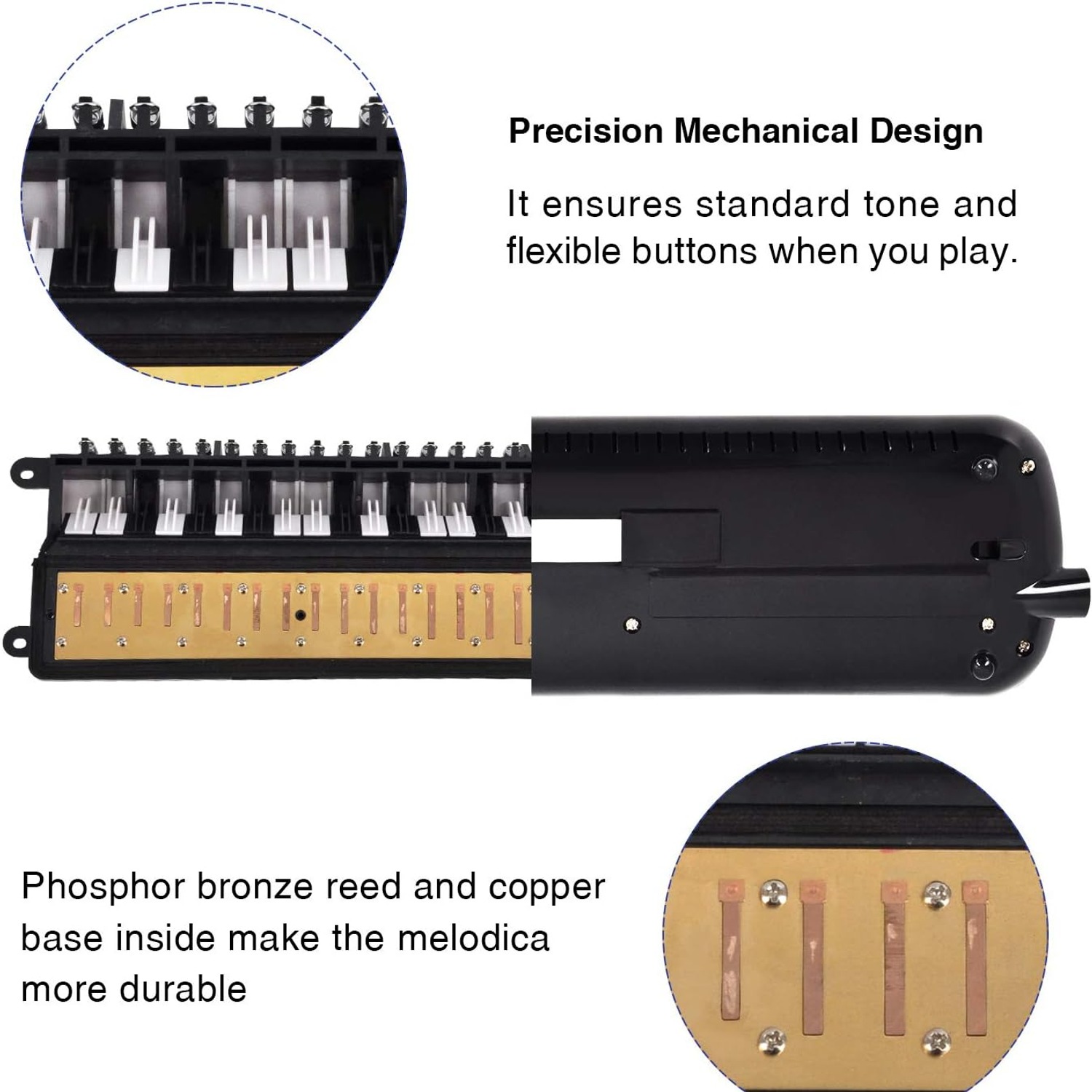
Inside the body sits a row of metal reeds, one per key. Each reed is a thin tongue of metal tuned to a specific pitch. When you press a key, a valve opens an air channel to that reed. Your breath moves through, the reed vibrates, and you hear the note.
This is the same family of mechanism used in harmonicas and accordions, which explains the family resemblance in tone. The reed is what gives a melodica its slightly buzzy, warm voice.
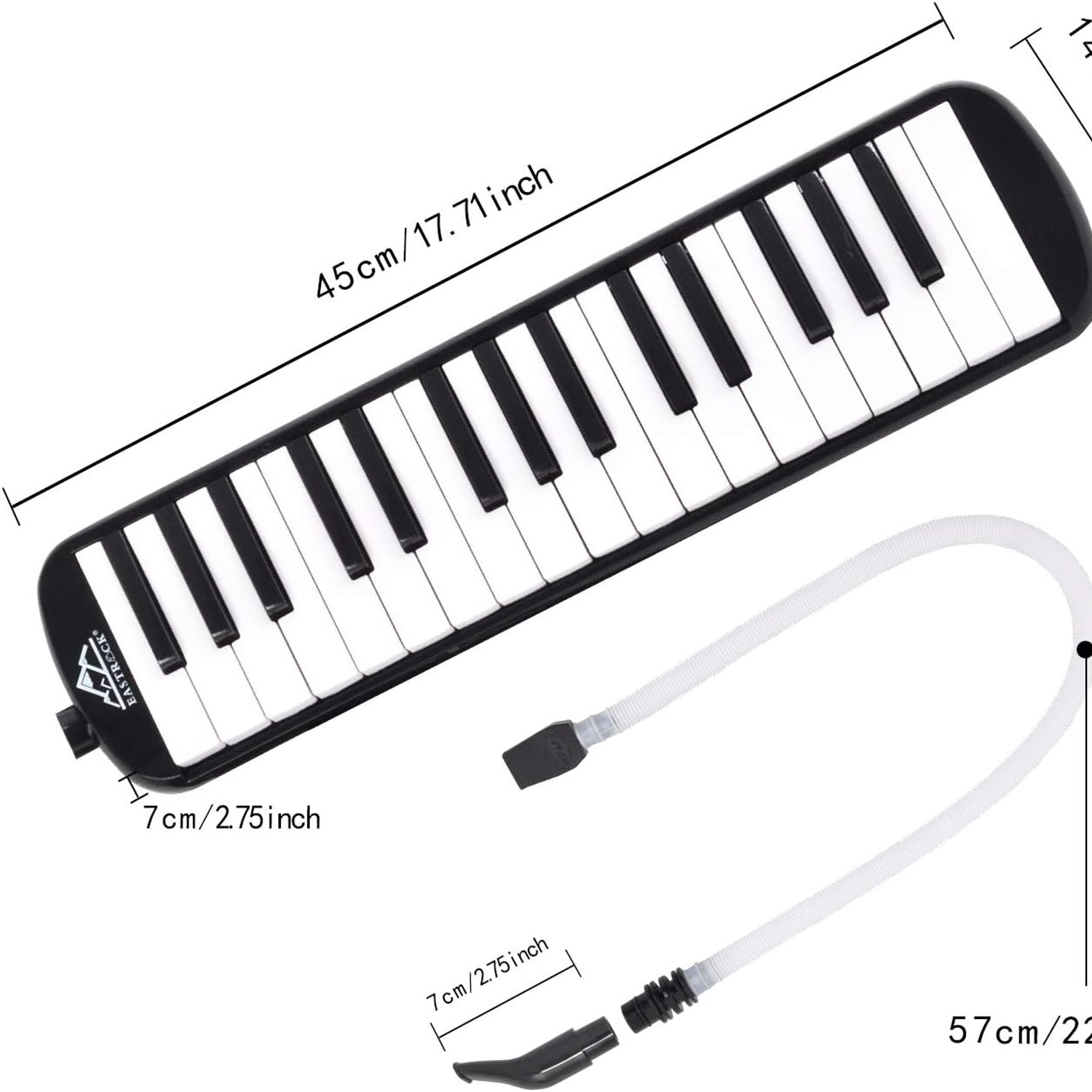
Reed material matters. This EASTROCK set uses phosphor bronze reeds mounted on a copper base, which the maker describes as giving a richer tone than ordinary reeds. The practical difference shows in the low notes, which carry more body, and in sustained notes, which sound less thin. The housing is food-grade ABS engineering resin, a tough moulded plastic that keeps the whole instrument at 1.1 kg.
You will notice air use varies. A single note takes very little breath. A three-note chord takes considerably more, because each open reed is drawing air. New players sometimes think the instrument is faulty when a chord sounds weak. It is not. It just needs more air, and a slightly firmer, steadier push rather than a sudden hard blow.
Who it suits
School music programs. Melodicas have been classroom staples for decades. They are affordable per student, they survive being carried around, and they teach keyboard layout and breath control at the same time. A student who learns note reading on a melodica can move to piano later with the hard part already done.
Children learning at home. The 32 key size is the right balance. Smaller 25 key models run out of range too quickly, and 37 key models get bulky for a child. With the hose fitted and the instrument flat on a table, a young player uses both hands comfortably.
Adults starting from zero. Plenty of adults want to play something without committing to a large instrument or a strict practice routine. A melodica fits in a drawer, costs little, and rewards ten minutes of noodling. People searching for the best beginner wind keyboard usually land here.
Experienced players who want a second voice. Keyboard players, songwriters and buskers use melodicas for their particular tone. It records well, it needs no power, and it adds a reedy character that a digital patch rarely matches. For street performance, the best portable keyboard instrument is often the one you can carry in one hand.
How to choose between models
Key count. Twenty-five keys is compact but limiting. Thirty-two is the standard, covering the range of most beginner and intermediate material. Thirty-seven gives more room for arrangements but is heavier and more awkward to hold upright.
Reed and body construction. Cheaper melodicas use basic reeds and thin plastic, and they sound it. Bronze reeds on a copper base, as in this model, give a fuller result. The ABS body is a sensible choice because it takes knocks without adding weight.
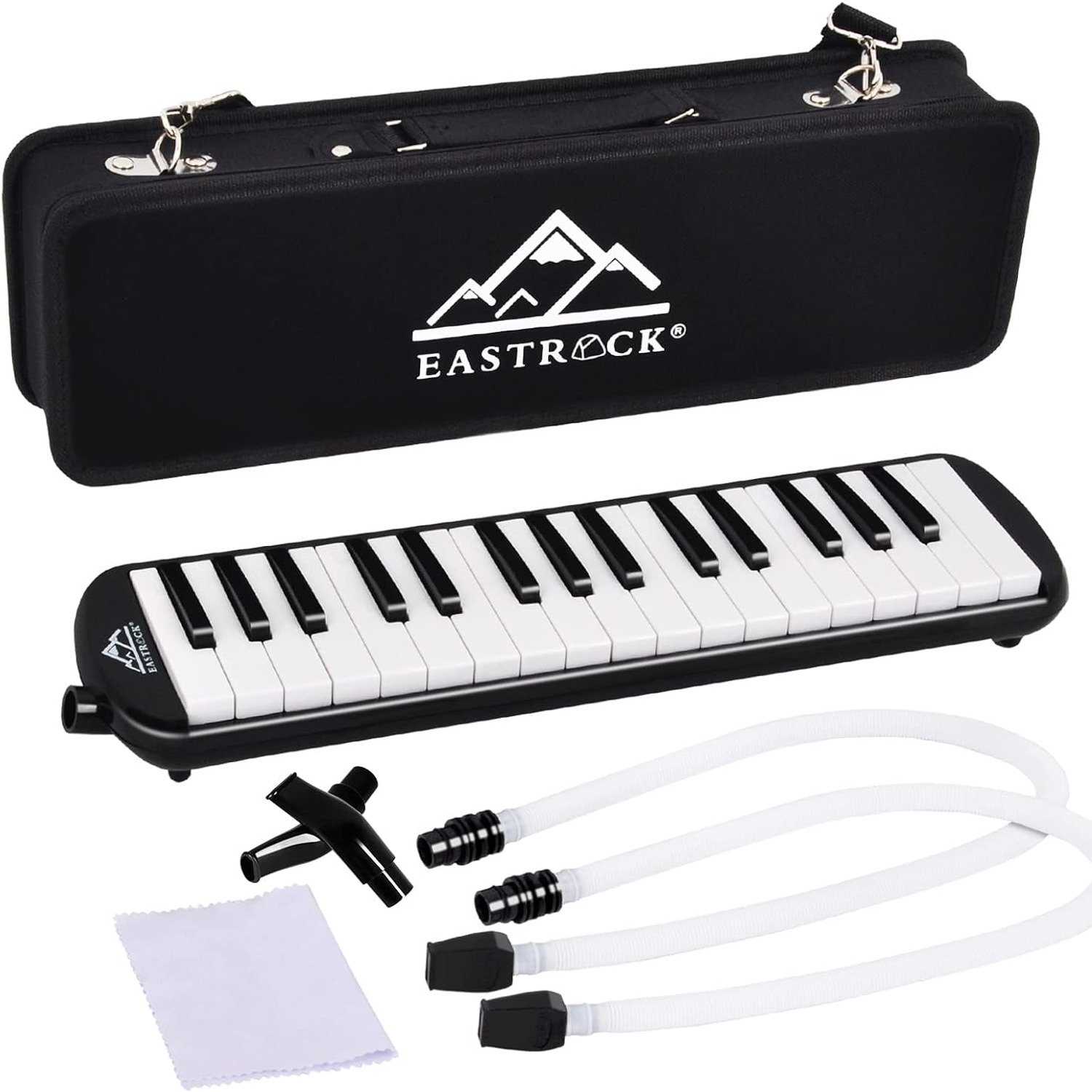
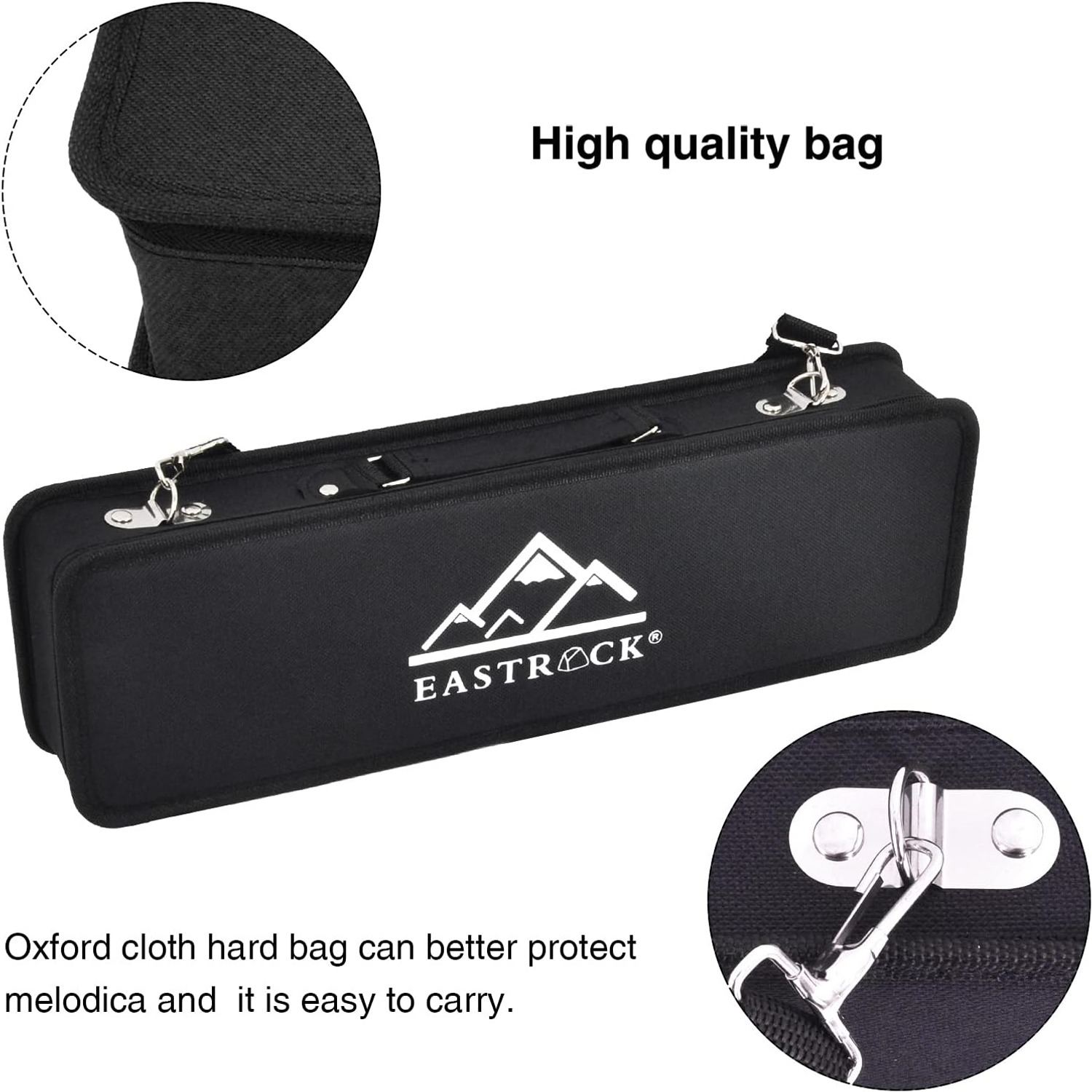
What comes in the box. This is where sets differ most. A bare melodica with one mouthpiece leaves you buying a bag and a hose separately. This set includes two mouthpieces, two extension hoses, a cleaning cloth, a shoulder strap and a hard carry case. Anyone comparing the best melodica with hard case options should check the bag type, since a scratch-resistant Oxford hard bag protects far better than a thin canvas sleeve.
Sharing. If more than one person will use the instrument, a second mouthpiece is not optional. Two are included here, which covers siblings, a parent and child, or a teacher demonstrating to a student.
Getting the most out of the first month
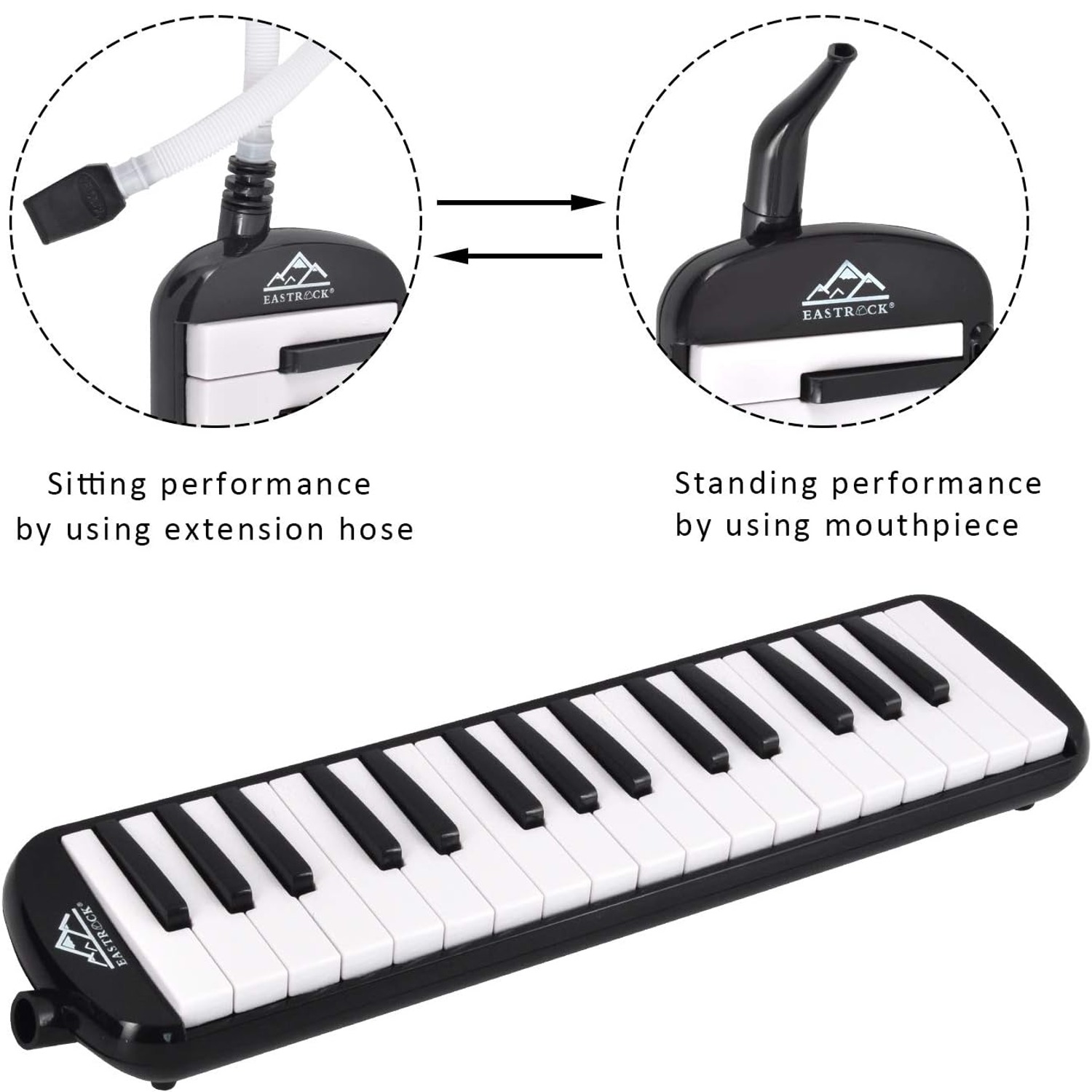
Start sitting down with the hose fitted and the melodica flat on a table. Both hands free, music on a stand in front of you, no holding anything up. Find middle C, play a scale slowly, and listen to whether each note starts and stops cleanly. That alone is a useful first session.
Breath is the skill to build. Try holding one note for a steady eight counts without the volume wobbling. Then try the same note starting quiet and growing louder, then the reverse. These sound dull written down, but they are the exercises that separate a player who sounds musical from one who sounds mechanical.
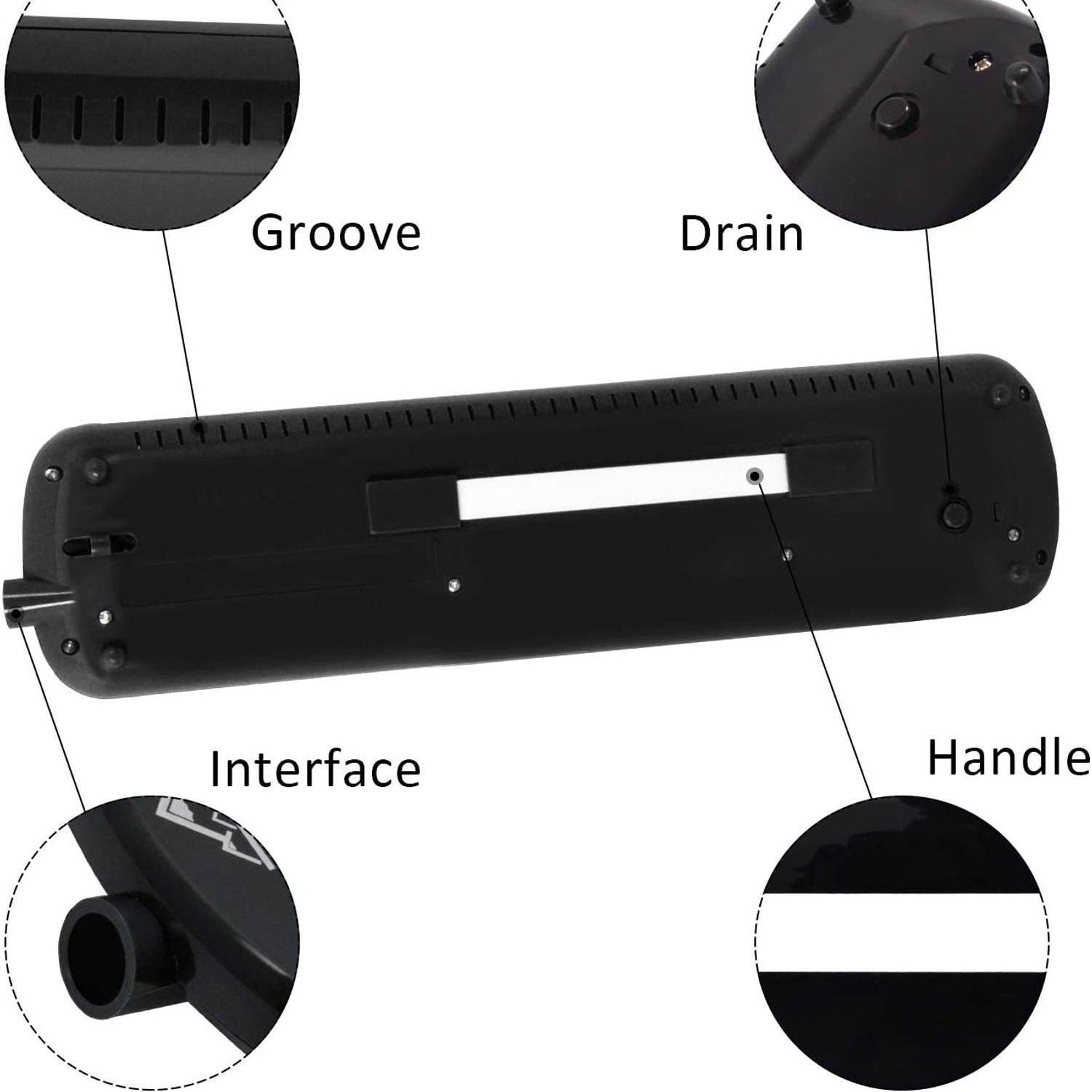
Once the keyboard feels familiar, switch to the upright position with the short mouthpiece. The hand strap on the back holds the instrument against your palm so your left hand does not have to grip hard. This position is what you want for standing performance, and it is how most melodica players are seen playing live.
Pick real tunes early. Nursery rhymes, folk melodies, film themes, anything the player already knows by ear. Motivation comes from recognisable music, not from exercises.
Care, and why it matters
Every wind instrument collects condensation. Warm breath meets cooler metal and water forms inside. Left there, that moisture sits against the reeds and shortens their life.
The fix takes twenty seconds. After playing, blow hard through the mouthpiece hole with no keys pressed to push the water out. Shake the instrument gently with the keys facing up. Leave it open on the table for a few minutes before packing it away. Do that every time and the instrument stays in good shape for years.
Wipe the keys and body with the cloth that comes in the set. Wash mouthpieces and hoses in warm soapy water, rinse them well and dry them fully, especially if two people are sharing. Skip boiling water and dishwashers, which can warp plastic.
Heat is the other enemy. Do not leave a melodica in a parked car, on a windowsill or near a radiator. Heat affects both the plastic body and the tuning. The hard case solves most of this by giving the instrument a proper home between sessions.
The short version
A 32 key melodica is one of the quickest routes from no musical experience to playing an actual tune. The keyboard layout is familiar, the note comes out clean on the first try, and the breath control you build transfers to singing and to every other wind instrument later.
This EASTROCK set gives you bronze reeds on a copper base for a fuller tone, a light 1.1 kg ABS body, two mouthpieces, two hoses, a hand strap, a cleaning cloth and a scratch-resistant hard case with shoulder strap. A 2-year warranty is listed. Drain it after playing, keep it out of the heat, and it will keep working for a long time.
For a school program, a child starting music, an adult picking up an instrument late, or a keyboard player wanting a portable reed voice, it is a sensible and genuinely enjoyable buy.