
The complete guide
How To Choose A Foldable 88 Key Piano, A Buyer's Guide
The problem with learning piano at home
Almost everyone who decides to learn piano runs into the same two obstacles. The first is space. A real upright needs a wall, a stable floor and a decision you cannot easily reverse. The second is noise. Scales at eight in the morning are fine. Scales at ten at night, in a flat with thin walls, are a different conversation with the neighbours.
So people compromise. They buy a small 61 key keyboard because it is cheap and it fits on a desk. Six months later, the student opens a piece that uses the bottom octave and the notes are simply not there. The keyboard that was meant to get them started becomes the thing holding them back.
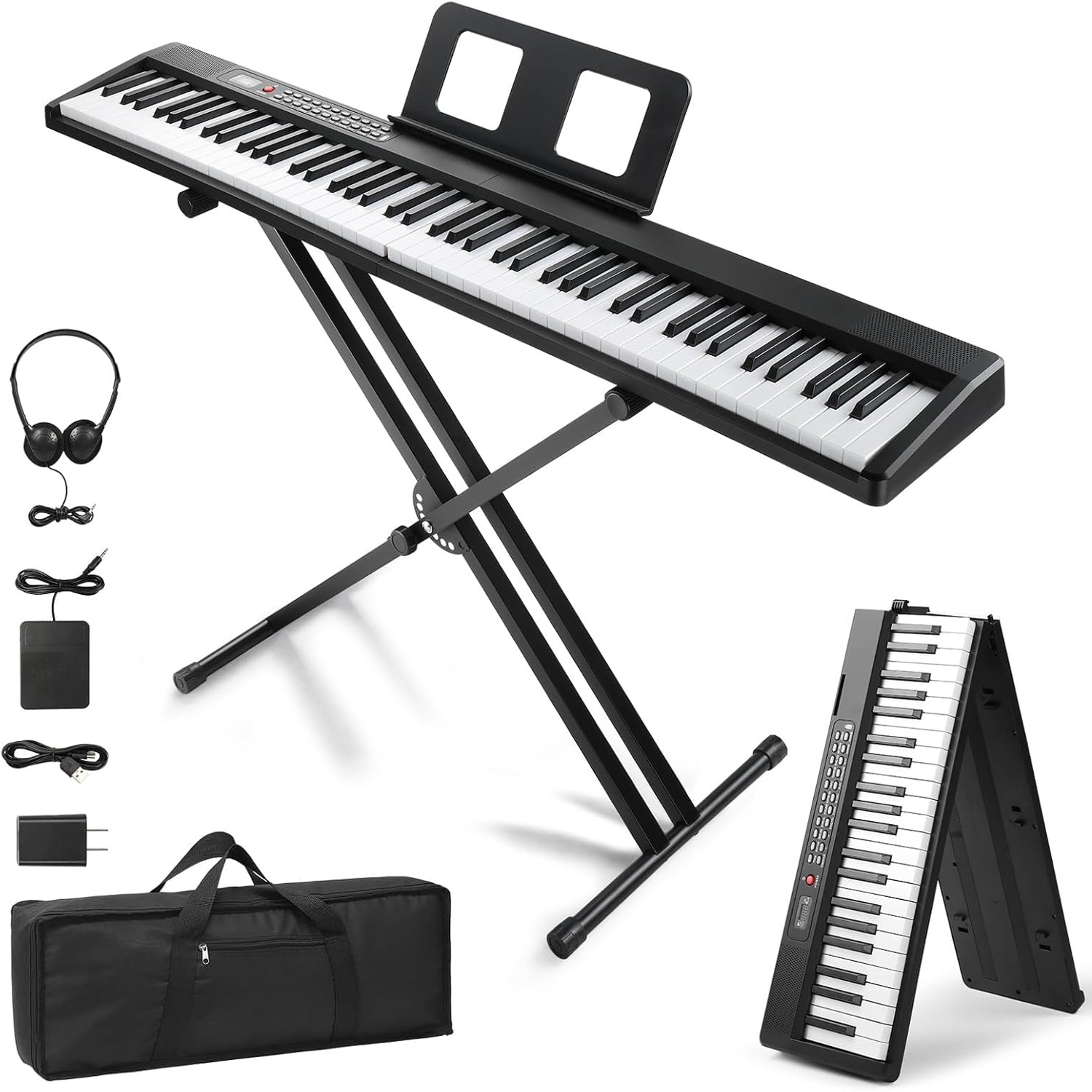
A foldable 88 key piano is a way out of that trade-off. You get the whole key range of a standard piano, the same spread a teacher or a lesson book assumes, and when practice is over the instrument folds and goes in a bag. The OMZZ Ryuusei 88 set takes that idea and adds the pieces a beginner normally has to buy separately.
How a folding piano actually works
The keybed is hinged roughly in the middle. Open, it sits flat on the stand and looks and plays like a normal keyboard. Closed, the two halves fold together and the footprint shrinks to about half the width. That is the whole trick, and it is why the padded bag in this set is a realistic size rather than something you need two people to carry.
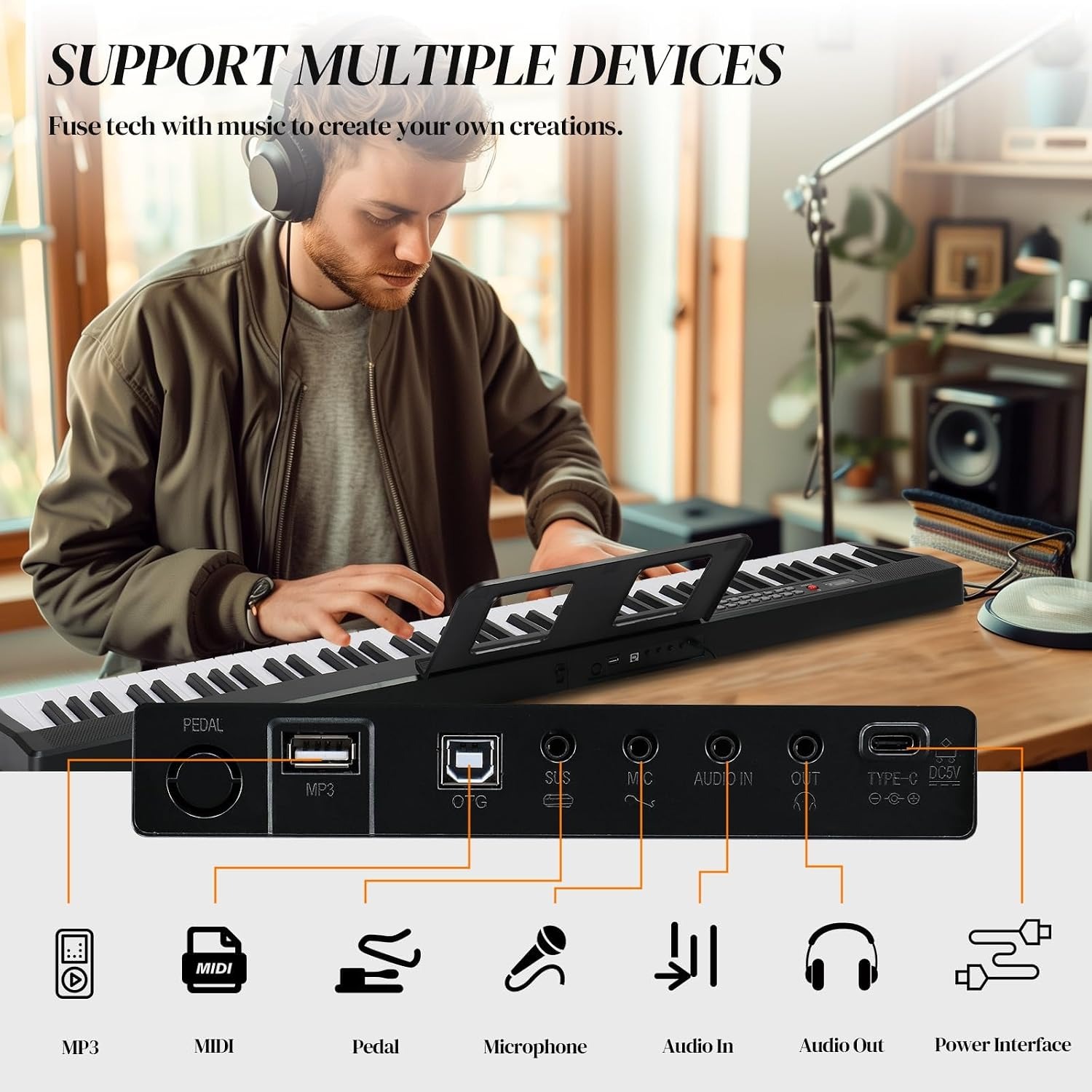
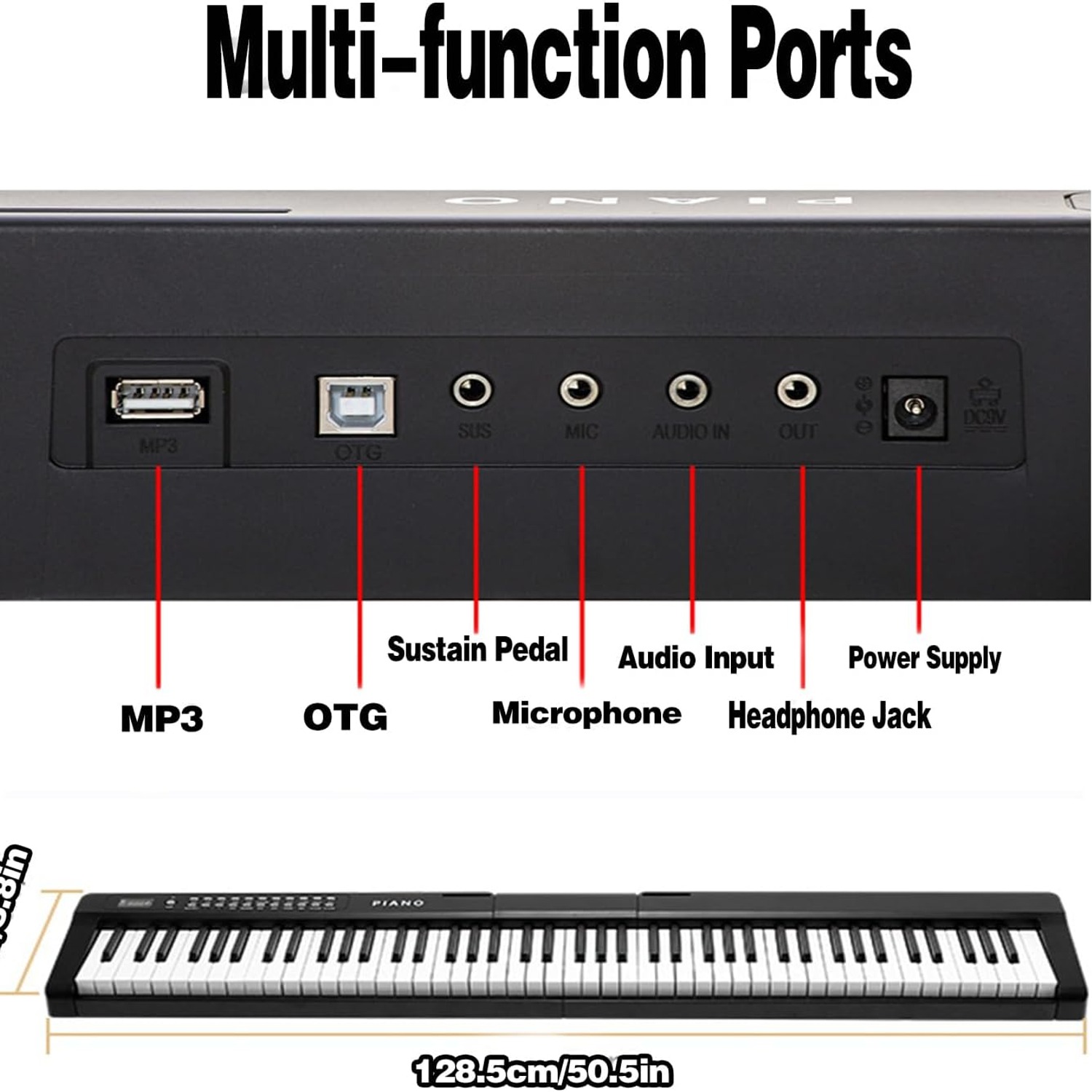
The electronics are standard digital piano parts. Pressing a key triggers a recorded piano sound played through built-in speakers, or through headphones if something is plugged into the 3.5mm jack. There is no tuning, no humidity worry and no annual technician visit.
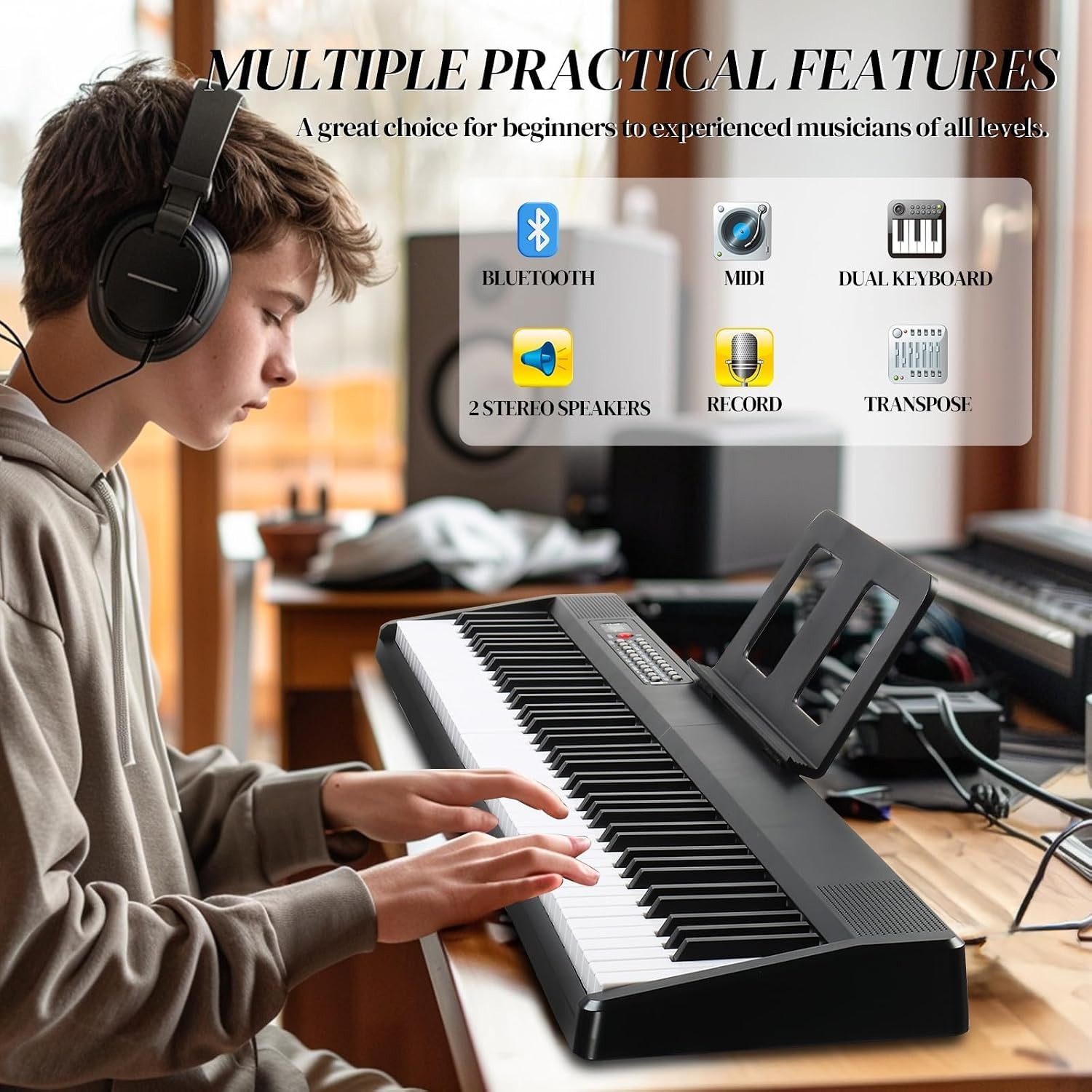
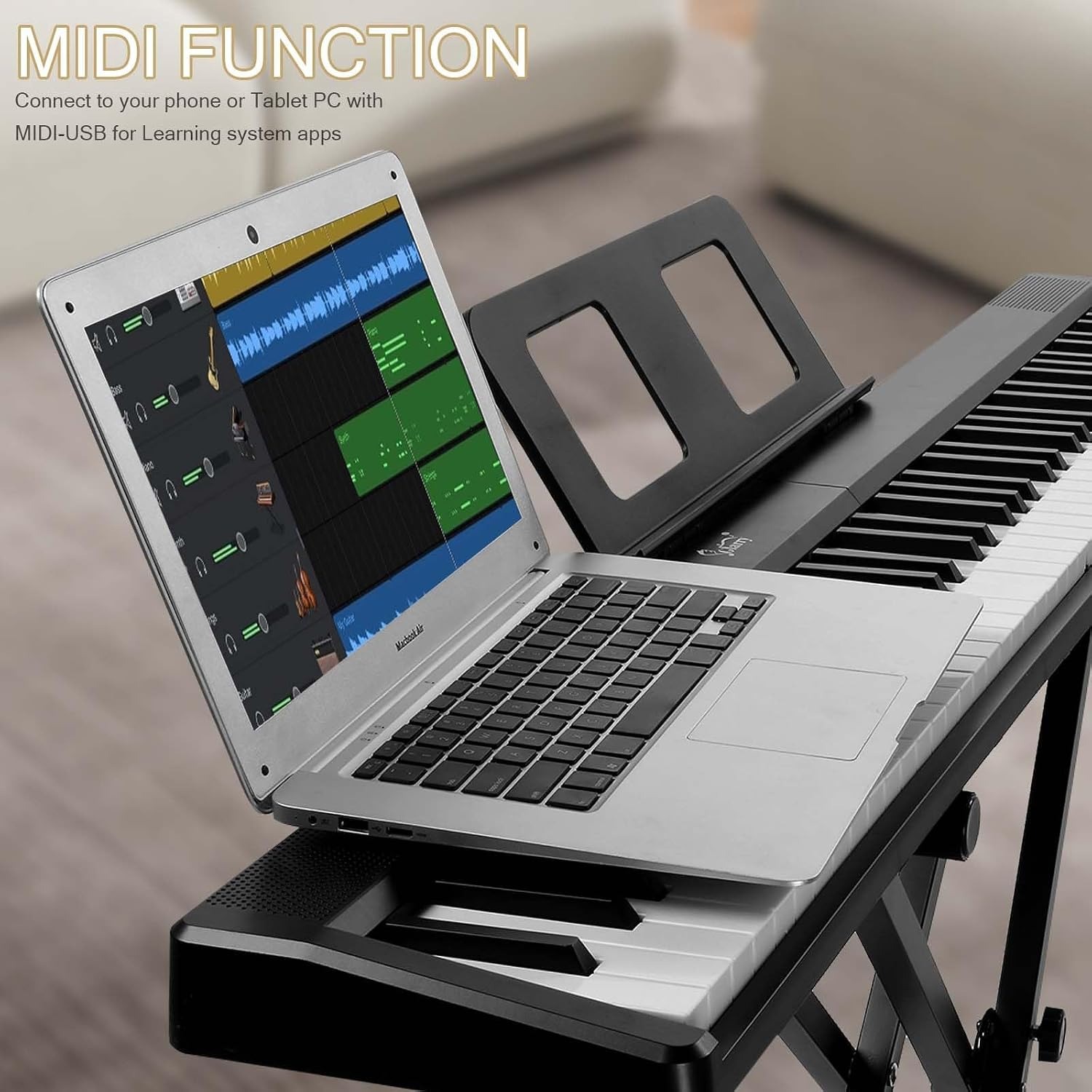
What has changed in the last few years is connectivity. This model lists USB, MIDI and dual Bluetooth mode. In plain terms, that means it can talk to a phone, a tablet or a computer. A learning app can see which key you pressed and tell you whether it was the right one. A recording program can capture a performance as editable notes rather than just audio. Recording and playback are also built into the instrument itself, so a student can play something, listen back and hear the timing problems they could not feel while playing.
Who this set suits
It suits a few clear groups.
Adult beginners who do not want to commit a corner of the living room to a piano forever. Fold it, slide it behind the sofa, get it out tomorrow evening.
Children starting lessons, where nobody yet knows whether the interest will last two months or ten years. A full 88 key range means they will not outgrow the instrument in the first year, and the included key stickers shorten the frustrating early weeks of hunting for middle C.
Students who travel between two homes, or who want to take the keyboard to a lesson. At 8.12 kg for the whole package, with a padded bag included, that is a practical weekly trip rather than a special operation.
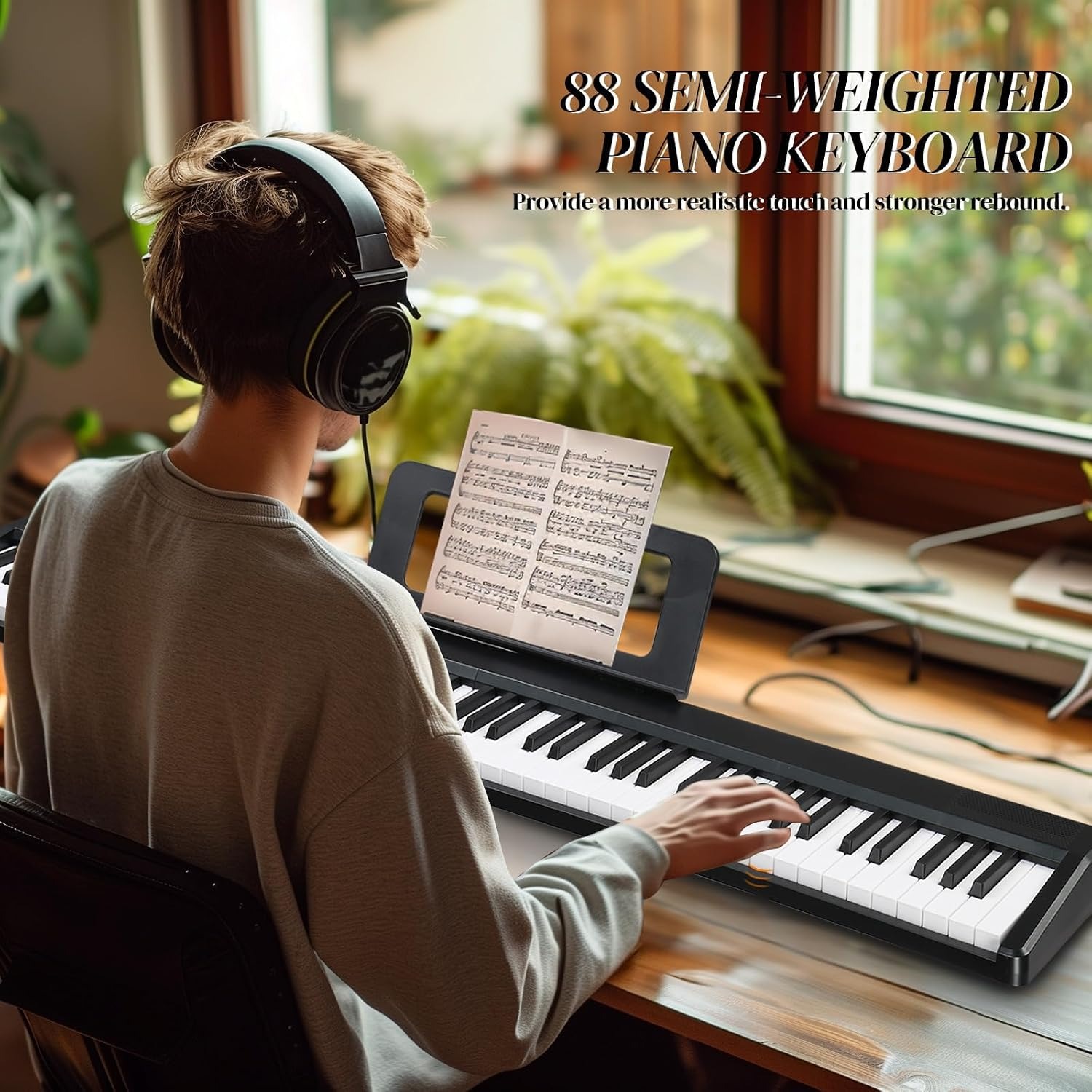
Anyone in a shared building. The headphone jack and supplied headphones are the difference between practising when you have time and practising only when the house is empty.
It is less suited to an advanced player who needs a specific hammer action and a long voice list. The supplier does not state the key action type for this model, and we are not going to claim one. If weighted keys are non-negotiable for you, ask us before ordering.
What to look for when comparing models
Key count. Eighty-eight is the full range. Sixty-one and seventy-six key models are cheaper and smaller, but every year of progress makes the missing notes more annoying. If you can start at 88, start at 88.
What is in the box. This is where sets differ enormously. A bare keyboard looks cheap until you add a stand, a sustain pedal, headphones and a bag, at which point the price gap often disappears. The Ryuusei 88 set includes a sustain pedal, music rest, power adapter, USB power adapter, headphones, keyboard bag, double-X stand and key stickers. For a first instrument, that completeness is worth real money, and it removes the week of waiting for a pedal to arrive.
The pedal specifically. Beginners are told they do not need a sustain pedal yet. Then around month three a piece asks for it. Having one already attached saves a small frustration at exactly the point where motivation is fragile.
Connections. Check that the keyboard supports MIDI over USB if you plan to use apps or recording software. Bluetooth MIDI is the more convenient version of the same thing. Both are listed here, which keeps the options open as the player's interests change.
The stand. A double-X stand is more stable than a single-X, and it adjusts in height. That matters more than people expect, because playing at the wrong height builds wrist and shoulder habits that are hard to undo later.
Honest dimensions. The supplier for this model lists the size as compact but does not publish exact measurements, and we have left those fields blank rather than invent them. If you are fitting the piano into a specific alcove or cupboard, ask us first.
Setting it up well
Put the stand on a flat floor and set the height so the player's forearms run roughly level with the keys when seated. Elbows slightly in front of the body, wrists not drooping. A dining chair is usually too low for an adult and too high for a child, so adjust the stand rather than the person.
Place the music rest where the eyes can move from page to hands without a big head movement. Run the power cable behind the stand, not across the path to the door.
If you are using headphones for late practice, set the volume before playing, not during. It is easy to start quiet, creep the volume up and end the session with ringing ears.
For apps, pair over Bluetooth first and keep a USB cable handy as a fallback. Wireless is convenient, but a cable never drops out mid-lesson.
Looking after it
Digital pianos are low maintenance, but a folding one has a hinge, and hinges reward a little care. Open and close it slowly, using both hands, and never force it if something feels caught.
Wipe the keys with a soft dry cloth, or a barely damp one for stubborn marks. Keep drinks off the instrument entirely. A spilled glass of water is the single most common way a keyboard dies.
Unplug the adapter if the piano is going to sit unused for weeks. Store it folded in the supplied bag, away from radiators, damp and direct sunlight. If you transport it in a car, do not leave it in a closed boot on a hot day.
The short version
If you want to learn piano but you do not have a free wall, a foldable 88 key piano solves the problem without cutting the key range. This OMZZ set gives you 88 keys, a double-X stand, a sustain pedal, headphones, a music rest, key stickers, both power adapters and a padded bag, all in one box at 8.12 kg.
Bluetooth and USB MIDI mean it works with learning apps and recording software, and the headphone jack means practice can happen at any hour. The action type and exact dimensions are not stated by the supplier, so if either is critical to your decision, message us and we will check before you order rather than after.