
The complete guide
Choosing Your First Mandolin, A Practical Buyer's Guide
The problem with "I always wanted to learn an instrument"
Most people who say that have tried guitar. They bought one, found the chord shapes awkward, got sore fingers, and the guitar ended up behind a door. The instrument was not the problem. Six strings spread across a wide neck is a lot to ask of hands that have never done it before.
A mandolin asks for less. The neck is short, the chord shapes mostly use two or three fingers, and because the strings are tuned in fifths, the patterns repeat in a way that makes sense after a while. You can learn one shape and slide it up the neck to get a different chord. That is genuinely encouraging in the first month, when encouragement matters most.
The catch is that mandolins look unfamiliar. Eight strings seems like double the work. Shoppers see A style and F style and have no idea which one matters. This guide clears that up so you can buy once and get on with playing.
What eight strings actually means
The eight strings are four pairs. Each pair is tuned to the same note, and you fret both strings in a pair at the same time with one fingertip. So your left hand is doing four strings' worth of work, not eight.
The pairs are tuned G, D, A, E from low to high. That is violin tuning, which is handy if anyone in the house plays fiddle, because the fingering transfers directly. It also means mandolin sheet music and fiddle tunes are interchangeable, and fiddle tunes are a huge, free, century-deep library of music to learn from.
Why double the strings at all? Volume and shimmer. Two strings ringing the same note never vibrate in perfect agreement. The slight difference between them is what makes a mandolin sound like a mandolin rather than a small guitar. It is most obvious during tremolo, the fast back-and-forth picking you hear in Italian and bluegrass playing, where the doubling turns a single note into a sustained wash of sound.
A style versus F style
This is the one piece of mandolin jargon worth understanding before you spend money.
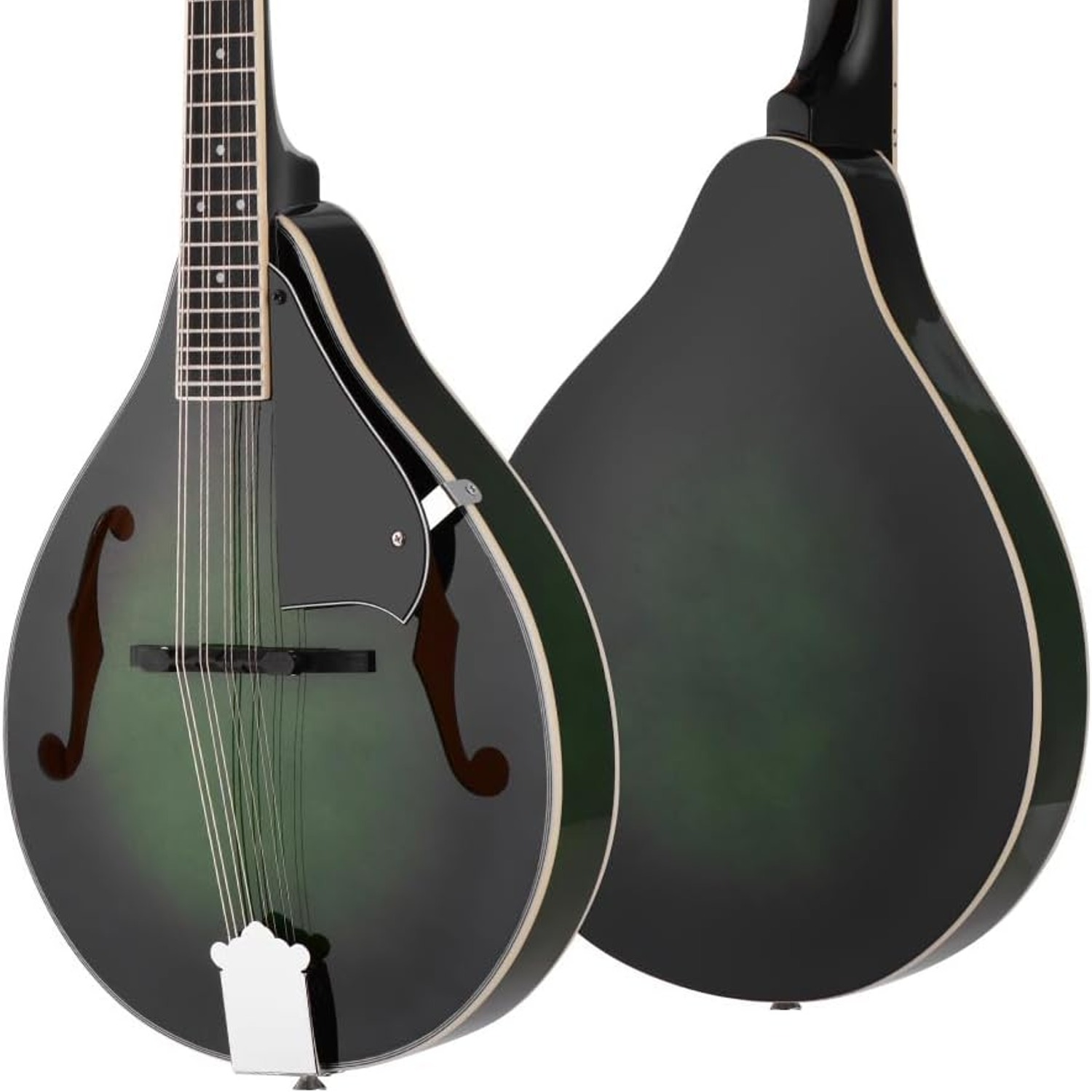
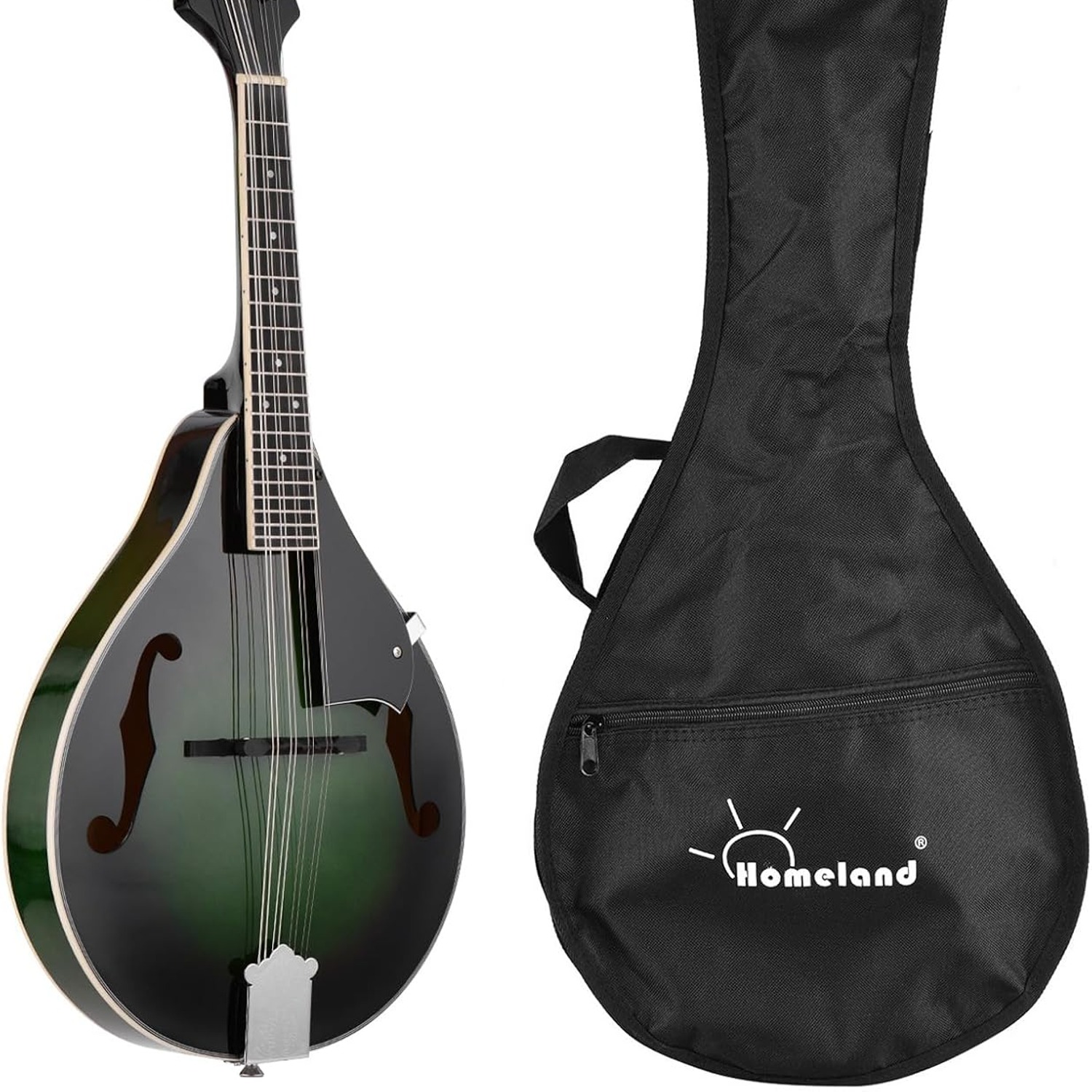
A style means a plain teardrop or pear-shaped body. Symmetrical, no decoration, nothing sticking out. F style means the body has a carved scroll on the upper bout and usually a couple of points. The scroll is decorative. It does not make the instrument louder or better in tune.
What it does is take far more labour to build, which is why F style mandolins cost substantially more at every quality level. A bluegrass player on stage often wants one because it is the look associated with the genre. A person learning at home gets more instrument for their money with an A style, because the budget goes into the parts that make sound rather than the parts that look impressive in photos.
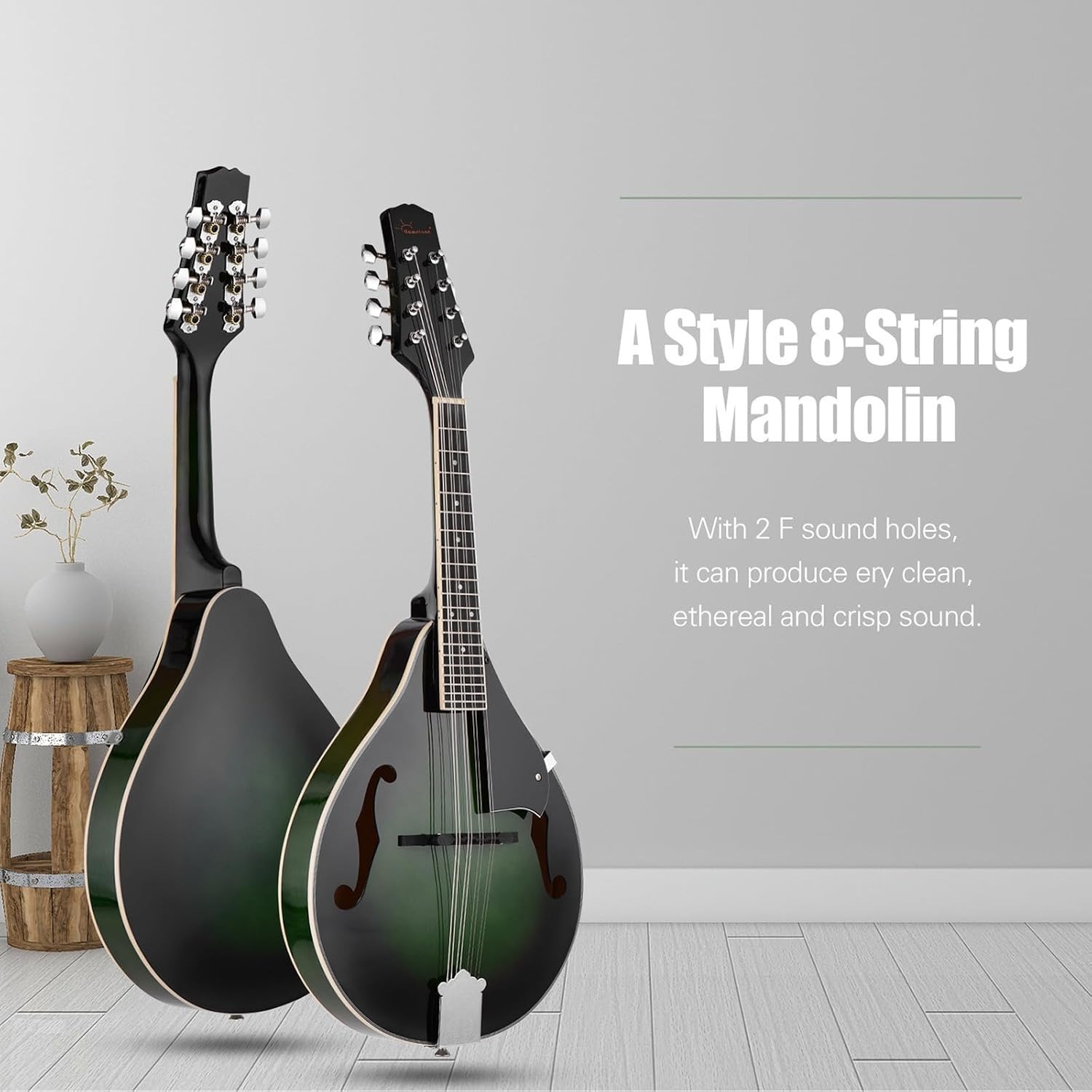
This is an A style mandolin, which is the right call for anyone who wants playability over presentation.
Why the F-holes matter more than the body shape
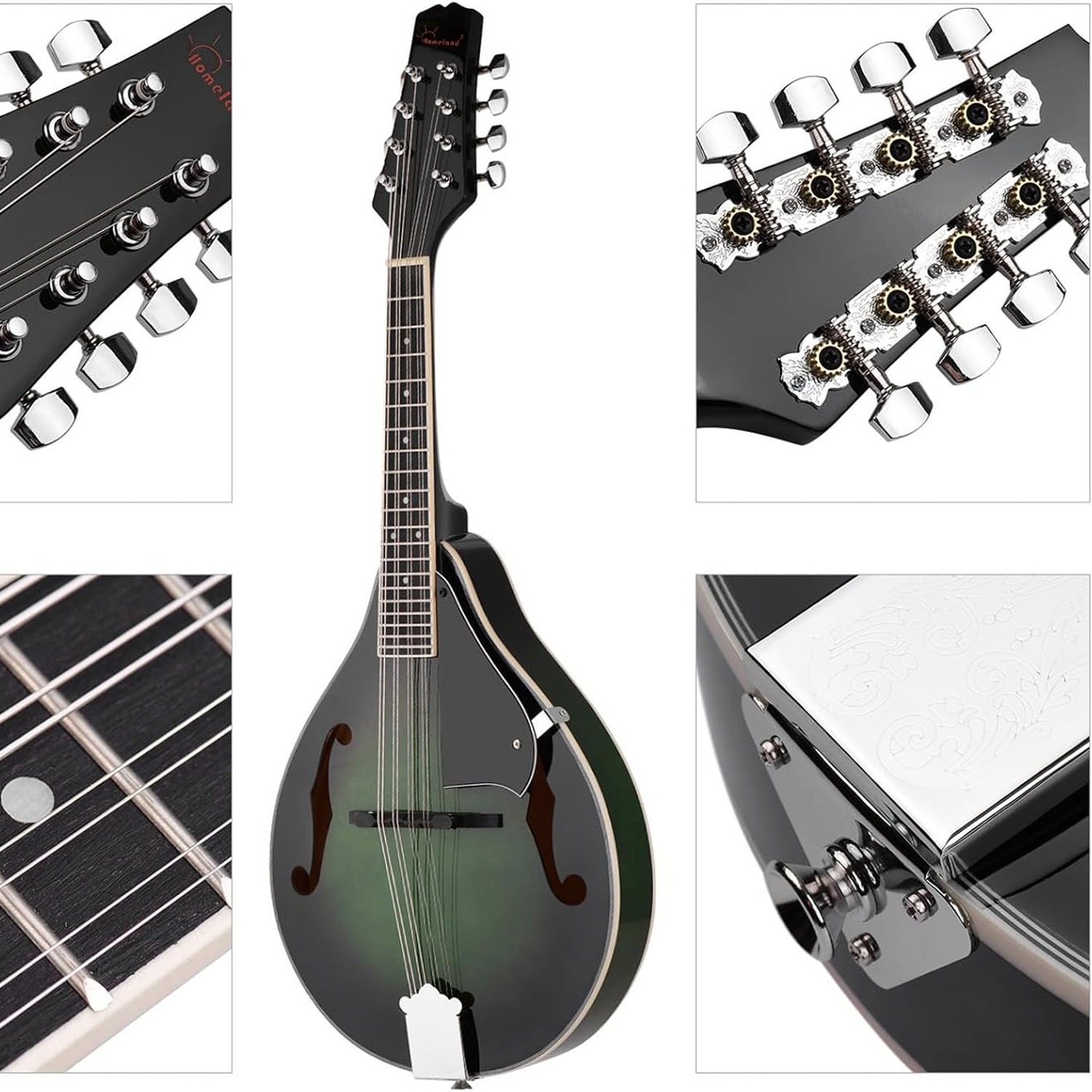
The two F-shaped openings cut into the top are not decoration. They are how the sound gets out, and their shape changes the character of the instrument.
Round-hole mandolins tend to sound warm and full, with a slightly softer attack. They are a favourite for Celtic and classical playing. F-hole mandolins push more of the sound directly forward and give notes a sharper, more defined edge. That edge is why F-holes dominate bluegrass, where the mandolin has to cut through a banjo, a guitar and a bass without an amplifier.
For a beginner, the F-hole voice has a practical advantage. You can hear what you are playing clearly, including the mistakes. Clarity helps you fix things. A warm, forgiving instrument can hide sloppy fretting from your own ears, which slows you down in the long run.
Twenty frets and what you will actually use
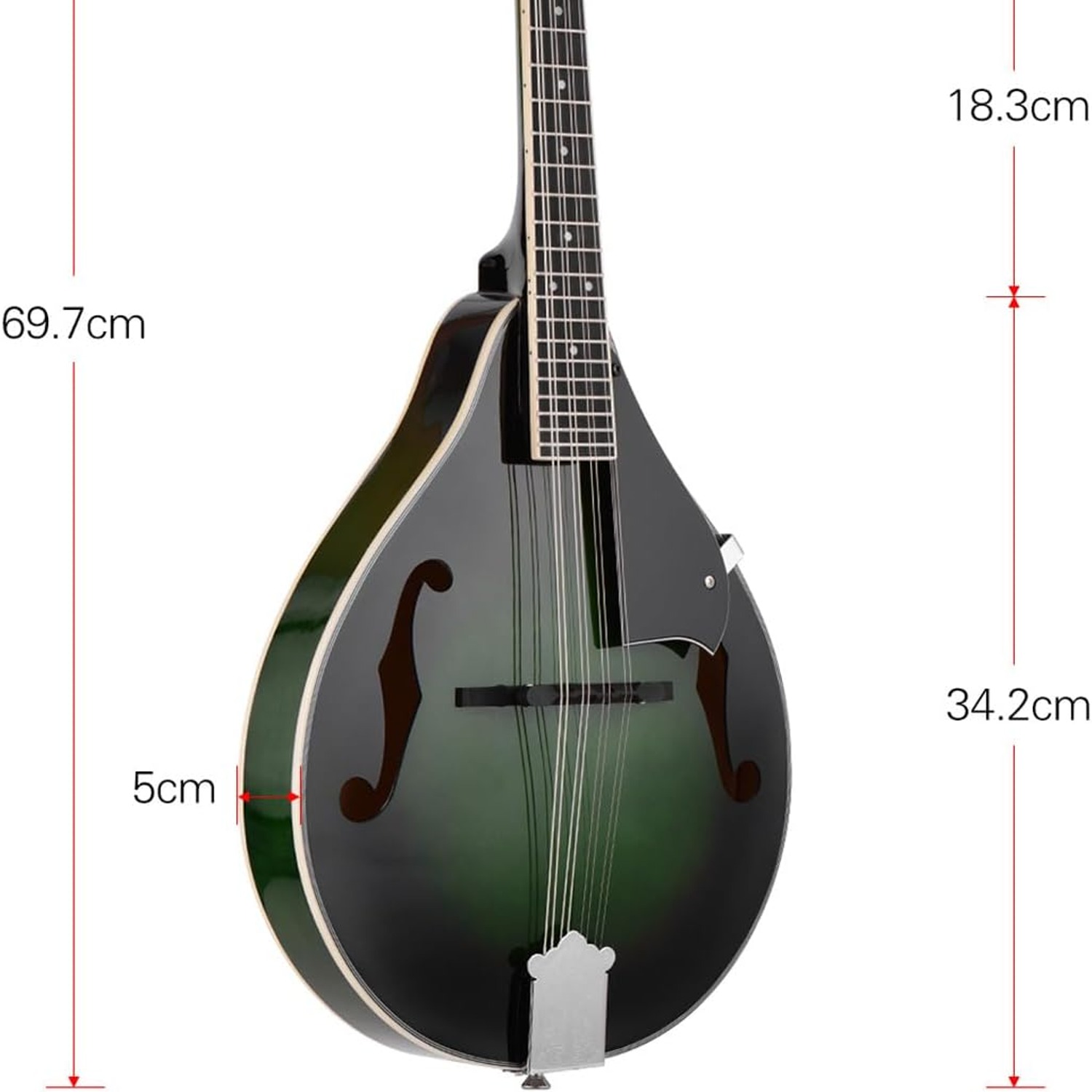
The fingerboard on this model carries 20 frets. In your first few months you will live in the first five, which is where all the common open chord shapes sit. You might reasonably wonder why the other fifteen exist.
They exist because the mandolin is a melody instrument as much as a chord instrument. Once you move past strumming and start picking out tunes, you run out of room quickly in first position. Fiddle tunes in particular wander up the neck. Having 20 frets means the instrument does not become the limiting factor six months after you buy it, which is a real problem with very short-necked budget instruments.
A wider fretted range also lets you play the same chord in several places on the neck, which is how you make a simple song sound less repetitive when you accompany a singer.
Tuners, and why open gears are a good sign
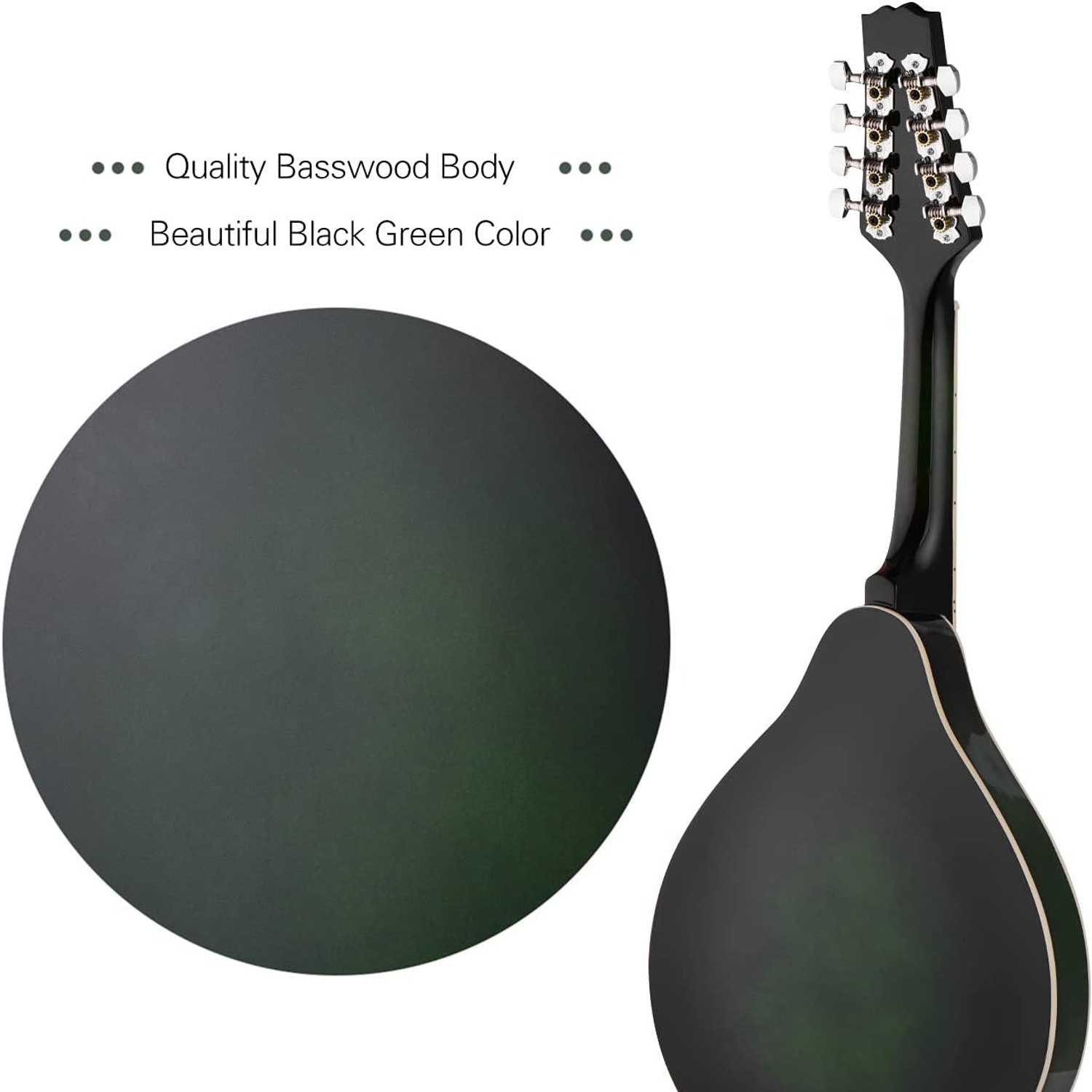
The tuning machines here are chrome-plated open gear units. Open gear means you can see the worm and cog on the back of the headstock rather than having them sealed in a metal housing.
Two practical benefits. First, you can see exactly how much the post has turned, which helps enormously when you are learning to tune by ear and are not yet confident about which direction raises pitch. Second, if a gear ever gets stiff, a single drop of light oil fixes it, where a sealed unit usually has to be replaced.
Mandolin tuning takes patience because you are matching two strings to each other as well as to the correct pitch. Tuners that respond smoothly and predictably make that less frustrating. Expect to tune every time you pick the instrument up for the first few weeks, then less often as the strings settle.
Who this suits
Adults coming back to music after years away do well on a mandolin, because progress is fast enough to keep you interested. Guitarists pick it up quickly. Singers like it because a strummed mandolin sits in a different frequency range to the voice, so it supports singing instead of competing with it.
Children and teenagers are a good fit too. The short scale suits smaller hands, and the whole instrument weighs 1.7 kg, so nobody is wrestling with it. If a child has tried a full-size guitar and found it physically awkward, a mandolin often succeeds where the guitar did not.
It also works as a gift. The storage bag is included, so the person opening it has everything required to start that afternoon. No separate case to buy, no accessory shopping list before the first note.
Looking after it
Mandolins are not fragile, but they are made of wood under tension, and wood responds to its environment. A few habits keep it healthy.
Wipe the strings down with a dry cloth every time you finish playing. Finger oil is what kills string tone, and thirty seconds of wiping can double how long a set sounds fresh. Wipe the body too, especially around where your forearm rests.
Keep it in the bag when you are not playing. Dust settles into F-holes and around the bridge otherwise. The bag also protects the polished finish from knocks.
Avoid extremes. Do not leave it in a car on a hot day, next to a radiator, or in a damp garage. A normal living room is fine. If you are putting it away for several months, slacken the strings a little to take tension off the neck.
Change strings when they look dull and sound dead rather than on a fixed schedule. Swap them one pair at a time so the neck is never left fully unloaded.
How to make the first month work
Short and daily beats long and occasional. Fifteen minutes a day will build calluses and muscle memory faster than two hours on a Sunday. Keep the mandolin out of the cupboard and within reach, because the hardest part of practising is starting.
Learn two chords first and play a song with them. There are hundreds. Then add a third. Chasing perfect technique before you have played anything enjoyable is how people quit.
A clip-on tuner is the one accessory worth buying immediately. An out-of-tune instrument sounds wrong no matter how well you play, and beginners often blame themselves for what is actually a tuning problem.
The short version
An A style mandolin with twin F-holes is the sensible starting point for almost anyone. You get the bright, carrying tone that suits folk and bluegrass, a 20-fret neck that will not hold you back once you improve, and open-gear chrome tuners that make tuning straightforward to learn.
This one weighs 1.7 kg, has a polished finish, needs no batteries, and comes with a storage bag so it has somewhere to live from day one. Material, colour and full dimensions are not listed in our product record, so we have not claimed them here.
If you have been meaning to learn something stringed and the guitar never clicked, this is a genuinely easier door into playing music.