
The complete guide
Buying a Concert Ukulele, Explained Simply
The problem with most first ukuleles
Here is the pattern. Someone buys the cheapest small ukulele they can find, plays it for ten days, and quietly puts it in a cupboard. They decide they are not musical. Usually that is not what happened.
What happened is the instrument was fighting them. The frets were too close together, so fingers kept muting the string next door. The strings were stiff, so fingertips hurt before anything sounded good. And the body was so small that even a correctly fretted chord came out thin and plinky. Nobody practises something that sounds unrewarding.
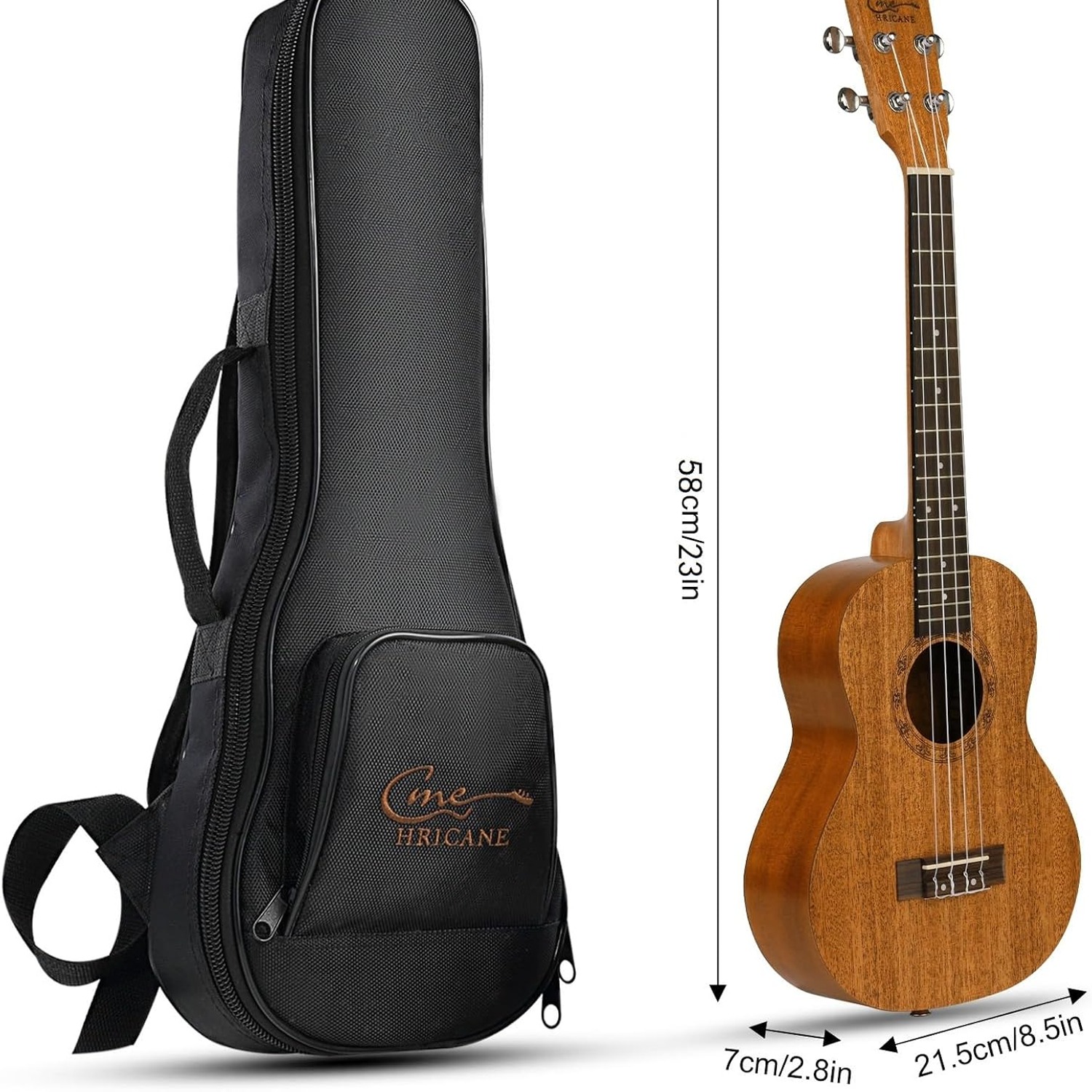
A concert ukulele solves a surprising amount of this just by being bigger. At 23 inches it sits between the tiny soprano and the larger tenor. More scale length means more space between frets. A bigger body means more air moving, which means more volume and more warmth. For an adult beginner, that combination is the single biggest upgrade available, and it costs very little compared to lessons.
How a concert ukulele actually works
There is not much machinery involved, which is part of the appeal. Four nylon strings are stretched over a wooden box. You press a string down at a fret to shorten it, which raises its pitch. You strum, the strings vibrate, the top of the body moves with them, and the box pushes air.
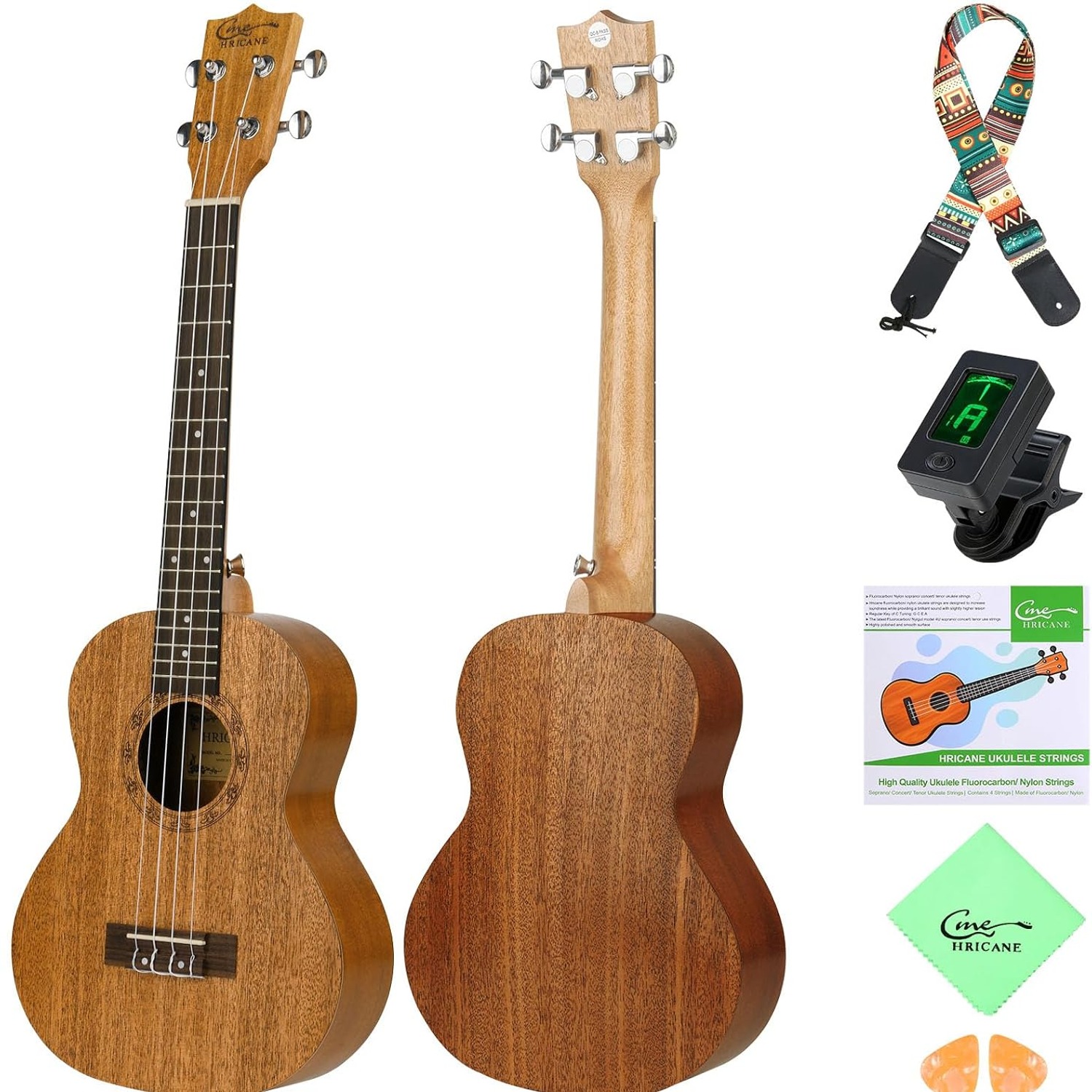
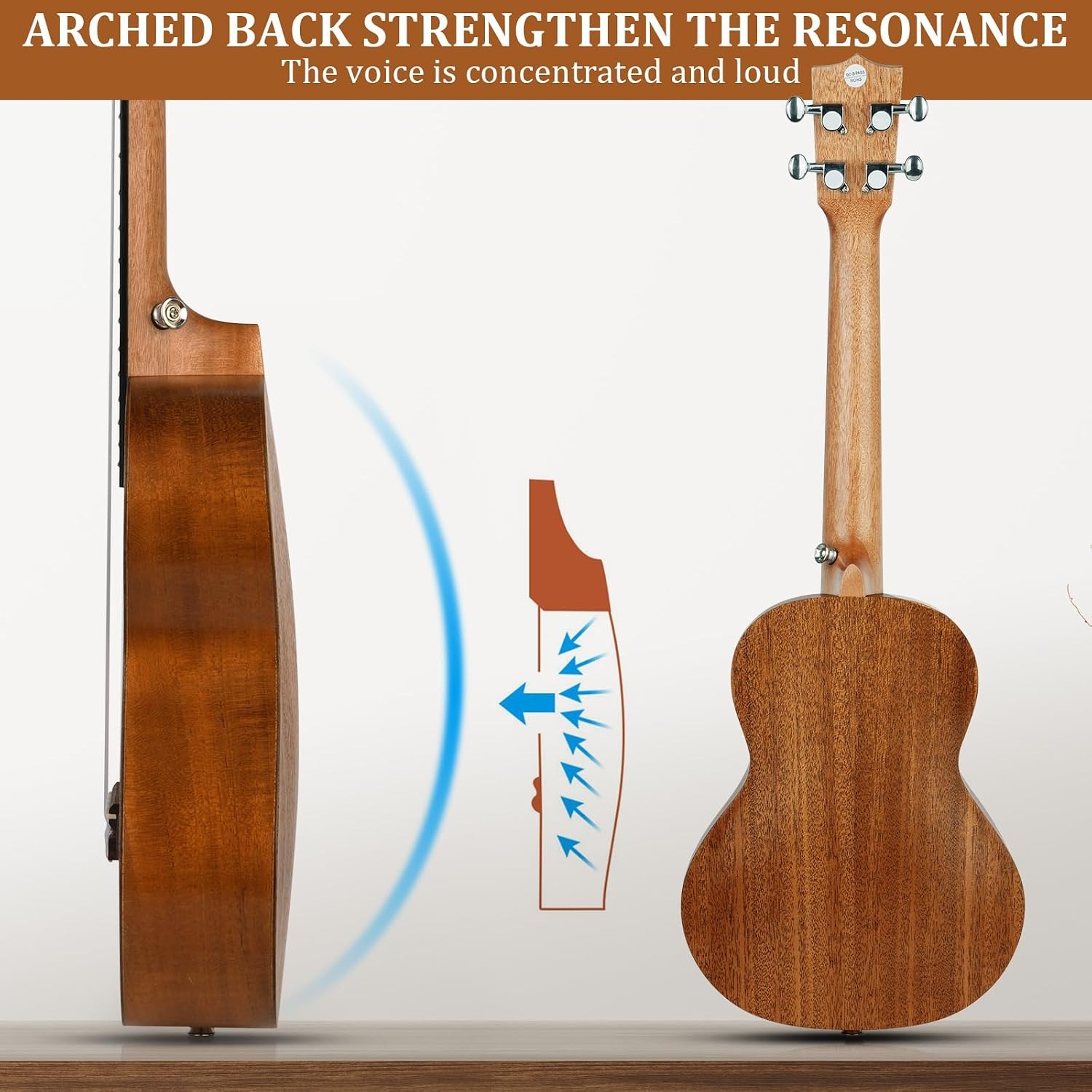
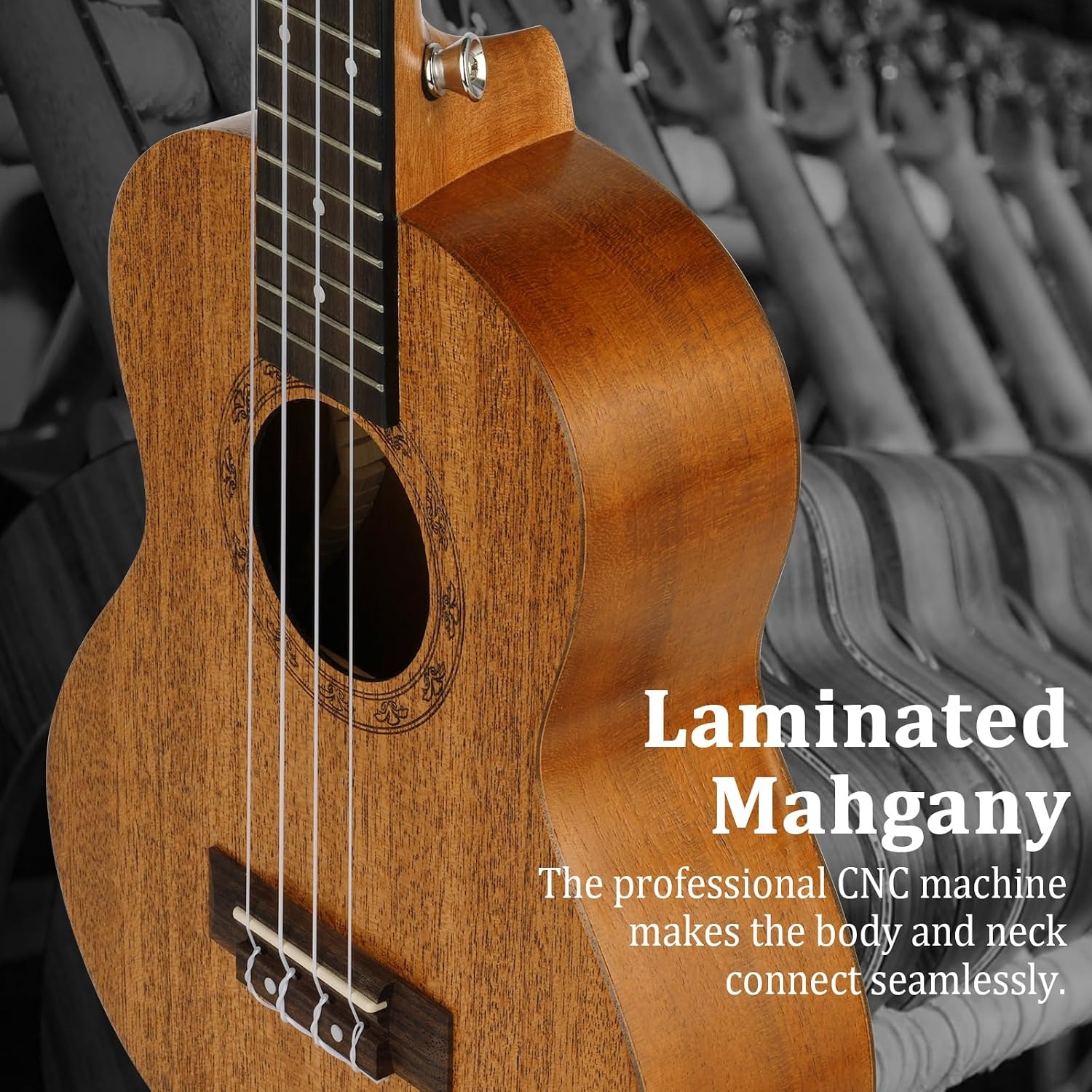
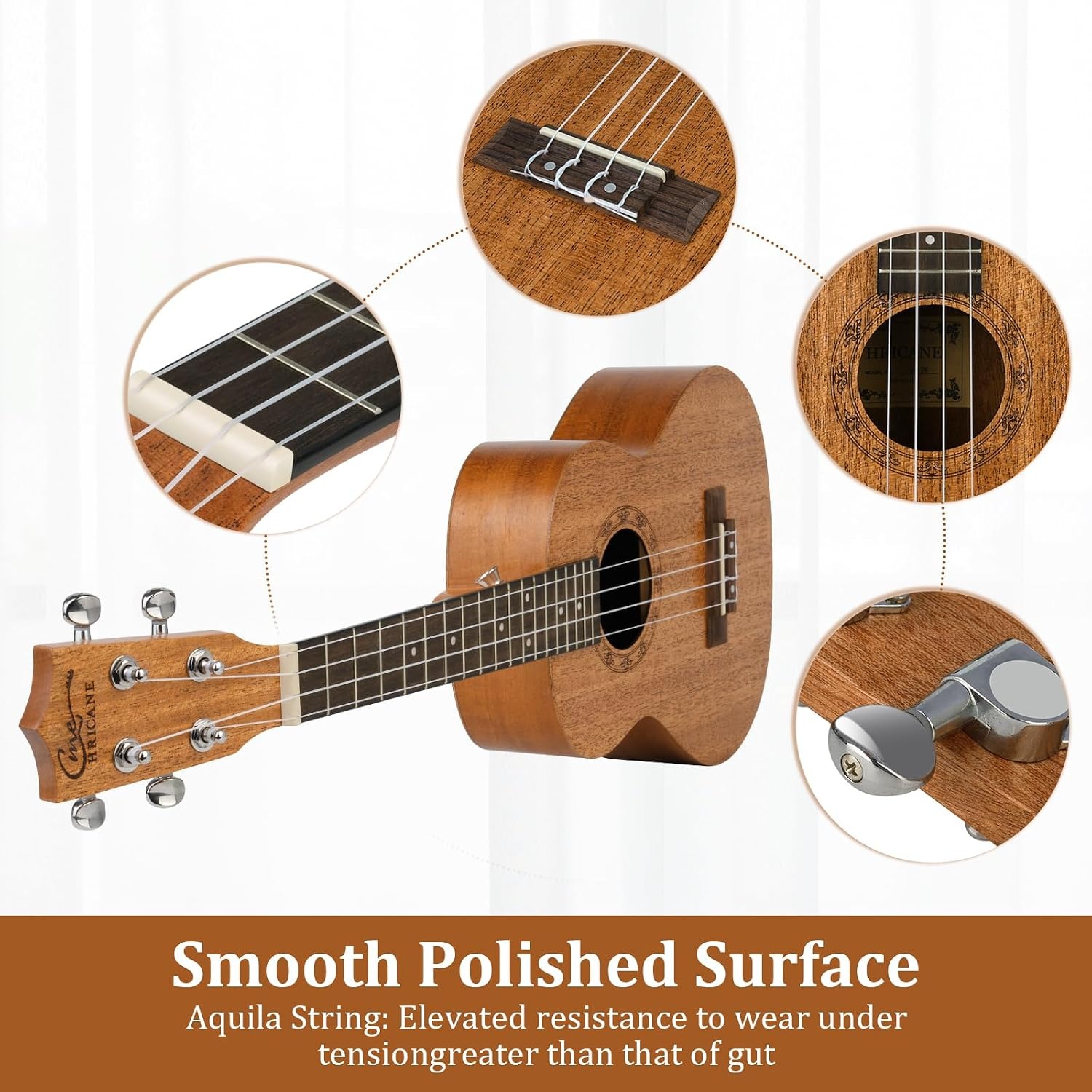
That is why the wood matters. This instrument has a mahogany top, back and body. Mahogany is the traditional ukulele timber and it has a recognisable character, described here as warm, fuller, with deeper woody tones. Compared with a bright, hard-sounding laminate, mahogany rounds off the top end. Chords sit together rather than jangling, and a single note has a bit of body to it.
The fingerboard is walnut, which is the surface your fingertips spend all their time on. The strings are nylon, tuned G C E A. That tuning is worth understanding, because it is the standard. Every chord chart, every beginner video, every songbook assumes G C E A. You never have to translate anything.
One quirk of ukulele tuning that confuses newcomers is reentrant tuning, where the fourth string is not the lowest note. It is why ukuleles have that particular bouncy sound. You do not need to think about it to play. Just tune to the notes and everything works.
Who this suits
Adults starting from zero are the obvious group. If you have never played anything, four strings and three chord shapes is a far gentler entry than six strings and barre chords. Within a week you can accompany yourself on something recognisable, and that early win is what keeps people going.
Guitarists are the other big group. The shapes rhyme with guitar chords, so the learning curve is short, and the nylon strings feel kind after steel. A lot of guitar players keep a mahogany ukulele on a hook near the couch simply because it is the instrument they actually pick up.
For kids, it depends on size. A smaller child may be better served by a soprano, which they can get their arms around more easily. Older children and teenagers generally handle a concert fine and will not outgrow it. At 1.09 kg it is not a burden to hold or carry.
Travellers and campers like the format too. The packed footprint is 58.4 x 21.3 x 6.1 cm, which goes in a car boot without negotiation, and the included bag keeps dust and knocks off it. The best travel ukulele is usually just the one that is light enough that you bother taking it.
How to choose between the sizes
Think about hands first, sound second, portability third.
Hands decide more than anything. Put your fingers in a C chord shape and look at the gaps between them. If your fingers are broad, a soprano will crowd them and you will mute strings without meaning to. A concert gives you breathing room. If you have genuinely large hands and long fingers, you might eventually prefer a tenor, but concert is the safe default for most adults.
Sound is next. Bigger body, deeper and louder tone, broadly speaking. The soprano is the classic chirpy ukulele sound. The concert keeps that character but adds weight underneath it. With a mahogany body you get the warmer end of that range, which flatters singing voices.
Portability only matters if you will actually be carrying it. A concert is still a small instrument by any sensible measure.
Then there are the practical bits that decide the purchase. Does it come with a bag? This one does. Are there spare strings in the box? Yes, a string set is included, which matters more than it sounds, because a string usually breaks at the worst possible moment. A beginner ukulele kit that covers those two things saves you a second order.
Be careful about specs nobody has confirmed. The fret count, the country of origin and warranty terms are not stated by the maker, so we are not going to put numbers on them. If one of those decides it for you, ask us and we will check current stock.
Living with it day to day
Tuning is the habit to build. Nylon stretches, so a brand new ukulele will drift noticeably for the first week or two. This is normal and not a fault. Tune it, play it, tune it again. Gently pulling each string away from the fretboard and retuning speeds the process along. After that settling period a quick check before each session is enough.
Humidity and temperature move wood. Leaving a ukulele in a hot car, next to a radiator or in a damp garage is how instruments develop problems. A normal room is fine. The bag is the easiest storage solution and it also keeps dust off the strings.
Cleaning is a dry soft cloth and nothing else. Wipe the strings and the polished body after playing. Finger oils dull both. Skip household sprays and anything with alcohol or solvent in it, because polished finishes do not forgive those.
Strings need replacing when the tone flattens out, when they look grimy, or when tuning stops holding. For someone playing a few times a week, roughly once or twice a year is typical. The spare set in the box covers the first change. Changing nylon strings is a ten minute job and there are clear videos showing exactly how.
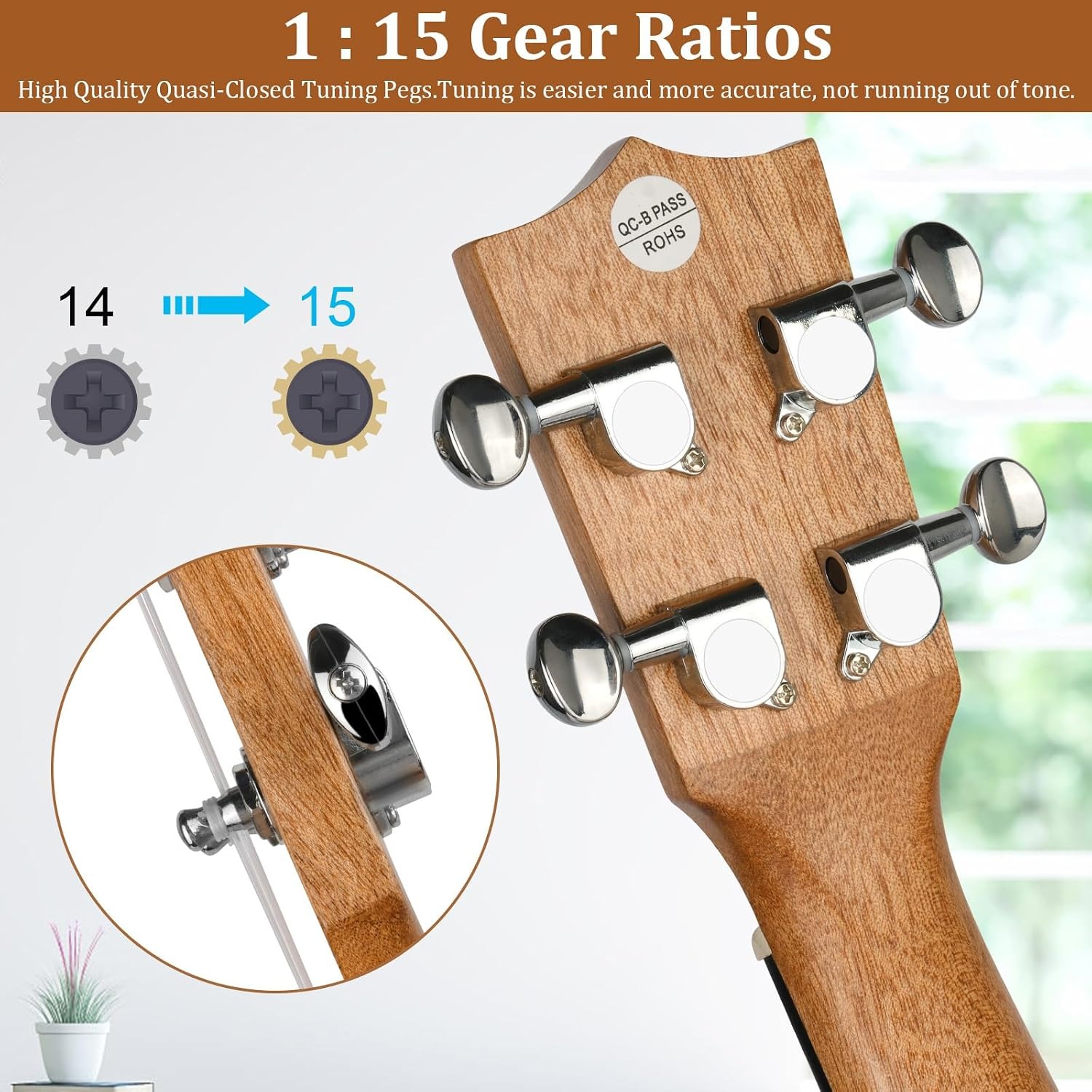
If a tuning peg feels loose or stiff over time, a small turn of the screw on the peg button is usually all it needs. Nothing on a ukulele is complicated to maintain.
Getting the first fortnight right
Learn three chords before you learn anything else. C, F and G7 between them cover an enormous amount of music. Play them slowly, one strum each, until the change is clean. Speed comes free afterwards.
Short practice beats long practice. Ten minutes a day will take you further in a month than a single two hour session on a Sunday. Leave the ukulele out of the bag somewhere visible, because an instrument you can see is an instrument you pick up.
Expect sore fingertips for about a week. The nylon strings make this much milder than a steel string guitar, but there is still an adjustment. Push through it and the calluses arrive.
The short version
A 23 inch concert ukulele is the sensible middle ground. Bigger and easier to fret than a soprano, smaller and friendlier than a tenor. This one has a mahogany top, back and body with a polished finish, a walnut fingerboard, and four nylon strings in standard G C E A, giving a warm, fuller tone with deeper woody character. It weighs 1.09 kg and comes with a bag and a spare string set.
If you are an adult or older child starting out, or a guitarist who wants something easy to grab, this size and this wood are a reliable combination. Tune it often in the first fortnight, keep it in the bag, wipe it down, and it will keep doing its job.