
The complete guide
How to Choose a Cajon Box Drum (and Actually Play It)
The problem with wanting to play drums
Most people who want to play drums never do. The reasons are boring and practical. A kit costs a lot, it eats a corner of a room, it takes twenty minutes to set up and pack away, and it is far too loud for a terrace house, a flat, or a small church hall. So the idea sits there, unused, and the person who wanted to play rhythm ends up tapping the steering wheel instead.
A cajon box drum removes almost all of those problems at once. It is a wooden box you sit on. You play it with your hands. There are no sticks, no pedals, no stands and no assembly. It weighs 3.33 kg and measures 44 x 32.5 x 32 cm, so it lives behind a sofa or in a car boot. And because the sound comes from your hands rather than a stick on a plastic head, it sits at a volume that works with acoustic guitars and singing voices instead of flattening them.
That combination is why the cajon has quietly become the default rhythm instrument for acoustic shows, songwriter rounds, worship teams, school music rooms and drum circles. It does the job a kit would do in those rooms, at about a tenth of the hassle.
How a cajon actually works
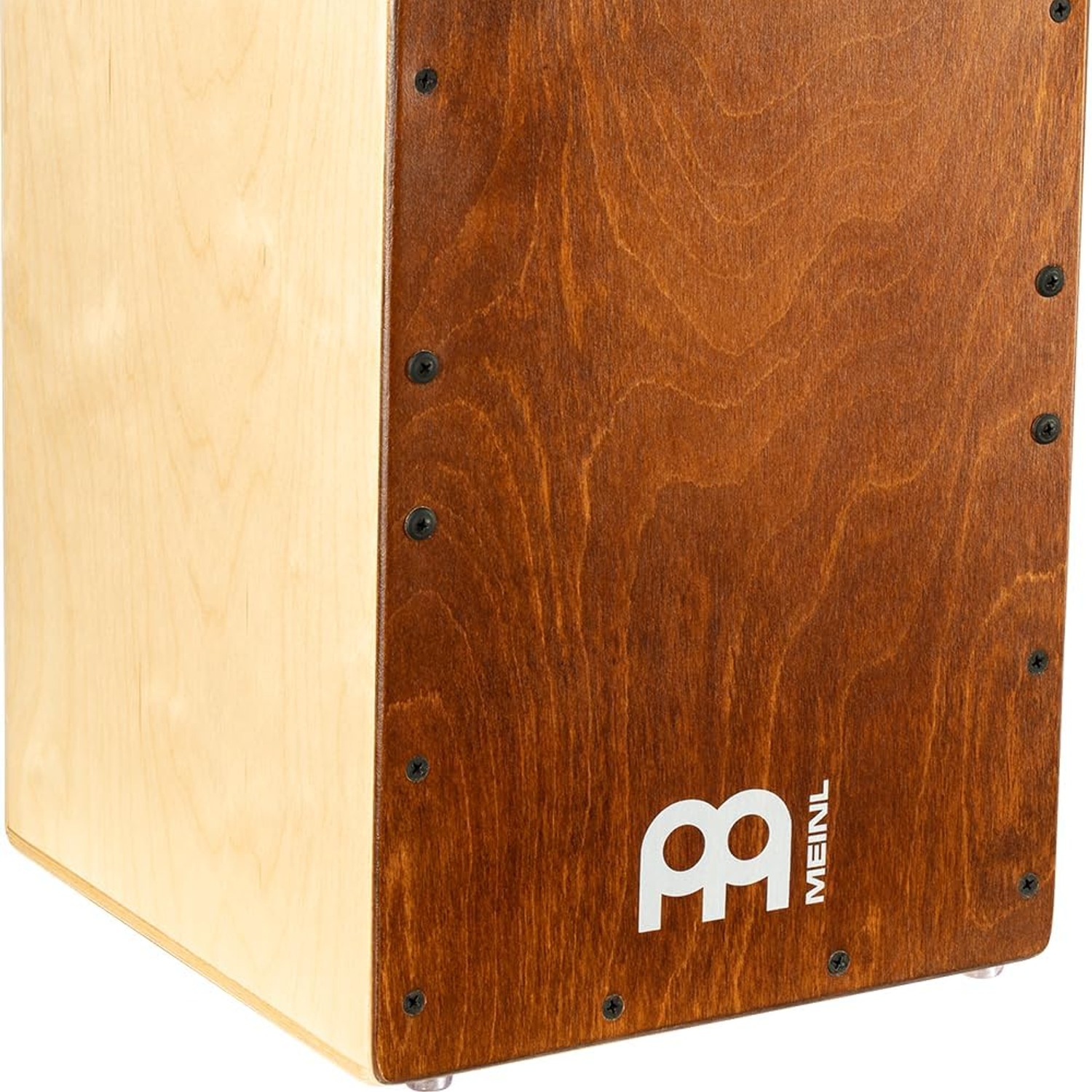
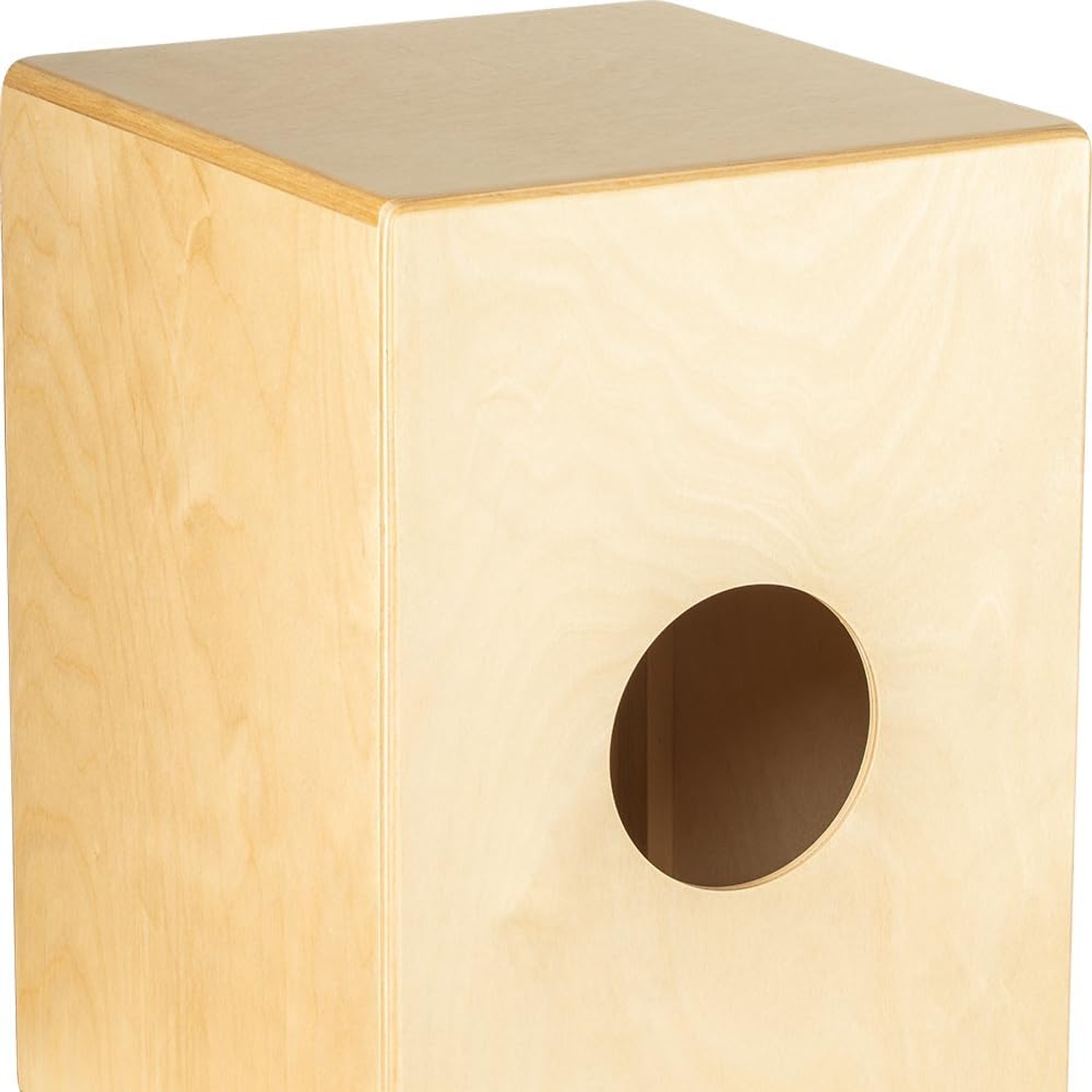
The front panel is the important part. It is called the tapa, and it is deliberately thin so it can flex when you hit it. The rest of the box is a solid resonating chamber. Strike the tapa low and near the middle with a flat, relaxed hand and the whole box responds with a round bass note. Move your hand up to the top corners and hit with your fingers and the panel gives you a thin, cutting slap. Those two tones, low in the centre and high at the edge, are the entire vocabulary of basic cajon playing.
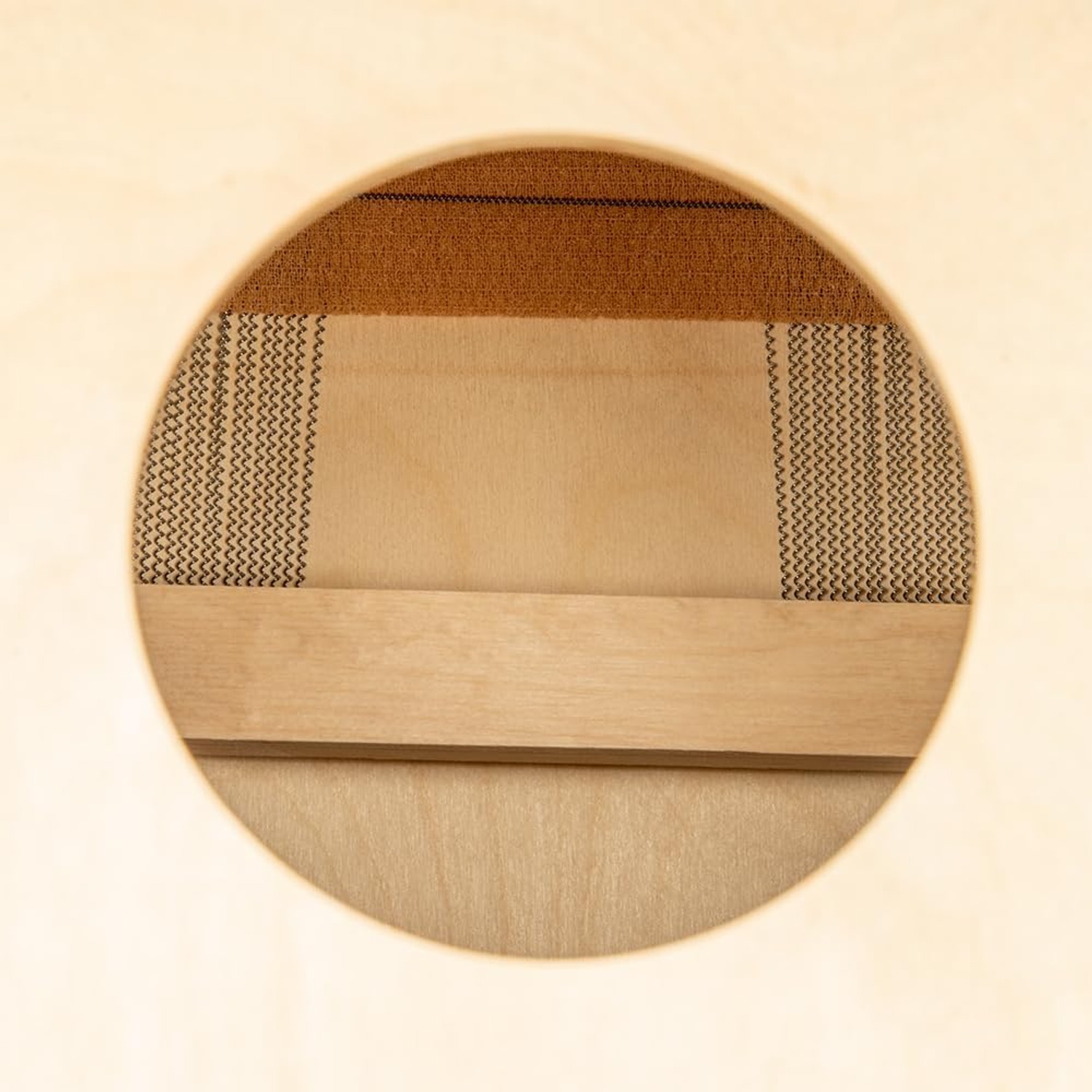
On this model there is a third ingredient. Two fixed sets of coiled steel snare wires sit against the inside of the tapa. These are the same kind of wires found under a snare drum. When you strike the top edge, the panel moves just enough to set them rattling, and the result is a crisp crack rather than a dull knock. That one feature is what turns a box into a drum you can hold a backbeat with. Because the sets are fixed, there is nothing to adjust before you play, and nothing to go out of tune.
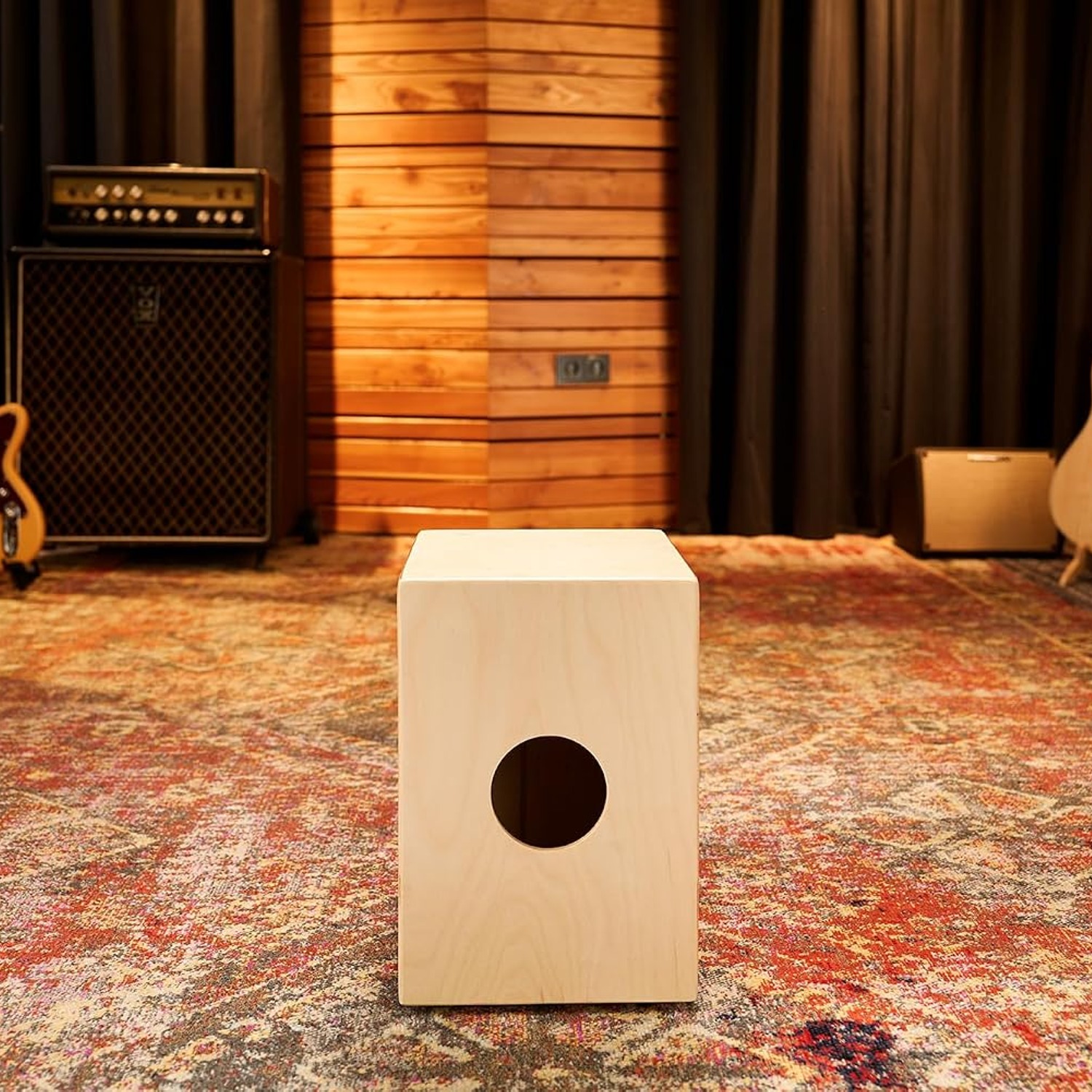
The back of the box has a 4 inch sound port. Air needs somewhere to go when you hit the front, and that port is where it goes. It lets the bass note build and then push out into the room. Block it, push the cajon hard against a wall, or drape a coat over it, and the low end disappears. Leave it clear and you get the full tone. It is also the obvious place to put a microphone if you are playing an amplified gig, since that is where the bass lives.
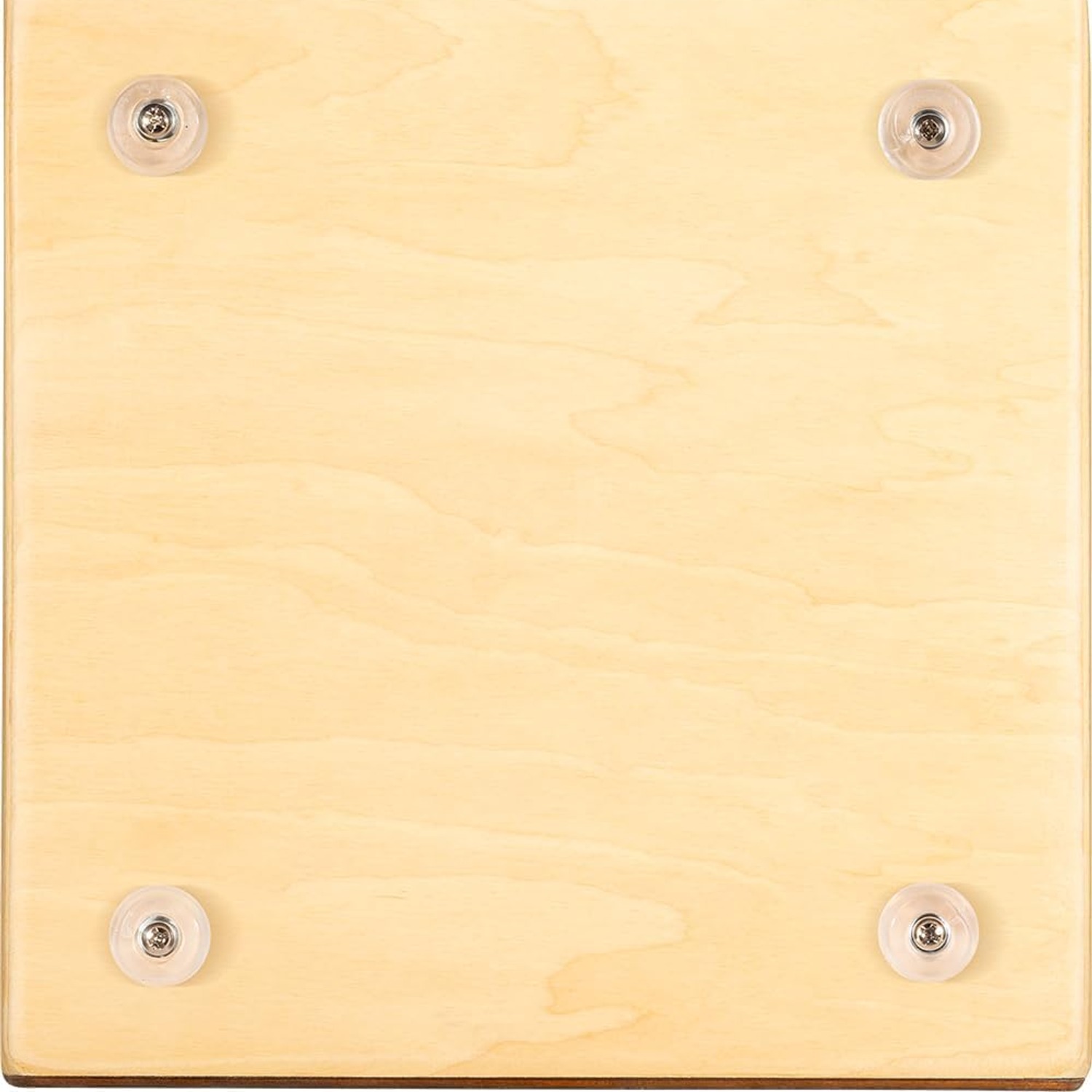
Underneath are four silicone feet. They do three jobs. They stop the box sliding when you lean into a groove, they keep the shell from buzzing against a hard floor, and they lift the body just enough to let it resonate. They are safe on timber, laminate, tile, carpet, brick and concrete, which matters more than it sounds when you are playing in borrowed rooms.
Why the timber matters
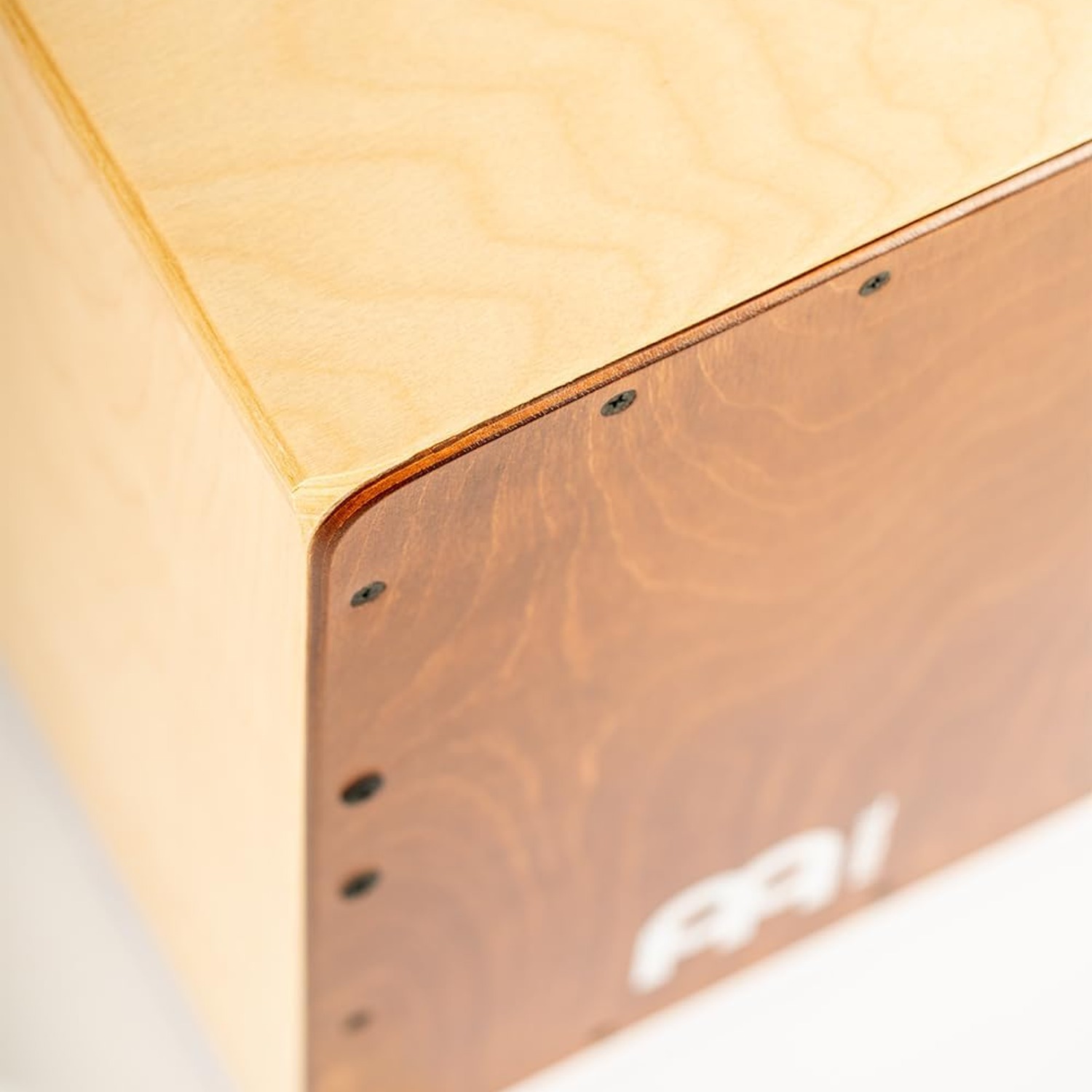
The body here is 100 percent Baltic birch. That is not marketing decoration. Birch is a common choice in serious drum building because it gives a strong, clear low end with a warm edge, and it holds together when you play hard. Cheaper box drums are often thin laminate over a soft core, and the difference shows up fastest in the bass note. A laminate box can sound fine at low volume and then go thin and papery the moment you push it. A birch body keeps its weight.
The finish is almond birch and natural, with a brushed finish type. It reads as a plain, warm piece of timber rather than a stage prop, which suits a cajon's usual home on an acoustic stage where nothing else is shiny either.
Who it suits
Guitarists who write songs and want to hear the groove while they work. Singers who need a rhythm instrument they can carry on public transport. Teachers who want thirty kids clapping and then playing within one lesson. Worship teams in rooms where a kit would be too much. Anyone in a flat who has given up on the idea of drums.
It also suits the complete beginner better than almost any other percussion instrument, because the learning curve starts flat. You do not need coordination between four limbs. You do not need to buy sticks, a throne and a hi-hat stand. You sit, you tap, you hear something musical, and that early win is what keeps people practising.
The one group it suits less well is players who want a high volume rock backbeat for a loud band. A cajon can be miked and pushed, but it is not trying to out-shout a drum kit, and nothing about it pretends otherwise.
How to choose between cajons
A few things separate one box drum from another, and price alone will not tell you which is which.
Look at the material first. Solid birch or similar quality ply through the body is what gives you a usable low end. Then look at the snare system. Some cajons have no snares at all, which gives a pure bass and slap sound suited to traditional Peruvian and flamenco playing. Some have adjustable snares with a lever or thumbscrews. This one has two fixed sets, which is the simplest approach and gives a consistent, snappy response with nothing to fiddle with.
Size is the next thing, and it is often overlooked. You will be sitting on this, so the height needs to let you sit with your feet flat and your hands able to reach the whole playing face. At 32 cm deep and 32.5 cm wide with a 44 cm dimension, this sits in the compact and portable bracket while still holding an adult.
Finally, think about feet and portability. Silicone feet are worth having if you ever play on a hard floor. And weight matters more than people expect, because the cajon you actually take to rehearsal is the one you can carry in one hand.
Playing it well in the first month
Start with the simplest pattern there is. Bass with a flat hand on beats one and three, snare with your fingers near the top on two and four. Keep both hands loose and let them bounce off the panel instead of pressing in. Pressing in kills the tone, and it is the single most common beginner habit.
Once that is steady, fill the gaps with light fingertip taps. That gets you a shuffle feel and covers most folk, pop and singer-songwriter material. After that, work on moving your bass hand slightly off centre to find different pitches, and on hitting the very top corner for the sharpest snare crack.
Sit toward the back of the top surface so your arms hang naturally. If your shoulders are up around your ears after ten minutes, you are sitting too far forward or reaching too far down.
Care and storage
There is almost nothing to maintain. Wipe the playing face and body with a dry or barely damp soft cloth, and avoid solvents, polishes and anything abrasive. Hand oils build up on the tapa over months, so a quick wipe after a session keeps the finish clean.
The main thing is storage. Wood reacts to moisture, so keep the cajon indoors in a normal living space rather than a damp garage or a hot car. Away from direct sun and away from heaters. Store it upright on its feet. If you move it often, a padded bag is a small purchase that prevents a lot of scuffs.
The short version
A cajon is the shortcut between wanting to play rhythm and actually playing it. This one is Baltic birch, has two fixed sets of steel snare wires for a real backbeat, a 4 inch rear port that lets the bass breathe, and silicone feet that keep it steady on any floor. It weighs 3.33 kg and measures 44 x 32.5 x 32 cm, so it goes where you go.
If you play acoustic guitar, sing, lead a worship team, teach music, or just want a drum you can keep in a flat without annoying everyone in the building, it is hard to beat. Sit down, tap the front, and you are playing within a minute.