
The complete guide
Choosing Your First Alto Saxophone, A Practical Buyer's Guide
Why the first saxophone is such a hard purchase
Almost everyone buying a first saxophone is buying blind. You know the instrument sounds good when someone else plays it, but you have no way to judge pad seals, key action or intonation from a photo. Meanwhile the price range is absurd, running from a few hundred to several thousand, and the people giving advice tend to split into two camps. One says buy cheap and see if you stick with it. The other says anything under a certain price is unplayable junk that will put a student off for life.
The truth sits in between. A genuinely terrible saxophone will frustrate a learner, because leaking pads and sloppy keys make the instrument sound bad no matter how well you blow. But you also do not need a professional horn to learn fingerings, build an embouchure and get through the first few grades. What you need is an instrument that seals, responds evenly and holds its adjustment through a school term.
What the alto is and why it is the usual starting point
The alto saxophone is pitched in Eb, sits in the middle of the saxophone family and is the horn almost every beginner method book is written for. It is smaller and lighter than a tenor, which matters a lot for a young player, and the mouthpiece is more forgiving than a soprano, which is notoriously fussy about embouchure.
Being an Eb instrument means the saxophone transposes. Play a written C and the note that sounds in the room is Eb. You do not need to do any mental maths, because the sheet music written for alto sax already accounts for this. It only becomes relevant if you are playing from a piano part or trying to match a recording, at which point a transposing app or a quick lesson will clear it up.
How the instrument actually works
Air goes in past a cane reed clamped to the mouthpiece. The reed vibrates against the mouthpiece opening, and that vibration excites the air column inside the brass body. Open a tone hole and you shorten the column, which raises the pitch. Close it and the pitch drops. Everything the keys do is in service of opening and closing those holes quickly and completely.
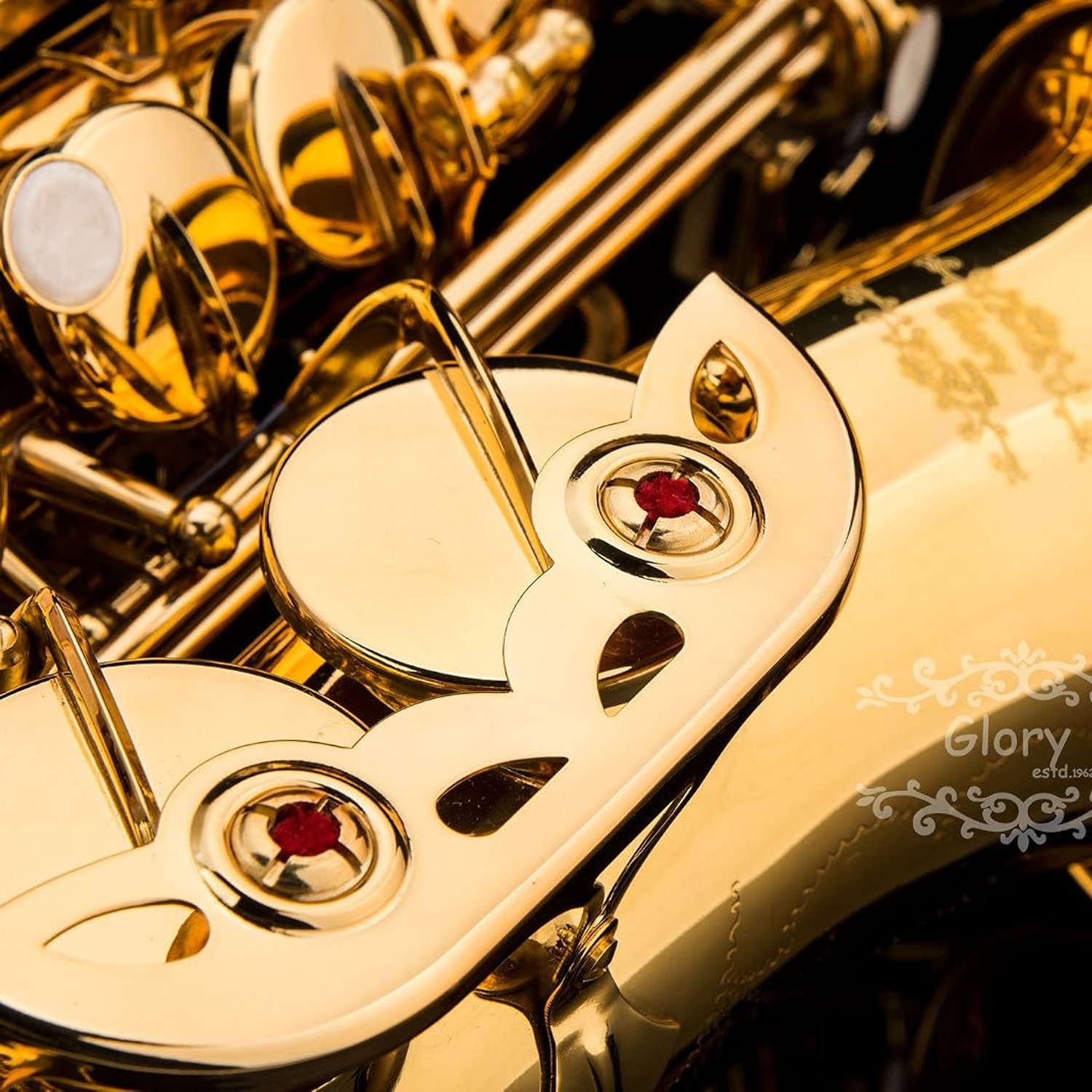
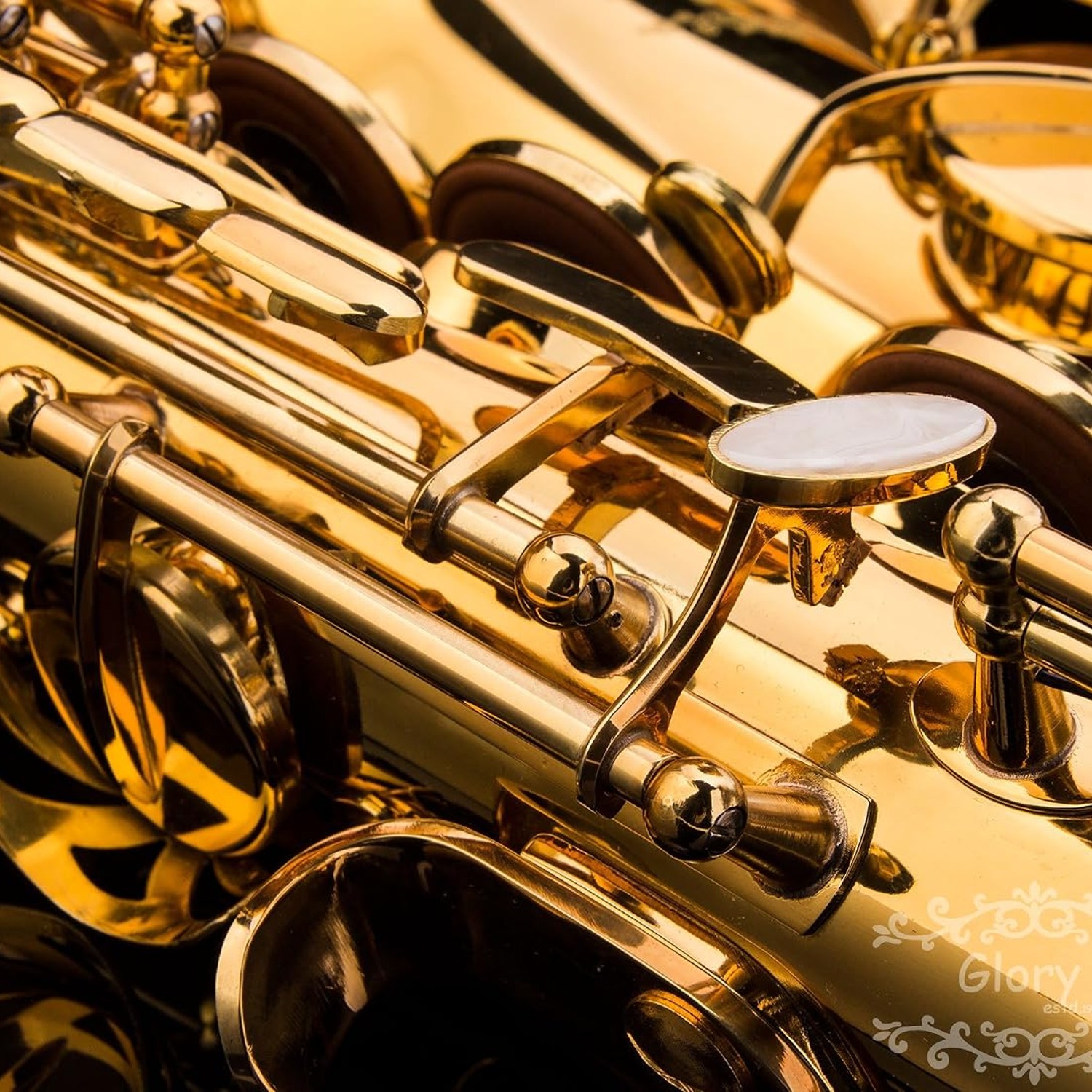
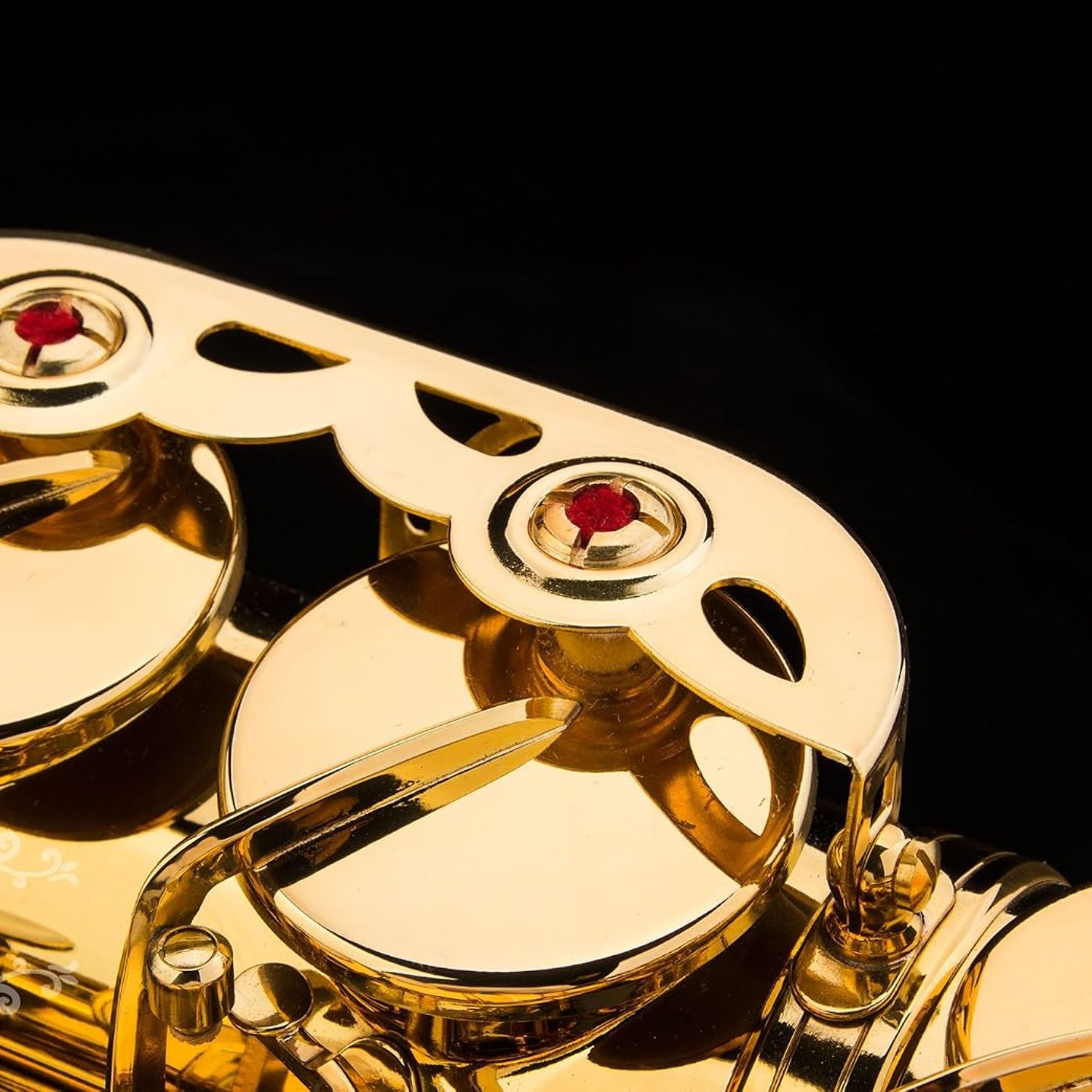
That is why pads matter so much. Every closed key has a pad pressing against a tone hole rim, and if that seal is even slightly imperfect, air leaks and the note either refuses to speak or sounds weak and airy. This model uses leather pads with metal resonators. The leather does the sealing, and the resonator in the middle bounces sound back down the tube rather than letting the leather soak it up. The practical effect is a horn that feels more responsive and carries a bit further.
The adjustable key height screws are a related detail. They set how far certain keys lift off the tone holes. Set too low and the notes choke, set too high and your fingers travel further than they need to. A technician can dial these in, which is a useful option to have on a student instrument.
Who this particular outfit suits
It fits three kinds of buyer especially well. The first is a parent whose child has just been handed a band place and needs an instrument before next Tuesday. The second is an adult who played at school, has not touched a horn in twenty years and does not want to spend professional money to find out whether the enthusiasm is still there. The third is a player who already owns a good saxophone and wants a knockabout second horn for busking, travel or outdoor gigs where they would rather not risk the expensive one.
It is less suited to someone already performing at a high level, or to a student who has been playing for several years and is pushing against the limits of their current instrument. At that stage the tonal differences between tiers of saxophone become obvious and worth paying for.
What to look at when comparing student saxophones
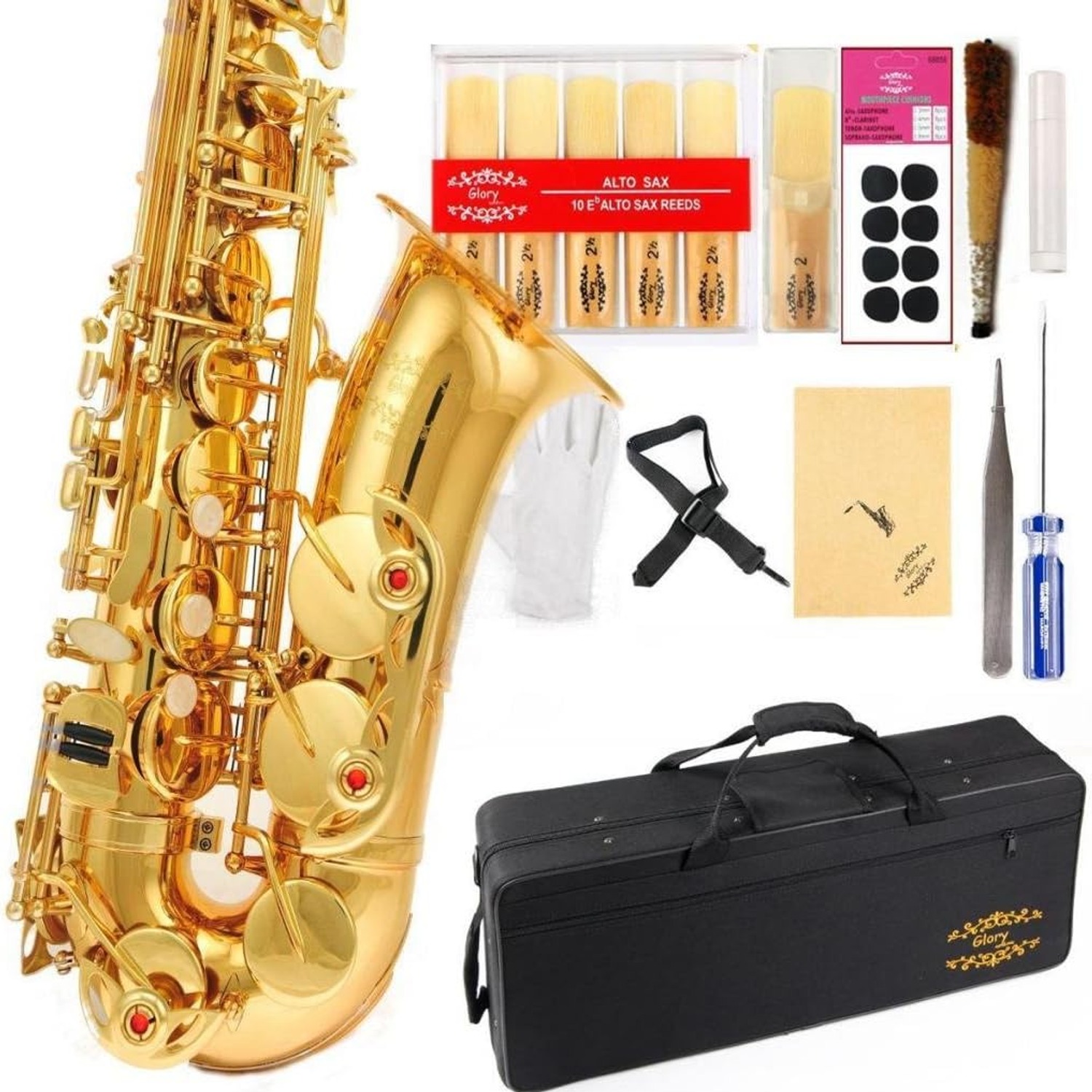
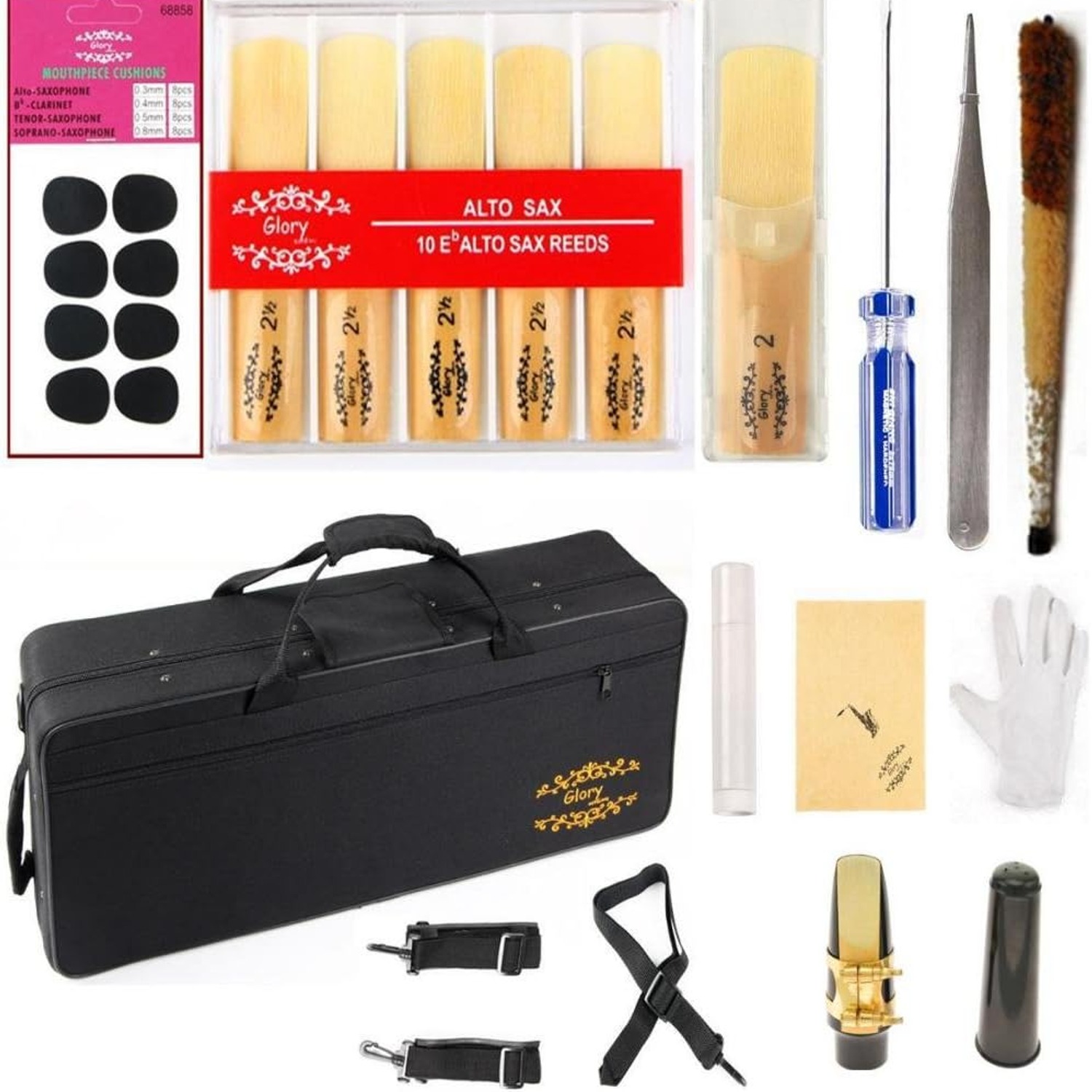
Start with what is in the box. A saxophone on its own is not a playable package. You need a mouthpiece, a ligature, reeds, a neck strap, cork grease and something to swab moisture out of the body. Buying those separately after the fact usually adds a meaningful sum to the total. This outfit arrives with 11 reeds, 8 mouthpiece cushions, a mouthpiece, neck strap, grease, a screwdriver, cleaning cloth and rod, and gloves, all inside a hard-shell case. That is the whole first-month shopping list covered.
Next, check for the high F# key. It is the small key operated by the left hand that extends the range a semitone above high F. Plenty of budget horns skip it, and a student who later needs it has to work around the gap with alternate fingerings. Having it fitted from the start removes a future headache.
Then think about weight and ergonomics. A 4.38 kg packed outfit is manageable for a student carrying it to school. The metal thumb rest and compact key spacing on this model are designed so that fingers sit naturally over the keys, which reduces the hand strain that makes young players give up.
Finally, consider the case. A soft gig bag is lighter but offers very little protection in a bike basket or a crowded bus. A hard-shell case is the sensible choice when the instrument is travelling several times a week.
Settling in with a new horn
Give yourself an unhurried first hour. Grease the neck cork lightly, fit the mouthpiece, soak a reed in your mouth for a minute and set it so the tip lines up with the mouthpiece tip. Clip on the neck strap and adjust it so the mouthpiece comes to your mouth rather than you bending down to it. That one adjustment prevents most of the neck and shoulder complaints beginners report.
Expect the first notes to sound rough. That is the embouchure, not the instrument. Building the mouth and breath control takes weeks, and it comes faster with short daily sessions than with one long weekend practice.
Looking after it
Moisture is the enemy. Every time you play, condensation collects inside the body and neck. Swab it out with the cloth and rod afterwards, wipe the lacquer, take the reed off the mouthpiece and let it dry flat. Leaving a wet reed clamped on is the quickest way to ruin it and to grow something unpleasant on your mouthpiece.
Rinse the mouthpiece in lukewarm water occasionally. Never use hot water, which can warp it. Keep the saxophone in its case when you are not playing, stored keys up, away from radiators and damp corners. Once a year, book a woodwind technician to check the pad seals and cork fit. It is a modest cost and it catches small leaks before they become sulky, unresponsive notes.
Be gentle when you pick the instrument up. Lift by the bell or the body, never by the key work, and never set the horn down on a chair where it can roll. A proper stand is a worthwhile early purchase.
The short version
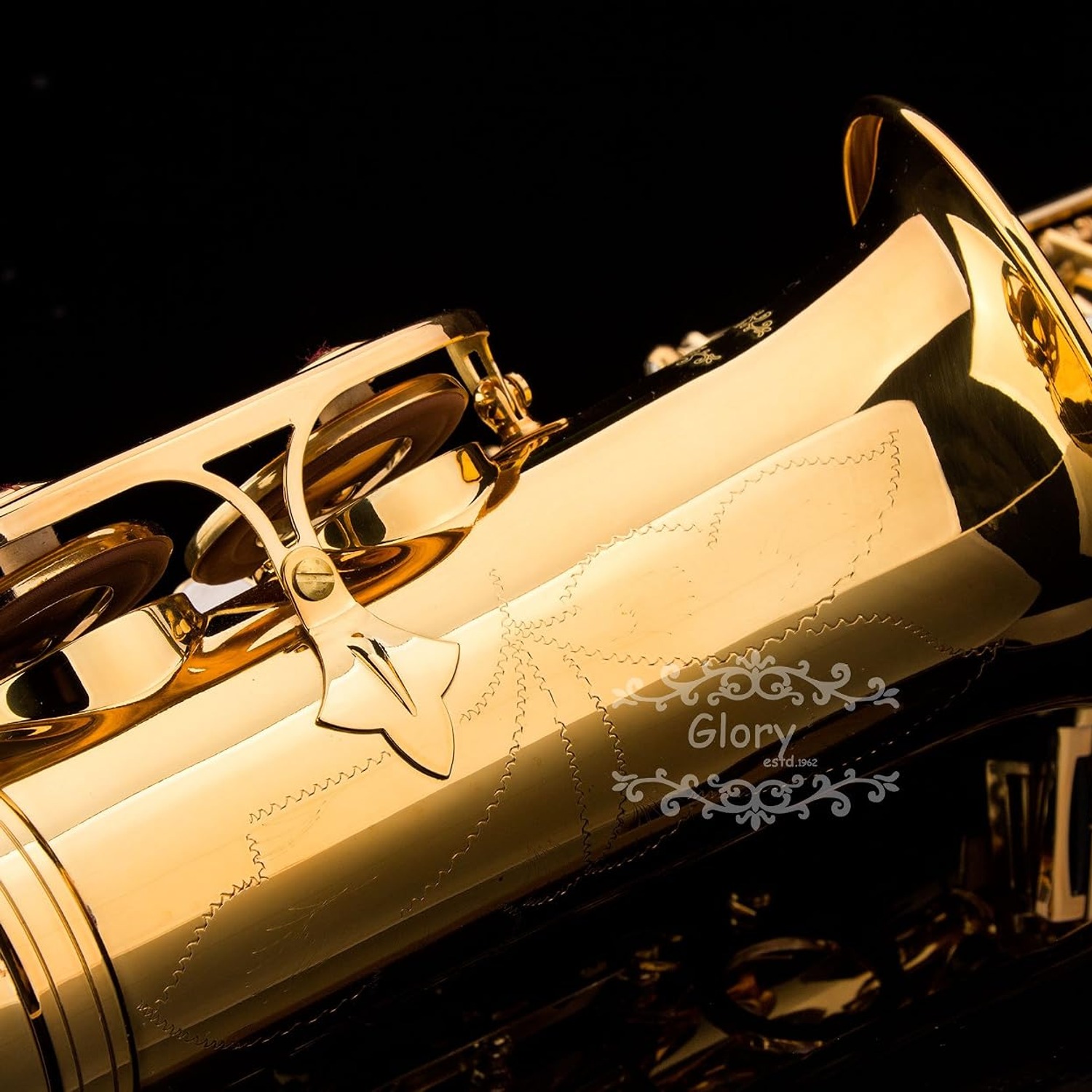
This is an affordable, well-equipped Eb alto saxophone aimed at people starting out or coming back. The brass body with gold lacquer, the leather pads with metal resonators, the high F# key and the adjustable key heights give it the specification you want in a student horn. The hard case and full accessory kit mean nothing is missing on day one.
It is not pretending to be a professional instrument, and if you are already playing at that level you will want something else. But for a first saxophone, for a school band place, or for a returning player testing the water, it does exactly the job it is built for.