

Music Instruments
Company
Shop By Category
T&Cs
Shop Online
  • Box contents listed
  • Free tracked Australia-wide delivery over $150
  • 14-day returns

10 hole blues harmonica | key of C harmonica | diatonic harmonica for beginners

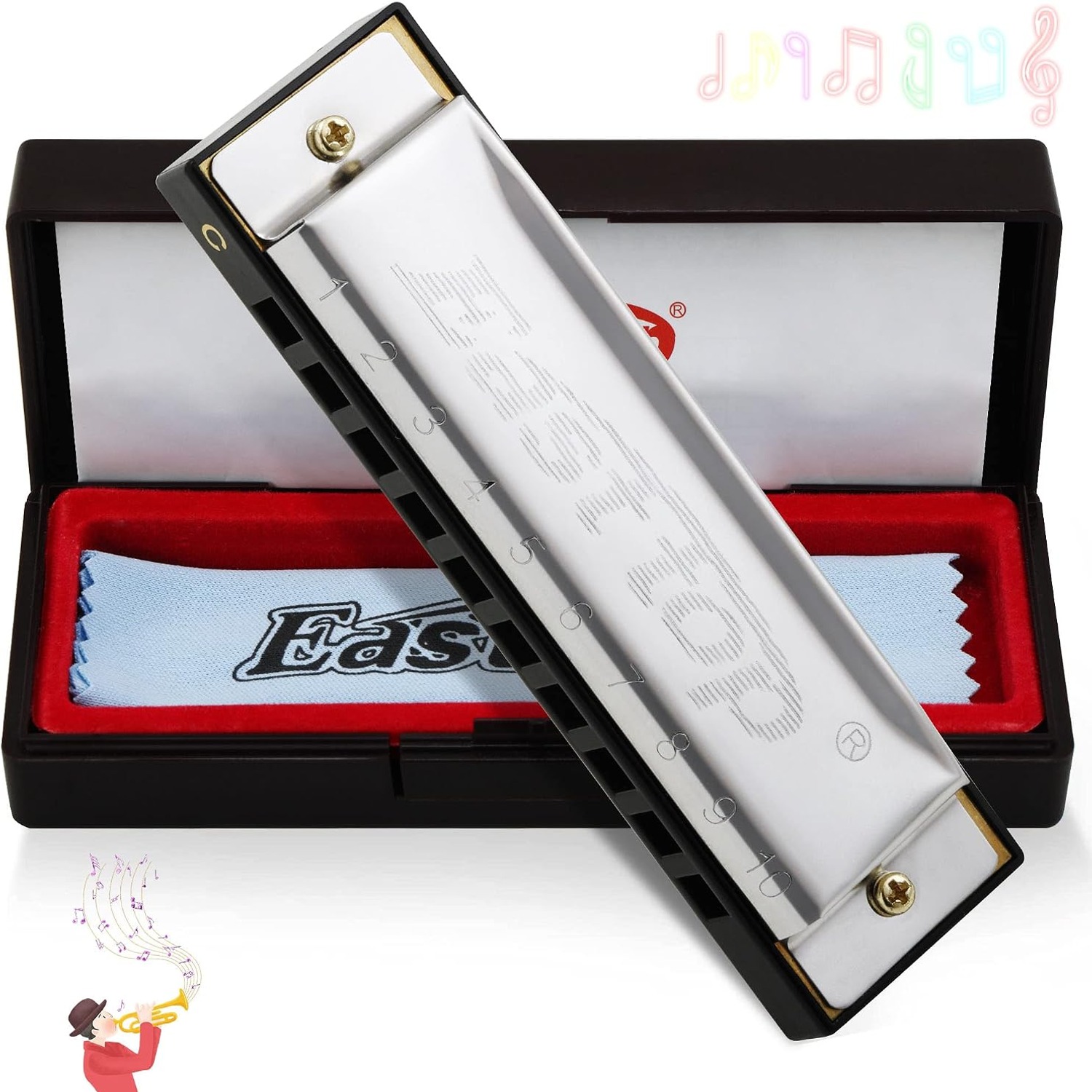
East Top T10-4 10 Hole Blues Harmonica, Key of C

$28.99 $34.99 Save $6
  • Key of C
  • Brass Reeds
  • Carry Anywhere
  • Boxed And Ready

Price: $28.99 $34.99

  • Free tracked Australia-wide delivery on orders $150+, otherwise a flat $15
  • Pay by card or PayPal, handled by the payment provider
  • 14 days to change your mind, plus your statutory rights
Product specifications
BrandEast top
Model NameEast top Harmonica
Model NumberT10-4
Manufacturer Part NumberT10-1
Instrument TypeHarmonica
Instrument KeyC
Number Of Holes10
MaterialBrass
StyleBrass
Finish TypePolished
Sound ProfileRich
ColourT10-4-C
Included ComponentsCleaning Cloth
Number Of Items1
Item Weight100 g
Country Of OriginChina
UPC726312272903
Warranty1 Year Limited Warranty
Weight100 g
Shipping & returns

Tracked delivery anywhere in Australia. It is free on orders of $150 or more, and a flat $15 below that.

If it is not right for you, send it back within 14 days of delivery in resaleable condition and we refund the price you paid, including standard delivery. That is a voluntary policy we offer on top of your legal rights. You cover the cost of returning it unless the item is faulty.

If it arrives faulty, damaged or not as described, we put it right at no cost to you under the Australian Consumer Law and the Competition and Consumer Act 2010, return postage included.

Shipping details · Refunds and returns

Key of CThe standard starting key, so most beginner lessons and songbooks match it.
Brass ReedsBrass reed plates give a warm, rich tone with a quick response.
Carry AnywhereLight enough at 100 g to live in a jacket pocket or glovebox.
Boxed And ReadyArrives with an instruction sheet and a cleaning cloth in a neat package.

Pick up a 10 hole blues harmonica and start making music the same afternoon it lands on your doormat.

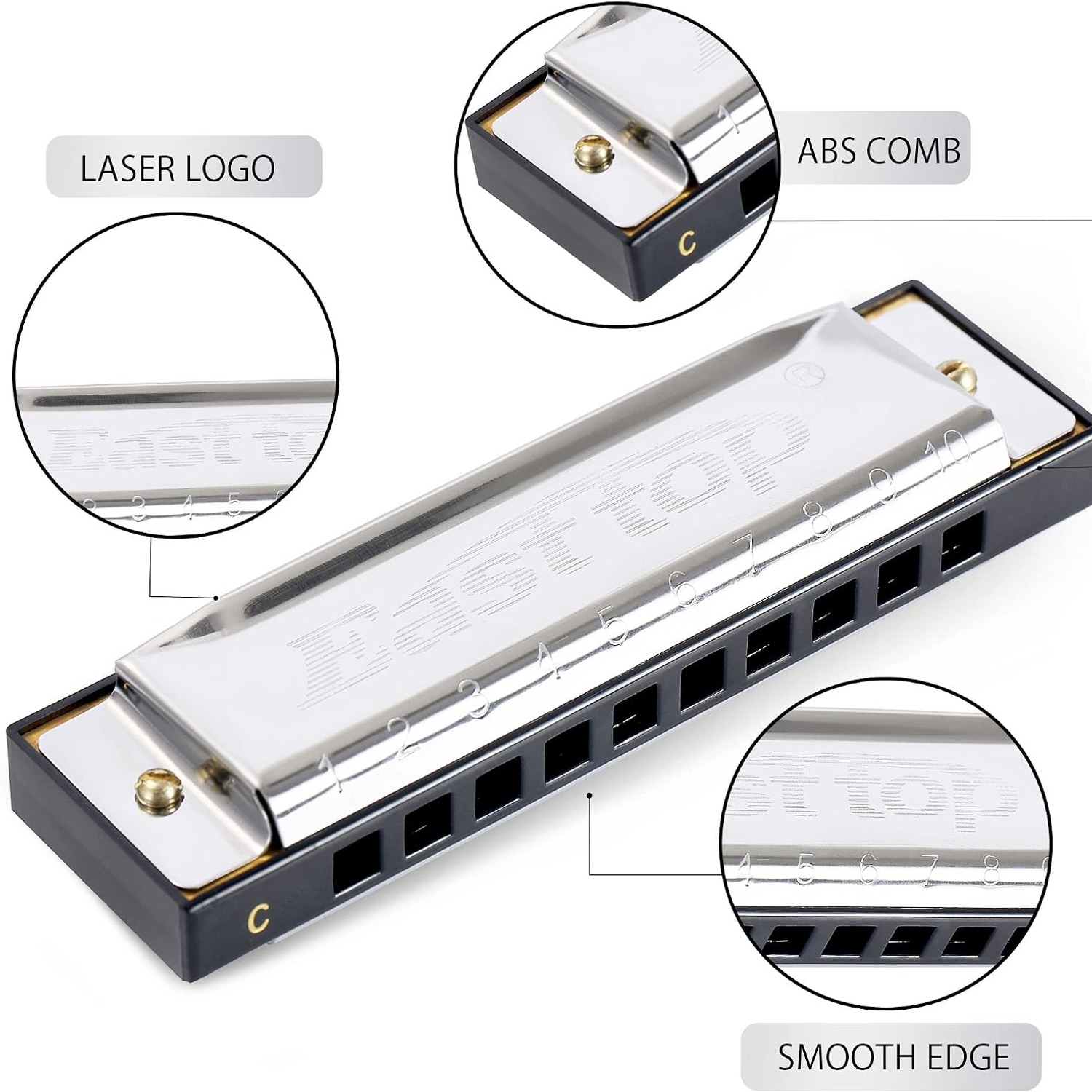
A brass-reed diatonic harmonica in the key of C with a precision plastic comb, a polished finish and a cleaning cloth in the box, built for players who want a real instrument without a steep price.

This is a 10 hole diatonic harmonica in the key of C, the key almost every beginner tutorial is written for.

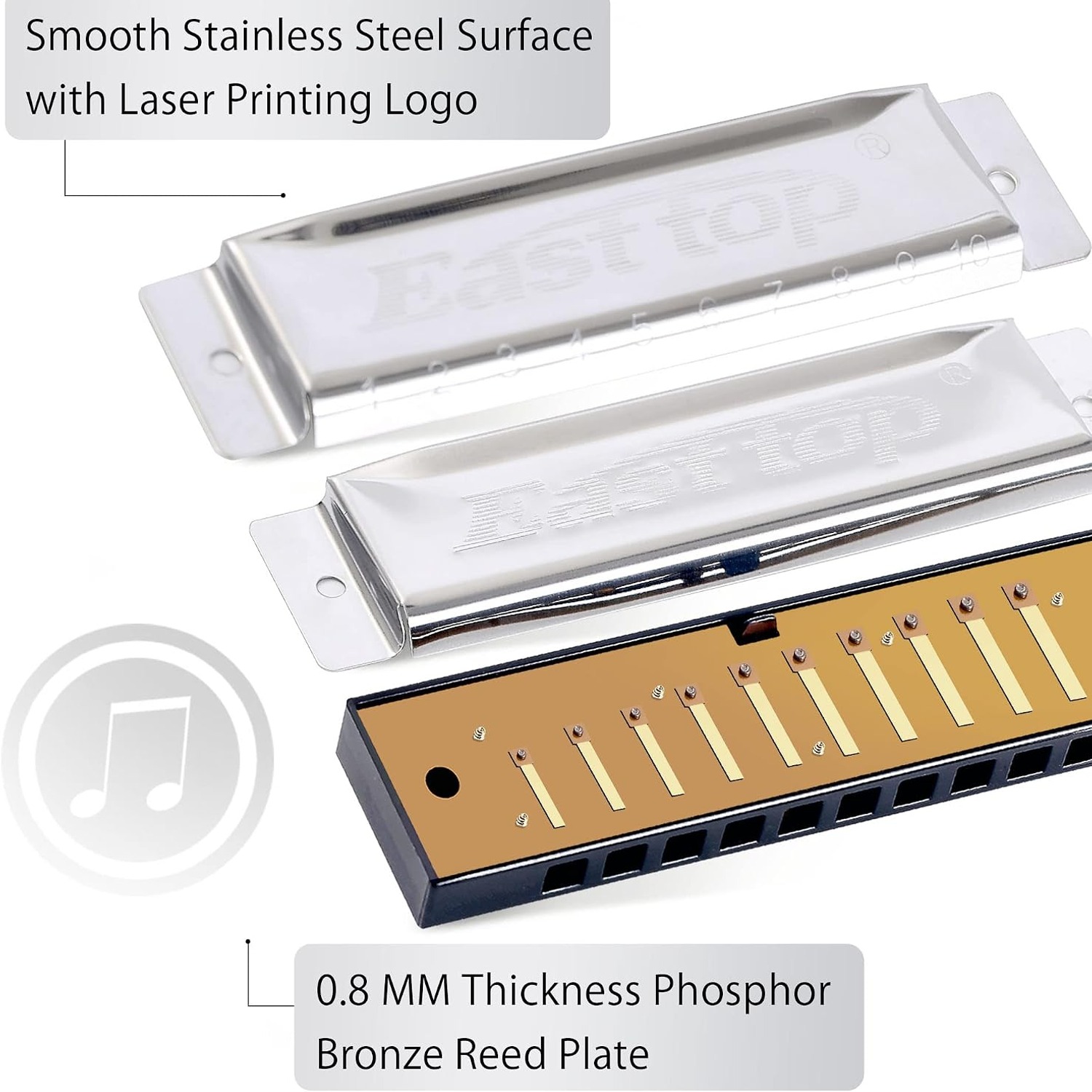
Brass reeds and a precision plastic comb give it a full sound and a tight seal, so notes speak without you forcing air.

At 100 g it slips into a pocket, which means practice happens on the train, on a break, or around a campfire.

The polished covers and tidy box make it a genuine gift rather than a toy, whether for a birthday or a first lesson.

A cleaning cloth and an instruction sheet come in the package, so there is nothing else to buy before you start.

East Top T10-4 10 Hole Blues Harmonica, Key of C

A 10 hole diatonic harmonica is the instrument most people picture when they think of blues, and this East top T10-4 is a straightforward example of the type. Ten holes, the key of C, brass reeds and a polished cover plate. You blow and draw on each hole to get two different notes, and that simple layout is what makes the harmonica so quick to pick up compared with almost anything else you can hold.

East Top T10-4 10 Hole Blues Harmonica, Key of C

The reeds are brass, mounted on reed plates fixed to a precision made plastic comb. Brass is the traditional reed material for a reason. It has a warm, slightly rounded tone and it responds fast, so a soft breath still produces a clear note. The plastic comb keeps the whole assembly airtight and will not swell or crack the way untreated wood can when it gets damp, which matters more than people expect with an instrument you breathe into.

East Top T10-4 10 Hole Blues Harmonica, Key of C

The key of C is deliberate. It is the default key for beginner harmonica books, YouTube lessons and backing tracks, and it sits in a comfortable middle range that is neither shrill nor muddy. If you have ever searched for the best harmonica in key of C, this is the configuration those lessons assume. When you later move into cross harp playing, a C harmonica puts you in the key of G, which covers a huge amount of blues and folk repertoire.

East Top T10-4 10 Hole Blues Harmonica, Key of C

Size is part of the appeal. At 100 g this fits in a shirt pocket, a bag pocket or a car door bin, and that portability is the real difference between an instrument you practise and one you mean to practise. Ten minutes on a bus adds up faster than an hour you keep postponing. Plenty of people buy a pocket harmonica precisely so they have something to fiddle with that makes music instead of noise.

East Top T10-4 10 Hole Blues Harmonica, Key of C

Each one ships in a small presentation box with an instruction sheet and a cleaning cloth, and East top backs it with a one year limited warranty. That makes it easy to hand over as a birthday present, a holiday souvenir or a starter gift for someone who has talked about learning an instrument for years. Colour is listed as T10-4-C with a polished finish, and the country of origin is China.

Not sure yet? That is fine.

An instrument has to suit the player, and you cannot always judge that from a photograph. If it is not right for you, send it back within 14 days of delivery in resaleable condition and we refund the price you paid, including standard delivery. That is on top of your Australian Consumer Law rights if anything arrives faulty.

If it turns up faulty, damaged or not as described, that is on us. The Australian Consumer Law and the Competition and Consumer Act 2010 covers you, and we pay the return postage. Read the full detail on our refunds and returns page, or ask us anything before you order.

Frequently Asked Questions

What exactly is a 10 hole blues harmonica?

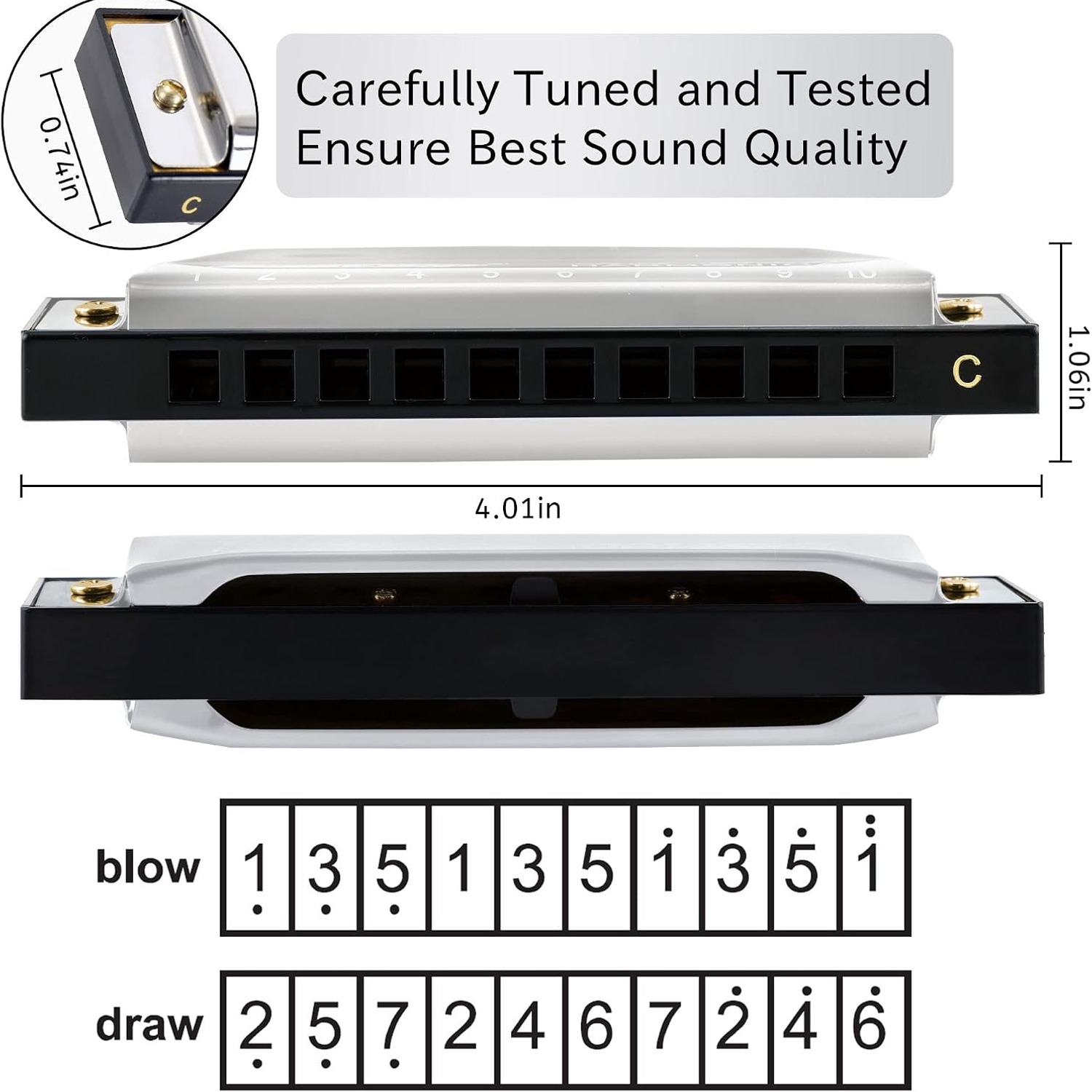
It is a diatonic harmonica with ten holes, each giving one note when you blow and a different note when you draw. That gives twenty notes across roughly three octaves, tuned to a single key. It is the standard harmonica used in blues, folk, country and rock.

What key is this harmonica?

The key of C. That is the most common starting key and the one almost every beginner method book, app and video lesson uses. If you only ever own one harmonica, C is the sensible choice.

Is this suitable for a complete beginner?

Yes. A diatonic harmonica for beginners is arguably the easiest instrument to get a pleasant sound out of on day one, because almost any combination of holes you play in a single key sounds reasonable. The instruction sheet in the box gets you started on hole numbering and breathing.

How many notes can I play on it?

Twenty notes without any special technique, ten blow notes and ten draw notes. Experienced players add more by bending, which lowers the pitch of certain draw notes by controlling the shape of the mouth. Bending takes practice but it is where the blues sound comes from.

What are the reeds made of?

Brass. Brass reeds give a warm, rich tone and respond quickly to gentle breath, which is one reason they remain the traditional choice for this style of harmonica.

What is the comb made of?

A precision made plastic comb. Plastic holds its shape when wet, which keeps the instrument airtight and avoids the swelling that can affect untreated wooden combs.

What is included in the package?

One harmonica in the key of C, one instruction sheet and one cleaning cloth. It comes in a small presentation box suitable for gifting.

How heavy is it?

The item weight is listed as 100 g. That is light enough to carry in a shirt pocket without noticing it.

What are the exact dimensions?

Dimensions are not listed by the maker. As a guide, a standard 10 hole diatonic harmonica is around the length of a chunky pen and fits comfortably inside a closed hand.

Can I play blues on it straight away?

You can play simple blues phrases within the first week. Playing in second position, often called cross harp, is what gives you that classic blues sound, and on a C harmonica that puts you in the key of G. Plenty of free lessons cover it.

Is it only for blues?

No. A 10 hole diatonic works well for folk, country, rock, gospel, sea shanties and simple melodies. Blues is just the style most associated with it.

Can children use it?

Yes, it is a common first instrument for kids who are old enough to handle a small object safely and understand not to chew it. Many parents look for the best harmonica for kids precisely because it is compact, affordable and immediately rewarding.

Does it need tuning?

No. The reeds are tuned at the factory and a harmonica is not user tuned the way a guitar is. Over a long life reeds can drift slightly, but that is a repair job rather than routine maintenance.

How do I clean it after playing?

Hold it with the holes facing down and tap it gently against your palm to shake out moisture, then wipe the covers with the supplied cleaning cloth. Let it sit out of its box for a few minutes before storing it.

Can I wash it with water?

Do not submerge it or run it under a tap. Water sitting between the reed plates and comb can cause problems, and soap or dishwasher heat will do real damage. Tapping dry and wiping down is all that is needed.

Should I eat before playing?

Better not to. Food particles and sugary drinks leave residue on the reeds, which dulls the tone and shortens reed life. Rinsing your mouth with water before you play is the simplest habit to adopt.

How long will it last?

With regular care a brass reed harmonica used by a hobbyist commonly gives years of service. Heavy daily playing with hard breath pressure wears reeds faster. Playing softly is better for both your tone and the instrument.

What if a single note sounds dead?

First check for debris in that hole and tap the harmonica out. If it still will not sound, the reed may be stuck or damaged. Contact us about the one year limited warranty and we will advise on the next step.

Can I play single clean notes easily?

It takes a little practice. Most players either purse the lips into a narrow shape or use tongue blocking to cover neighbouring holes. A week of short daily sessions usually gets you clean single notes.

Do I need any accessories to start?

No. The harmonica, the instruction sheet and the cloth are everything you need. Later you might add a neck holder if you want to play guitar at the same time, or a microphone for amplified blues.

Is this a toy or a real instrument?

It is a real instrument with brass reeds and a polished finish, not a novelty item. It sits in the student and hobbyist bracket rather than the professional one, which is exactly where a first harmonica should sit.

Will it work with harmonica apps and online lessons?

Yes. Anything written for a standard 10 hole diatonic in C applies directly, which covers the vast majority of free and paid beginner material online.

Can I use it with a guitar in a neck holder?

Yes, standard 10 hole diatonic harmonicas fit common neck holders. The holder is sold separately. Playing a C harmonica in cross harp alongside guitar in G is a classic pairing.

Is it loud?

It carries well for its size but it is not disruptive in a flat or an office break room. You can play softly for practice and push more air when you want volume.

Does it come with a case?

It arrives in a small presentation box. Many players simply keep the harmonica in that box, which is enough to protect it in a bag.

Is this a good gift?

It makes a tidy present for a birthday, a graduation, a holiday souvenir or a thank you. The small box presents well and the recipient can make a sound within minutes, which is rare for a gifted instrument.

What is the warranty?

East top backs it with a one year limited warranty. Keep your order confirmation and get in touch if something is wrong with the instrument itself.

Where is it made?

The country of origin is listed as China. East top is the manufacturer and the brand on the instrument.

How fast will it be delivered?

We deliver anywhere in Australia with a tracked courier. Most orders arrive within 3 to 7 working days of the order date, a little longer to regional and remote addresses. Delivery is free on orders of $150 or more and a flat $15 under that. You get a tracking link by email as soon as the parcel is on its way.

What if it is not right for me?

Get in touch and tell us what went wrong. If the harmonica arrives faulty or does not match the description, we will sort out a replacement or a refund under our returns policy. For hygiene reasons a played mouth instrument cannot be resold, so please check the key and specification before you play it.

How To Choose Your First 10 Hole Blues Harmonica

6 min read Music Instruments

The instrument people mean to learn and never do

Most instruments ask for a lot before they give anything back. A guitar needs tuning, calloused fingers and a month before a chord sounds like a chord. A piano needs space and money. A violin will make the dog leave the room for the first year.

A harmonica is different. You put it to your mouth, you breathe, and a musical note comes out. That is the whole barrier to entry. Ten minutes later you can play a tune that another person in the room will recognise. This is why the harmonica has stayed in coat pockets, kit bags and campfire circles for over a century while fashions in instruments came and went.

The catch is that cheap harmonicas can be genuinely bad. Leaky combs, reeds that choke when you breathe harder, tuning that drifts off after a fortnight. Those instruments put people off for good. So the question is not really whether to learn harmonica. It is which one to start on.

What a 10 hole diatonic actually is

Look at the front of the instrument and you will see ten numbered holes in a row. Each hole holds two reeds, thin strips of metal that vibrate when air passes over them. One reed sounds when you blow out, the other when you draw in. That gives twenty notes.

Those notes are not laid out like a piano. They are arranged so the notes of one key sit under your mouth, with the chords you need most falling naturally under groups of holes. That is what diatonic means. It is a key specific instrument, and that limitation is also its strength. You cannot easily play a wrong note, so a beginner sounds musical almost immediately.

The East top T10-4 follows this standard layout exactly. Ten holes, brass reeds, brass reed plates, a precision made plastic comb and polished covers. Nothing unusual, nothing experimental. For a first instrument that is what you want, because every lesson, chart and tab you find online will match what is in your hand.

Why the key of C

Harmonicas come in twelve keys. Beginners almost always start on C, and that is what this one is.

Three reasons. The first is pitch. A C harmonica sits in the middle of the range, bright enough to cut through but not so high that it makes your ears ring in a small room. The second is teaching material. Open any beginner book, search any lesson video, download any tab, and the odds are overwhelming that it assumes a C harmonica. Starting on anything else means constant mental transposition before you have even learned to play.

The third reason is blues. Harmonica players rarely play in the key the harmonica is named for. They play what is called cross harp, or second position, which shifts the sound into a different key and unlocks the bent, wailing notes the blues is built on. A C harmonica played cross harp gives you the key of G, and G is one of the most common keys in blues, folk and country. So a key of C harmonica is a straight answer and a blues answer at the same time.

Brass reeds and a plastic comb

Reed material shapes tone. Brass is the long standing choice for diatonic harmonicas because it gives a warm, full sound and springs back quickly, which means a quiet breath still produces a clean note. That responsiveness matters more than beginners realise. On a sluggish instrument people blow harder and harder trying to get a sound, which wears the reeds and teaches terrible habits. A responsive reed teaches you to play gently, and playing gently is where good tone lives.

The comb is the body the reed plates bolt onto, with channels that direct your air to the right reed. Traditional combs were wood, and good wooden combs still exist, but untreated wood swells when it gets wet. Since you are breathing warm moist air into this thing every time you play, that is a real issue. A precision made plastic comb holds its shape, stays airtight and shrugs off moisture. For a daily carry instrument it is the practical choice.

Airtightness is the quiet specification nobody advertises but everybody feels. A leaky harmonica wastes your breath, responds late and refuses to bend notes. A tight one does what you ask the instant you ask it.

Who this suits

Total beginners are the obvious group. If you have never played anything, this gets you making music the day it arrives, and the one year limited warranty means you are not gambling.

Then there are returning players, the ones who had a harmonica as a teenager and found it in a drawer last month with a reed gone. A pocket harmonica is an easy thing to replace and the muscle memory comes back fast.

Guitarists are a third group. A harmonica in a neck holder turns one person into something closer to a band, and C harp against a G chord is a combination that has been working since before anyone reading this was born. The holder is a separate purchase.

Finally, gift buyers. The small box and the polished finish make this a real present rather than a stocking filler, and there is something satisfying about giving someone an instrument they can actually use before the afternoon is over.

Getting started in the first week

Begin with chords, not single notes. Put your mouth over three or four holes, breathe in and out slowly, and listen. In and out on the lower holes already sounds like a train, which is where most players start and where most kids stop grinning.

Then work on single notes. Narrow your lips as if saying the word "who" and aim for one hole. It will be messy at first. Short sessions beat long ones here. Five minutes, four times a day, will get you further in a week than one grim hour on Sunday.

Count the holes by feel, not by looking. Your tongue and lips learn positions faster than your eyes can guide them, and the whole point of a travel harmonica is that you can play it walking down a street.

Bending comes later. It is the technique that pulls certain draw notes down in pitch and produces the crying sound people associate with blues harp. It feels impossible until one day it just happens. Do not chase it in week one.

Looking after it

Care is simple and takes seconds. After playing, turn the harmonica so the holes face down and tap it gently against your palm. Moisture and debris fall out. Wipe the covers with the cloth that came in the box. Leave it out for a few minutes before putting it away.

Do not eat right before you play, and rinse your mouth with water if you have. Sugar is the enemy of reeds. It builds up, dulls the tone and eventually makes notes stick.

Never submerge the instrument, never run it through a dishwasher, and keep it out of direct sun and away from radiators. Store it in the box or a pocket rather than rattling loose at the bottom of a bag with keys.

If a single note stops speaking, tap the harmonica out first. Most dead notes are debris, not damage. If it persists, the warranty is there.

The short version

A 10 hole blues harmonica in the key of C is the standard first harmonica, and this one ticks the boxes that matter. Brass reeds for a warm tone and quick response. A precision made plastic comb that stays airtight and does not mind moisture. A polished finish, a cleaning cloth, an instruction sheet and a one year limited warranty, all in a box small enough to give as a present.

It weighs 100 g, so it goes everywhere with you, and that is the real trick. The best beginner harmonica is the one you actually have on you when you have ten free minutes. Order it, keep it in your coat, and let the practice happen on its own.

Browse the shop

Ready to play your first riff?

Order the key of C harmonica today and you will be bending notes before the end of the week.

Ask us a question

Page summary

The East top T10-4 is a 10 hole diatonic blues harmonica in the key of C. It uses brass reeds and brass reed plates on a precision made plastic comb, with a polished finish and a colour code of T10-4-C. The item weighs 100 g and ships with one harmonica, an instruction sheet and a cleaning cloth. The manufacturer is East top, model number T10-4, manufacturer part number T10-1, UPC 726312272903, and the country of origin is China. It carries a one year limited warranty. Packaged dimensions and reed plate thickness are not specified in the maker's listing. It suits beginners learning blues, folk, rock, country or jazz, and is small enough to carry daily.