


The complete guide
How to Choose Your First Acoustic Guitar Bundle
The problem with buying your first guitar
Wanting to learn guitar is easy. Buying one is where people get stuck.
You start with a simple idea, then open a shopping site and find a wall of numbers. Body shapes you have never heard of. Tonewoods described in language that sounds like a wine list. And once you finally pick an instrument, you discover you also need a tuner, a strap, picks, a bag, and a spare set of strings, because guitars are sold like razors. The instrument is only the first purchase.
A lot of people never get past that stage. The project quietly turns into a browser tab that stays open for three weeks and then gets closed.
A starter bundle fixes that. One box, one price, one decision. You open it, tune up, and start learning. That is the entire argument for this format, and it is a good one.
What a 41-inch full-size acoustic actually means
The 41-inch figure describes the overall length of the instrument, and it is the standard adult size for a steel-string acoustic. If you are an adult or a teenager who is close to full height, this is the size you want.
Size matters more than beginners expect. A guitar that is too small forces your picking arm into an awkward angle and cramps your fretting hand. You will be uncomfortable within ten minutes, and discomfort is the single most common reason people stop practising. A full-size body sits properly on your thigh, gives your strumming arm somewhere natural to rest, and lets you sit upright instead of hunching.
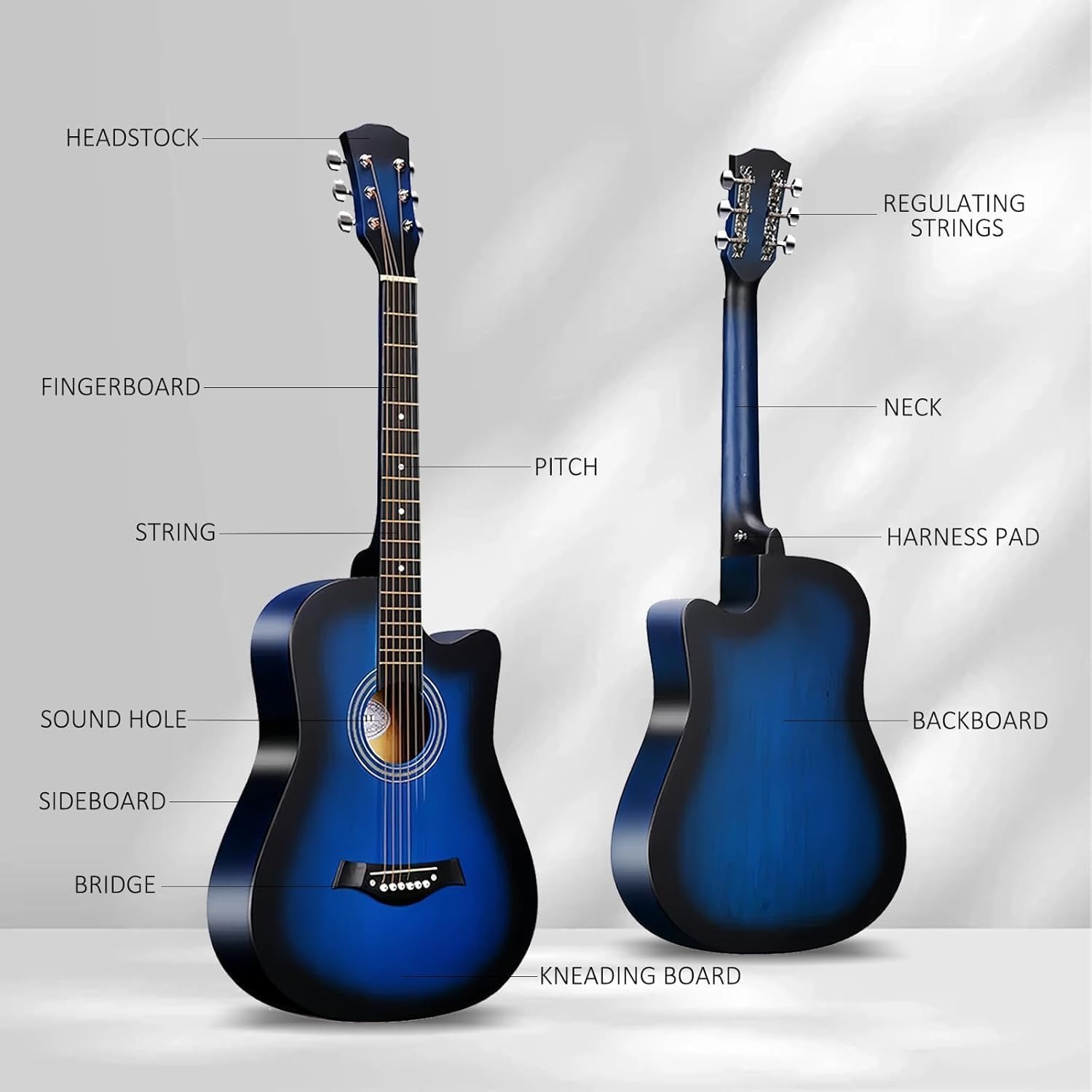
This particular guitar has a cutaway body. That is the section carved away where the neck meets the body, on the side nearest the floor when you hold it. It does not change the sound much. What it changes is access. When you eventually start learning melodies and lead parts that sit above the twelfth fret, your hand has room to get there. On a non-cutaway body the shoulder of the guitar blocks your thumb. For a first instrument, a cutaway buys you room to grow.
The woods and the sound
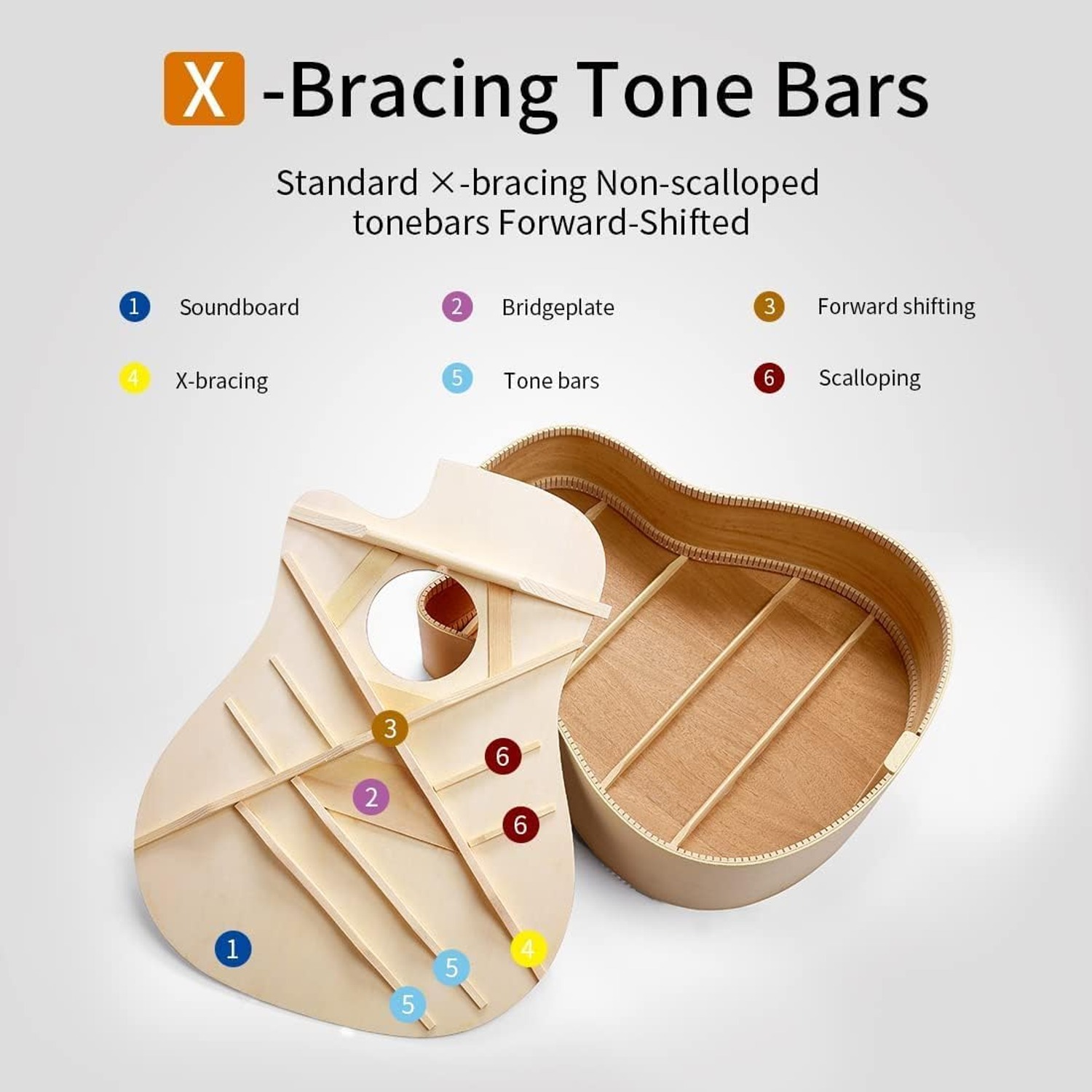
The body material here is listed as basswood with a mahogany back, and the strings are alloy steel over a fixed bridge. The supplier describes the sound profile as rich, warm and balanced.
In practical terms, warm means the guitar leans away from a sharp, glassy top end and sits in a rounder middle. That tends to flatter beginner strumming, because early strumming is rarely precise and a very bright guitar exaggerates every mistake. It also sits nicely under a singing voice, which is what most new players want. You learn four chords, you sing over them, and the guitar supports rather than fights you.
Steel strings are the right starting point for pop, folk, country and anything you would hear on the radio with an acoustic in it. They do take a little more finger pressure than nylon strings, so your fingertips will complain for the first week or two. That is normal, it affects everybody, and it goes away once the skin toughens up. Fifteen minutes a day gets you through that phase faster than one long session on a Sunday.
There is no pickup fitted to this guitar. The record lists the pickup configuration as "Does Not Apply". For home practice, lessons and playing with friends, that is fine. If you ever need to play through a PA system later, a clip-on soundhole pickup is an inexpensive add-on.
What the accessories are actually for
The accessory list on a bundle can look like padding. On this one, most of it earns its place.
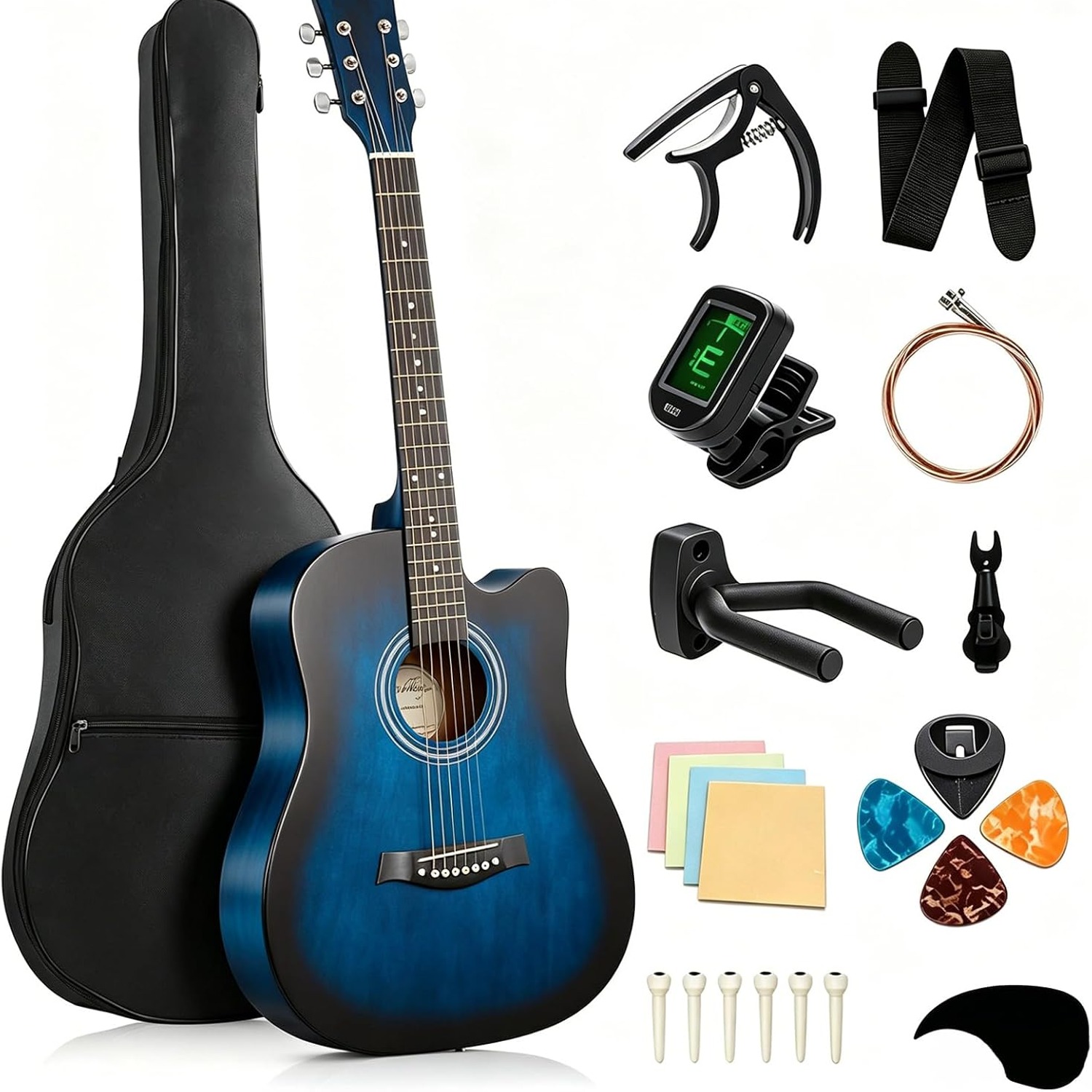
The clip-on digital tuner is the most important item. A guitar that is out of tune sounds wrong no matter how well you play, and beginners cannot yet hear the difference well enough to fix it by ear. The tuner clips to the headstock and reads the vibration through the wood, so it works even if the TV is on. Use it every single time you pick the guitar up for the first few months.
The capo clamps across the fretboard and shifts everything up in pitch. It sounds like an advanced accessory but it is the opposite. It lets you play along with songs that sit in awkward keys using only the easy chord shapes you already know.
The gig bag is padded, which protects the finish from the knocks that happen in a car boot or on a bus to a lesson. The spare strings and the string winder matter because strings break, usually at an inconvenient moment, and having a set in the drawer is the difference between a five minute fix and a week of not playing.
Then there is the wall hanger, which is the quiet hero of the whole kit. A guitar in a case under the bed gets played once a fortnight. A guitar hanging on the wall where you can see it gets played most days, because picking it up costs you nothing. If you buy this for someone, mount that hanger for them.
Who this suits, and who it does not
This works well for an adult beginner, a teenager starting lessons, or someone returning to guitar after a long gap who wants a knockabout instrument for the lounge room.
It also works as a gift, and it is a better gift than a bare guitar because the recipient is not left needing a second shopping trip before they can play anything. That matters more than it sounds. A gift with a missing step tends to sit in a corner.
It is not the right pick for a young child. A 41-inch body is too big for most players under about twelve, and a 3/4 size instrument will serve them far better. It is also not for left-handed players, since the hand orientation is listed as right. And if you are a working musician who needs to plug into a desk, you want an acoustic-electric instead.
One more honest note. The supplier lists the warranty description as "No", and some details including exact body dimensions are not specified in the record. Your usual consumer rights on faulty goods still apply, and we will sort out anything that arrives damaged, but we would rather tell you that upfront than let you discover it later.
Keeping it in good shape
Wooden instruments respond to their environment. Keep the guitar out of direct sunlight, away from radiators and heating vents, and out of damp rooms. A bedroom or lounge is fine. A garage, a car boot in summer, or a spot next to a window is not.
Wipe the strings and the body with the cleaning cloth after you play. Sweat and skin oils are what kill strings, and a ten second wipe can double how long a set lasts.
Expect the guitar to drift out of tune constantly for the first week or two. New strings stretch, and that is physics rather than a fault. After ten days or so of regular playing it will settle and hold pitch much better.
Change strings when they sound dull, look discoloured or feel rough under your fingers. For most learners that lands somewhere around every three to four months. The winder in the kit makes the job far quicker than doing it by hand.
The short version
If you want to learn guitar and you do not want to spend a weekend researching tonewoods, this bundle removes the research. You get a full-size 41-inch cutaway acoustic with a warm, balanced voice, plus the tuner, capo, strap, bag, picks, spares and wall hanger that normally come as separate purchases.
Tune it with the clip-on tuner, hang it somewhere you can see it, and give it fifteen minutes a day. That is genuinely all it takes to be playing songs within a month.