
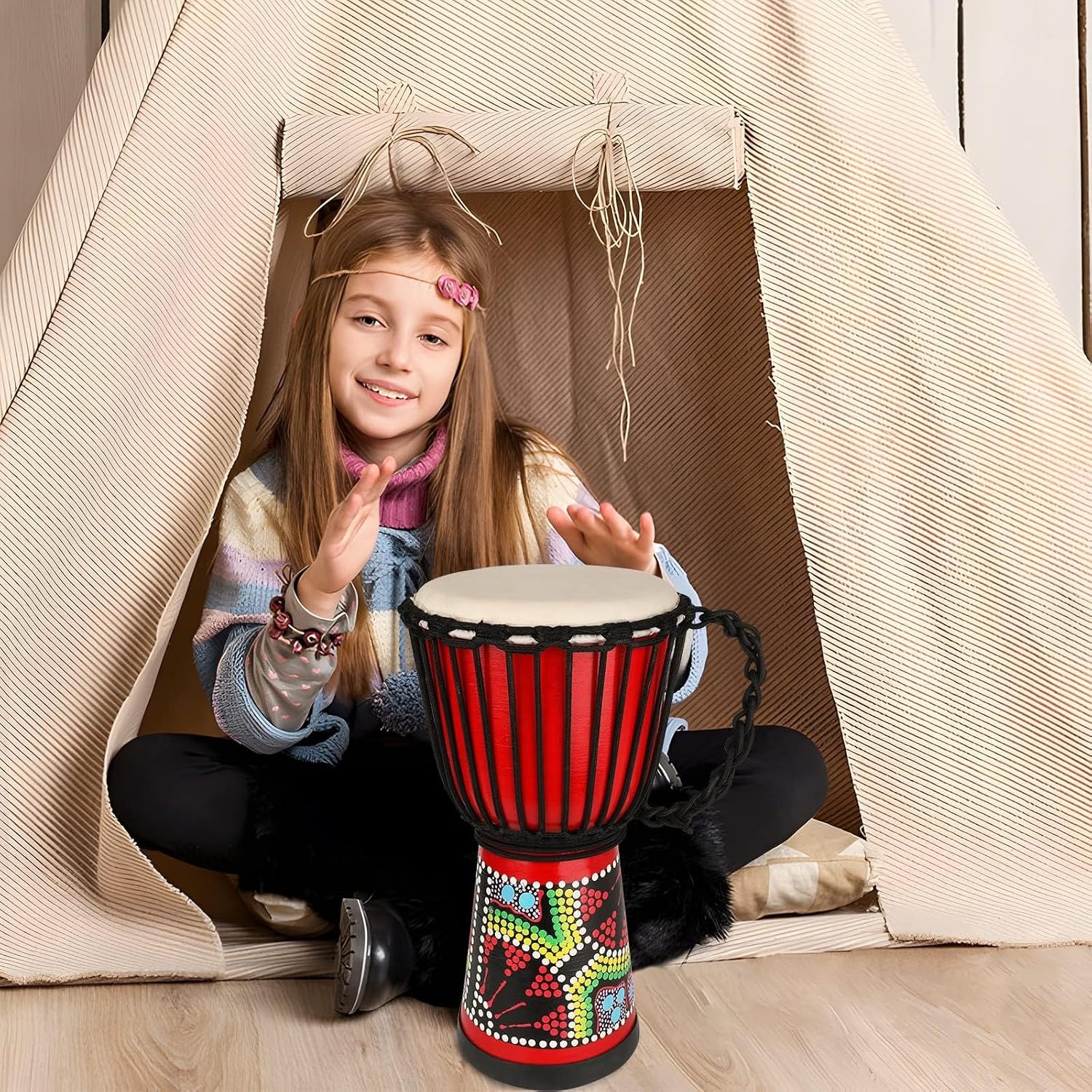

The complete guide
How to Choose a Djembe Drum You Will Actually Keep Playing
The problem with most first instruments
Most instruments punish you for being a beginner. A guitar buzzes, a violin squeaks, a keyboard sits in the corner because nobody wants to work through the book. The djembe is different. You sit down, hit it, and it sounds like a drum. That immediate reward is the reason djembes end up getting played every day while other instruments gather dust.
That said, not every drum sold as a djembe is worth owning. There are glued-together shells that rattle, synthetic heads that sound like a bucket, and metal-ringed drums with hardware that bites your knees. Knowing what separates a decent drum from a decorative one saves you from buying twice.
How a djembe actually makes its sound
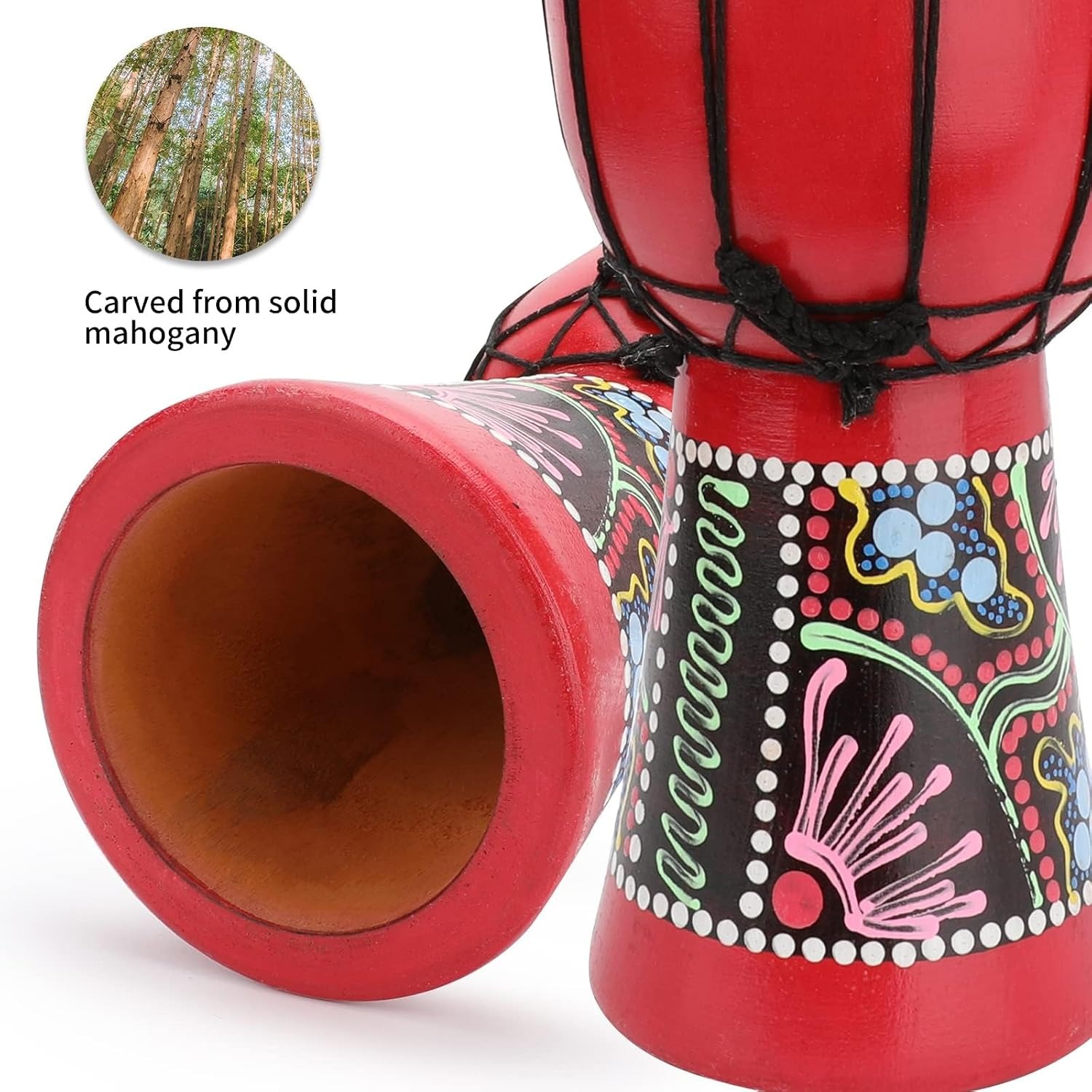
Look at the shape and the physics becomes obvious. The top is a wide bowl, the bottom is a narrow stem, and the whole thing is open at the base. When you strike the head, the air inside the bowl gets pushed down through the stem and out the bottom, which is what produces that deep, round bass note. Block the base with the floor or a thick cushion and the bass disappears. Tilt the drum forward and it comes back.
The timber matters too. This drum is carved from one piece of mahogany rather than assembled from strips, and that continuous wall lets the vibration travel without joins soaking up energy. Hardwood with real density is what gives a djembe its weight of tone. The sound profile recorded for this model is warm and heavy, which is exactly what you want from a mahogany shell.
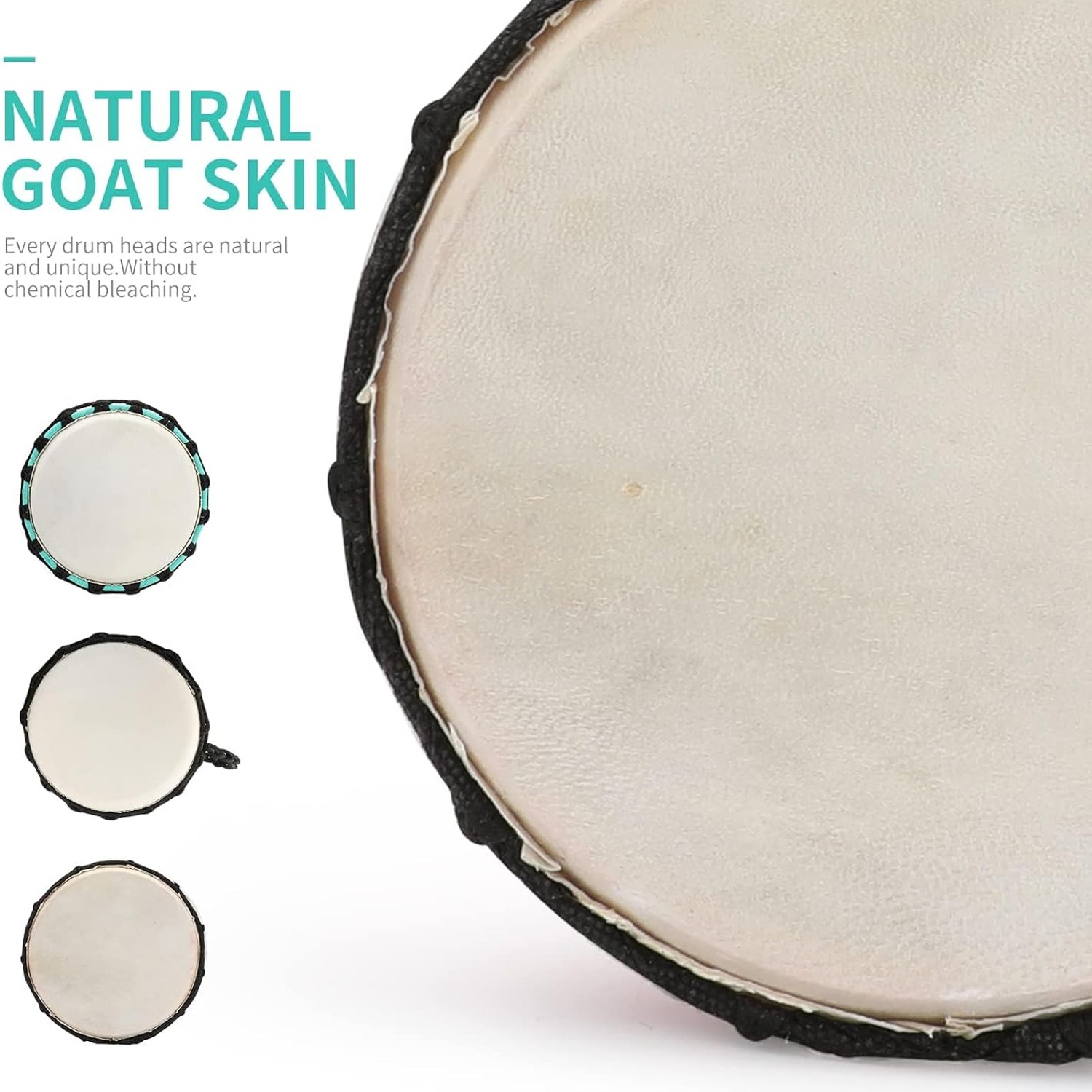
The head is the other half of the equation. Natural goatskin has a grain and a thickness that synthetic material does not reproduce well. Hit it flat in the middle and you get bass. Hit it at the rim with your fingers together and you get a clear tone. Let your fingers snap off the edge and you get a slap. Three sounds, one drum, no equipment. A good goatskin hand drum teaches you those differences quickly because the response is honest.
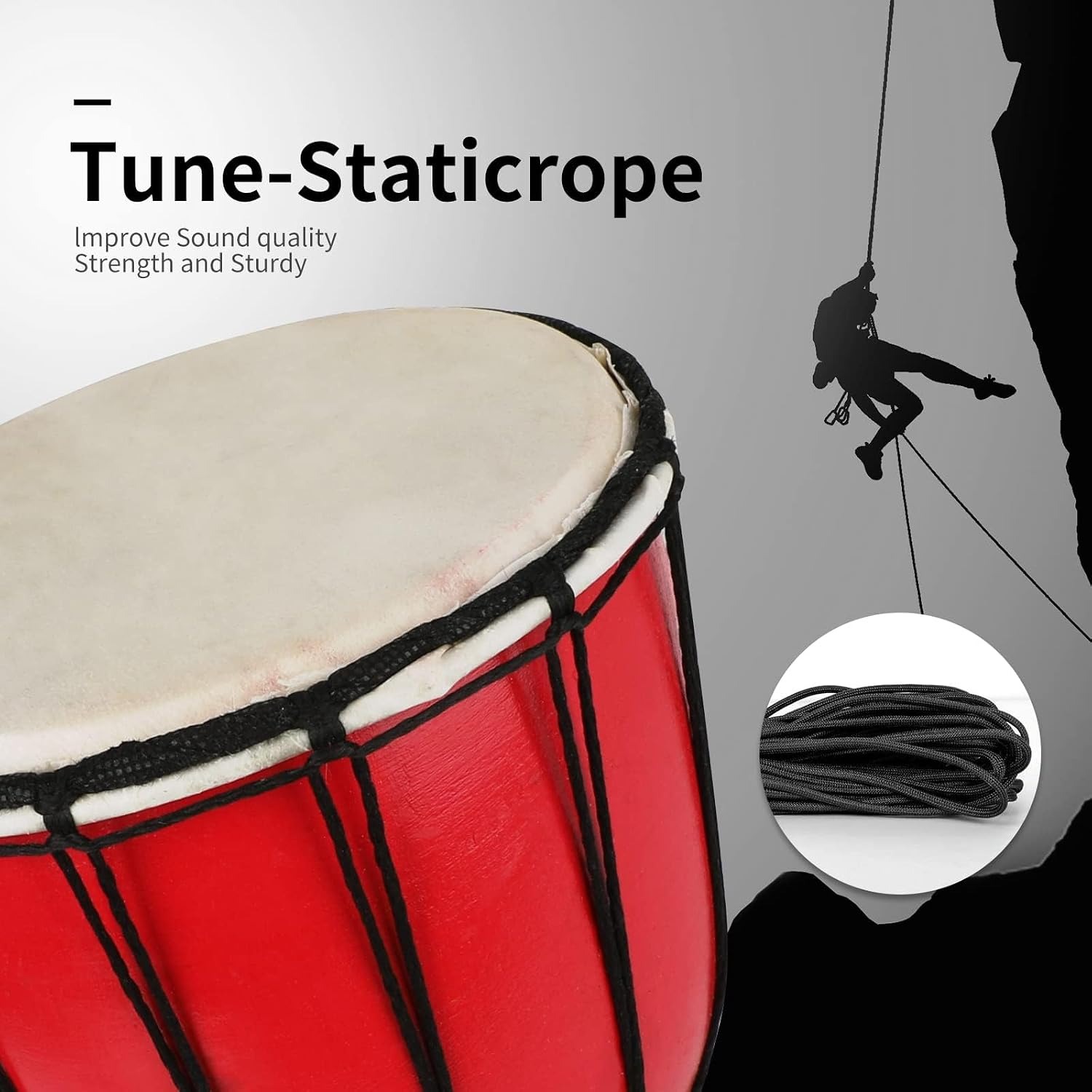
Finally, there is the rope. Tensioning rope wrapped down the shell pulls the head ring tight. It is the traditional method and it is still the best one for a drum you intend to keep, because you can restore the pitch yourself as the skin settles. Hardware-tuned drums need the right key and the right parts. Rope needs patience and a short video.
Who this size suits
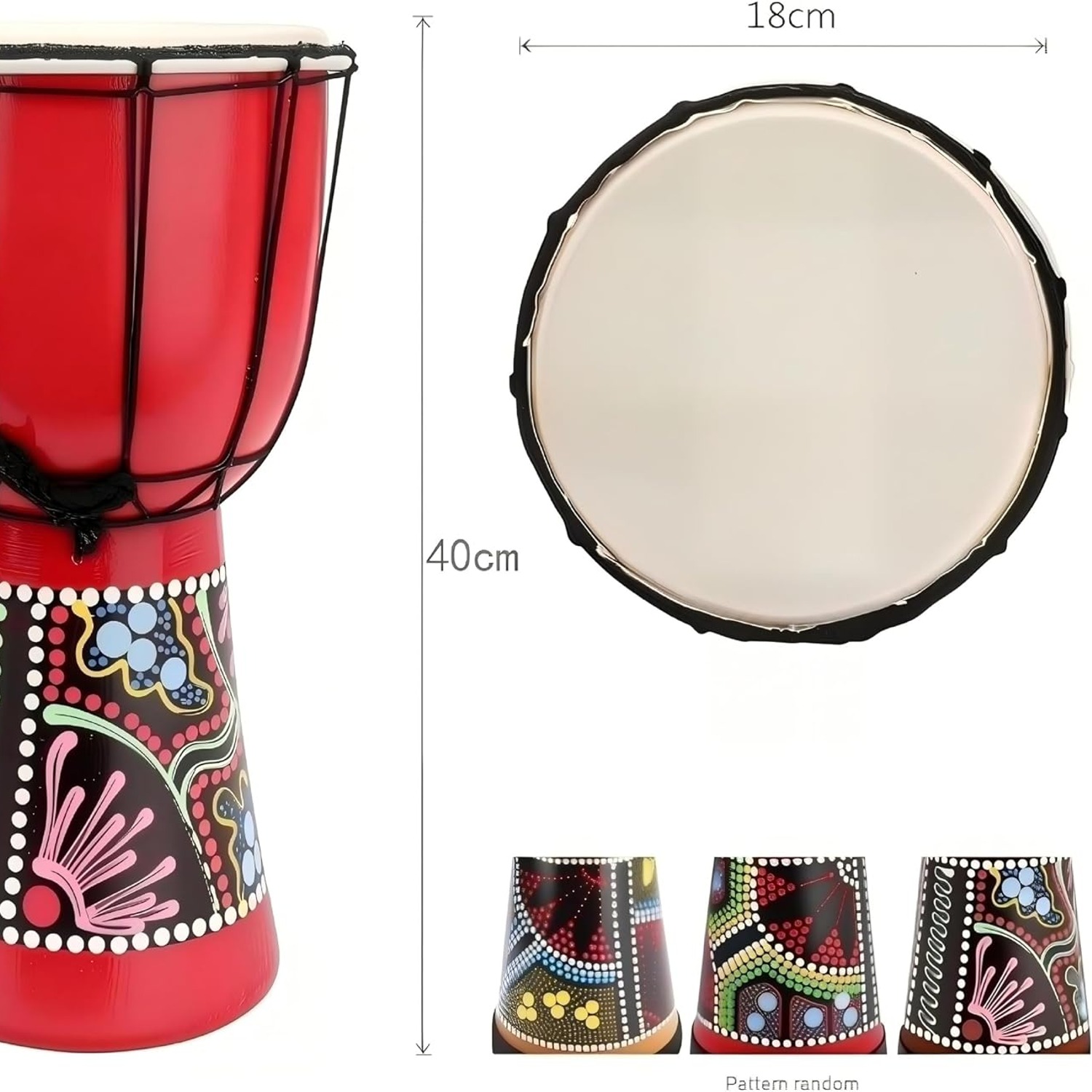
At 40 cm tall with an 18 cm head and a weight of 2.44 kg, this is a compact djembe. That is not a compromise, it is a category. A 60 cm drum has more bass but it is heavy to carry, awkward on a train, and too big for most children to straddle properly.
A 40 cm drum fits in a car boot, sits in the corner of a living room without dominating it, and can be carried to a class in one hand. For a beginner, that portability is the thing that keeps the drum in use. For a parent buying for a teenager, the smaller head is far easier for younger hands to control. For an adult who wants a practice drum at home alongside a bigger instrument, it covers the same patterns at lower volume.
The one group who should think twice is the player who wants to lead a large outdoor circle. If you are the one setting the pulse for fifteen people in a park, a bigger drum will carry further. For everybody else, including most people buying their first African percussion instrument, this size is the sensible choice.
What to look for when you compare drums
Start with the shell. One-piece carved timber beats glued staves every time, because glue lines can open up and buzz. Run your hand around the inside if you can. A good shell is smooth and even, with no sharp ridges.
Then check the head. Unbleached natural skin keeps more of its fibre strength than chemically bleached skin, and it usually has a slightly textured surface that grips your hand. Bleached heads look cleaner in photos and often sound thinner in person. This drum uses unbleached goatskin, which is the better choice for a drum you want to keep for years.
Look at the rope next. It should be taut, evenly spaced and tidy, with no loose loops flapping around the shell. Tension that is too low gives a dead, flabby sound. Tension that is cranked to the limit leaves nothing in reserve when the skin settles. A drum delivered at a sensible middle tension is a drum you can look after.
Last, think about the finish. Hand-painted shells are unique by definition, so the piece you get will not match the photo exactly. Some people love that, some people want uniformity. If a one-off paint design appeals, a hand painted djembe is the kind of instrument people notice sitting in a room.
Getting started in the first week
Do not try to learn a rhythm on day one. Spend ten minutes finding your bass, then ten minutes on your tone, and let your ear sort out the difference. Once those two strokes are reliable you have the backbone of most traditional patterns.
Keep your fingers together and your hand relaxed. Beginners hit too hard, tense up, and end up with sore palms by the end of the first evening. The drum does the work. Your hand just releases it.
Play along to music you already know. Four even bass notes under a song is a complete and perfectly good rhythm, and it trains your timing far better than drills do. Once that is easy, start putting tones on the off-beats.
Looking after it
Treat natural skin the way you would treat a leather jacket. Keep it indoors, out of direct sun, away from radiators and never damp. A garage or shed is the quickest way to ruin a head.
Wipe the shell with a dry cloth. Do not use polish or household cleaner on the skin. If the head sounds dull in humid weather, it will usually brighten again when the air dries out, so resist the urge to crank the ropes on a wet week.
Take off rings and watches before playing. A single catch from a ring edge can start a tear that spreads. And store the drum standing on its base rather than lying on its side, where something heavy might land on the head.
The protective footings fitted to the base before despatch are there for transit. Peel them off when you are ready, or leave them on if you want a bit of floor protection. Either way is fine.
The short version
A djembe is the easiest instrument to make a good sound on and one of the most satisfying to keep improving at. This one has the things that matter: a one-piece mahogany shell, a natural unbleached goatskin head, and traditional rope tensioning. The 18 x 18 x 40 cm size at 2.44 kg hits the sweet spot between real tone and genuine portability, which is why it works so well as a first drum.
Keep it indoors, play it with bare hands, and give the ropes a little attention when the skin settles. Do that and it will still be making noise in your house in ten years.