
The complete guide
How To Choose A Beginner Classical Guitar Starter Kit
The real reason people give up on guitar
It is almost never a lack of talent. It is friction. Someone buys a cheap guitar, discovers it has no strap, no way to carry it, no tuner and no picks, then puts it in a cupboard because getting set up feels like a project. Three months later it is still there, slightly out of tune, gathering dust.
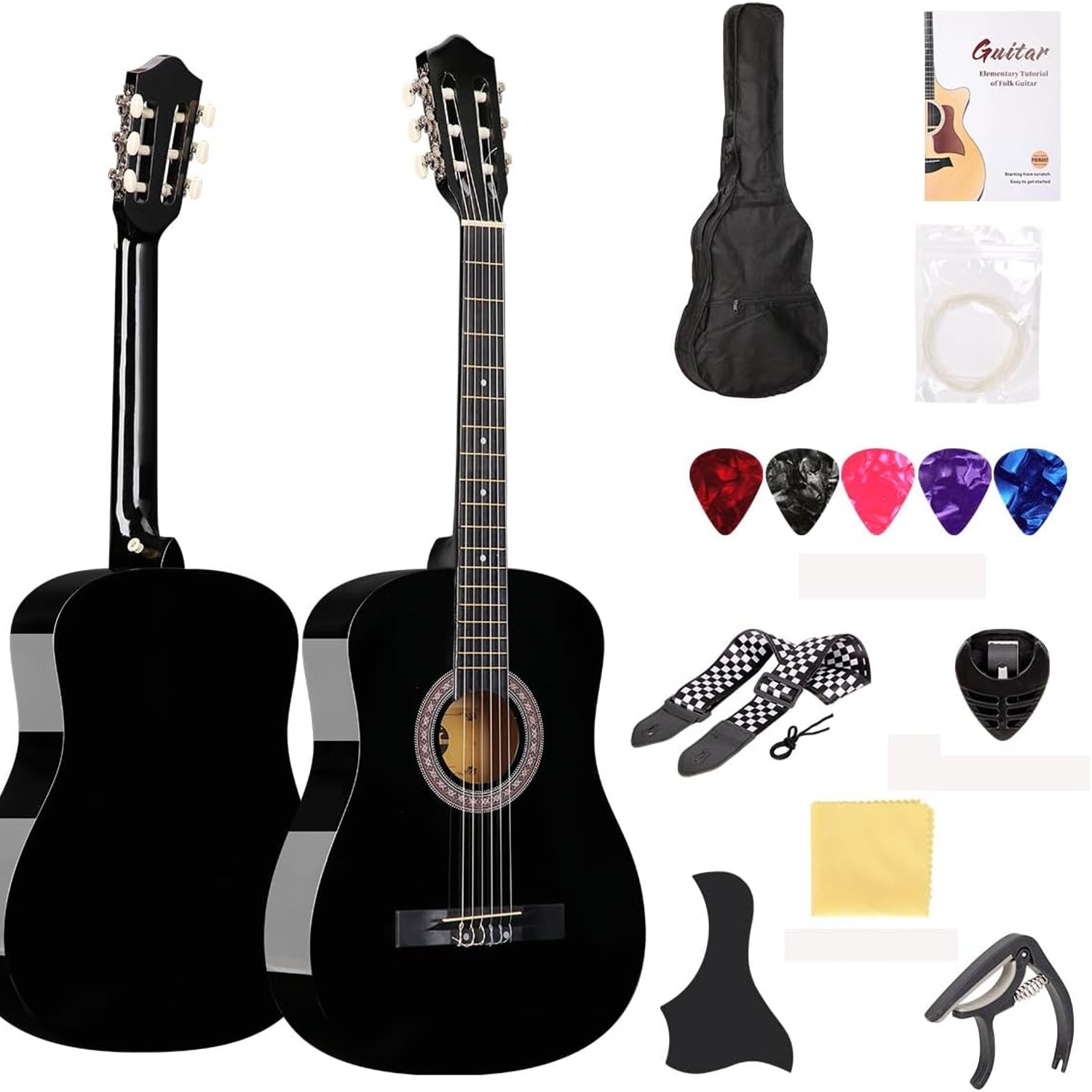
A starter kit removes that friction. When the gig bag, capo, strap, spare strings, picks, pickguard and cloth are all in the same box as the instrument, there is nothing left to arrange. You open it, tune it, and play something badly. That first bad-sounding attempt is the whole point. It is how everyone starts.
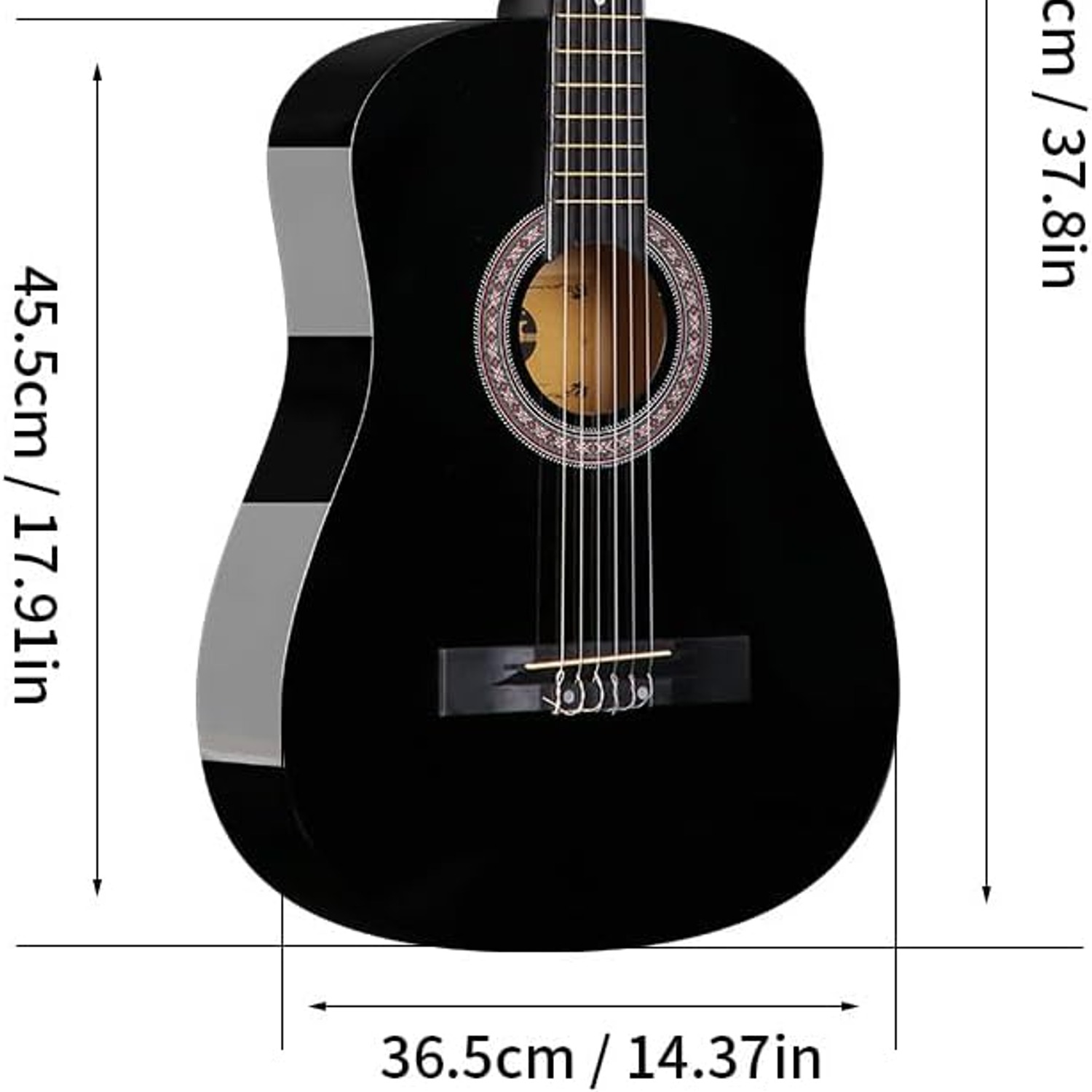
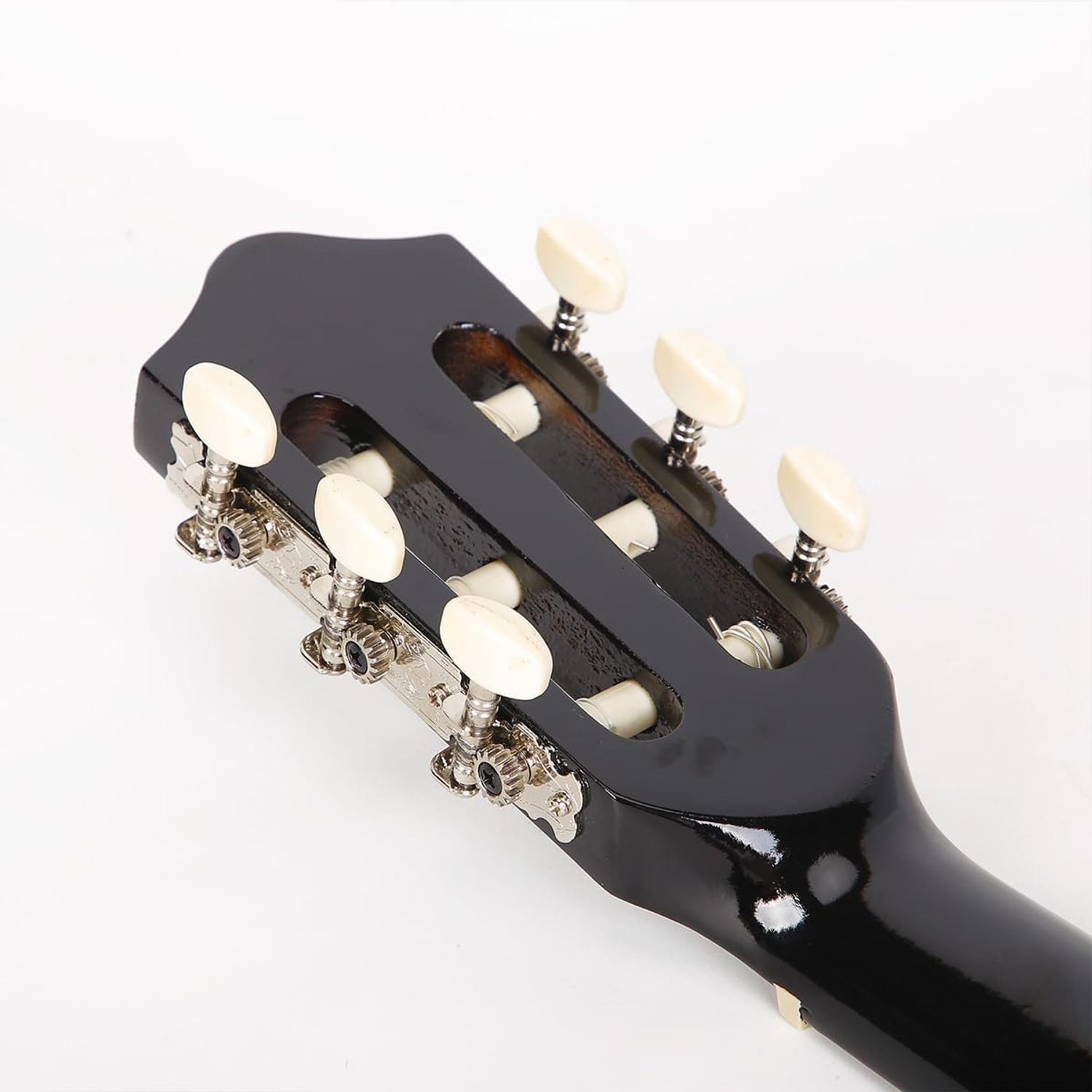
This particular guitar is a 38 inch classical model with a basswood top, back and neck, a rosewood fretboard and a warm, mellow voice. It weighs 2.57 kg and measures 96 by 36.5 by 8.5 cm. Those are the facts. What follows is how to think about whether they suit you.
What 38 inch actually means
Guitar sizing is confusing because the industry never agreed on one system. You will see fractions like 3/4 and 1/2, you will see inch measurements, and you will see body shape names. A 38 inch guitar sits just below a standard full size instrument. The scale length here, which is the vibrating length of the string, is 96 cm.
A shorter scale has two effects. The frets are closer together, so a smaller hand can reach a chord shape without stretching. And the string tension is a little lower at the same tuning, so pressing down takes less finger strength. For a beginner with soft fingertips, that is a genuine advantage in the first few weeks.
The nut width is 4.3 cm, which is the spacing at the top of the neck. Wider spacing gives fingers more room to avoid muting the neighbouring string. Narrower spacing suits smaller hands. At this width you are in sensible middle ground for a student instrument.
Who this size suits
Kids from around eight years old generally get on well with a 38 inch guitar, though hand size matters more than a birthday. Sit the child down with the instrument on their lap. If their fretting arm can reach the first fret without the shoulder hunching up, the size is fine.
Teenagers almost always fit. Adults do too, especially if the guitar will live on a couch or travel in a car. Some adults with large hands eventually prefer a full dreadnought, but plenty of experienced players keep a smaller guitar around precisely because it is easy to grab.
If you are shopping for the best first guitar for adults and you are unsure, the compact size is rarely the thing that stops someone. Discomfort and neglect stop people. A guitar you actually pick up beats a technically superior one that stays in its case.
The materials and what they do
Basswood makes up the top, back and neck. It is a light, even wood that is common on student instruments for good reason. It keeps the overall weight down, which matters when a ten year old is holding it, and it produces a soft attack rather than a sharp one.
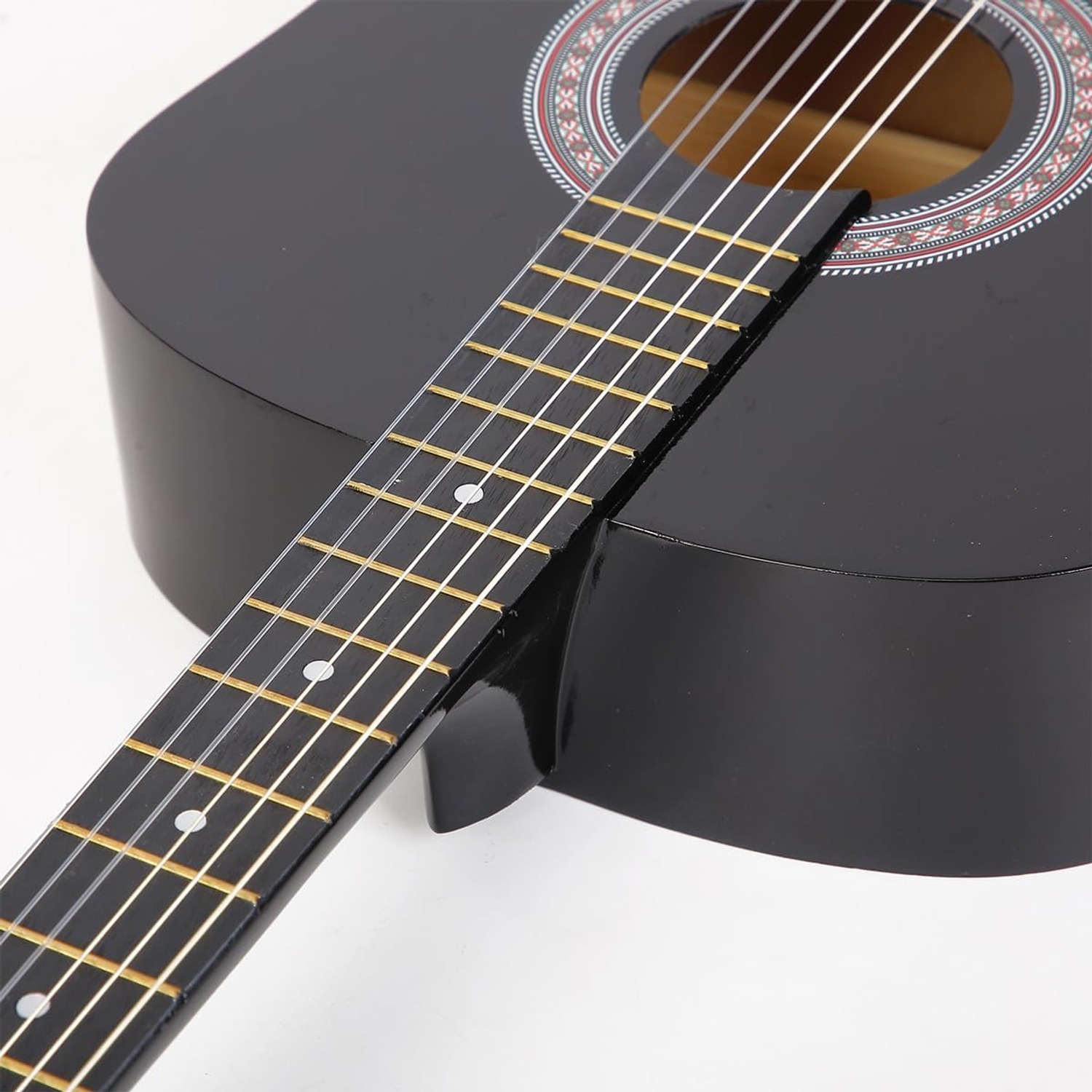
The fretboard is rosewood. That is the surface your fingertips press against all day, and rosewood has a smooth, slightly oily feel that wears in nicely over time. It is the part of the guitar you notice most after a few months of playing.
The sound profile is described as warm and mellow. In plain terms, the notes come out rounded rather than bright. That is flattering for a beginner. Harsh, clanky guitars make every mistake obvious. A mellow guitar lets a slightly muffled chord still sound pleasant, which keeps morale up in week two.
Strings, and the nylon question
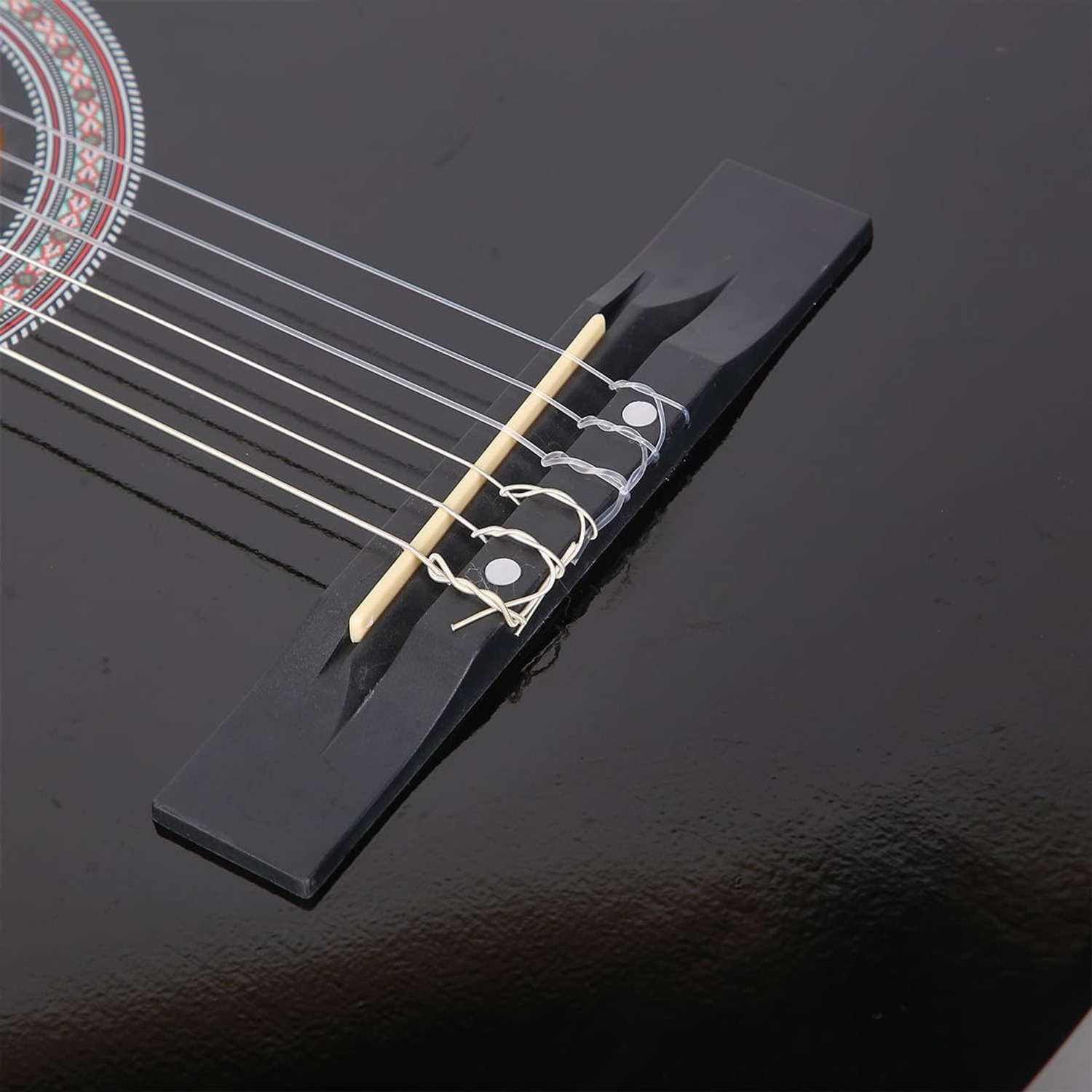
The record lists the fitted strings as metal, steel or bronze wound, and the kit also includes a set of nylon strings. It is worth understanding the difference because it changes how the guitar feels.
Nylon strings are thicker, softer and lower in tension. They are much kinder to fingertips in the first fortnight, when the skin has not hardened yet. They give a softer, more traditional classical sound. Steel strings are brighter and louder, and they suit strumming pop and folk songs, but they bite into untoughened fingers.
Many people searching for the best nylon string guitar for small hands are really after comfort. If that is you, fit the included nylon set. If you want more volume and sparkle for strumming, stay with steel. Having both options in the box is a quiet advantage of this kit.
How to judge any beginner pack
Four things separate a useful bundle from a box of filler.
First, does it include a way to carry the guitar? A gig bag is not optional if the instrument ever leaves the house. Second, is there a capo? It is the single accessory that unlocks the most songs for a beginner with only four chord shapes. Third, are there spare strings? A snapped string with no replacement means a week of not playing. Fourth, is there something to clean with? Finger oils dull strings fast.
This kit covers all four, plus a strap for playing standing and a pickguard to stop pick marks scratching the top. A tuner is the one thing you may still want, and a clip-on tuner is cheap. A free phone app does the job too.
Setting it up the day it arrives
Open the box carefully and check the neck, soundboard and bridge for any transit damage. Guitars are usually shipped with the strings slightly slack to reduce stress on the neck, so the first job is tuning.
Expect to retune several times over the first few days. New strings stretch. This is normal and not a fault. Tune, play for ten minutes, tune again. After a week it settles down.
Then fit the strap if you want to play standing, stick the pickguard on if it is not already fitted, and put the spare strings somewhere you will find them. Set a target of fifteen minutes a day rather than one long session on the weekend. Short and frequent builds calluses and muscle memory much faster.
Keeping it in good shape
Wood responds to heat and moisture. Keep the guitar out of direct sunlight, away from heaters and air conditioning vents, and never leave it in a hot car. Those three rules prevent most of the damage beginner guitars suffer.
Wipe the strings and the body with the included cloth after you play. It takes ten seconds and roughly doubles string life. Store the guitar in the gig bag if it is going to sit unused, or on a stand in a stable room if you want the visual reminder to practise. If it will be untouched for several months, loosen the strings slightly.
Change strings every three to six months for regular practice, or sooner if they look dull or will not hold pitch. The first string change is fiddly. The second takes ten minutes.
The short version
This is a 38 inch classical guitar sold as a complete beginner bundle. Basswood body and neck, rosewood fretboard, six strings, fixed bridge, no pickup, 2.57 kg, warm and mellow tone, black finish, right-hand orientation, one year warranty. In the box you also get a gig bag, capo, shoulder strap, nylon strings, picks, pickguard and a cleaning cloth.
It suits kids from around eight, teens, and adults who want something compact and ready to play. It is a genuinely sensible gift because the recipient needs nothing else to start. If you want more volume and a bigger sound later, a full size guitar will be waiting. For the first year or two of learning, this covers it.