Music Instruments
Company
Shop By Category
T&Cs
Shop Online
  • Box contents listed
  • Free tracked Australia-wide delivery over $150
  • 14-day returns

17 key Bb clarinet | student clarinet with case | beginner clarinet

17-Key Bb Clarinet with Case and Starter Accessory Kit

$261.99 $313.99 Save $52
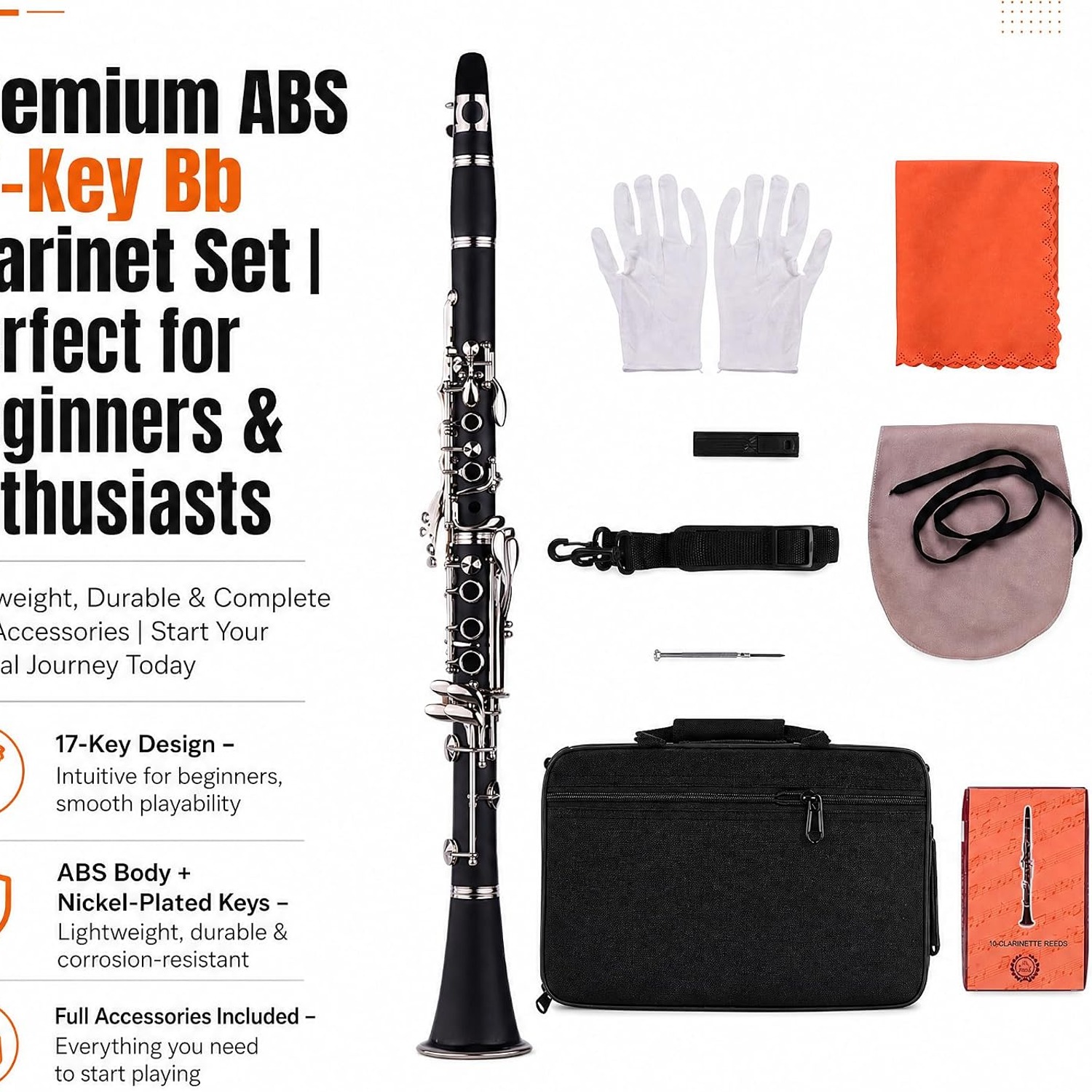
  • Full 17-Key Layout
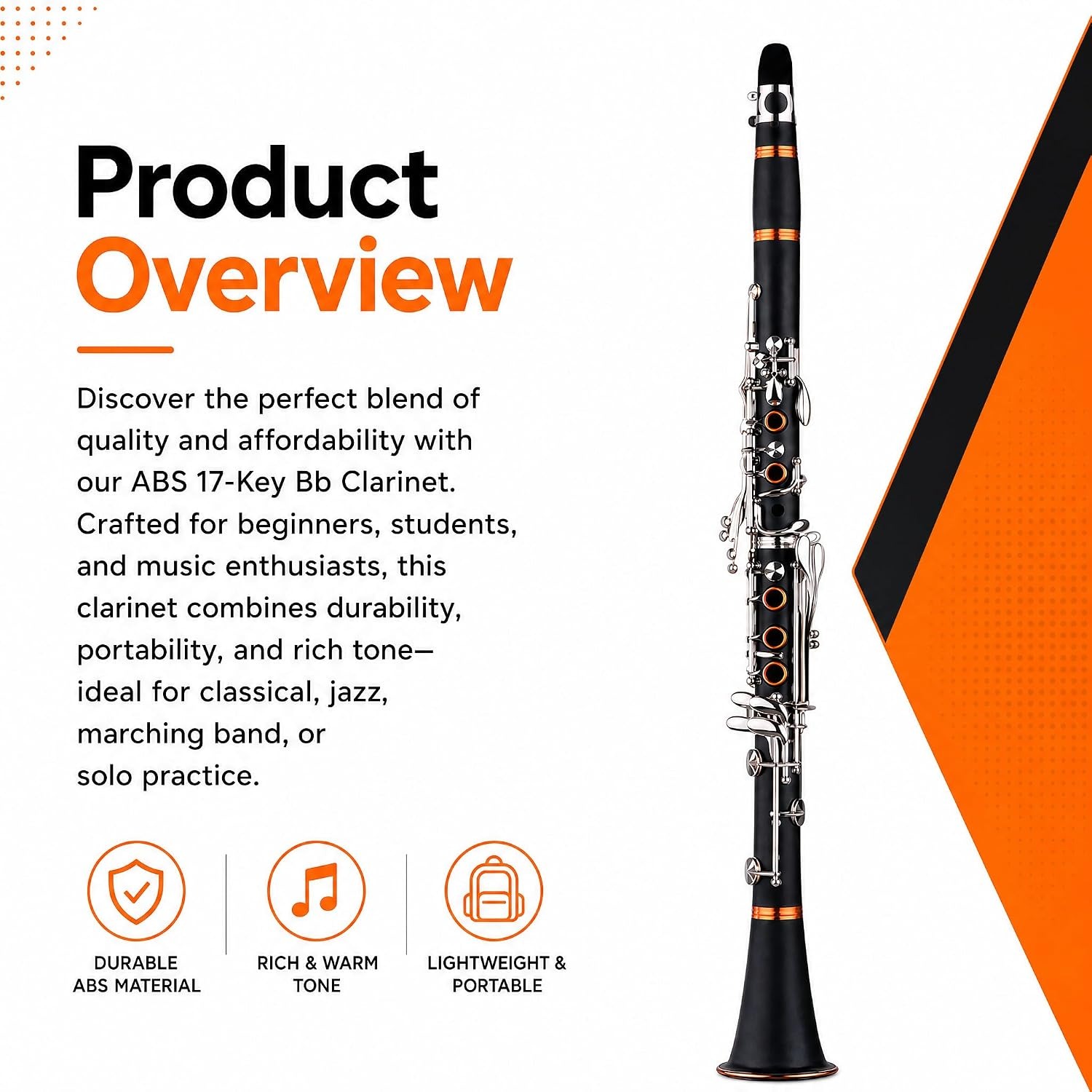
  • Light ABS Body
  • Padded Carry Case
  • Accessories Included

Price: $261.99 $313.99

  • Free tracked Australia-wide delivery on orders $150+, otherwise a flat $15
  • Pay by card or PayPal, handled by the payment provider
  • 14 days to change your mind, plus your statutory rights
Product specifications
BrandEacam
Instrument KeyB Flat
Key Count17 keys
Body MaterialAcrylonitrile Butadiene Styrene (ABS)
Key MaterialNickel
ColourBlack
StyleClassic
Included ComponentsCase, Cleaning Cloth, Gloves
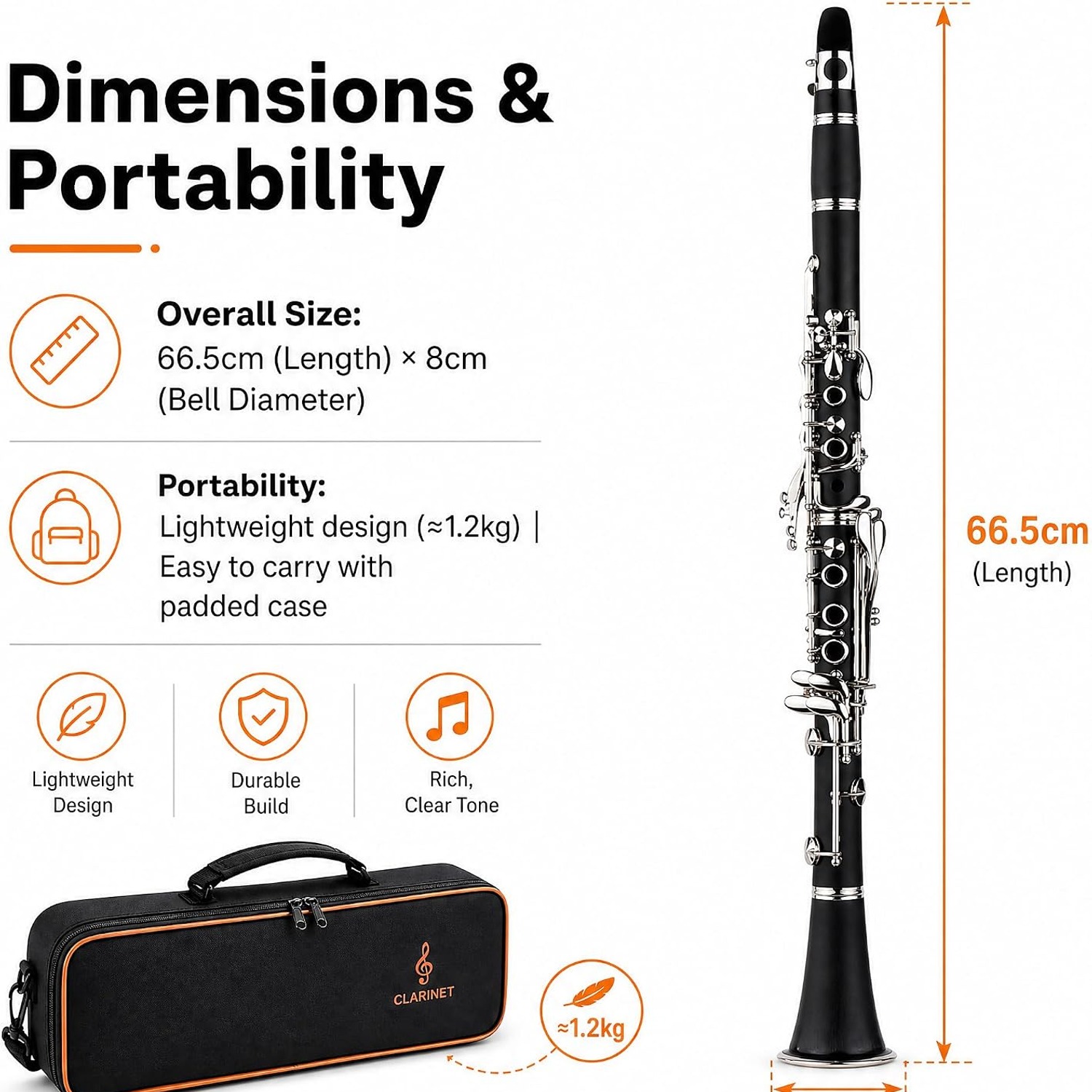
Item Weight710 g
Number of Packs1
ManufacturerEacam
Manufacturer Part NumberCIZ0762984687435BH
Country of OriginChina
Weight710 g
Shipping & returns

Tracked delivery anywhere in Australia. It is free on orders of $150 or more, and a flat $15 below that.

If it is not right for you, send it back within 14 days of delivery in resaleable condition and we refund the price you paid, including standard delivery. That is a voluntary policy we offer on top of your legal rights. You cover the cost of returning it unless the item is faulty.

If it arrives faulty, damaged or not as described, we put it right at no cost to you under the Australian Consumer Law and the Competition and Consumer Act 2010, return postage included.

Shipping details · Refunds and returns

Full 17-Key LayoutThe standard Boehm-style key count taught in school band programs.
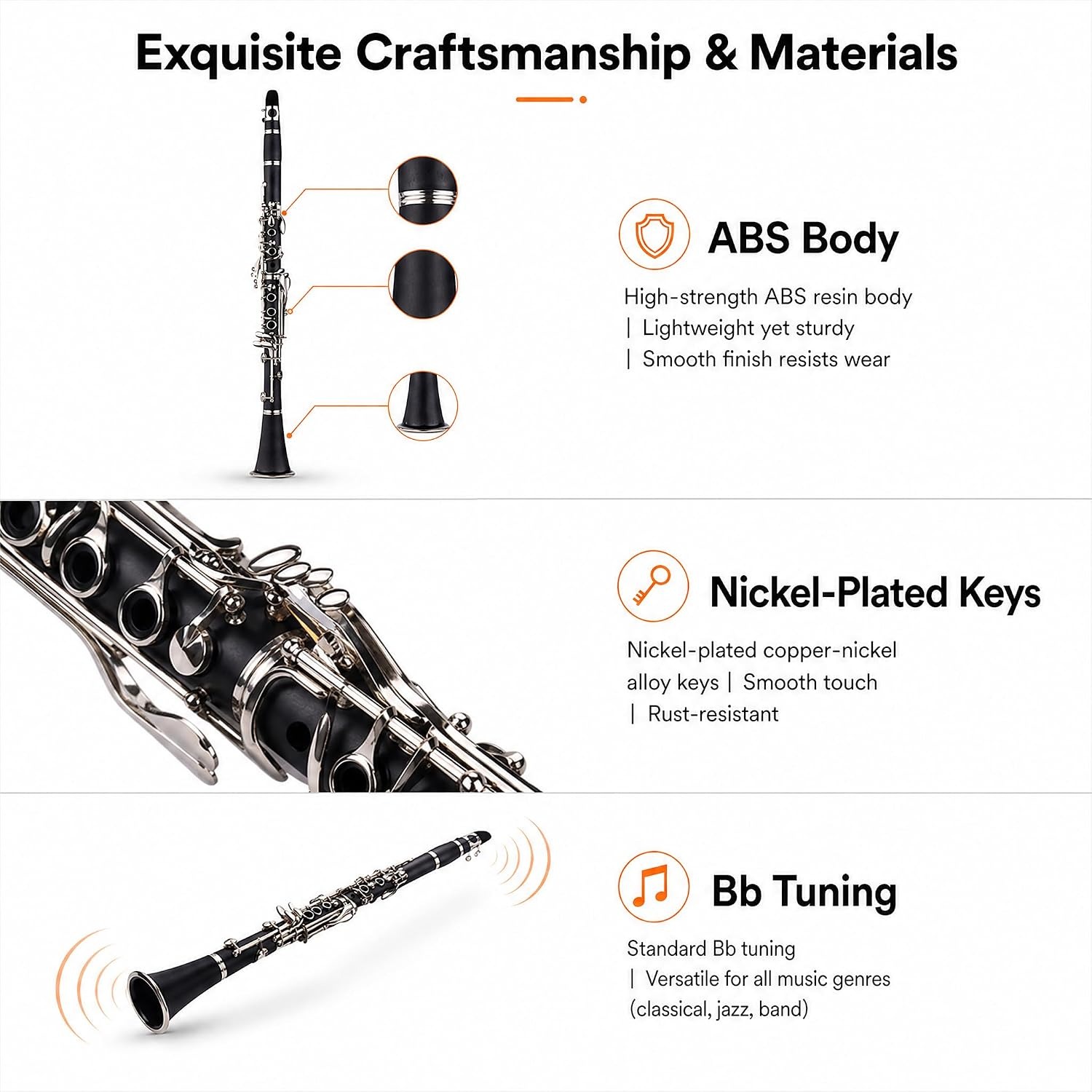
Light ABS BodySturdy resin construction that is easy for younger players to hold.
Padded Carry CaseProtects the instrument between home, lessons and rehearsal.
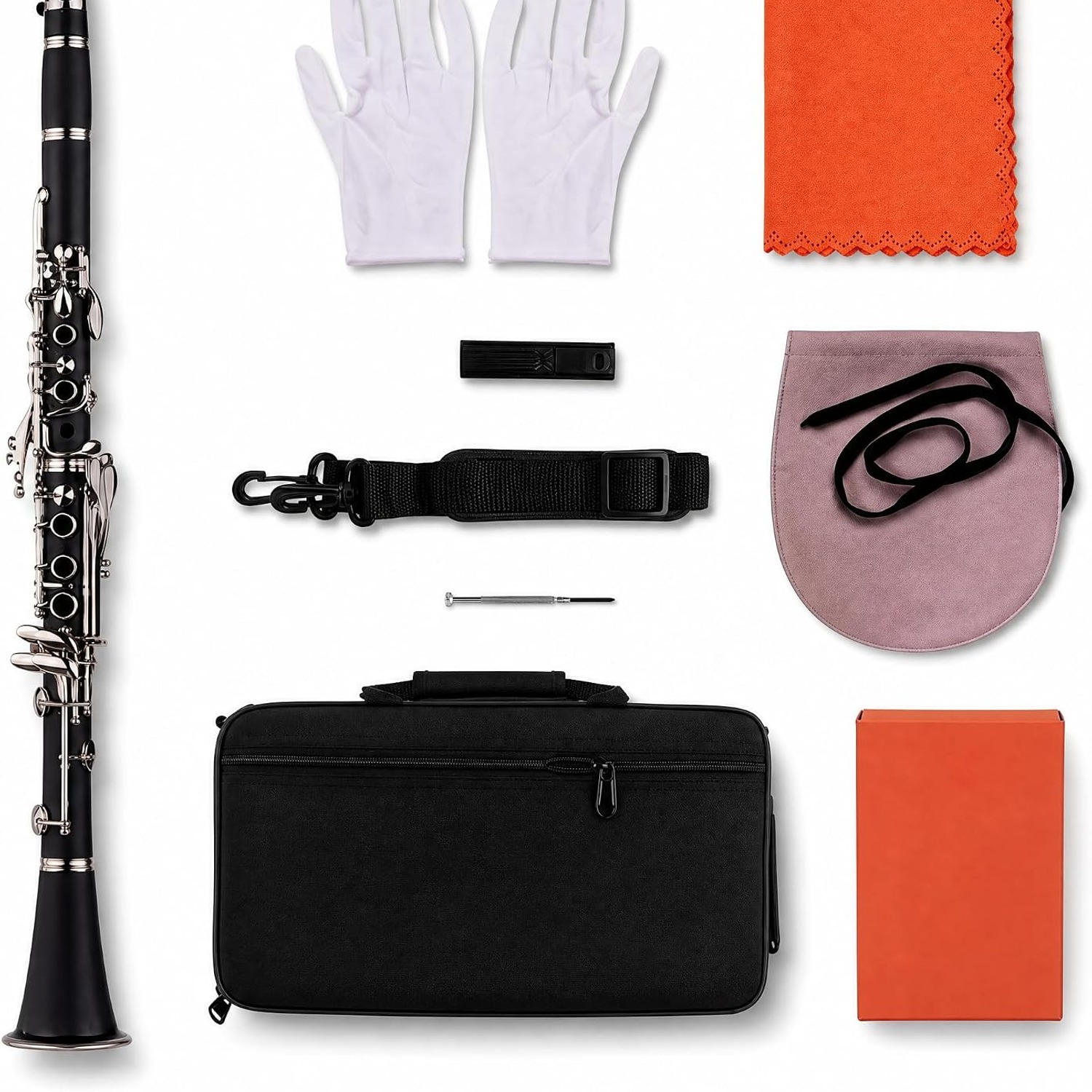
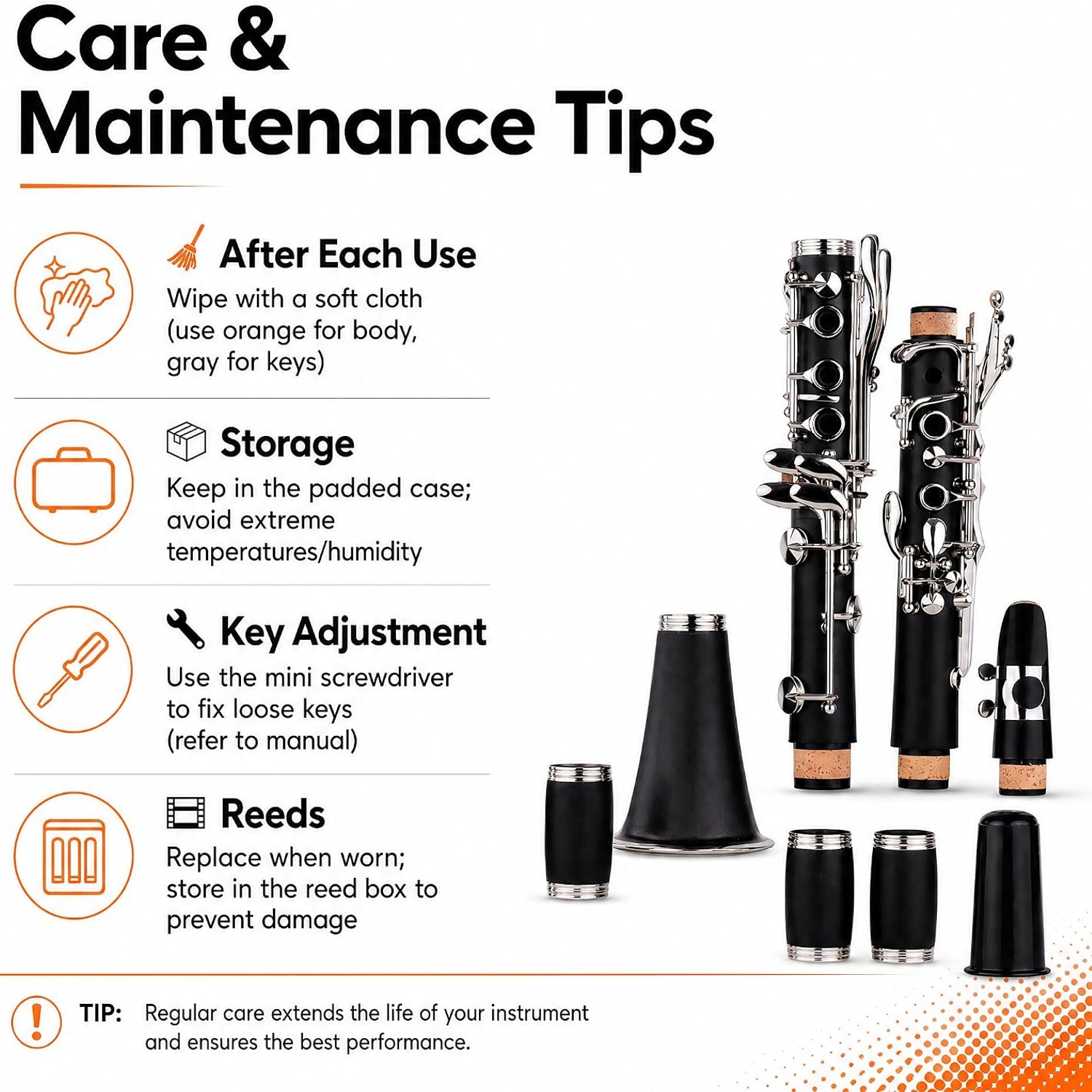
Accessories IncludedTen reeds, reed case, gloves, two cloths and a mini screwdriver.

Start playing sooner with a 17 key Bb clarinet that arrives ready to assemble, tune and enjoy.

Lightweight ABS body, nickel keywork, padded carry case, ten reeds, gloves, cleaning cloths and a mini screwdriver, so a first lesson needs nothing extra.

A 17 key Bb clarinet built for students, hobby players and anyone picking up a woodwind instrument for the first time.

The ABS resin body keeps the weight down to 710 g, which helps smaller hands and tired arms through a long practice session.

Nickel-finished keywork gives a firm, positive feel under the fingers and a clean look on stage.

A padded case, ten reeds with a reed case, gloves, two cleaning cloths and a mini screwdriver all come in the box.

Bb is the standard clarinet pitch for school bands, concert bands, jazz groups and marching ensembles.

17-Key Bb Clarinet with Case and Starter Accessory Kit

Learning the clarinet usually stalls for a boring reason. The instrument is too heavy, the case is awkward, or the reeds ran out two weeks ago and nobody got to the music shop. This 17 key Bb clarinet is put together to remove those small obstacles. It arrives in a padded case with ten reeds, a reed case, gloves, two cleaning cloths and a mini screwdriver, so the first practice session can happen the day it lands on the doorstep.

17-Key Bb Clarinet with Case and Starter Accessory Kit

The body is moulded from ABS resin. That choice matters more than it sounds. ABS does not swell or crack with humidity the way untreated wood can, it shrugs off the knocks that come with school bags and bus rides, and it keeps the whole instrument at 710 g. A lighter clarinet means a beginner can hold a steady hand position for longer, which is exactly when real progress happens.

17-Key Bb Clarinet with Case and Starter Accessory Kit

The keywork is nickel finished and laid out in the familiar 17-key pattern that teachers and method books assume. Nothing about the fingering will feel unusual to a tutor. A student can follow any standard beginner book, sit in a school band, or move across to a different clarinet later without relearning anything.

17-Key Bb Clarinet with Case and Starter Accessory Kit

Bb is the workhorse pitch of the clarinet family. Concert band parts, jazz charts, marching band arrangements and most tutor books are written for it. That makes this a sensible first instrument whether the goal is a school ensemble, a community group or simply playing along with recordings at home.

17-Key Bb Clarinet with Case and Starter Accessory Kit

Fine details beyond what is listed here, such as exact body dimensions and bore measurements, are not specified in the supplier record. What is confirmed is the 17-key Bb configuration, the ABS and nickel construction, the 710 g weight, the black classic finish and the accessories that ship in the box.

Not sure yet? That is fine.

An instrument has to suit the player, and you cannot always judge that from a photograph. If it is not right for you, send it back within 14 days of delivery in resaleable condition and we refund the price you paid, including standard delivery. That is on top of your Australian Consumer Law rights if anything arrives faulty.

If it turns up faulty, damaged or not as described, that is on us. The Australian Consumer Law and the Competition and Consumer Act 2010 covers you, and we pay the return postage. Read the full detail on our refunds and returns page, or ask us anything before you order.

Frequently Asked Questions

What exactly is a 17 key Bb clarinet?

It is the standard soprano clarinet pitched in B flat, with seventeen keys covering the full chromatic range taught in beginner method books. The 17-key layout is what school band programs, tutors and sheet music assume. If a teacher says "bring a clarinet", this is the instrument they mean.

Is this suitable for a complete beginner?

Yes. The key layout matches every standard tutor book, the ABS body keeps the weight manageable at 710 g, and the ten reeds included mean no extra shopping before the first lesson. It is a sensible choice for the best first clarinet in a household where nobody has played woodwind before.

What comes in the box?

The confirmed included components are the clarinet, a carry case, cleaning cloths and gloves. Supplier listings also reference a box of ten reeds with a reed case and a mini screwdriver for small adjustments. Between them you have what you need for a first practice session.

Why is the body made from ABS rather than wood?

ABS resin is stable in changing humidity, so it will not swell or crack the way untreated wood sometimes does. It also handles knocks better and weighs less, which matters for a student carrying an instrument to school. Most teachers recommend a resin body for the first year or two of learning.

How heavy is the clarinet?

The item weight is listed as 710 g. That is light enough for most children aged roughly nine and up to hold a steady position through a twenty-minute practice session. Weight is one of the quiet reasons beginners stick with an instrument or give up on it.

What are the keys made of?

The keywork is nickel, which gives a firm feel under the fingers and a bright silver appearance against the black body. Nickel keys resist tarnish reasonably well as long as you wipe them down after playing. Use the supplied gloves if you want to keep fingerprints off during handling.

Can an adult learner use this?

Absolutely. The 17-key Bb clarinet is one size for all ages, so an adult picks up the same instrument a twelve-year-old would. Many people looking for the best clarinet for adult learners start exactly here before deciding whether to invest in a wooden instrument.

Will it work for school band?

Yes. Bb is the standard pitch for concert band and marching band clarinet parts, and the 17-key configuration matches what band directors expect. Check with the specific program if they have any particular requirement, but this is the conventional setup.

Is it any good for jazz?

The Bb clarinet is the usual choice for traditional jazz, swing and small ensemble playing. A beginner instrument will take you a long way into that repertoire. Tone and projection depend as much on reed choice and embouchure as on the instrument itself.

How many reeds are included and what strength?

Supplier listings reference a box of ten reeds with a reed case. The specific strength is not listed by the maker. Most beginners start on a 2 or 2.5 strength, so check what arrives and ask a teacher before buying replacements.

How long do reeds last?

With regular practice, a reed typically lasts a few weeks before it loses responsiveness or chips. Rotating between two or three reeds extends the life of all of them. Always store them flat in the reed case so they dry evenly.

How do I assemble the clarinet?

Join the pieces in order, starting with the bell to the lower joint, then the upper joint, then the barrel and mouthpiece, twisting gently rather than forcing. Hold the joints where there are no keys so you do not bend rods. A little cork grease makes the tenons slide together smoothly.

What is the mini screwdriver for?

It handles small adjustments such as tightening a loose key screw over time. It is not a repair tool for bent keys or leaking pads, which need a technician. If a note stops speaking and the cause is not obvious, take it to a repairer rather than experimenting.

How do I clean the instrument after playing?

Pull a swab through the bore to remove moisture, then wipe the body and keys with a dry cloth. Take the reed off the mouthpiece and let it dry in the reed case. Two cleaning cloths are included so you can keep one for the bore and one for the exterior.

Can I wash the mouthpiece?

Rinse it occasionally in lukewarm water with a gentle mouthpiece brush. Never use hot water, as heat can distort the material and affect how the reed seats. Dry it fully before putting it back in the case.

Does it need oiling?

An ABS body does not need bore oil the way a wooden clarinet does. Key mechanisms benefit from a tiny drop of key oil at the pivots once or twice a year, applied by someone who knows where it goes. Cork grease on the tenons is the more frequent job.

Why is the case important?

A padded case protects the keywork, which is the most fragile part of any clarinet. Loose keys in a bag bend easily and a bent key means pads stop sealing. Among features people weigh up when hunting for the best student clarinet with case, proper padding matters more than looks.

Should I store it assembled?

No. Take it apart after playing, swab it, and lay the pieces in their moulded case spaces. Leaving a clarinet assembled puts constant pressure on the tenon corks and traps moisture in the bore.

What age is this suitable for?

Most students start clarinet around ages nine to eleven, when hands are big enough to cover the tone holes properly. There is no upper limit. For younger children, have them try covering the holes on a teacher's instrument first.

Do I need anything else to start?

A beginner method book, a music stand and a small tub of cork grease cover the gaps. Some teachers also suggest a neck strap for younger players. Otherwise the accessory kit supplied handles day to day needs.

What colour is the instrument?

The body is black with nickel keywork, described as a classic style. That is the traditional clarinet appearance and the one that blends into a band section without standing out.

Where is it manufactured?

The country of origin is listed as China. The manufacturer is Eacam and the manufacturer part number is CIZ0762984687435BH.

Does it come with a warranty?

No warranty terms are specified in the maker's listing. If the instrument arrives with a fault or does not play correctly, contact us and we will sort it out under our returns process.

What are the body dimensions?

Exact dimensions are not listed by the maker. A standard Bb clarinet assembles to roughly 66 cm long and packs down into a case about 40 cm in length, but we are not quoting a figure for this particular model that we cannot confirm.

Is this a good gift?

It works well as a gift because the recipient does not need to buy anything before their first attempt. The case makes it easy to wrap or hand over, and the included reeds and cloths cover the small items a newcomer would not know to purchase.

Can two people share one clarinet?

They can share the instrument but should each have their own mouthpiece and reeds for hygiene. Mouthpieces are inexpensive and swap in seconds. Label them so they do not get mixed up.

How soon will a beginner get a sound out of it?

Most people produce a note within the first session, though it may squeak. A clear, steady tone across a few notes usually comes within two or three weeks of short daily practice. Reed strength and embouchure are the main variables.

What if the keys feel sticky or a note will not sound?

Check first that all joints are seated fully and that no key is being held down by a sleeve or finger. If a specific note stays silent, a pad may not be sealing and a technician can adjust it quickly. Do not bend keys yourself.

How does shipping and delivery work?

We deliver anywhere in Australia with a tracked courier. Most orders arrive within 3 to 7 working days of the order date, a little longer to regional and remote addresses. Delivery is free on orders of $150 or more and a flat $15 under that. You get a tracking link by email as soon as the parcel is on its way.

What if it is not the right instrument for us?

Get in touch within the returns window with your order number and we will talk you through the options. As long as the clarinet is unused and back in its case with the accessories, we can arrange a return or exchange. If something arrived damaged, send a photo and we will replace it rather than send you back and forth.

Choosing Your First Clarinet, A Practical Buyer's Guide

6 min read Music Instruments

The problem with starting an instrument

Most people who quit the clarinet do not quit because of the music. They quit because of friction. The reed dried out and split. Nobody had cork grease so the joints would not go together. The case was a soft bag and a key got bent on the school bus. Small annoyances pile up until practice becomes a chore, and a chore gets skipped.

A first clarinet should remove as much of that friction as possible. It should be light enough to hold properly, stable enough to survive being carried around, and it should arrive with the consumables a beginner has not learned to think about yet. That is the whole brief for a student instrument. Tone refinement comes later, once the player actually has a reason to care about it.

What a 17 key Bb clarinet actually is

The clarinet family is bigger than most people realise, but one member does almost all the work. The soprano clarinet in B flat is the one in concert bands, the one in jazz ensembles, the one printed on the cover of beginner method books. When a teacher, a band director or a music shop says "clarinet", they mean this.

The 17 refers to the number of keys. That count is the standard Boehm system layout, which gives access to the full chromatic range a student needs. Instruments with fewer keys exist, usually for very young children or specific folk traditions, but they do not match standard fingering charts. Buying 17 keys means every tutor book, every YouTube lesson and every teacher's instruction lines up with the instrument in your hands.

The pitch matters too. Bb means the written notes sound a tone lower than concert pitch. That sounds confusing until you realise all the sheet music a clarinettist will ever touch already accounts for it. You do not need to do mental maths. You just read the part in front of you.

ABS versus wood, and why resin wins at the start

Professional clarinets are usually made from grenadilla, a dense African hardwood. They sound wonderful. They also cost many times more, need careful breaking in, and can crack if taken from a cold car into a warm hall.

A resin body sidesteps all of that. ABS does not absorb moisture, so it will not swell, warp or split as the seasons change. It takes knocks. It forgives being left in a bag overnight. And it weighs less, which is the practical point. This instrument sits at 710 g assembled. For a student holding a right-hand thumb rest for twenty minutes, that difference is the gap between finishing a practice session and putting the thing down after eight minutes.

Nearly every teacher recommends a resin instrument for the first year or two. Learn the fingerings, build the embouchure, find out whether the clarinet is actually your thing. Upgrade later if it is.

The keywork

Keys on this instrument are nickel. The finish is bright, which looks tidy in a band section, and nickel is firm under the fingers without feeling heavy. Keep it wiped down after playing and it stays looking good. The supplied gloves help if you want to handle the instrument without leaving fingerprints on the plating.

What you are feeling for in keywork is whether a key returns cleanly when you lift your finger and whether pads seal flat on the tone holes. Those are the two things that determine whether a note sounds. If a note goes quiet or airy months down the track, it is almost always a pad that has shifted, and a technician fixes it in minutes.

Who this instrument suits

Three groups, broadly. Primary and secondary students joining a school band, where Bb clarinet parts are the most common woodwind line after flute. Adult learners returning to music or picking it up for the first time, who want something they can play tonight without a long research project. And households buying a gift, where the appeal is that everything needed is already in the box.

It is less suited to someone who already plays at an advanced level and wants a specific tonal character. That player is shopping for wood, and they know it.

Hand size is the one genuine limit. The clarinet asks fingers to cover open tone holes completely, and very small hands struggle. Around age nine to eleven is the usual starting point. If you are unsure, have the child try covering the holes on a teacher's instrument before committing.

How to choose, practically

Start with the key count and the pitch. Seventeen keys, B flat. Anything else is a specialist purchase and you will know if you need it.

Next, check what comes with it. Reeds are consumable and a beginner will go through several in the first month. A box of ten with a reed case, as supplied here, covers a decent stretch. Cleaning cloths matter because moisture left in the bore is the fastest route to problems. A mini screwdriver handles the odd loose key screw.

Then look at the case. Hard or firmly padded, with moulded spaces for each joint, is what you want. A floppy bag lets keys press against each other and bend. The case is doing more work than most buyers credit.

Finally, think about the extras you will still want. A beginner method book. A music stand. A small tub of cork grease, because tenon corks eventually need it. None of these is expensive and all of them are easier to buy than they are to improvise.

Looking after it

The routine is short and it matters. After playing, pull a swab through the bore to clear moisture. Take the reed off the mouthpiece and lay it flat in the reed case so it dries evenly rather than warping. Wipe the body and keys with a dry cloth. Take the instrument apart and put each piece in its case slot.

That is it, most days. Occasionally rinse the mouthpiece in lukewarm water, never hot. Apply a thin film of cork grease when joints start to feel stiff. Keep the case away from radiators, car boots in summer and damp cupboards.

Avoid oiling the bore, as a resin instrument does not need it. Avoid tightening screws you do not understand. And resist the urge to straighten a bent key by hand, because key rods are soft and a repairer can do in ten minutes what an enthusiastic parent can turn into an expensive problem.

Reeds, the thing nobody explains

Reeds are thin pieces of cane that vibrate against the mouthpiece. They are the single biggest factor in how a beginner sounds, and they wear out. Most students start around strength 2 or 2.5, soft enough to speak easily while the embouchure is still developing. Harder reeds give more control and projection once the player's mouth muscles have built up.

Rotate between two or three reeds rather than playing one until it dies. Each gets a rest, dries fully, and all of them last longer. A chipped reed goes in the bin, no debate.

The short version

A 17 key Bb clarinet in ABS with nickel keys is the standard answer for anyone starting out. This one weighs 710 g, comes in black with a classic finish, and ships with a carry case, gloves, cleaning cloths and a screwdriver, with reeds and a reed case referenced by the supplier.

It will not sound like a professional's grenadilla instrument, and it is not trying to. What it does is let somebody start playing this week, survive the carrying and the knocks, and get far enough into the repertoire to find out whether the clarinet is going to be part of their life. That is exactly what a first instrument is for.

Browse the shop

Not sure if this is the right starter clarinet?

Tell us the player's age and what they are joining, school band, lessons or home practice, and we will point you to the right setup.

Ask us a question

Page summary

The Eacam 17-key Bb clarinet is a student-level woodwind instrument supplied with a padded carry case, gloves, cleaning cloths and a mini screwdriver. The body is moulded from ABS (acrylonitrile butadiene styrene) with nickel keywork, finished in black in a classic style. Total item weight is 710 g. The instrument is pitched in B flat with the standard 17-key layout used in school band programs, suiting concert band, jazz and marching band repertoire. Manufacturer part number is CIZ0762984687435BH and country of origin is China. Supplier listings also reference a box of ten reeds and a reed case. Exact body dimensions, bore size and any warranty terms are not specified in this record.