Music Instruments
Company
Shop By Category
T&Cs
Shop Online
  • Box contents listed
  • Free tracked Australia-wide delivery over $150
  • 14-day returns

Steel tongue drum | 8 note tank drum | handpan style percussion drum

8-Note Steel Tongue Drum with Mallets, Bag and Note Stickers

$44.99 $53.99 Save $9
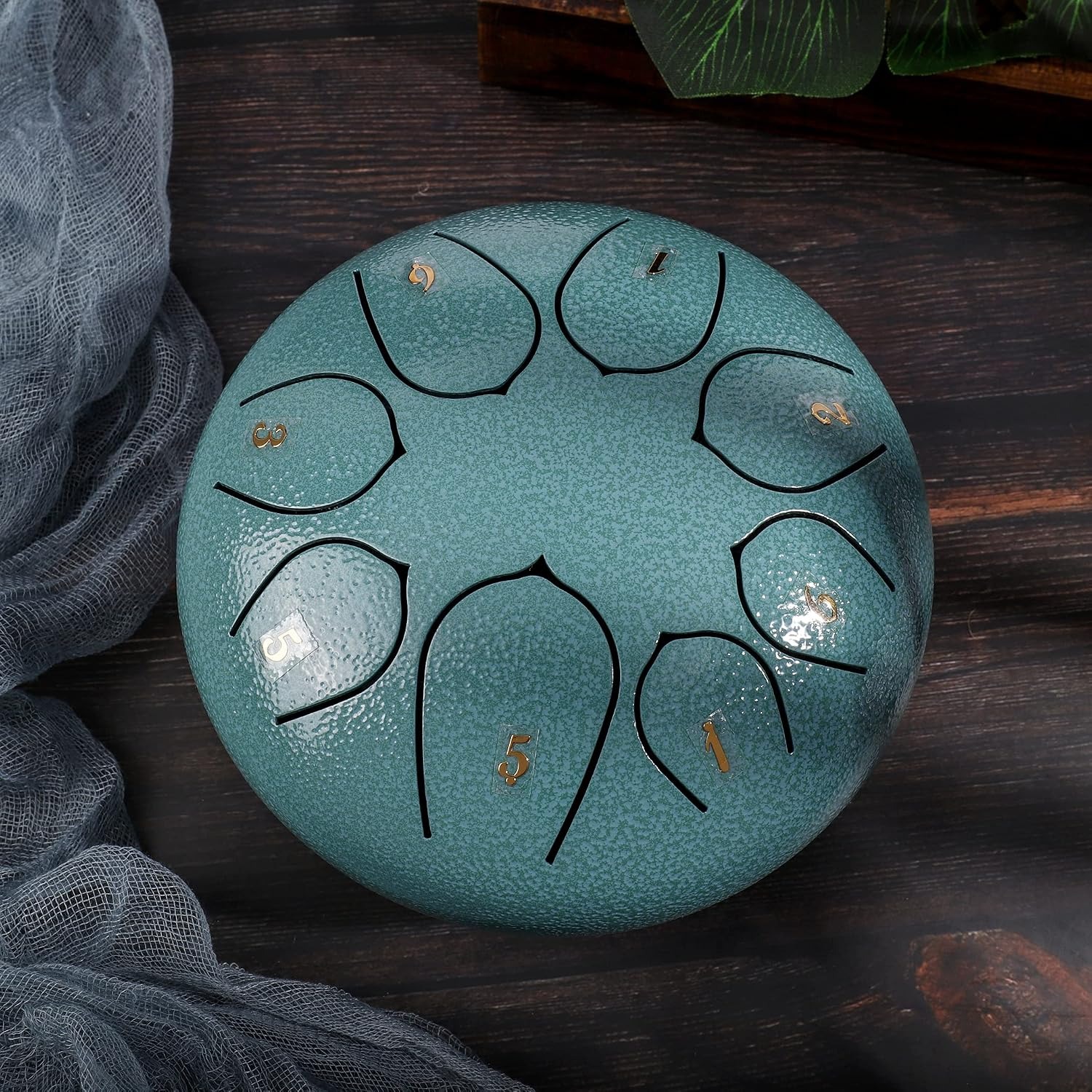
  • Eight Tuned Tongues
  • Mallets Or Fingers
  • Carry Bag Included
  • Note Stickers

Price: $44.99 $53.99

  • Free tracked Australia-wide delivery on orders $150+, otherwise a flat $15
  • Pay by card or PayPal, handled by the payment provider
  • 14 days to change your mind, plus your statutory rights
Product specifications
BrandCozyKit
Model0011
Item TypeSteel Tongue Drum
Number Of Tongues8
Body MaterialAlloy Steel
FinishPolished
ColourTurquoise
Sound ProfilePure and soothing notes
Included ComponentsDrum, 2 mallets, carry bag, tone stickers
Item Dimensions (L x W x H)8 x 9 x 8 cm
Item Weight300 g
Number Of Items1
Country Of OriginChina
Weight300 g
Shipping & returns

Tracked delivery anywhere in Australia. It is free on orders of $150 or more, and a flat $15 below that.

If it is not right for you, send it back within 14 days of delivery in resaleable condition and we refund the price you paid, including standard delivery. That is a voluntary policy we offer on top of your legal rights. You cover the cost of returning it unless the item is faulty.

If it arrives faulty, damaged or not as described, we put it right at no cost to you under the Australian Consumer Law and the Competition and Consumer Act 2010, return postage included.

Shipping details · Refunds and returns

Eight Tuned TonguesA pentatonic layout where the notes work together, so stray hits still sound musical.
Mallets Or FingersPlay with the two included mallets for clarity or with fingertips for a softer tone.
Carry Bag IncludedThe padded bag keeps the polished shell safe between sessions and makes it easy to take along.
Note StickersNumber and note stickers let complete beginners follow simple scores from day one.

A steel tongue drum you can pick up with no training and still sound good within minutes.

Eight laser-cut tongues in a polished alloy steel shell, supplied with two mallets, a carry bag and note stickers so beginners can follow simple sheet music straight away.

This 8 note tank drum gives you a full pentatonic scale in a shell small enough to hold in your lap.

The tongues are laser cut into hardened alloy steel and tuned so the notes ring clean rather than clashing.

Two mallets, a carry bag and a set of tone stickers come in the box, so nothing else is needed to start.

It suits meditation, yoga, classroom music and quiet evenings at home where a louder instrument would not fit.

At 300 g and roughly 9 cm across, it travels in a daypack without any fuss.

8-Note Steel Tongue Drum with Mallets, Bag and Note Stickers

A steel tongue drum is one of the few instruments you can hand to someone who has never played anything and watch them make a pleasant sound in under a minute. The notes are cut into the top of a closed steel shell as tongues of different lengths. Longer tongues ring lower, shorter ones ring higher, and because each one is tuned to a scale that agrees with itself, there is no obvious wrong note to hit. That changes how people approach it. Instead of worrying about mistakes, they start exploring.

This particular model from CozyKit is built from hardened alloy steel with a polished turquoise finish. The tongues are cut with lasers, which is what allows the tuning to hold across all eight notes rather than drifting at the edges. Eight tongues is enough to play recognisable melodies and plenty of simple accompaniment, while staying compact. The whole thing measures about 8 x 9 x 8 cm and weighs 300 g, so it sits comfortably on a knee, a cushion or a desk.

You get two choices of touch. The supplied mallets produce a brighter, more defined attack with a longer ring, which is what most people want when they are following a tune. Fingertips give a rounder, quieter sound that suits background playing and late-night practice. Many players switch between the two inside a single piece, using mallets for a melody line and fingers for soft fills. Neither approach needs any strength, and that is part of why it works as a best music therapy instrument in group settings.

The box includes a carry bag and a sheet of tone stickers. The stickers matter more than they sound. Placing them on the tongues turns a set of unmarked steel shapes into something you can read a simple score against, which removes the main barrier beginners hit. Once the notes are familiar, most people peel the stickers off and play by ear. The bag handles the other practical issue, which is keeping a polished surface free of scratches when the drum lives in a bag or on a shelf.

Where this drum tends to end up is interesting. It goes into yoga studios, therapy rooms, primary classrooms and home offices. It also ends up in living rooms where a guitar or keyboard would be too much commitment. It is quiet enough not to disturb a household, interesting enough to pick up repeatedly, and small enough that it never feels like it is taking over a room. For a lot of buyers that combination is the whole point.

Not sure yet? That is fine.

An instrument has to suit the player, and you cannot always judge that from a photograph. If it is not right for you, send it back within 14 days of delivery in resaleable condition and we refund the price you paid, including standard delivery. That is on top of your Australian Consumer Law rights if anything arrives faulty.

If it turns up faulty, damaged or not as described, that is on us. The Australian Consumer Law and the Competition and Consumer Act 2010 covers you, and we pay the return postage. Read the full detail on our refunds and returns page, or ask us anything before you order.

Frequently Asked Questions

What exactly is a steel tongue drum?

It is a closed steel shell with tongue shapes cut into the top surface. Each tongue is a different length, so each one rings at a different pitch when struck. You play it with mallets or your fingers, and it needs no tuning or setup from you.

How many notes does this drum have?

It has eight tongues, which gives you eight notes. That is enough for a pentatonic scale across a useful range, so simple melodies and repeating patterns both work well.

Is this the same thing as a handpan?

It is a handpan style percussion drum, but it is not a true handpan. Handpans are hammered by hand and cost far more. A tongue drum uses cut tongues instead of hammered note fields, which makes it much more affordable and much easier to play consistently.

Do I need to be able to read music?

No. The included tone stickers let you follow number or note based scores without reading standard notation. Many owners never read music at all and just play by ear.

What is a pentatonic scale and why does it matter?

A pentatonic scale uses five notes per octave that sound agreeable together. Because there is no clashing note in the set, almost any combination you hit sounds reasonable. That is what makes this a strong best beginner percussion instrument.

How loud is it?

It is a quiet instrument by percussion standards. Mallets give a brighter and slightly louder tone, fingers give a softer one. Most people can play it in an apartment in the evening without any complaints.

What comes in the box?

You get the steel tongue drum, two mallets, a carry bag and a sheet of tone stickers. Nothing else is required to start playing.

What is the drum made from?

The body is alloy steel with a polished finish. The listed colour is turquoise.

How big is it?

The item dimensions are 8 x 9 x 8 cm. It fits in two hands and sits easily on a lap, a cushion or a desk.

How much does it weigh?

The item weight is 300 g. That is light enough to carry in a daypack or a handbag without noticing it.

Is it suitable for children?

Yes, it is a popular choice for kids who are curious about music. The lack of wrong notes keeps frustration low. Younger children should be supervised with the mallets, and very small children should not be left alone with small parts such as stickers.

Can adults with no musical background use it?

Absolutely. That is who it suits best. People who gave up on guitar or piano often find this one sticks, because you get a satisfying sound on the first attempt.

Is it good for meditation?

Many people use it exactly that way. Slow, spaced strikes with long decay give you something to focus on. It is often picked as a best meditation drum for home practice because it needs no electricity and no technique.

Does it work in yoga classes?

Yes. Instructors use it to mark transitions, open a session or close a savasana. As a best yoga sound instrument it has the advantage of being quiet, portable and easy to play one-handed while speaking.

Can it be used in music therapy?

It is commonly used in that setting because it rewards any attempt at playing. People with limited hand strength can still produce a clean note with a mallet. Check with your practitioner about what suits a specific client.

Should I play with mallets or with my fingers?

Both work and they give different results. Mallets produce a clearer attack and longer ring, fingers produce a warmer, quieter sound. Try switching between them within the same piece.

How do I hold it while playing?

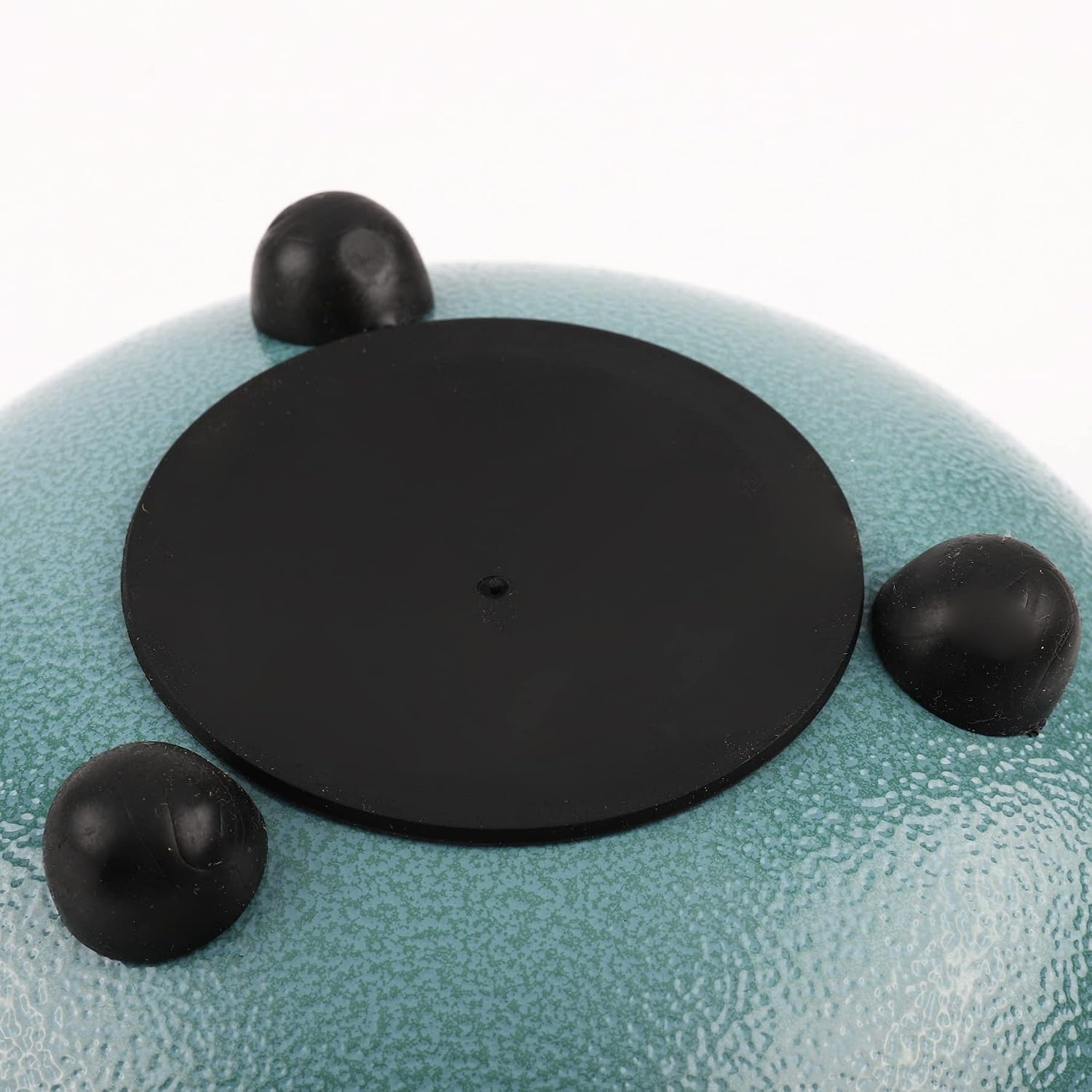
Most people rest it on their lap or on a cushion with the tongues facing up. Keeping the bottom off a hard surface lets the shell resonate properly. A folded towel works well if you are using a table.

Will the tuning drift over time?

The tongues are laser cut into hardened steel, which is a stable arrangement. Avoid dropping it or striking it with hard objects, as physical damage is the main thing that affects pitch.

Can I retune it myself?

No, and you should not try. Filing or bending a tongue will change the pitch permanently and usually for the worse. Treat the factory tuning as fixed.

What key is it in?

The specific key is not stated by the maker. The notes form a pentatonic set, so the scale structure is consistent regardless.

How do I clean it?

Wipe the surface with a soft, dry cloth after playing to remove fingerprints and moisture. Do not use abrasive cleaners or scouring pads on the polished finish.

Does it need any maintenance?

Very little. Keep it dry, store it in the bag, and keep hard objects away from the playing surface. There are no strings, heads or reeds to replace.

What happens if it gets wet?

Dry it straight away with a soft cloth, including around the tongue cuts where water can sit. Steel and ongoing moisture do not mix, so avoid leaving it in bathrooms or damp basements.

Can I take it travelling?

Yes. At 300 g and roughly 9 cm across it is one of the easier instruments to pack, which is why it comes up as a best travel tongue drum. The supplied bag handles the protection side.

What if I lose a mallet?

You can keep playing with your fingers in the meantime. Replacement mallets of a similar size are widely available from music retailers if you want a matched pair again.

Do the stickers damage the finish?

They are intended to be removable. Peel them off slowly and wipe away any residue with a soft cloth. If you plan to remove them later, avoid leaving them on in strong heat for long periods.

Is it a good gift?

It is one of the safer musical gifts because the recipient does not need any experience to enjoy it. It is often chosen as a best gift for music lovers who already own too many conventional instruments.

Can I record it or use it in music production?

Yes. A simple condenser microphone a short distance above the drum captures it well. The long decay means you may want to mute tongues with a fingertip when you need a tighter sound.

What are the delivery and returns arrangements?

We deliver anywhere in Australia with a tracked courier. Most orders arrive within 3 to 7 working days of the order date, a little longer to regional and remote addresses. Delivery is free on orders of $150 or more and a flat $15 under that. You get a tracking link by email as soon as the parcel is on its way. If you change your mind, you have 14 days from delivery to return it in resaleable condition for a full refund. If it arrives faulty or damaged, the Australian Consumer Law covers you and we pay the return postage.

What if it is not right for me when it arrives?

Keep the original packaging and contact the store team through the returns process on the site. Describe the issue, whether that is damage in transit, a missing accessory or simply the wrong fit for what you had in mind, and they will walk you through the next step.

Steel Tongue Drum Buyer's Guide, How To Choose And Play Your First One

6 min read Music Instruments

The problem with starting an instrument

Most instruments punish you for the first six months. A guitar gives you buzzing strings and sore fingertips. A violin gives you something closer to a distressed animal. A piano at least sounds correct, but you need to know where the notes live before anything musical happens. That gap between picking something up and enjoying it is where most people quit.

A steel tongue drum removes that gap almost entirely. You hit a tongue, you get a clear, ringing note. You hit another one, and the two sound fine together. Nothing in the normal first week of learning an instrument applies here, because the tuning does the hard work for you.

That is not a trick or a shortcut. It is how pentatonic instruments have always worked. Five notes per octave, chosen so that no two of them fight. Kalimbas work on the same principle. So do a lot of folk instruments across the world. The tongue drum just packages it into a small steel shell you can hold in your lap.

How a tongue drum actually works

Picture a hollow steel shell, sealed, with a flat playing surface on top. Cut tongue shapes into that surface, each one a different length, and each one becomes a vibrating reed. Strike it and the tongue flexes, the shell resonates, and you hear a note with a long tail of sustain.

Longer tongue, lower note. Shorter tongue, higher note. The cutting on this model is done with lasers, which is the detail that matters for tuning. Hand-cut tongues vary. Laser-cut tongues come out consistent, so the eighth note is as accurate as the first.

The closed shell is doing a second job as a resonator. That is why the sound carries far longer than you would expect from a 300 g object. It also explains why playing on a hard table sounds worse than playing on a cushion. Sitting the drum on something soft lets the bottom of the shell move freely.

Mallets versus fingers

You get two mallets with this drum, and they are worth using. A mallet head concentrates the strike into a small area, which gives a clean, bright attack and the longest ring. If you are following a tune or playing for other people in a room, mallets are usually the right call.

Fingers give you a different instrument. The contact area is wider and softer, so the attack is rounder and quieter. It is more intimate, better for playing to yourself at night, and better when you want the drum to sit underneath a conversation rather than lead it.

Plenty of people use both at once. Mallet in the right hand carrying the melody, fingers on the left filling in soft notes underneath. There is no technique to learn here, just a preference to find.

Who this suits

The obvious group is complete beginners. If you have never played anything and want to start, this is about as gentle an entry point as exists. The best steel tongue drum for beginners is simply the one that gets picked up often, and an instrument with no wrong notes gets picked up far more than one that needs practice before it sounds acceptable.

The second group is people who already play something else. Guitarists and pianists tend to treat a tongue drum as a texture rather than a main instrument. It sits nicely in recordings, it works for loop pedals, and it gives you something to hold when you are thinking.

The third group is professional. Yoga teachers, meditation guides, music therapists and primary school teachers all use these. The reasons overlap. It is quiet, it is portable, it works one-handed, and anybody in the room can play it without instruction. That combination is unusual.

The last group is people buying a gift. A tongue drum lands well because it does not demand anything from the recipient. There is no lesson plan, no tuning routine, no accessories to buy. It just sits there looking good and sounding good when touched.

Choosing the right size and note count

Tongue drums run from about 6 inches up to 14 inches or more, with note counts from six to fifteen. More notes and more diameter means more range, more volume and a deeper low end. It also means more weight and more money.

Eight notes in a 9 cm shell, as here, lands in the compact end of the range. The trade-off is honest. You will not get the deep bass of a 12-inch drum, and a very complex piece of written music may run out of notes. What you get instead is something you can carry anywhere, play on a train, keep on a desk, and hand to a child without worry.

For meditation, yoga and casual home playing, eight notes is more than enough. Most meditation playing uses three or four notes anyway, spaced out with long gaps. For classroom work, the small size is an advantage because a set of them stores easily.

If you specifically want to play along with recorded music in a particular key, check the key before buying any tongue drum. The key for this model is not stated by the maker, so if that is critical to your plan, ask before ordering.

Getting started in the first week

Put the stickers on first. It takes two minutes and it turns an unmarked steel surface into something you can read a score against. Once the layout is in your head, peel them off. Most people do this within a month.

Then try the simplest possible thing. Strike one tongue, listen to the whole note until it fades, strike another. Resist the urge to play fast. The long sustain is the best part of this instrument and rushing hides it.

After that, look for repeating patterns. Three or four notes in a loop, played slowly, is the backbone of most tongue drum playing you will hear online. Change one note in the loop and you have a new section. That is genuinely all it takes to play something that sounds composed.

If you want structure, simple number-based scores for tongue drums are widely available free online, and they map directly onto the sticker system.

Looking after it

Steel and moisture are the only real concern. Wipe the surface with a soft dry cloth after you play, especially if your hands were warm. Fingerprints are mostly cosmetic on a polished finish, but standing moisture is not.

Store it in the bag. The bag exists to stop the polished surface collecting scratches from keys, zips and shelf grit. It also keeps the mallets with the drum, which saves the usual hunt for a missing accessory.

Do not strike the surface with anything harder than the supplied mallets. Pens, coins and drumsticks can dent a tongue, and a dented tongue is a permanently mistuned tongue. Beyond that, there is nothing to maintain. No strings, no heads, no reeds, no electronics.

Avoid leaving it in a hot car or in direct sun for long stretches. Heat is unlikely to ruin it, but there is no reason to test that.

The short version

A steel tongue drum is the rare instrument that sounds good the first time you touch it. Eight laser-cut tongues in a pentatonic layout mean there is no wrong note, so beginners get straight to playing instead of grinding through a learning curve. This one is small (8 x 9 x 8 cm), light (300 g) and ships with two mallets, a carry bag and note stickers.

It suits anyone who wants to make music without a commitment, anyone running a yoga, therapy or classroom session, and anyone buying for a person who already owns enough gear. It will not replace a 14-inch drum for depth or range. For everything else it does the job and travels while doing it.

Browse the shop

Not sure if eight notes is enough?

For melodies, meditation and classroom use, eight pentatonic notes covers far more ground than most first-time buyers expect.

Ask us a question

Page summary

The CozyKit steel tongue drum (model 0011) is an 8-note tank drum made from polished alloy steel in turquoise. The tongues are laser cut and tuned to a pentatonic layout, and the drum can be played with the two supplied mallets or with the fingers. Each unit ships with the drum, two mallets, a carry bag and a sheet of tone stickers for following simple scores. Item dimensions are 8 x 9 x 8 cm and the item weight is 300 g. The country of origin is China. It is used for music education, relaxation, yoga and meditation practice. No warranty period, GTIN, customer rating or specific tuning key is specified in this record.