Music Instruments
Company
Shop By Category
T&Cs
Shop Online
  • Box contents listed
  • Free tracked Australia-wide delivery over $150
  • 14-day returns

Kids piano keyboard | 37 key toddler piano | first keyboard for children

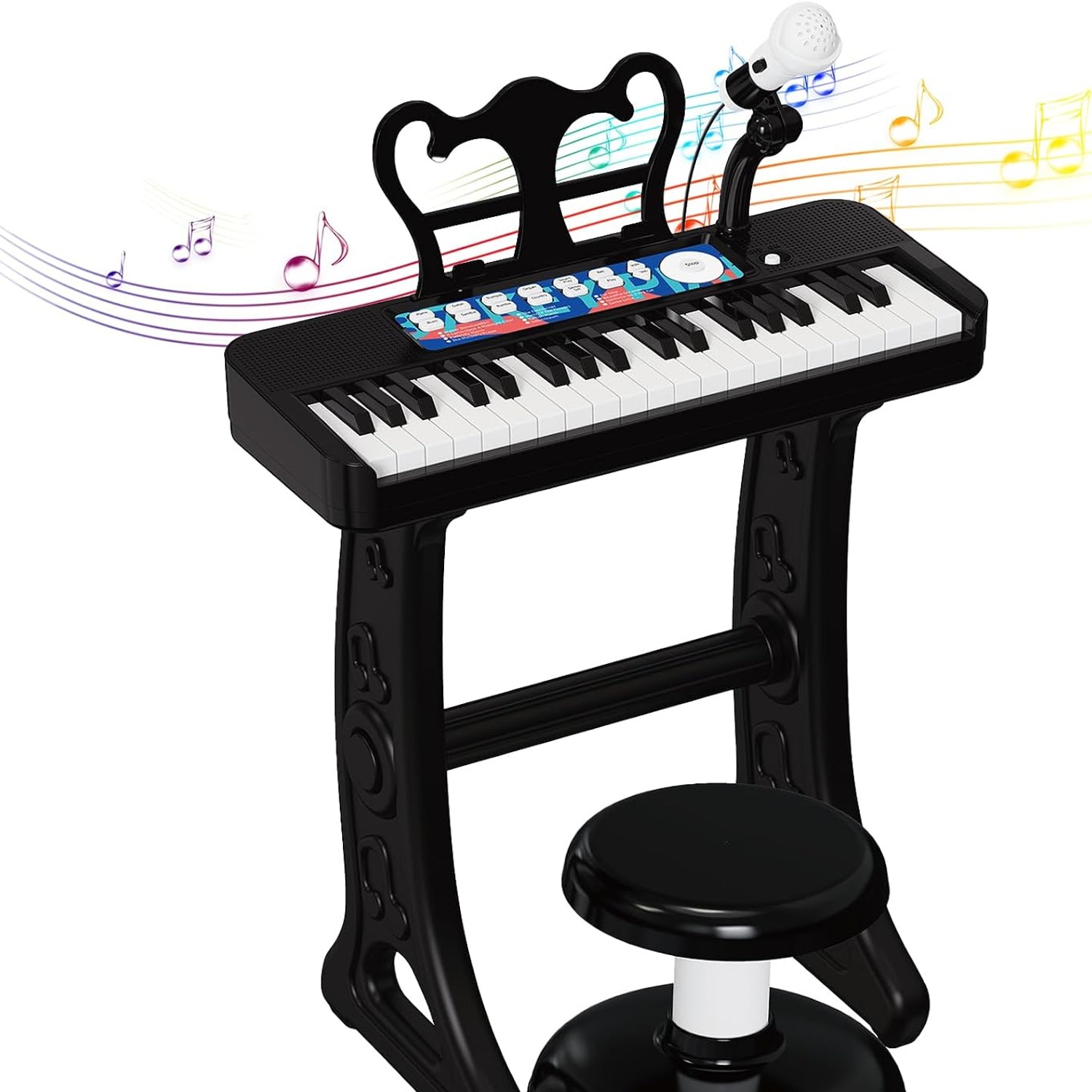
Tucraew 37-Key Kids Piano Keyboard with Microphone, Stool and Music Stand

$99.99 $119.99 Save $20
  • 37 Full Keys
  • Microphone Included
  • Stool And Stand
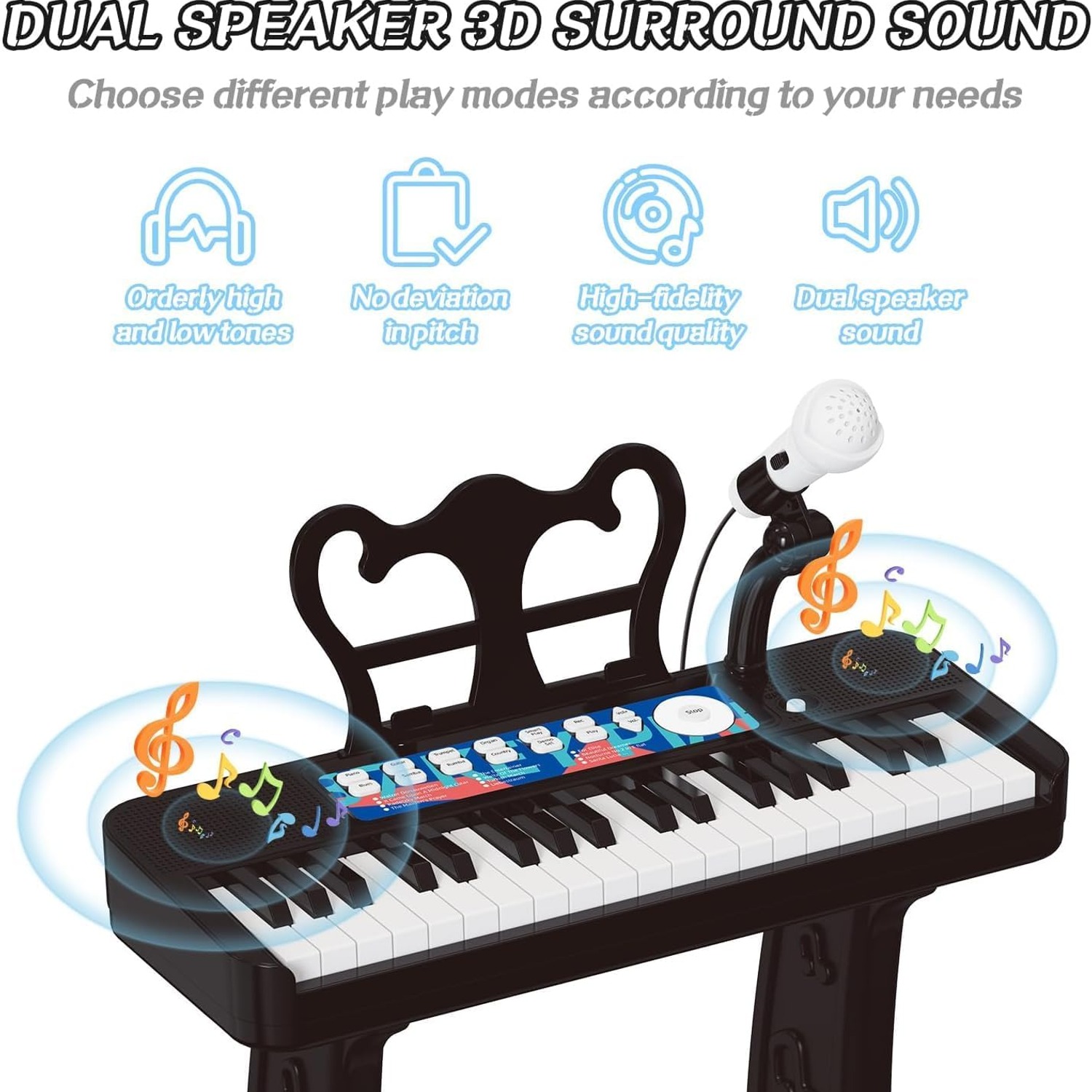
  • Dual Speakers

Price: $99.99 $119.99

  • Free tracked Australia-wide delivery on orders $150+, otherwise a flat $15
  • Pay by card or PayPal, handled by the payment provider
  • 14 days to change your mind, plus your statutory rights
Product specifications
BrandTucraew
Instrument TypeElectronic piano keyboard
Number Of Keys37
Recommended Age3 years and up
Included ComponentsPiano keyboard, piano stool, microphone, music stand
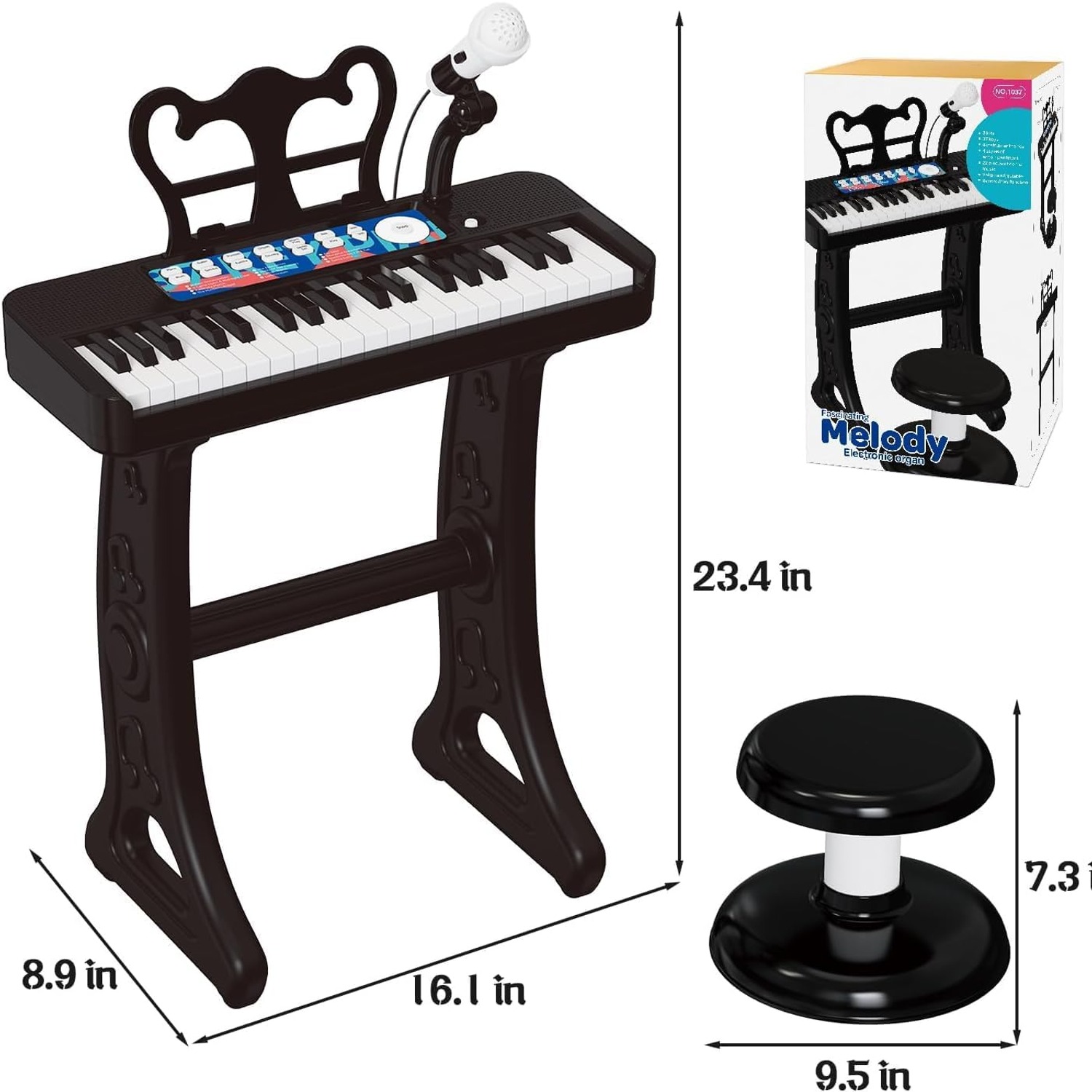
Item Dimensions40.9 x 22.6 x 59.4 cm
Item Weight1.93 kg
ColourBlack
MaterialAcrylonitrile Butadiene Styrene (ABS)
Operation ModeManual
Assembly RequiredYes
Unit Count1
Manufacturer Part Number1037
Educational ObjectiveBuilds interest in music, finger coordination, imagination and emotional development
Weight1.93 kg
Shipping & returns

Tracked delivery anywhere in Australia. It is free on orders of $150 or more, and a flat $15 below that.

If it is not right for you, send it back within 14 days of delivery in resaleable condition and we refund the price you paid, including standard delivery. That is a voluntary policy we offer on top of your legal rights. You cover the cost of returning it unless the item is faulty.

If it arrives faulty, damaged or not as described, we put it right at no cost to you under the Australian Consumer Law and the Competition and Consumer Act 2010, return postage included.

Shipping details · Refunds and returns

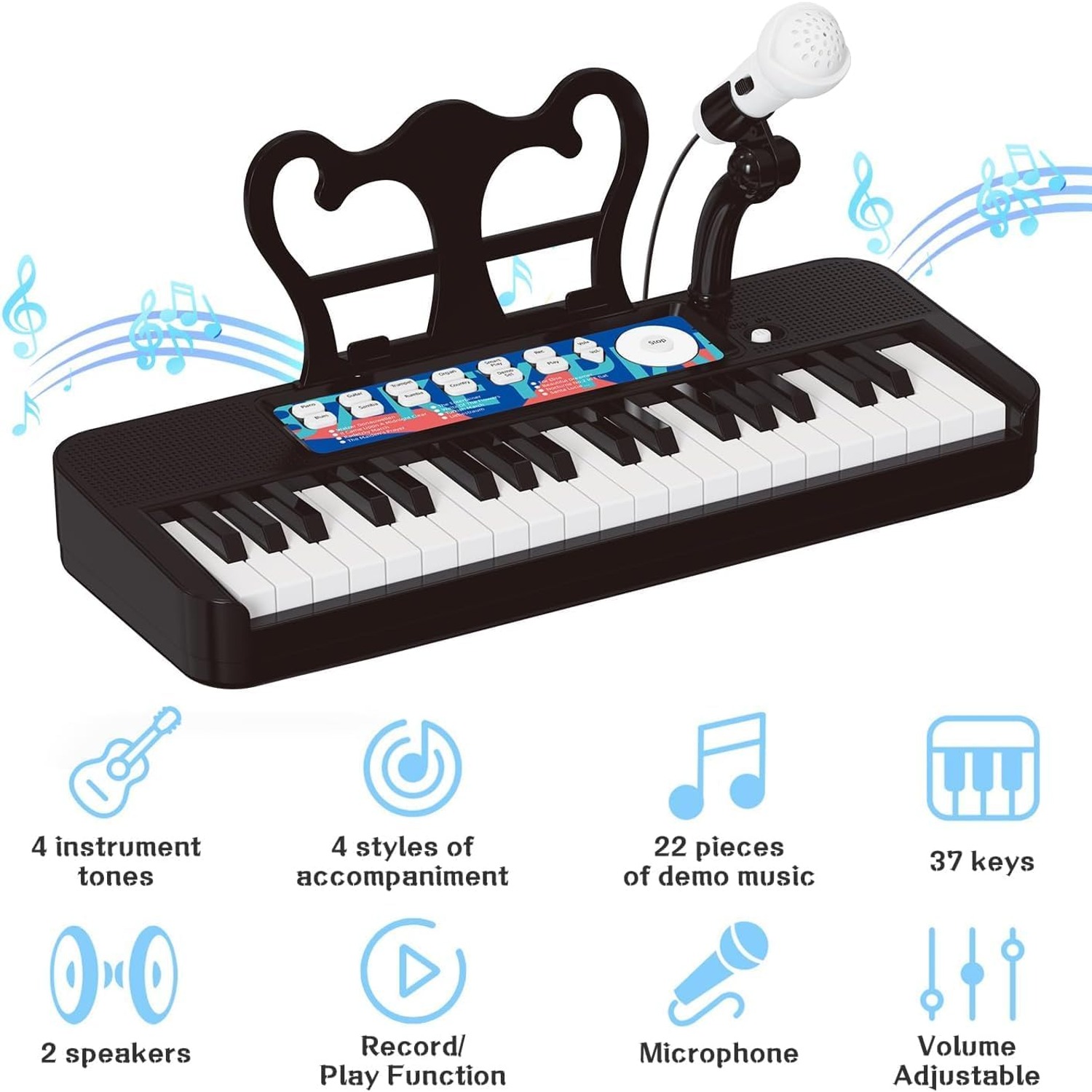
37 Full KeysEnough range for simple tunes and both hands, without overwhelming a small player.
Microphone IncludedChildren can sing along while they play, which builds confidence fast.
Stool And StandA seat and a music stand are in the box, so setup is one job, not three.
Dual SpeakersLeft and right speakers give the sound more depth than a single-speaker toy.

A kids piano keyboard that turns a quiet afternoon into a living-room concert.

Thirty-seven keys, a working microphone, a stool and a music stand come together so children aged three and up can sit down, press a key and hear music straight away.

A 37-key kids piano keyboard built for children aged three and up, with a stool and music stand included so the whole setup arrives in one box.

The working microphone lets your child sing while they play, which is often the moment a shy kid decides music is for them.

Two speakers carry the sound left and right, giving demo songs and played notes a fuller feel than a single-speaker toy piano.

An audio cable lets you connect a phone, tablet, MP3 player or computer so children can play along with music they already love.

Light at 1.93 kg and made from ABS plastic, it moves easily between the bedroom, the lounge and a grandparent's house.

Tucraew 37-Key Kids Piano Keyboard with Microphone, Stool and Music Stand

Most children meet music through a toy that makes noise. This one goes a step further. With 37 keys, a kids piano keyboard gives a child enough notes to pick out a real melody, try a simple chord and hear the difference between a low note and a high one. That range matters. A five-key toy teaches cause and effect. A 37 key toddler piano starts teaching music.

Tucraew 37-Key Kids Piano Keyboard with Microphone, Stool and Music Stand

The package is deliberately complete. You get the keyboard, a stool to sit on, a music stand for propping up a songbook, and a microphone that actually works through the speakers. Many parents buy a first keyboard for children and then discover they need a seat at the right height and somewhere to rest a book. Here it is all in the one box, which also makes it a tidy gift to hand over.

Tucraew 37-Key Kids Piano Keyboard with Microphone, Stool and Music Stand

Sound comes from two speakers rather than one, so notes spread out a little instead of coming from a single point. There is also an audio input cable, so a phone, tablet, MP3 player or computer can be plugged in and the child can play along with a song they already know by heart. For a lot of kids, playing over the top of a favourite track is far more motivating than any practice chart.

Tucraew 37-Key Kids Piano Keyboard with Microphone, Stool and Music Stand

It is built from ABS plastic in black, weighs 1.93 kg, and measures 40.9 x 22.6 x 59.4 cm as supplied. Some assembly is required, mostly putting the stool and stand together, and it is manual operation with no app or screen involved. The maker lists it for ages three and up, which fits the key spacing and the simplicity of the controls.

Tucraew 37-Key Kids Piano Keyboard with Microphone, Stool and Music Stand

The stated aim of a toddler piano toy like this is not to produce a concert pianist by Tuesday. It is to build interest in music, work small fingers independently, stretch imagination and give a child a way to express a mood without needing words. Those are the things that make a child want to sit down at an instrument again tomorrow.

Not sure yet? That is fine.

An instrument has to suit the player, and you cannot always judge that from a photograph. If it is not right for you, send it back within 14 days of delivery in resaleable condition and we refund the price you paid, including standard delivery. That is on top of your Australian Consumer Law rights if anything arrives faulty.

If it turns up faulty, damaged or not as described, that is on us. The Australian Consumer Law and the Competition and Consumer Act 2010 covers you, and we pay the return postage. Read the full detail on our refunds and returns page, or ask us anything before you order.

Frequently Asked Questions

What age is this kids piano keyboard for?

The manufacturer recommends it for children aged three years and up. That matches the key size and the simple button controls. Younger toddlers can still enjoy pressing keys with an adult nearby, but the stool and small parts suit a three-plus child better.

How many keys does it have?

It has 37 keys. That is roughly three octaves, which is enough to play most nursery songs, simple pop melodies and early lesson pieces. It is a common size for a first keyboard for children because it covers real music without being physically intimidating.

What comes in the box?

The included components are the piano keyboard, a piano stool, a microphone and a music stand. That means you do not need to buy a seat or a stand separately. It is one of the reasons this works well as a ready-to-give gift.

Does the microphone really work?

Yes, the microphone is a working one that plays through the keyboard's speakers. Children can sing along while they play with one hand. For shy kids, having their own mic is often the thing that gets them performing.

Is assembly required?

Yes, some assembly is required. In practice this is mainly putting the stool together and fitting the music stand. It is a short job with no specialist tools expected.

How big is it?

The item dimensions are 40.9 x 22.6 x 59.4 cm. That is compact enough for a bedroom corner or the end of a playroom. It does not need a dedicated music room.

How heavy is it?

It weighs 1.93 kg. A primary-school-aged child can usually carry it short distances, and an adult can move the whole setup to another room without a second trip. Light weight is handy if you want the best kids keyboard with stool for a family that moves things around.

What is it made from?

The material type is listed as Acrylonitrile Butadiene Styrene, usually shortened to ABS. ABS is a common rigid plastic used in children's toys because it handles knocks well. The colour is black.

Can I connect a phone or tablet to it?

Yes, an audio cable is supplied so you can connect an MP3 player, phone, tablet or computer. The music then plays through the keyboard's speakers and your child can play over the top. It is a simple way to make practice feel like fun.

Why does having two speakers matter?

Two speakers spread sound left and right rather than firing it all from a single point. The result feels fuller and less flat. On a toddler piano toy at this size, it is a noticeable step up.

Does it need batteries or a power adapter?

Power details beyond the manual operation mode are not specified in this record. Check the packaging and instruction sheet on arrival for the exact power requirement. If batteries are needed, keep spares on hand so a flat set does not end a practice session.

Is it loud?

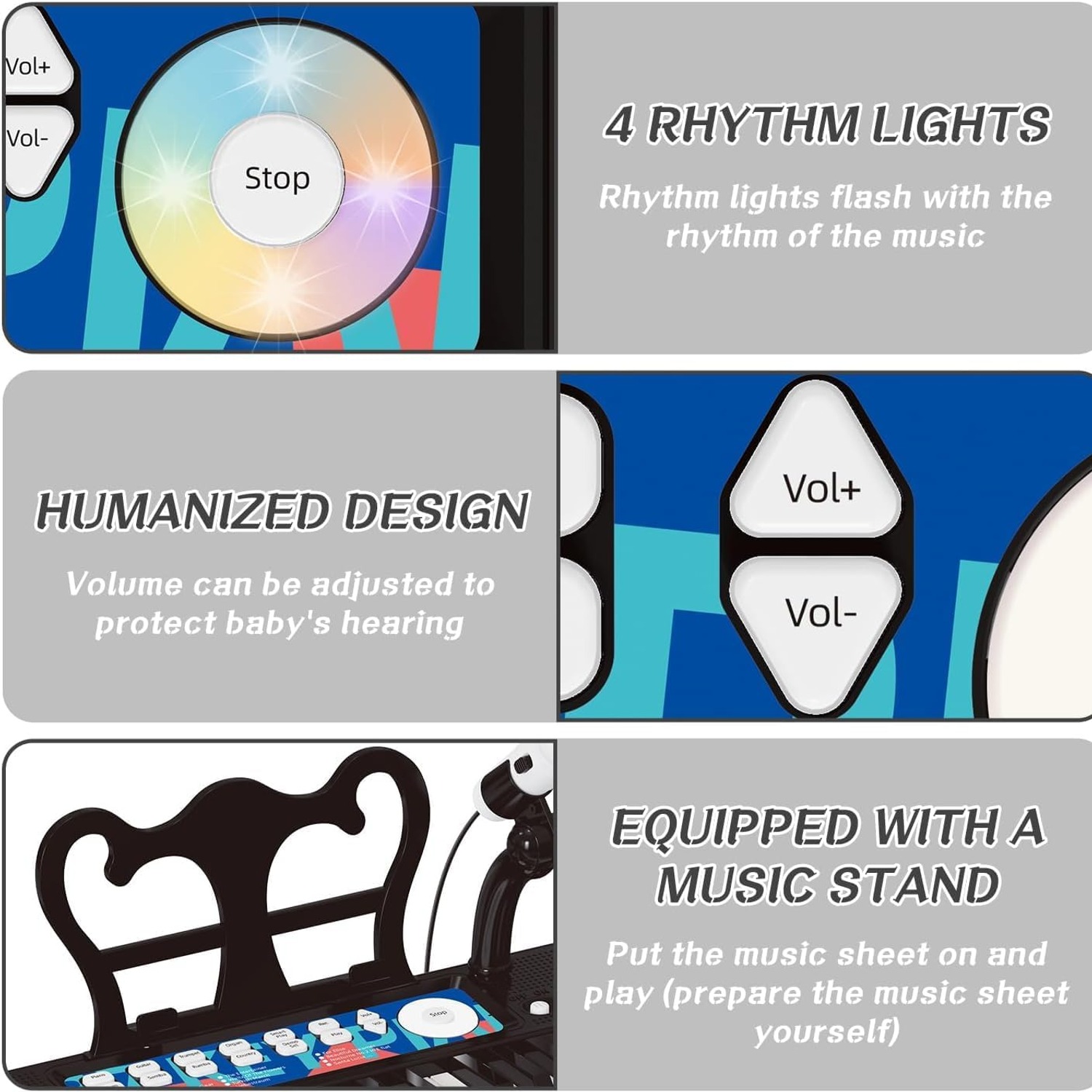
It is a children's instrument, so the volume is designed for a bedroom or lounge rather than a hall. Volume controls are part of the standard layout on this style of keyboard. Setting a house rule about volume early helps everyone.

Will it help my child learn real piano?

It builds the groundwork. A child who already knows where the high notes live, how to press cleanly and how to keep a steady beat starts formal lessons with real advantages. Many teachers are happy for a beginner piano for kids to be the starting instrument before an upright or full-size digital.

What are the learning benefits?

The stated educational objective is to build interest in music, promote finger coordination, support brain development, and improve imagination and emotional intelligence. In everyday terms, your child learns to use fingers independently, listen carefully and stick with something until it sounds right. Those skills carry well beyond music.

Is this a good gift for a birthday?

It works well because it is complete. The child opens one box and has an instrument, a seat, a stand and a mic, with nothing missing. For a piano gift for a 5 year old, that matters more than an extra feature list.

Can two children share it?

Yes, though they will need to take turns on the stool. Siblings often fall into a pattern where one plays keys and the other sings into the microphone. That shared play is one of the better things about a keyboard with a mic.

Does it suit a child with no musical background in the family?

Absolutely. Nothing here requires a parent who reads music. Demo tunes, play-along audio and simple key pressing give a complete beginner plenty to work with on their own.

How do I clean it?

Wipe the keys and body with a soft dry cloth, or one that is barely damp. Keep liquids away from the keys and speaker openings. Avoid solvents and abrasive cleaners on the ABS surfaces.

How should I store it?

Keep it indoors, away from direct sun and damp. If it will sit unused for weeks, remove any batteries so they cannot leak. Standing it against a wall rather than face-down protects the keys.

Is the stool adjustable?

Adjustability is not listed by the maker. The stool is supplied at a height intended for the recommended age group. If your child is at the tall end of the range, a cushion or a different chair is an easy fix.

Will the keys be too small for an adult hand?

The keys are sized for children, so an adult hand will feel cramped. That is normal for a 37 key piano for toddlers. Parents can still demonstrate a short tune one finger at a time.

Can it be used for school music classes?

It is a home toy rather than a classroom instrument, but it is perfectly usable for practising a tune before a class or a performance. Many parents use it to help a child rehearse a song they are learning at school. Check with the teacher about what the class expects.

Does it have a record function?

The recording and playback style of feature is typical for this category, but the exact feature list beyond keys, speakers, microphone, stand and stool is not confirmed in the maker's listing. The supplied instruction sheet will list every button. Read it once with your child so they know what each control does.

What is the manufacturer part number?

The manufacturer part number is 1037 and the brand is Tucraew. Keep that number if you ever need to ask about parts or accessories. It is also useful when checking which model you own.

Where is it made?

Country of origin is not listed by the maker. The product detail listing names Tucraew as the manufacturer. If origin matters for your purchase, contact us before ordering and we will pass on what the supplier confirms.

How long does delivery take?

We deliver anywhere in Australia with a tracked courier. Most orders arrive within 3 to 7 working days of the order date, a little longer to regional and remote addresses. Delivery is free on orders of $150 or more and a flat $15 under that. You get a tracking link by email as soon as the parcel is on its way.

Can I return it if my child does not get on with it?

Yes, our standard returns policy applies. Keep the box and the stool and stand parts together, since a complete return is always smoother. Contact us before sending anything back so we can give you the right address.

Is there a warranty?

No warranty term is stated in the maker's listing. If something arrives faulty or damaged, contact us with photos and we will sort it out. Your local consumer protections apply regardless.

How does it compare to a tiny toy piano with eight keys?

Eight keys teach a child that pressing makes noise. Thirty-seven keys let them play an actual song, which is where real interest starts. If you want the best starter keyboard for small hands rather than a novelty, the extra range is the deciding factor.

Can I buy replacement parts like the stool or microphone?

Spare part availability is not listed by the maker. Contact us with the part number 1037 and we will check what the supplier can offer. In most cases a generic small-child stool is an easy substitute.

How to Choose a First Piano Keyboard for a Child

6 min read Music Instruments

The problem with most first instruments

Plenty of children ask for a piano. Far fewer get one that holds their attention past the second week.

The usual story goes like this. A parent buys a small toy piano with a handful of keys and a few preset tunes. The child loves it for three days. Then they realise they cannot actually play anything on it, because there are not enough notes to carry a melody. The toy goes under the bed.

The opposite mistake is just as common. A full-size digital piano arrives, a stand is bolted together, and a six year old sits in front of 88 keys feeling completely lost. The instrument is correct, but the moment is wrong.

A kids piano keyboard with 37 keys sits between those two problems. There are enough notes for real songs, and few enough that a child can see the whole instrument at once without feeling swamped.

What 37 keys actually gives you

Thirty-seven keys is about three octaves. In practical terms, that covers almost every nursery rhyme, most simple folk tunes, a huge chunk of early lesson book material and the melody line of plenty of pop songs.

It also gives a child something harder to measure. They can hear the low end and the high end on the same instrument, and they start to understand that notes have a position, not just a sound. Press a key on the left and the note is deep. Press a key on the right and it is bright. That is the first real piece of music theory anybody learns, and it only works when you have enough keys to feel the difference.

On this Tucraew model, those keys sit on a black ABS body, weighing 1.93 kg and measuring 40.9 x 22.6 x 59.4 cm with the stand in place. It is small enough to live in a bedroom corner and light enough to carry to a grandparent's house for the weekend.

Why the extras matter more than the feature list

The box includes the keyboard, a stool, a microphone and a music stand. It sounds like packaging detail. It is not.

A child who has to kneel on the carpet to reach the keys will stop playing sooner than one who has a seat at the right height. A child balancing a songbook on their knees loses their place and gets frustrated. A microphone, meanwhile, changes the whole activity. Singing into a mic that actually works through the speakers turns a quiet solo practice into a performance, and performance is what makes kids come back.

If you are hunting for the best kids keyboard with stool and microphone, this is the sensible reason why. Not because the extras are fancy, but because they remove the small frictions that end a hobby early.

The play-along feature nobody talks about

There is an audio cable in the box. It lets you connect a phone, tablet, MP3 player or computer so the music plays through the keyboard's two speakers.

This is quietly one of the most useful things on the instrument. A child who is bored by scales will happily play along with a song they already know by heart. They hunt for the right note, they get the timing wrong, they try again. That is practice, and it does not feel like practice.

Dual speakers help here too. One speaker makes everything sound like it is coming from a box. Two spread the sound out a little, so the backing track and the notes a child plays do not fight each other.

Who this suits

This keyboard is listed for ages three and up. Within that range, the fit changes a lot.

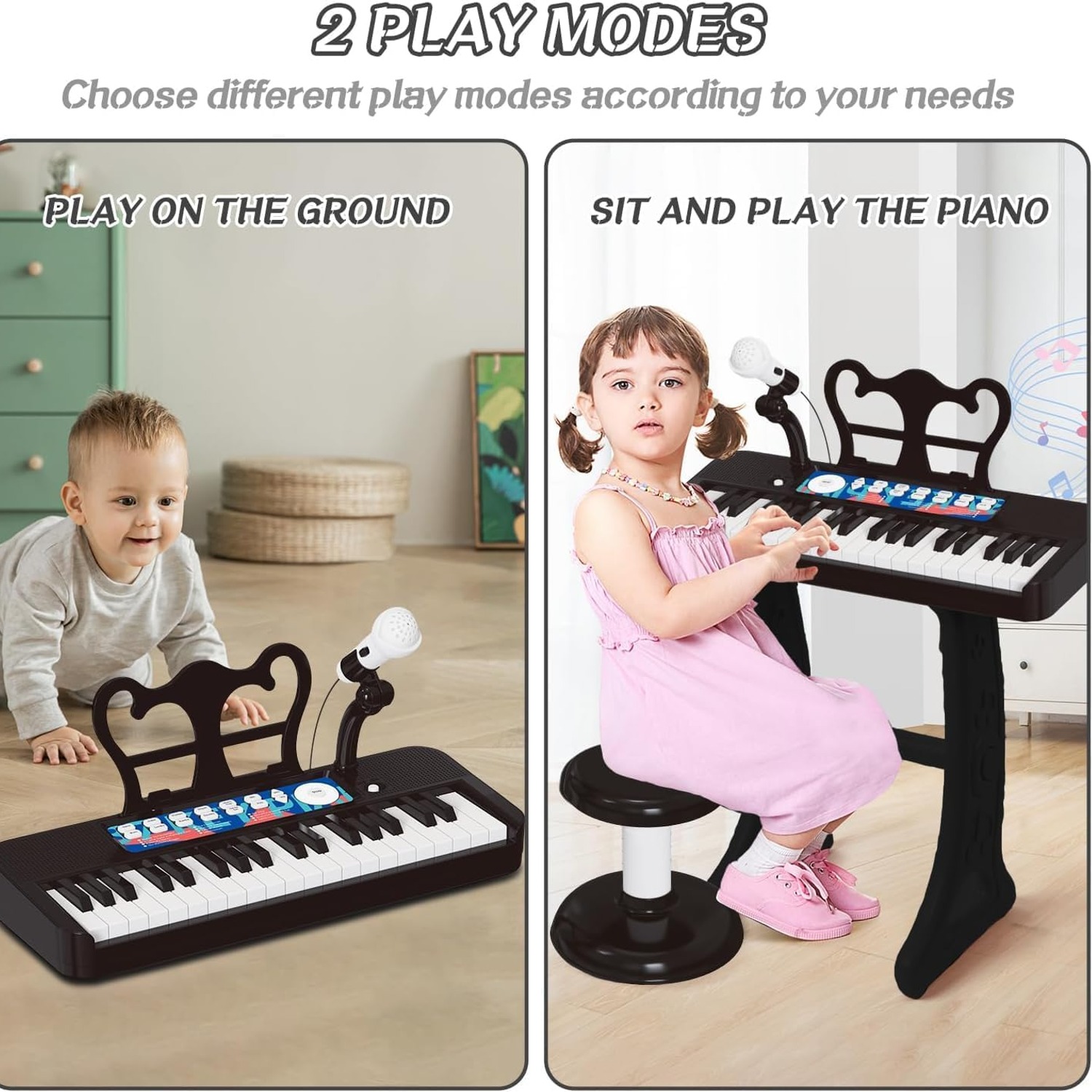
A three or four year old will mostly explore. They will press keys, giggle at the demo songs, sing nonsense into the mic and wander off. That is exactly right, and it is still valuable. They are learning that instruments respond to them.

A five to seven year old is where this kind of toddler piano toy really earns its keep. They have the finger control to play a tune with one hand, the patience to repeat something until it sounds better, and enough reading to follow a simple songbook on the stand.

An eight or nine year old can still enjoy it, especially alongside beginner lessons, but they will outgrow the key size within a year or two. If your child is already taking lessons and practising daily, think about a full-size instrument instead.

How to choose between keyboards

A few things actually matter when you are comparing options.

Key count comes first. Under 25 keys and you are buying a noisemaker. Thirty-two to 37 keys is the sweet spot for a first keyboard for children. Sixty-one keys and up is school-age territory.

Then check what is included. Sitting height, book support and sound input are not luxuries, they are the difference between an instrument that gets used and one that does not.

Size and weight come next. If the keyboard has to be dragged out of a cupboard every time, it will be played less. Something that can live out in the open, as this one can at under two kilograms, gets picked up far more often.

Finally, think honestly about noise. Any children's instrument makes noise, and that is the point. Agree on volume and times of day early, before the first week of enthusiasm turns into a household argument.

Setting it up well

Some assembly is required, mainly for the stool and the stand. Do it yourself before you hand it over, so the first minute of ownership is music rather than waiting.

Put it somewhere visible. A keyboard on the floor of a bedroom gets played. The same keyboard in a wardrobe does not.

Sit with your child the first few times. You do not need to know any music. Just press a key, let them press one back, and build from there. Ten minutes of a parent paying attention does more for a child's interest in music than any demo song.

Looking after it

Care is simple. Wipe the keys with a soft dry cloth, or one that is barely damp. Keep drinks and food away from the keys and the speaker openings, because that is where spills do real damage. Skip solvents and scouring pads on the ABS surfaces.

Store it indoors away from direct sun and damp. If it is going to sit unused for several weeks, take any batteries out so they cannot leak. Tighten the stool fittings occasionally, since they loosen with normal wriggling.

The short version

If you want a child to actually learn something musical, give them enough keys to play a real song and enough support to sit comfortably while they do it. That is what this does.

Thirty-seven keys, two speakers, a working microphone, a stool and a music stand, all in black ABS at 1.93 kg. Recommended from age three. Some assembly needed, nothing complicated.

It will not make anyone a concert pianist. It will tell you, within a month, whether your child is genuinely interested in music, and that is a question worth answering cheaply.

Browse the shop

Not sure if 37 keys is enough?

Message us with your child's age and how much space you have, and we will tell you honestly whether this keyboard is the right starting point.

Ask us a question

Page summary

The Tucraew kids piano keyboard is a 37-key electronic piano for children aged three and up. The box includes the keyboard, a piano stool, a working microphone and a music stand. It has dual speakers and accepts an audio cable so a phone, tablet, MP3 player or computer can be connected for play-along music. The unit is black ABS plastic, weighs 1.93 kg and measures 40.9 x 22.6 x 59.4 cm. Operation is manual and some assembly is required. Manufacturer part number is 1037. The stated educational purpose is building musical interest, finger coordination, imagination and emotional development. Colour is black. Country of origin and warranty details are not specified in this record.