Music Instruments
Company
Shop By Category
T&Cs
Shop Online
  • Box contents listed
  • Free tracked Australia-wide delivery over $150
  • 14-day returns

Kids acoustic guitar | 30 inch junior guitar | first guitar for children

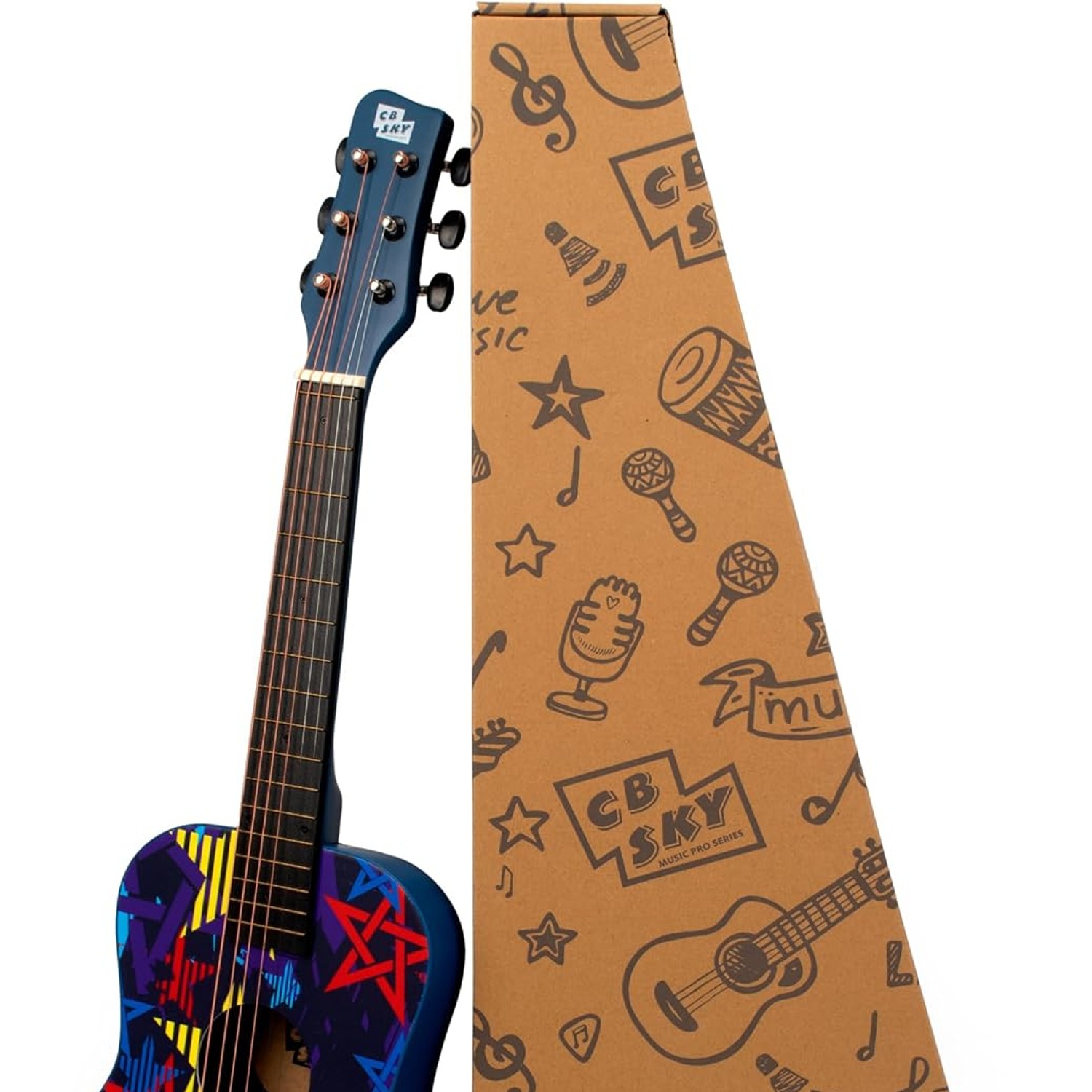
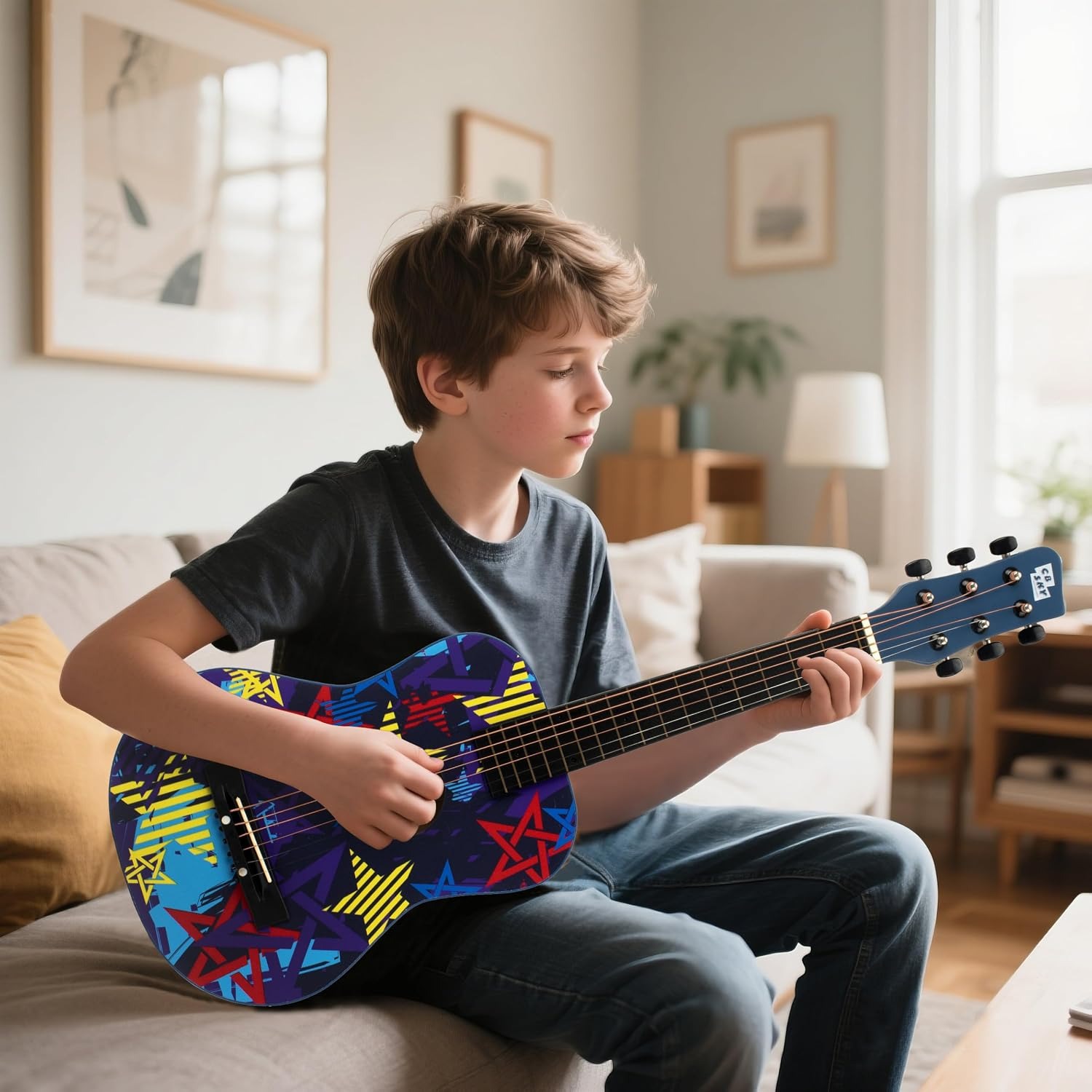
CB SKY 30-Inch Kids Acoustic Guitar

$111.99 $133.99 Save $22
  • 30-Inch Junior Scale
  • Real Wooden Build
  • Just 1.2 kg
  • Six Steel Strings

Price: $111.99 $133.99

  • Free tracked Australia-wide delivery on orders $150+, otherwise a flat $15
  • Pay by card or PayPal, handled by the payment provider
  • 14 days to change your mind, plus your statutory rights
Product specifications
BrandCB SKY
Model NameSKY 30
Model NumberCB 001
InstrumentAcoustic Guitar
Instrument Size30-inch Junior/Student
Scale Length30 inches
Number of Strings6
String MaterialStainless Steel
Hand OrientationRight
Bridge SystemFixed
Top MaterialWood
Body MaterialPoplar
Back MaterialWood
Neck MaterialWood
Fretboard MaterialMaple Wood
ColourBlue
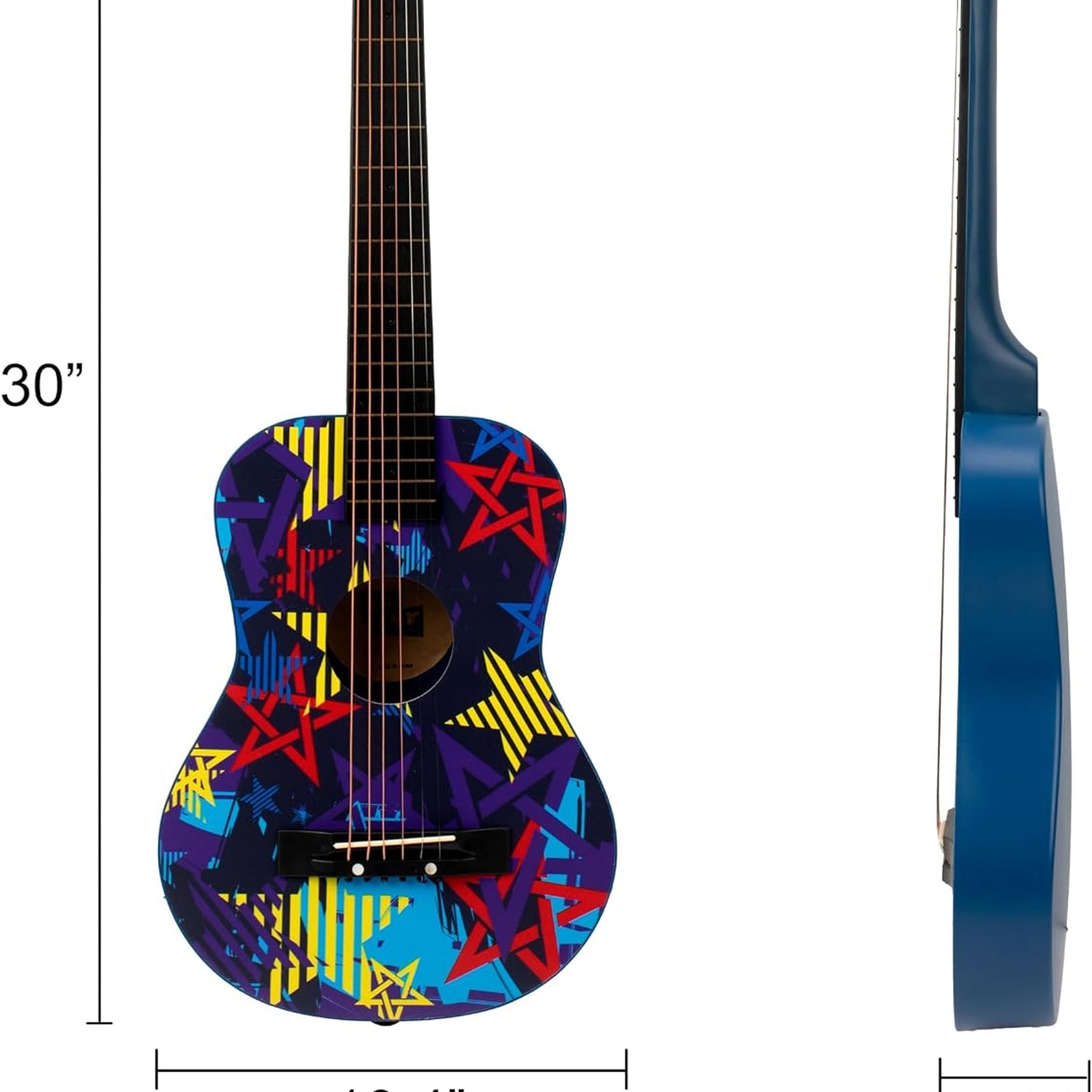
Item Dimensions78.7 x 27.9 x 6.6 cm
Item Weight1.2 kg
Included ComponentsGuitar
Unit Count1
Weight1.2 kg
Shipping & returns

Tracked delivery anywhere in Australia. It is free on orders of $150 or more, and a flat $15 below that.

If it is not right for you, send it back within 14 days of delivery in resaleable condition and we refund the price you paid, including standard delivery. That is a voluntary policy we offer on top of your legal rights. You cover the cost of returning it unless the item is faulty.

If it arrives faulty, damaged or not as described, we put it right at no cost to you under the Australian Consumer Law and the Competition and Consumer Act 2010, return postage included.

Shipping details · Refunds and returns

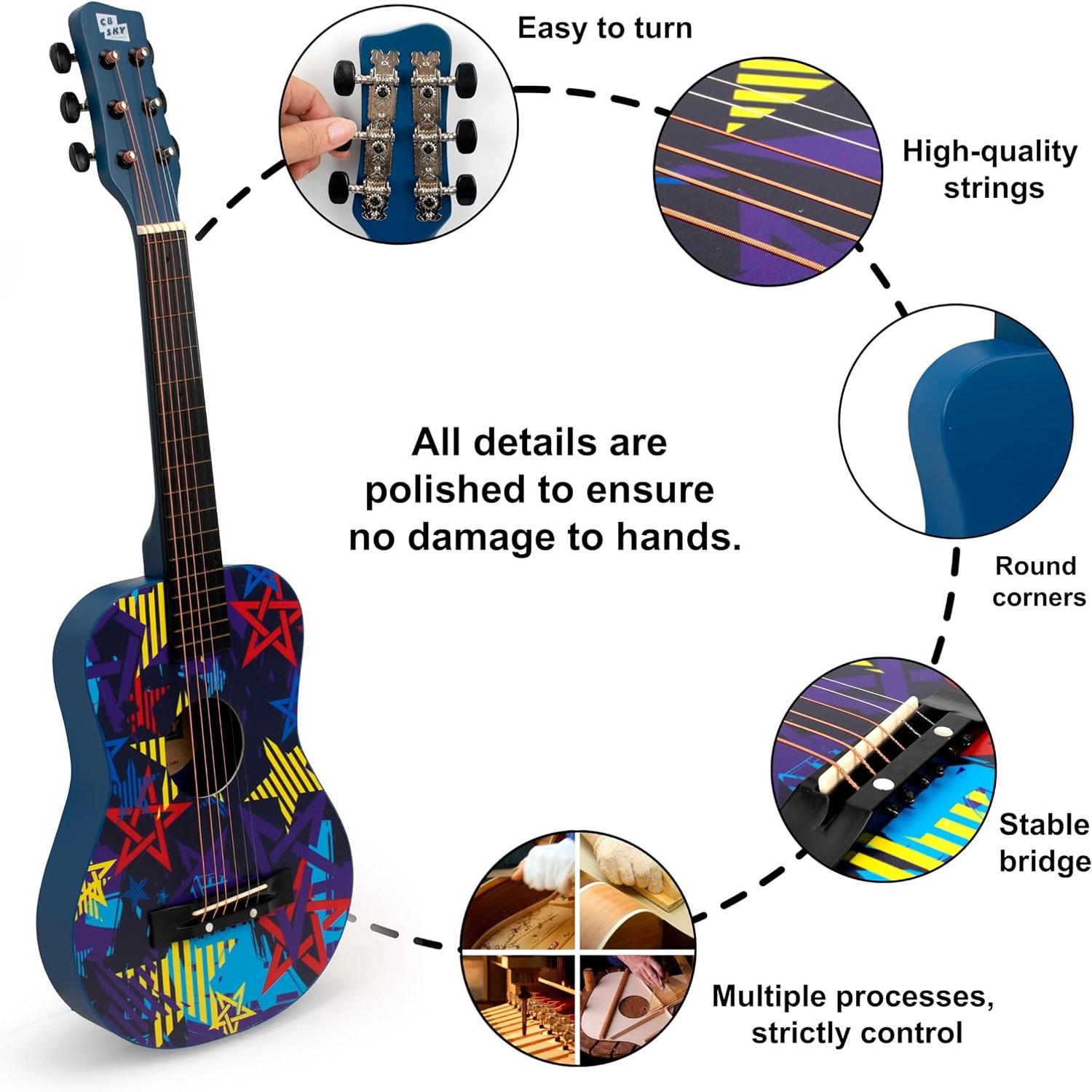
30-Inch Junior ScaleShort scale and slim body suit smaller arms and hands.
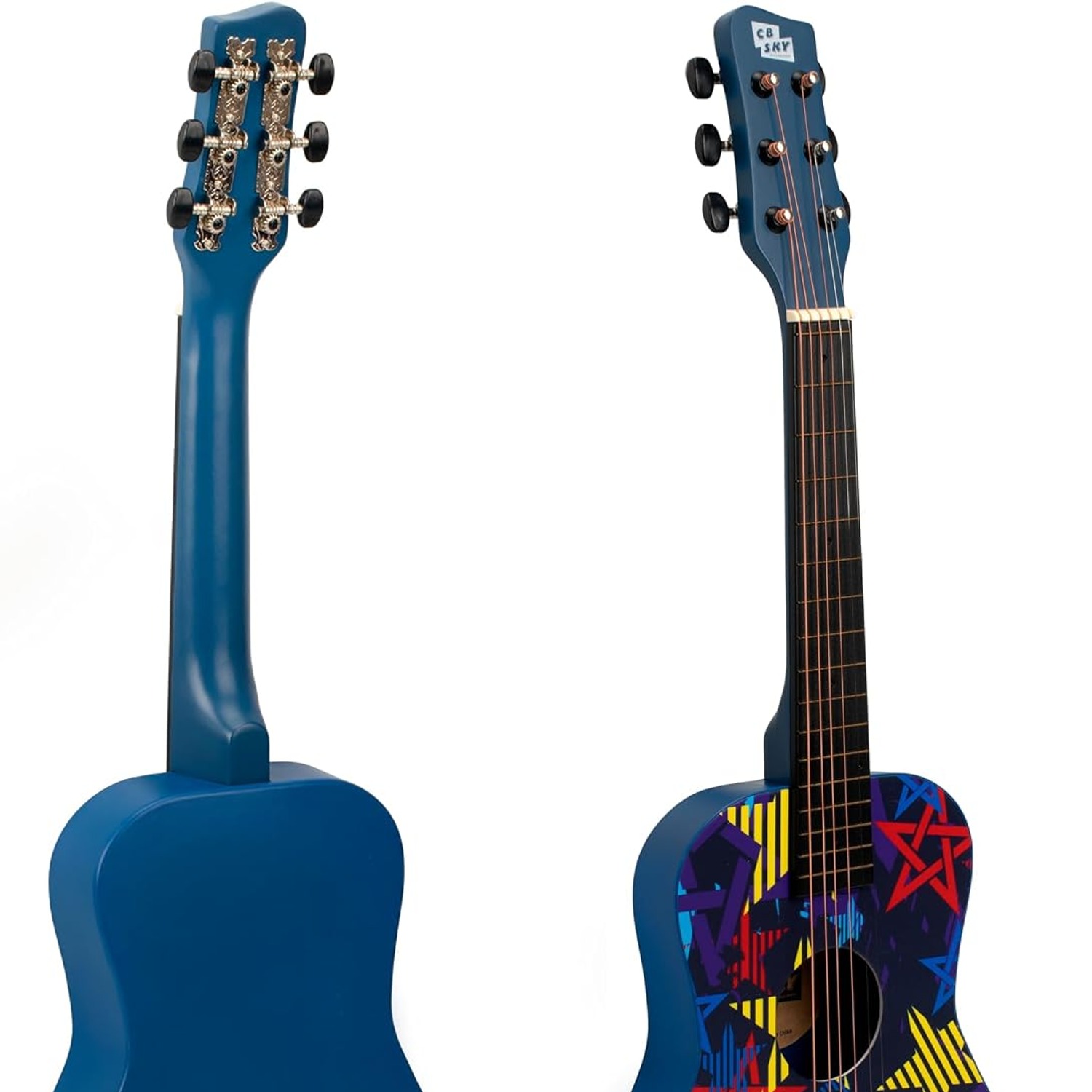
Real Wooden BuildPoplar body with a maple fretboard, not a plastic toy.
Just 1.2 kgLight enough to hold through a full practice session.
Six Steel StringsStandard six-string layout with a fixed bridge for stable tuning.

A kids acoustic guitar sized for small hands, so learning real music feels fun from the very first strum.

Six stainless steel strings, a 30-inch junior scale, a poplar body and a maple fretboard give beginners a proper wooden instrument that is light enough to hold for a whole practice session.

A 30-inch junior guitar built for children who are ready for a real instrument rather than a toy.

The poplar body and wooden neck keep the whole guitar at 1.2 kg, so it stays comfortable to hold.

Six stainless steel strings and a fixed bridge give a familiar setup that matches what teachers use.

A maple fretboard gives small fingers a smooth surface to find chord shapes on.

Blue finish and a compact 78.7 cm length make it easy to store in a bedroom or carry to a lesson.

CB SKY 30-Inch Kids Acoustic Guitar

Most children who want to play guitar run into the same wall. A full-size acoustic is simply too big. The neck is too wide for small fingers to stretch across, the body digs into the ribs, and the whole thing is heavy enough that holding it becomes the hard part instead of playing it. The CB SKY SKY 30 solves that by shrinking the scale to 30 inches while keeping everything else familiar.

CB SKY 30-Inch Kids Acoustic Guitar

It is a real wooden guitar. The body is poplar, the neck and back are wood, and the fretboard is maple. Six stainless steel strings run over a fixed bridge, which is the same basic arrangement a teacher will expect to see at a lesson. Nothing about the layout needs to be unlearned later when a child moves up to a larger instrument.

CB SKY 30-Inch Kids Acoustic Guitar

Weight matters more than people expect with a first guitar for children. At 1.2 kg, this one is light enough that a child can sit with it, stand with it, and still want to pick it up again tomorrow. The overall footprint of 78.7 by 27.9 by 6.6 cm also means it fits beside a bed, under a desk or in the back seat of a car without a struggle.

CB SKY 30-Inch Kids Acoustic Guitar

The right-handed setup covers the majority of beginners. The blue finish gives it the look of an instrument a child will want to show people, which is a bigger motivator than most adults remember. A guitar that looks good leaning in the corner of a bedroom gets played more often than one that gets shut in a cupboard.

Learning an instrument is mostly about repetition, and repetition only happens when practice feels easy to start. A correctly sized junior guitar removes the physical excuses. What is left is the fun part, which is working out a chord, playing it badly, then playing it slightly less badly the next day.

Not sure yet? That is fine.

An instrument has to suit the player, and you cannot always judge that from a photograph. If it is not right for you, send it back within 14 days of delivery in resaleable condition and we refund the price you paid, including standard delivery. That is on top of your Australian Consumer Law rights if anything arrives faulty.

If it turns up faulty, damaged or not as described, that is on us. The Australian Consumer Law and the Competition and Consumer Act 2010 covers you, and we pay the return postage. Read the full detail on our refunds and returns page, or ask us anything before you order.

Frequently Asked Questions

What size guitar is this?

It is a 30-inch junior or student size with a 30-inch scale length. The overall dimensions are 78.7 x 27.9 x 6.6 cm. That makes it noticeably shorter and slimmer than a full-size acoustic.

What age is a 30 inch junior guitar suitable for?

Guitar sizing follows arm reach and height more than birthdays, but a 30-inch body commonly suits children in the roughly five to eight year range. The reliable test is whether your child can rest the guitar on one leg and still curl their fretting hand comfortably around the neck. If their arm has to straighten right out to reach the far frets, they need a smaller size.

Is this a real guitar or a toy?

It is a real instrument. The top, back and neck are wood, the body is poplar, the fretboard is maple, and it carries six steel strings over a fixed bridge. Toy guitars usually have moulded plastic bodies and fewer strings.

How many strings does it have?

Six strings, which is the standard acoustic guitar layout. That means standard chord diagrams, apps and lesson books all apply directly. Nothing has to be translated or adapted.

What are the strings made of?

The strings are stainless steel. Steel strings give a brighter, clearer tone than nylon. They do take a little getting used to for brand new fingertips.

Will steel strings hurt my child's fingers?

There is usually some tenderness in the first week or two while fingertips toughen up. Short practice sessions of ten to fifteen minutes handle this better than long ones. The discomfort fades on its own as calluses form.

What is the body made from?

The body is poplar, a light hardwood often used for student instruments. The top and back are listed as wood and the neck is wood as well. Poplar keeps the weight down while still giving a proper acoustic resonance.

What is the fretboard made from?

Maple wood. It gives a smooth, light-coloured playing surface under the fingers. Small hands find it easy to slide along when changing chord shapes.

How heavy is it?

The listed item weight is 1.2 kg. That is light for an acoustic guitar and is one of the main reasons it works as a first guitar for children. A child can hold it for a whole practice session without their shoulder complaining.

Is it right-handed or left-handed?

The hand orientation is listed as right. A left-handed child can still learn on it, and many do, but a dedicated left-handed instrument would be more comfortable long term. If your child has a strong left-hand preference already, it is worth considering.

What colour is it?

The listed colour is blue. Colour choices beyond that are not specified in this record. The finish covers the wooden body in a single shade.

Does it come with a case?

The included components are listed as the guitar only, so a case is not specified here. A soft gig bag is a worthwhile separate purchase if your child will carry it to lessons. It also keeps dust off between practices.

Does it come with a tuner, strap or picks?

Those accessories are not listed among the included components. A clip-on tuner and a few medium picks are inexpensive and make a real difference to the first month. A strap only matters if your child wants to play standing up.

What kind of bridge does it have?

It uses a fixed bridge. Fixed bridges hold string tension steadily and need no adjustment during normal play. That is exactly what you want on a best beginner guitar for kids where simplicity counts.

How often will it need tuning?

A new guitar with new strings will drift noticeably for the first week or two while the strings settle. After that, checking tuning before each practice is a good habit. Temperature swings and humidity changes also nudge tuning around.

How do I tune it?

A clip-on tuner that attaches to the headstock is the easiest route and costs very little. Free phone tuner apps also work well in a quiet room. Standard tuning is E, A, D, G, B, E from the thickest string to the thinnest.

Can an adult play it?

An adult can certainly play it, though the short 30-inch scale will feel cramped for full-size hands. It can work as a couch guitar or a travel-friendly strummer. For serious adult playing, a full-size instrument is a better fit.

Is this a good first guitar for children starting lessons?

Yes, provided the size suits your child. Teachers generally prefer students to arrive on a correctly sized six-string acoustic, which is what this is. The standard layout means lesson material transfers directly.

How long before a child outgrows it?

Most children play a 30-inch junior guitar for roughly two to three years before moving to a 34-inch or 36-inch size. Growth spurts are the usual trigger rather than skill level. The signs are elbows pushed out wide and a crowded strumming hand.

Do I need to do anything before the first play?

Check the tuning, since instruments shift during shipping. Give the body a quick wipe with a dry soft cloth. Then let your child hold it and get used to the weight before any formal practice starts.

How should I clean it?

Wipe the body and strings with a soft dry cloth after playing. Sweat on steel strings is the main cause of dullness and early corrosion. Avoid household cleaners and polishes on the wood.

Where should I store it?

Keep it away from direct sunlight, radiators, heating vents and damp rooms, because wood moves with heat and humidity. A stand or a case is far safer than leaning it against a wall. Many a best wooden kids guitar has been broken by a simple topple.

Will the strings need replacing?

Eventually yes. Steel strings dull over months of play and can corrode faster if hands are not washed before practice. A set change once or twice a year is typical for a casual young player.

Can my child learn from online videos with this guitar?

Absolutely. Because it has six strings in standard tuning, any beginner video, app or chord chart will match what is in their hands. That makes it a practical best practice guitar for children who learn at home.

Is it loud enough to hear properly?

It is an acoustic guitar with a hollow wooden body, so it projects on its own with no amplifier needed. The volume is modest compared to a full-size dreadnought because of the smaller body. For bedroom practice that is often an advantage.

Can it be used in a school music programme?

It fits the standard student acoustic format schools usually ask for, in a junior size. Check with the teacher about preferred sizing for the year level. Label it clearly if it will travel to and from school.

How is it packed for delivery?

It ships in protective packaging sized for the instrument. Check tuning after it arrives, since transit almost always loosens strings a little. Inspect the neck and body before the first play.

Does it make a good gift?

It works well as a birthday or holiday gift because it arrives as a complete playable instrument rather than a kit to assemble. The blue finish and junior size make it look like it was chosen for the child, not handed down. Pairing it with a cheap tuner and a beginner chord book rounds the gift out nicely.

What happens if my child loses interest?

Junior guitars hold their usefulness well because younger siblings, cousins and friends can pick them up. Many children also come back to the instrument a year or two later. A guitar sitting on a stand in a shared room tends to get played eventually.

What if the size turns out to be wrong for my child?

Measure your child's reach against the 78.7 cm overall length before ordering if you are unsure. If the guitar arrives and the fit is clearly wrong, contact us about returning it in its original condition and packaging and we will walk you through the process. Our returns terms on the site cover timeframes and what to send back.

How to Choose a First Guitar for Children

6 min read Music Instruments

The problem with handing a child a full-size guitar

Plenty of guitars get bought with good intentions and then quietly stop being played. The usual reason has nothing to do with motivation. The guitar was simply too big.

A full-size acoustic has a scale length around 40 inches and a body that is deep and wide. For an adult that is comfortable. For a seven year old it is awkward in every direction. The body pushes their strumming arm out at a strange angle. Their fretting hand has to stretch across a neck that is too wide, and their fingers cannot reach the third or fourth fret without the whole hand twisting. Holding it still becomes the task.

Children do not usually say any of this out loud. They just play less, then stop. Parents conclude the interest faded. More often, the instrument was working against them the entire time.

A 30-inch junior guitar removes that obstacle. Shorter scale, narrower neck, slimmer body, less weight. The physical effort drops to almost nothing and the only remaining challenge is the one you actually want, which is learning to play.

What a 30-inch junior guitar actually is

The number refers to scale length, the stretch of string that vibrates between the nut and the bridge. At 30 inches, the frets sit closer together than on an adult instrument. That single change makes chord shapes reachable for a smaller hand.

The CB SKY SKY 30 keeps the rest of the design conventional. Six stainless steel strings. A fixed bridge. A wooden top, wooden back and wooden neck, with a poplar body and a maple fretboard. Right-handed orientation. Overall it measures 78.7 by 27.9 by 6.6 cm and weighs 1.2 kg.

That last figure is worth pausing on. A kilo and a bit is genuinely light for an acoustic guitar. It is the difference between a child who sits down and plays for twenty minutes and a child who shifts around for five minutes and then puts it back.

Because the layout is standard, nothing about it has to be unlearned later. The chord a child learns on this guitar is the same chord on a full-size one. The fingers just move further apart.

Who this suits

The clearest fit is a child who has shown real interest and is ready for a proper instrument. Maybe they have been strumming a plastic toy, or they have come home from a school music class asking questions. A best first guitar for children at that point needs to feel like a step up without feeling like a mountain.

It also suits children about to start formal lessons. Teachers usually want a six-string acoustic in the right size, and that is exactly what this is. Turning up with the correct instrument saves the first few lessons from being spent on workarounds.

Children who travel between two homes, or who carry a guitar to school, get an extra benefit. At under 80 cm and 1.2 kg, it slides into a car and lives in a bedroom corner without taking over the space.

Left-handed children are the one group to think carefully about. The hand orientation here is right. Many left-handed players learn perfectly well right-handed, and some prefer it, but if your child already shows a strong left-hand preference for writing and sport, a dedicated left-handed instrument may serve them better.

Getting the size right

Sizing by age is rough at best. Children of the same age can differ by a head in height. Two simple checks work better.

First, sit your child down with the guitar resting on their right thigh in the normal playing position. Their strumming arm should drape over the body with the elbow relaxed, not hoisted up or splayed out.

Second, watch the fretting hand. With the thumb behind the neck, they should be able to curl their fingers over the strings and reach across all six without the wrist locking straight. If the elbow has to straighten fully to reach the far end of the neck, the guitar is too large.

Outgrowing one is easy to spot too. The strumming arm starts to feel crowded, the fingers bunch up between frets, and the child instinctively reaches for anything bigger. Most children get two to three years out of a junior size before that happens.

Setting it up for the first week

Check the tuning as soon as it arrives. Strings always loosen in transit and an out-of-tune guitar sounds wrong no matter how well it is played, which is discouraging on day one.

A clip-on tuner costs very little and is the single most useful accessory you can add. It clamps onto the headstock and shows each note on a small screen. Free phone apps do the same job in a quiet room. Standard tuning runs E, A, D, G, B, E from the thickest string to the thinnest.

New steel strings also need a settling period. Expect to retune several times over the first week or two, then far less often after that. Teaching a child to check tuning before each practice turns a chore into a thirty second habit.

Fingertips need a settling period as well. Steel strings press into soft skin and the first sessions can be tender. Short practices work better here. Ten minutes a day beats an hour on Sunday, both for the fingers and for building the habit.

Looking after a wooden instrument

Wood responds to its surroundings. Heat, cold and damp all move it, which affects both tuning stability and the instrument's long-term health.

Keep the guitar out of direct sunlight and away from heaters, vents and air conditioners blowing straight at it. Damp rooms and garages are poor storage spots. A normal bedroom at a comfortable temperature is close to ideal.

Wipe the strings and body with a soft dry cloth after playing. Sweat is what dulls steel strings and starts corrosion, so a ten second wipe genuinely extends their life. Skip household cleaners and furniture polish on the wood.

Storage is where most damage actually happens. A guitar leaning against a wall will fall over sooner or later, usually onto the headstock, which is the weakest point. A simple stand or a soft case is cheap insurance for a best junior guitar for small hands that you want to last through a second child.

If the guitar will sit unplayed for months, slacken the strings slightly to ease tension on the neck.

Accessories worth adding

The included components are listed as the guitar, so a few extras are worth budgeting for.

A clip-on tuner comes first. After that, a handful of medium-gauge picks, since children lose them constantly and medium thickness suits strumming better than thin or heavy. A soft gig bag matters if the guitar leaves the house. A strap only becomes relevant once your child wants to stand up and play, which usually happens a few months in.

A beginner chord book or a free online course rounds it out. Because this is a standard six-string in standard tuning, any beginner material will match the instrument exactly.

The short version

A 30-inch junior guitar exists to take the physical struggle out of learning. This one is a real wooden instrument, with a poplar body, a maple fretboard and six steel strings over a fixed bridge, built at a size a child can actually manage. At 1.2 kg it is light enough to hold for a full practice session.

Check the fit against your child's reach, tune it before the first play, keep practices short at the start, and store it on a stand rather than against a wall. Do those four things and the guitar stops being an obstacle and becomes what it should be, which is the fun part of the day.

Browse the shop

Ready to hear that first chord?

Order the 30-inch junior guitar today and give your child an instrument sized to actually play.

Ask us a question

Page summary

The CB SKY SKY 30 is a 30-inch junior acoustic guitar made for children and beginner students. It has six stainless steel strings, a fixed bridge and right-handed orientation. The top, back and neck are wood, the body is poplar and the fretboard is maple. It measures 78.7 x 27.9 x 6.6 cm and weighs 1.2 kg, and the listed colour is blue. The model number and manufacturer part number are both CB 001. One guitar is supplied per unit, and the included components are listed as the guitar only, so accessories such as a case, strap, tuner or picks are not listed by the maker. Country of origin and warranty details are also not specified here.