
The complete guide
Open Back Banjo Buyer's Guide, Choosing Your First 5 String
The problem with most first banjos
Plenty of people buy a banjo, play it for a fortnight, and quietly park it in a cupboard. The reason is almost never a lack of interest. It is usually one of two things. Either the instrument was heavy and awkward to hold, or it arrived badly adjusted and sounded wrong no matter what the player did.
Weight matters more than beginners expect. A traditional banjo with a thick wooden rim and a cast metal tone ring can tip past six kilos once you add a strap and a case. Sit with that on your knee for forty minutes and your back will have opinions. A banjo that is a chore to lift is a banjo you stop lifting.
Set-up matters just as much. A banjo has more adjustable parts than a guitar. Head tension, bridge placement, neck relief, tailpiece angle and string height all interact. Get one wrong and the instrument buzzes, chokes, or refuses to play in tune past the fifth fret. Most beginners cannot tell whether the problem is them or the banjo, so they assume it is them.
A light, shop-adjusted open back model solves both problems in one go. That is the gap the Gold Tone AC-1 was designed to fill.
How an open back banjo actually works
Strip a banjo back to basics and it is a drum with a neck bolted to it. The head, a thin membrane stretched over a circular rim, is the speaker. Strings transfer their vibration through the bridge into the head, the head moves air, and you hear a banjo.
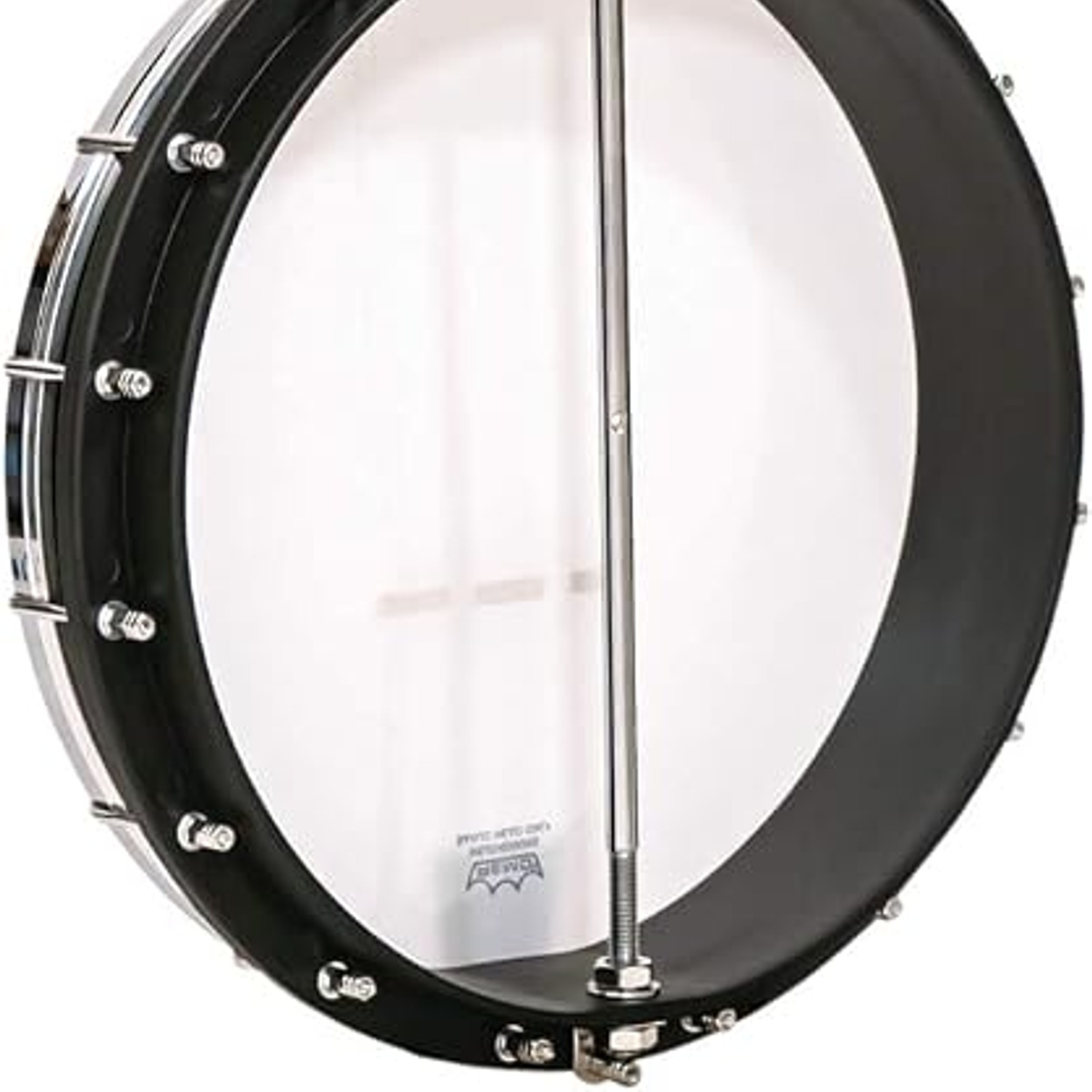
The open back part refers to what is not there. A resonator banjo has a shaped wooden bowl attached to the rear, which catches sound coming off the back of the head and throws it forward. That makes it loud and punchy, which is why bluegrass bands use them. Remove that bowl and the sound radiates in all directions. The result is quieter, warmer, and far easier to live with in a small room.
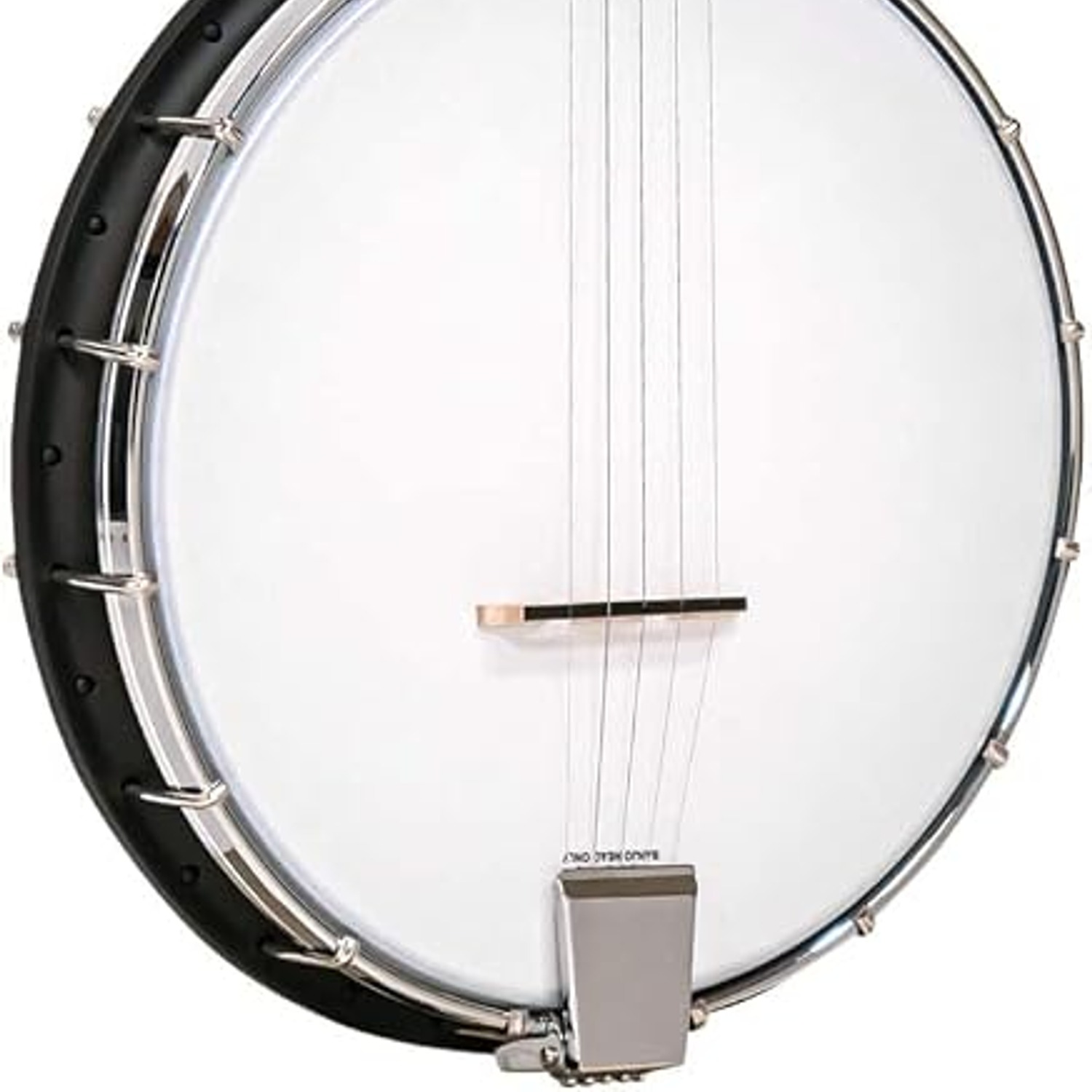
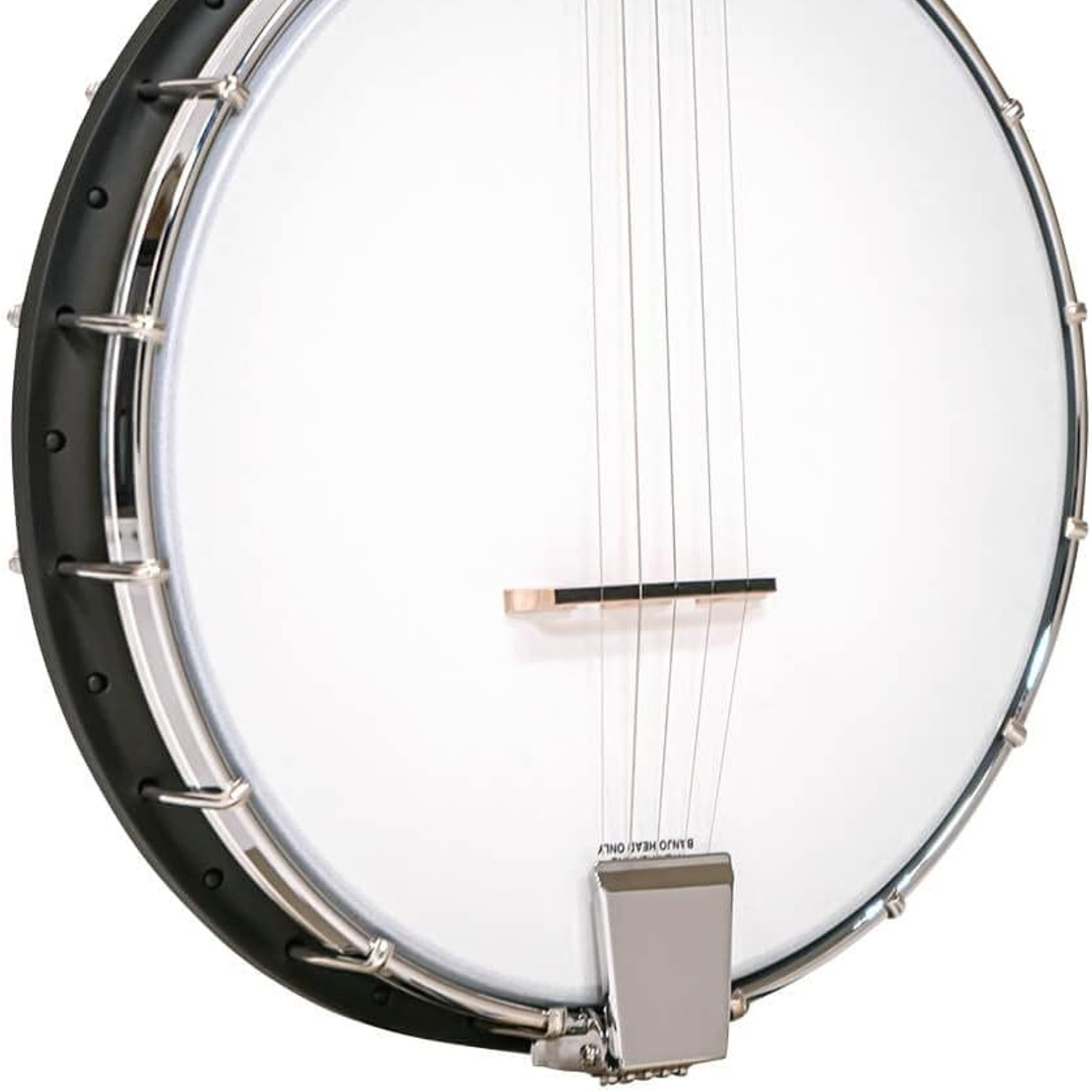
On the AC-1, the rim is composite rather than solid timber. That is the trick behind the low weight. A Remo frosted head sits over the top. Frosted heads have a slightly textured coating that trims the sharpest edge off the treble, so the banjo sounds woody rather than brittle. Underneath the strings you have nickel-plated steel, the standard material, which gives a clear attack without much fuss.
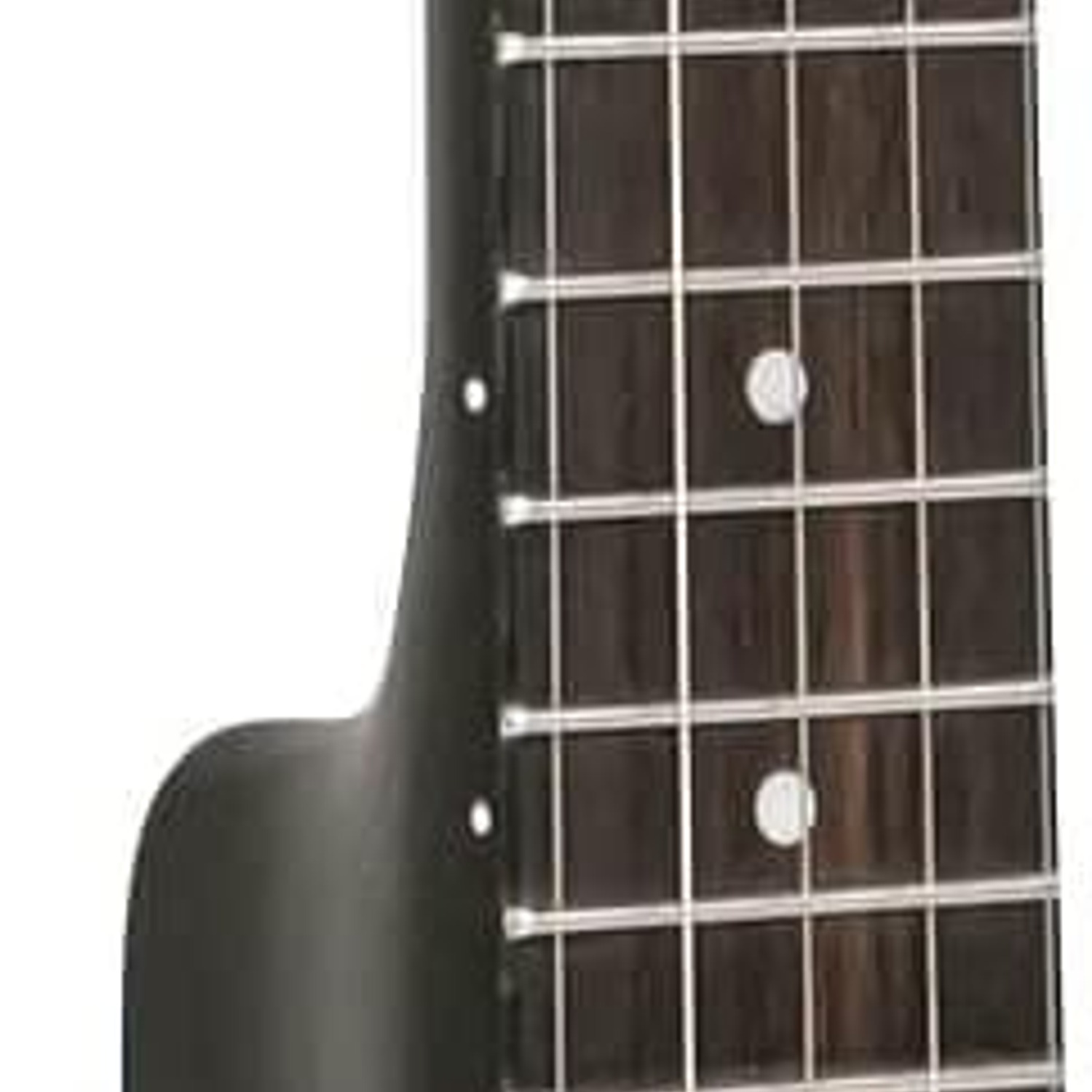
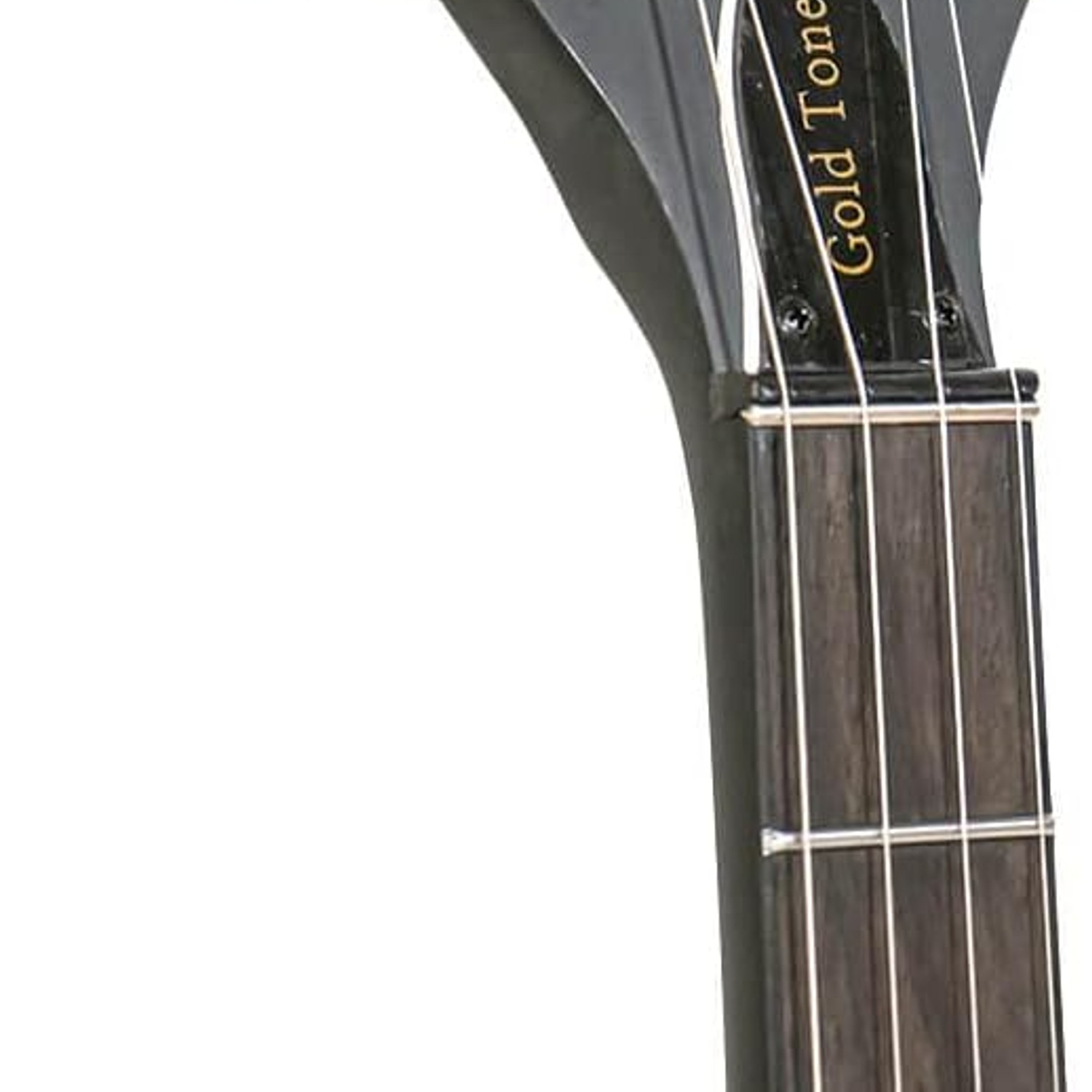
The neck is hard rock maple with a two-way adjustable truss rod inside. Maple is dense, so it stays put. The truss rod means that when the weather shifts and the neck moves a hair, a technician can correct it in either direction instead of shrugging. Few instruments in this bracket bother with a two-way rod.
At the headstock end sits the Zero Glide nut. Standard banjo nuts have slots cut into bone or plastic, and strings drag in those slots. You tune up, the string sticks, then it releases halfway through a tune with an audible ping and you are flat again. The Zero Glide system places a fret at the zero position so the open string rings against the same metal as a fretted note, and the slots guide rather than grip. Fewer tuning arguments, and a more even sound between open and stopped strings.
Who this banjo suits
If you are starting from scratch and you like old time, folk, or anything with a frailing rhythm, this is squarely aimed at you. Clawhammer is played with the back of the fingernail striking down, and that technique sounds best on an open back. The best banjo for frailing is almost always one without a resonator.
If you already play guitar and want a second instrument to mess about with, the light weight and quiet voice make it low-commitment. You can practise at ten at night without the household staging an intervention.
If you are an experienced player who already owns a serious resonator banjo, this makes sense as a knock-about instrument. Take it camping, take it on a plane, leave it at the holiday house. Nobody takes a four thousand dollar banjo to a muddy festival.
Who it does not suit: left-handed players, since the hand orientation is listed as right-handed. And anyone who needs to cut through a loud bluegrass jam will eventually want a resonator for the extra projection.
How to choose between open back and resonator
The honest answer is to pick based on the music you actually want to play, not the music you imagine playing in two years.
Want Earl Scruggs rolls, fast tempos and a band? Resonator. Want Appalachian tunes, modal drones and a rhythm you can sing over? Open back. Want both? Start open back, because a resonator banjo played gently sounds thin, while an open back played hard still sounds good.
Then look at weight. Pick the instrument up in your mind and imagine standing with it for an hour. The best lightweight travel banjo is the one that is still comfortable at minute fifty-nine.
Then look at whether somebody has set it up. An instrument sold straight from a carton, untouched by a human, is a gamble. A 12-point shop set-up means somebody checked the action, the bridge and the head tension before it went in the box.
Finally, check what comes with it. A bag included in the package is not a trivial extra. Banjo cases are bulky and not cheap, and an instrument carried loose in a car boot picks up damage fast.
Setting it up when it arrives
Open the bag and let the banjo sit in the room for a few hours before you play it. Instruments travel through temperature changes, and wood and heads both respond to that.
First job is tuning. Standard open G is gDGBD, with that short fifth string tuned high. A clip-on tuner is the easiest way to get there. New strings stretch, so expect to retune several times in the first few days.
Second job is the bridge. It is not fixed down, it just sits under string tension, and it can shift in transit. Measure from the nut to the twelfth fret, then set the bridge the same distance again past the twelfth fret. Check with harmonics at the twelfth and adjust by a millimetre or two until the fretted note and the harmonic agree.
Third, listen to the head. If it sounds loose and thuddy, the tension may need a small lift. Work around the brackets in small even turns, like tightening wheel nuts. If you are unsure, take it to a technician, because overtightening a head is an expensive mistake.
Care over the long run
Wipe the strings down with a dry cloth after you play. Finger oils are what kills nickel-plated steel strings, not playing time. A thirty second wipe can double string life.
Keep it in the bag when it is not being played. Direct sun warps necks, heaters dry out timber, and damp bathrooms do unpleasant things to heads. A normal lounge room is fine.
Do not overtighten anything in a single sitting. Banjos respond to small adjustments. If the neck relief needs changing, let someone with a feeler gauge handle the truss rod.
Change strings when they look dull, feel rough, or stop holding pitch. Every couple of months is about right for regular players.
The short version
An open back banjo trades raw volume for warmth, comfort and portability. The Gold Tone AC-1 takes that formula and strips weight out with a composite rim, then adds a hard rock maple neck, a two-way truss rod and a Zero Glide nut, parts that normally live further up the price list. A Remo frosted head gives it the dry old time voice, the nickel-plated steel strings keep the attack clear, and the 12-point shop set-up means it should play properly the day it lands. The gig bag comes with it.
If you want to learn clawhammer, play folk tunes at home, or keep a banjo that travels without drama, this is a sensible place to start.