
The complete guide
Choosing a Kids Percussion Set That Actually Gets Played
The toy that goes quiet after a fortnight
Most parents have bought one. A bright plastic music toy with a speaker, a few buttons, and three songs on a loop. It gets played hard for about ten days. Then the batteries go flat, nobody replaces them, and it joins the pile at the back of the cupboard.
The reason is simple. That toy does the playing. The child presses, the toy performs. There is no skill to build and nothing new to discover after the first week, because the toy already knows all the sounds it will ever make.
A kids percussion set is built on the opposite idea. Nothing happens unless the child makes it happen. Shake harder and the sound changes. Tap a different spot on the xylophone and you get a different note. There is no ceiling on this, because there is no fixed set of recorded sounds to run out of. That is why acoustic instruments stay in rotation long after the electronic toys have gone.
What this set actually is
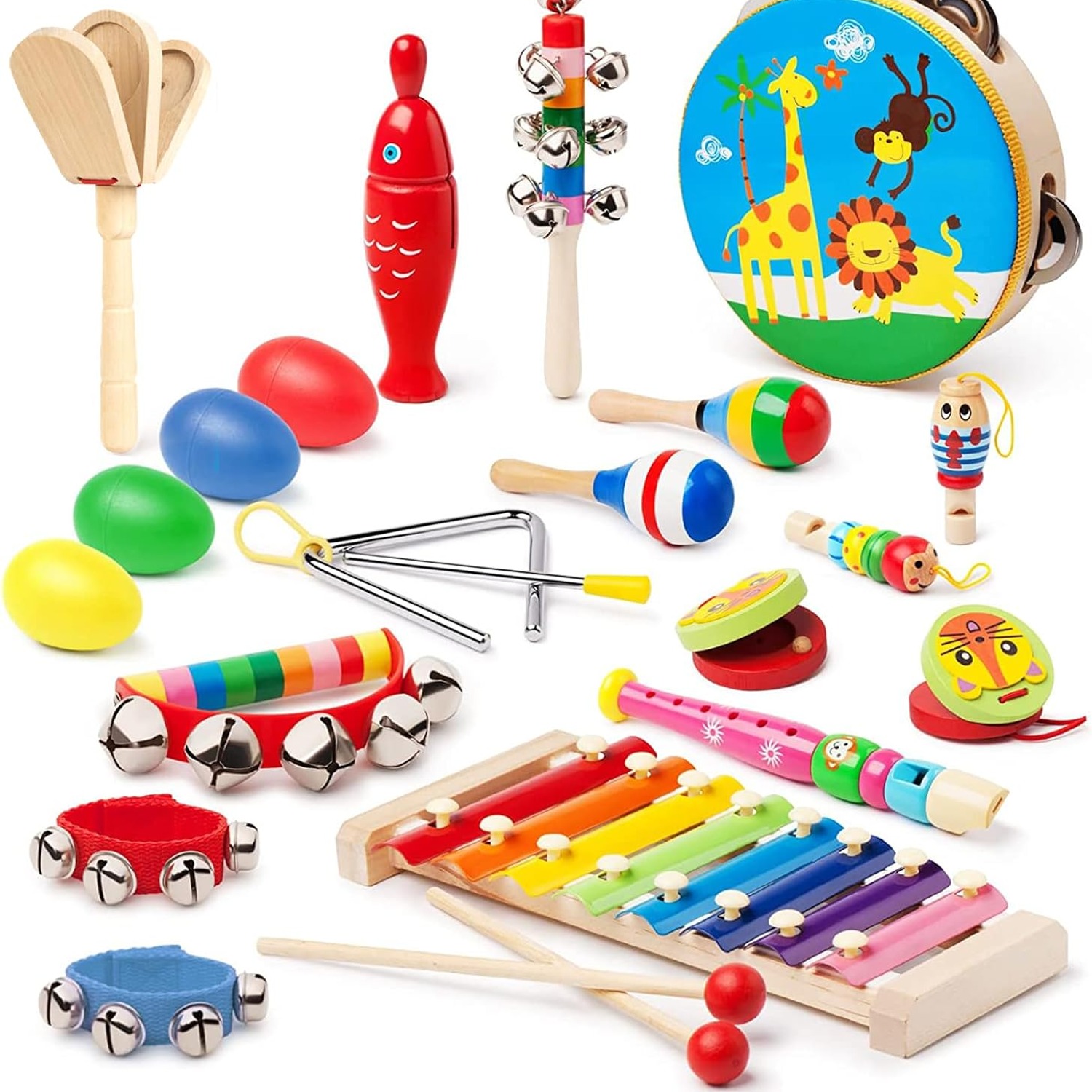
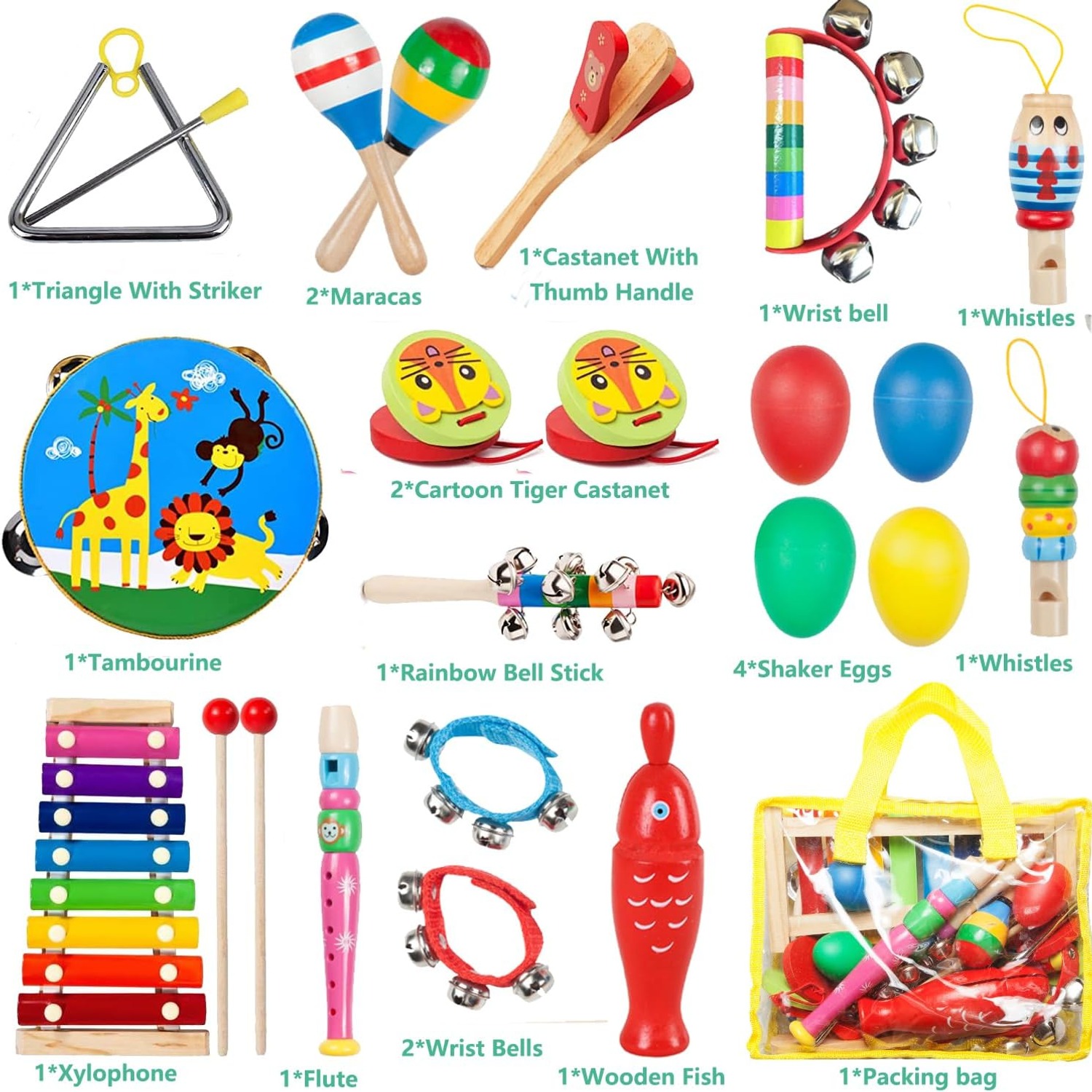
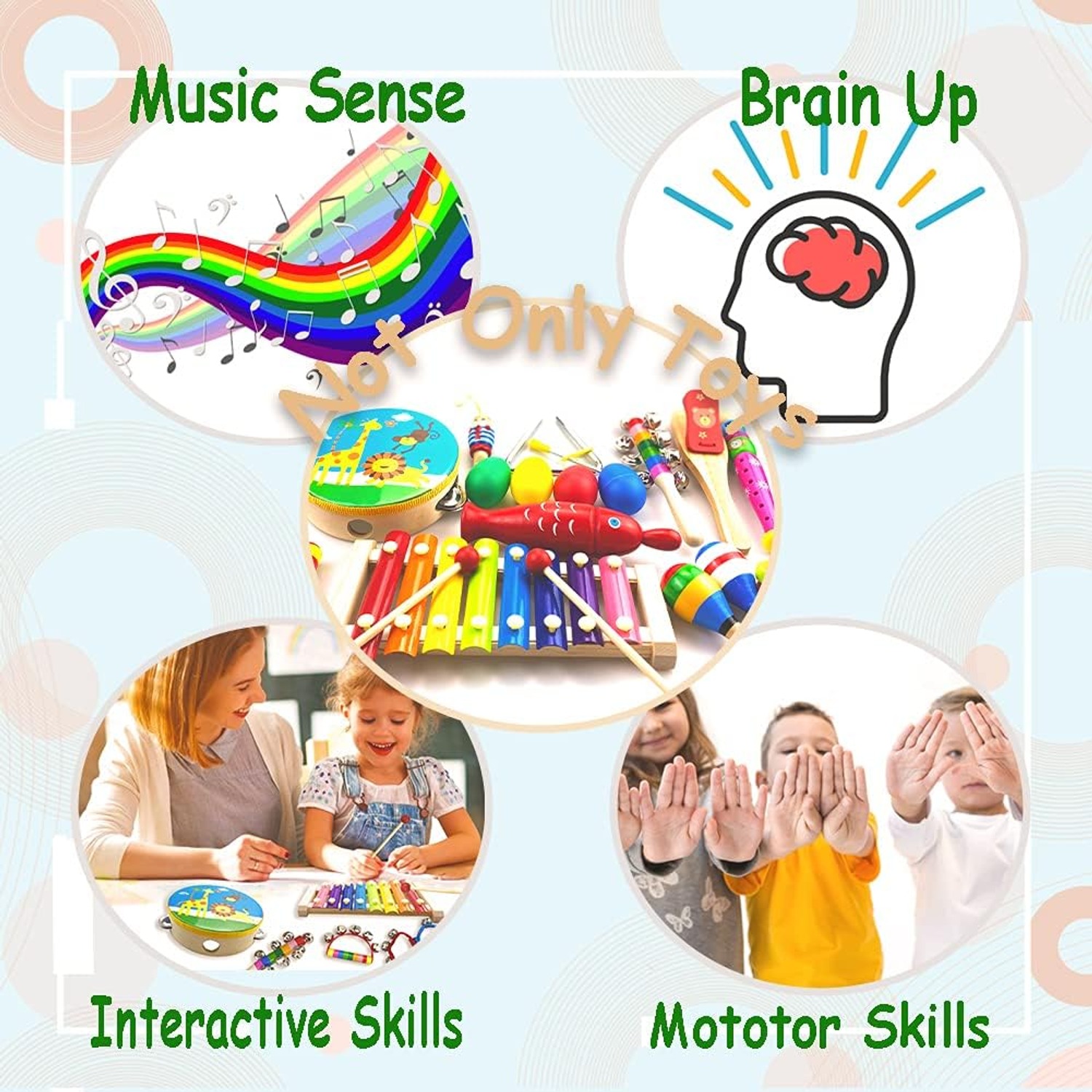
This is a 16-piece musical toy set from LZHZH, model YQ0235. The centrepiece is a xylophone with 14 keys. The rest of the pieces are hand percussion, made from a mix of metal and wood.
The whole set measures 38.1 by 27.9 by 10.2 cm and weighs 1.14 kg. That weight tells you something useful. Thin plastic sets of a similar size come in at a fraction of that. Wood and metal have mass, and mass is part of why they sound better.
There is no assembly and no power source beyond a pair of hands. The operation mode is listed as manual, which in practice means you open the box and the set is ready.
Why fourteen keys matters
A lot of toy xylophones have eight keys, which gives you one octave. That is enough for a handful of nursery songs and not much else.
Fourteen keys gives you room to move. A child can play a melody that goes up and comes back down, can hit notes above and below the starting point, and can learn that pitch is a ladder rather than a short list of colours. It is the difference between making noises and playing music.
For a child, that gap is motivating. Playing a tune that other people recognise is a genuine thrill. It is the moment a wooden toy stops being a toy and starts being an instrument.
Wood and metal versus plastic
Plastic is cheap, light, and easy to mould. It also sounds thin, because plastic does not resonate the way wood and metal do.
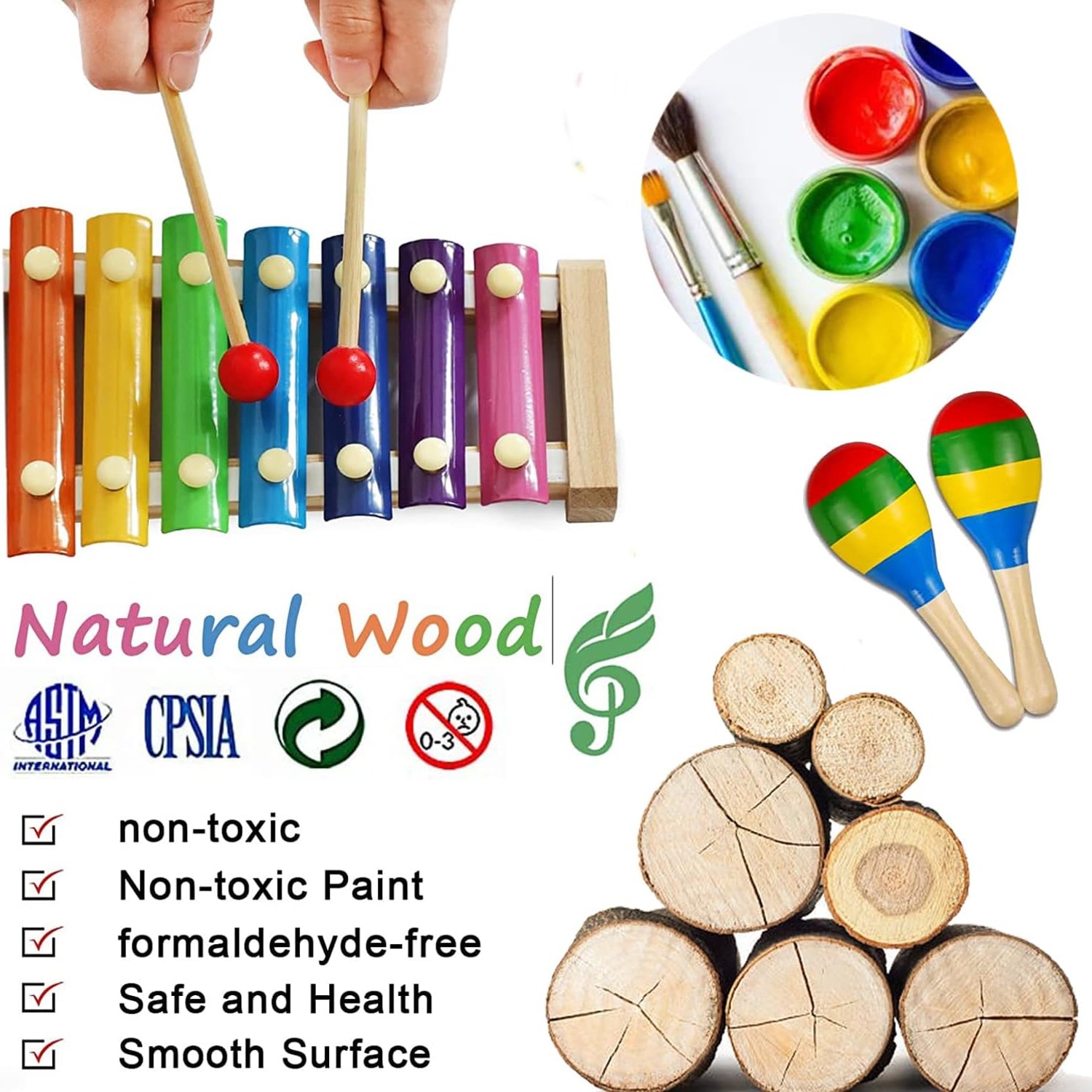
Wooden pieces produce a rounder, warmer tone that fades gently. Metal pieces ring brighter and hold the sound longer. Having both in one box means a child hears the difference directly, side by side, without anyone needing to explain it. They work out for themselves that different materials make different sounds.
There is a handling benefit too. A piece with real weight gets held more deliberately. Children tend to treat heavier objects as more serious, and they play with more care because of it.
Who it suits
The manufacturer recommends ages 5 to 12. The broader age range description also mentions toddlers, which is fair with a caveat.
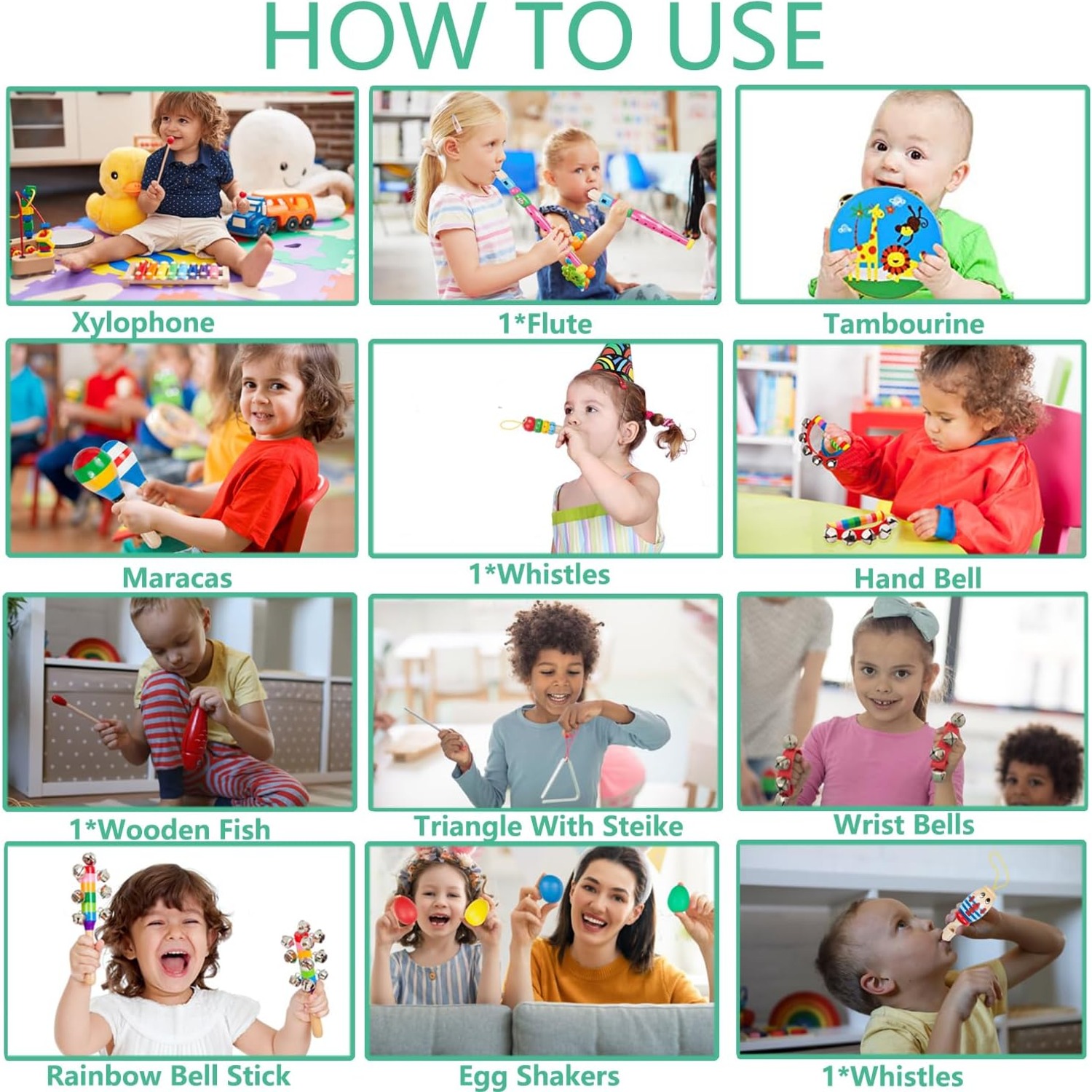
At five or six, a child is mostly exploring. They want to find out what every piece does and how loud it goes. This is normal and it is the point. A set with sixteen pieces gives them plenty to work through.
By eight or nine, the play changes. Children start keeping time with music they already like, matching a shaker to the beat of a song on the radio. This is where early childhood music set territory turns into something closer to actual rhythm practice.
By ten or eleven, the xylophone takes over. A child this age can pick out melodies by ear, work from a simple sheet, or teach a tune to a younger sibling. Toddlers can absolutely join in, but keep an adult close by and put the smaller pieces away after play.
How to choose a set that lasts
A few things separate the sets that get used from the sets that get shelved.
Count the pieces. A single instrument has a short shelf life. A box with sixteen different things in it means a child can change what they are doing without getting bored, and means more than one child can play at the same time.
Check the materials. Wood and metal cost more and weigh more, and both of those are good signs. A set that is suspiciously light for its size is usually thin moulded plastic.
Check the power source. Anything listed as manual will never go flat. That matters more than it sounds, because flat batteries are the single most common reason a toy stops being played.
Check the key count on the xylophone. Fourteen keys gives a child real musical range. Eight gives them a novelty.
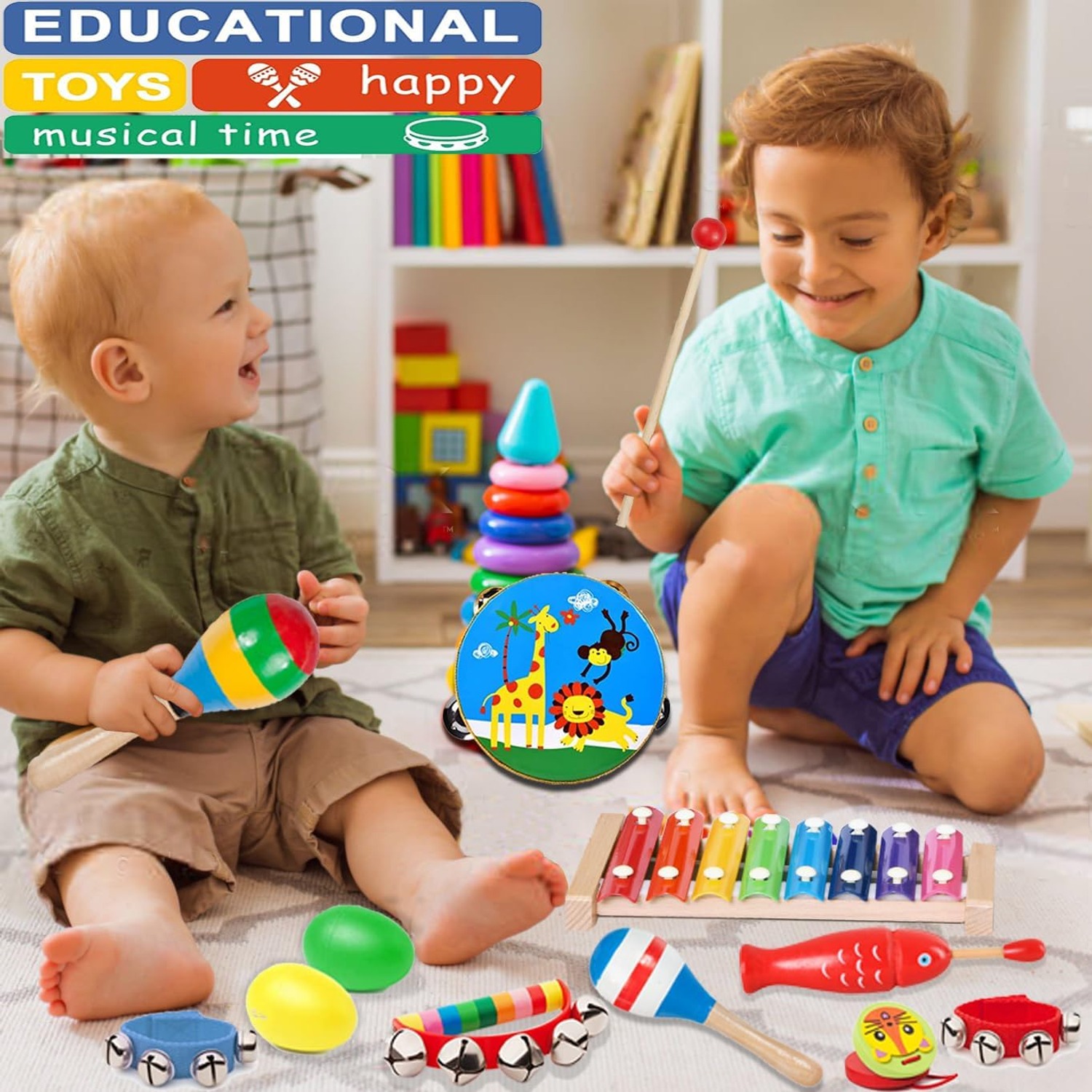
Think about who else plays. If you have more than one child, or you host playdates, a multi-piece set earns its keep. Siblings can form a band, which teaches turn-taking and listening without anyone needing to run a lesson.
Looking after it
Wooden and metal instruments ask for very little, but they do ask for a bit.
Wipe the pieces with a soft cloth that is slightly damp, then dry them straight away. Never soak anything and never put a piece in a dishwasher. Water gets into wood grain and lifts finishes, and once a wooden instrument has warped it will not sound right again.
Store the set somewhere dry and indoors. Direct sun fades the finish and dries the wood out. Damp rooms do the opposite and swell it. A shelf in a bedroom or living room is ideal.
Keep everything in one container. Percussion sets lose mallets and small shakers faster than anything else in a toy box, and a set missing half its pieces stops being fun. A labelled box and a two-minute tidy at the end of play solves it.
Give the mallets a quick look every so often. If a handle splits or a head comes loose, set it aside rather than letting it get played with.
Getting the most out of it
You do not need to be musical to help a child use this well.
Clap a short rhythm and ask them to copy it. Then let them clap one and you copy. That simple back-and-forth is the foundation of every rhythm lesson ever taught.
Play a song they like and hand them a shaker. Do not worry about accuracy at first. Just keeping time at all is the skill.
Label the xylophone keys with small stickers if they want to learn note names. Simple beginner sheets for wooden xylophone for toddlers and older kids are easy to find online, and most start with tunes a child already knows.
Let them be bad at it for a while. Percussion is one of the few instruments where messing about is also practice.
The short version
This is a 16-piece kids percussion set built around a 14-key xylophone, made from wood and metal, weighing 1.14 kg in a box measuring 38.1 by 27.9 by 10.2 cm. No batteries, no assembly, recommended for ages 5 to 12.
What you get for that is a toy that works on day one and still works in three years, because the sound is something a child makes rather than something a speaker plays back. It suits one child alone or a group together, and it gives a beginner a real instrument to grow into rather than a gadget to outgrow.
If you have been looking for a gift that does not need charging and does not get boring, a box of actual instruments is a hard thing to beat.