
The complete guide
Egg Shakers Buyer's Guide, How To Pick And Use A Set
The problem with most "musical" toys
Walk down a toy aisle and most of the instruments are not really instruments. They are plastic boxes with a speaker inside that plays a recorded tune when you press a button. The child presses the button. The box makes the sound. The child had almost nothing to do with it.
Egg shakers do the opposite. The sound only exists because a child moved their arm. Shake harder, it gets louder. Stop, it stops. That connection between action and result is the thing that makes a child look up with that particular face, the one that says I did that. It is also the first real step into rhythm, and you do not need to teach a single thing to get there.
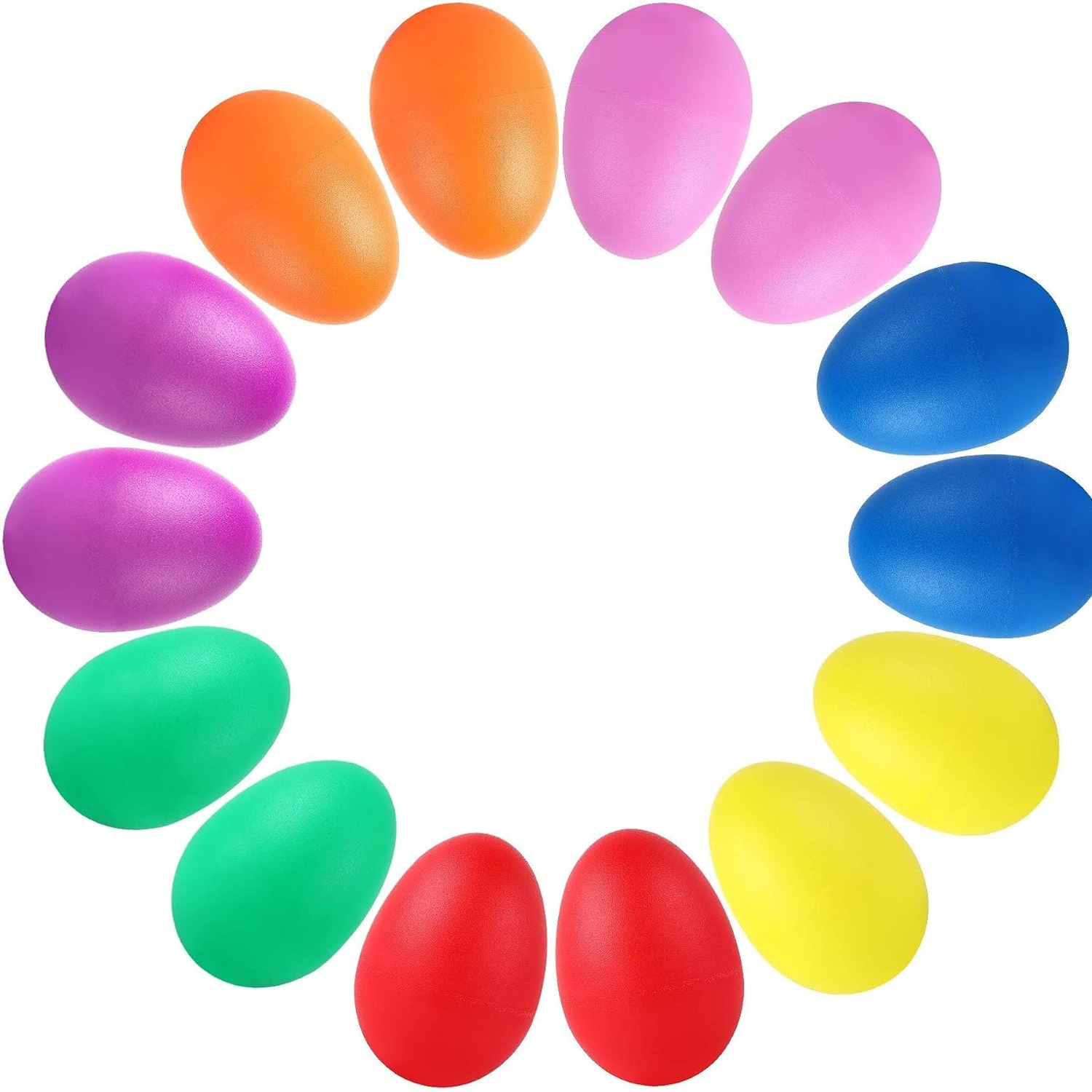
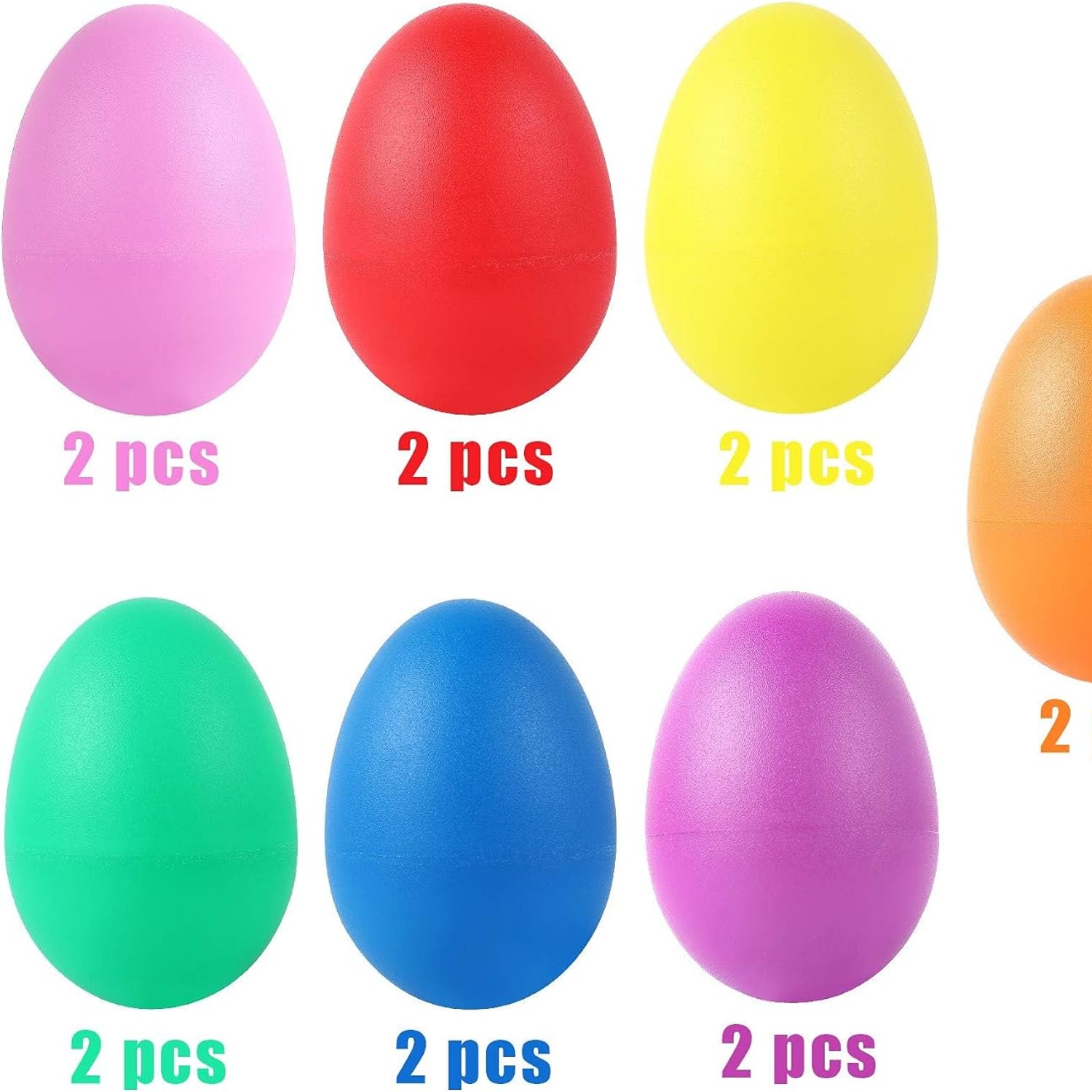
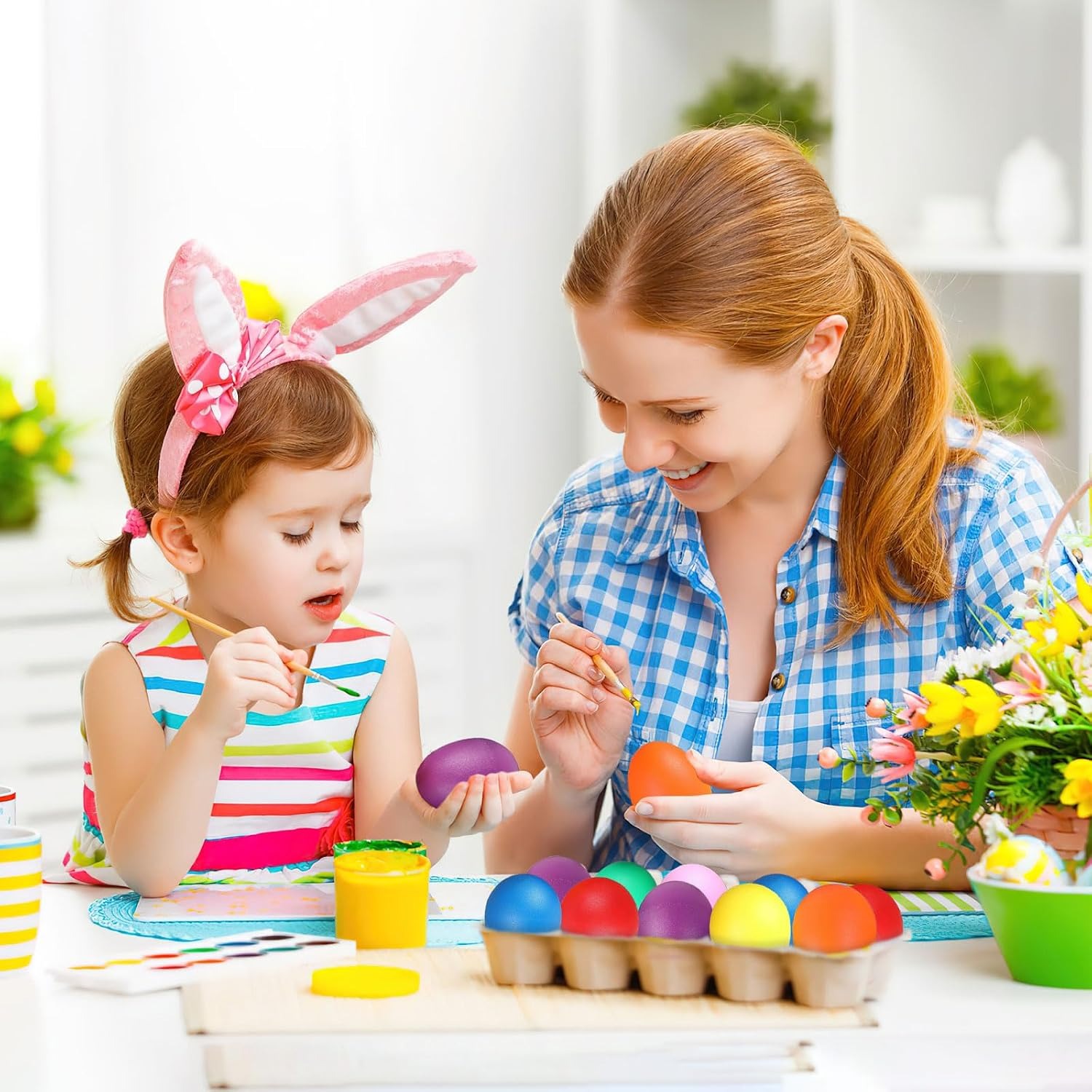
This set gives you 14 of them in seven colours, two of each, sealed plastic shells that rattle. That is the whole product. The simplicity is the feature.
How an egg shaker actually works
Inside each sealed shell is loose filling. When the shell moves, the filling slides across and strikes the inside wall, then slides back when you reverse the motion. Each pass produces a short burst of sound. Shake in a steady rhythm and you get a steady rattle.
Because the sound happens at the end of each movement rather than the start, children quickly learn to time the flick of their wrist. That is real rhythm practice, dressed up as play. Over weeks you will see the shake get tidier, going from a wild flap to a controlled little snap.
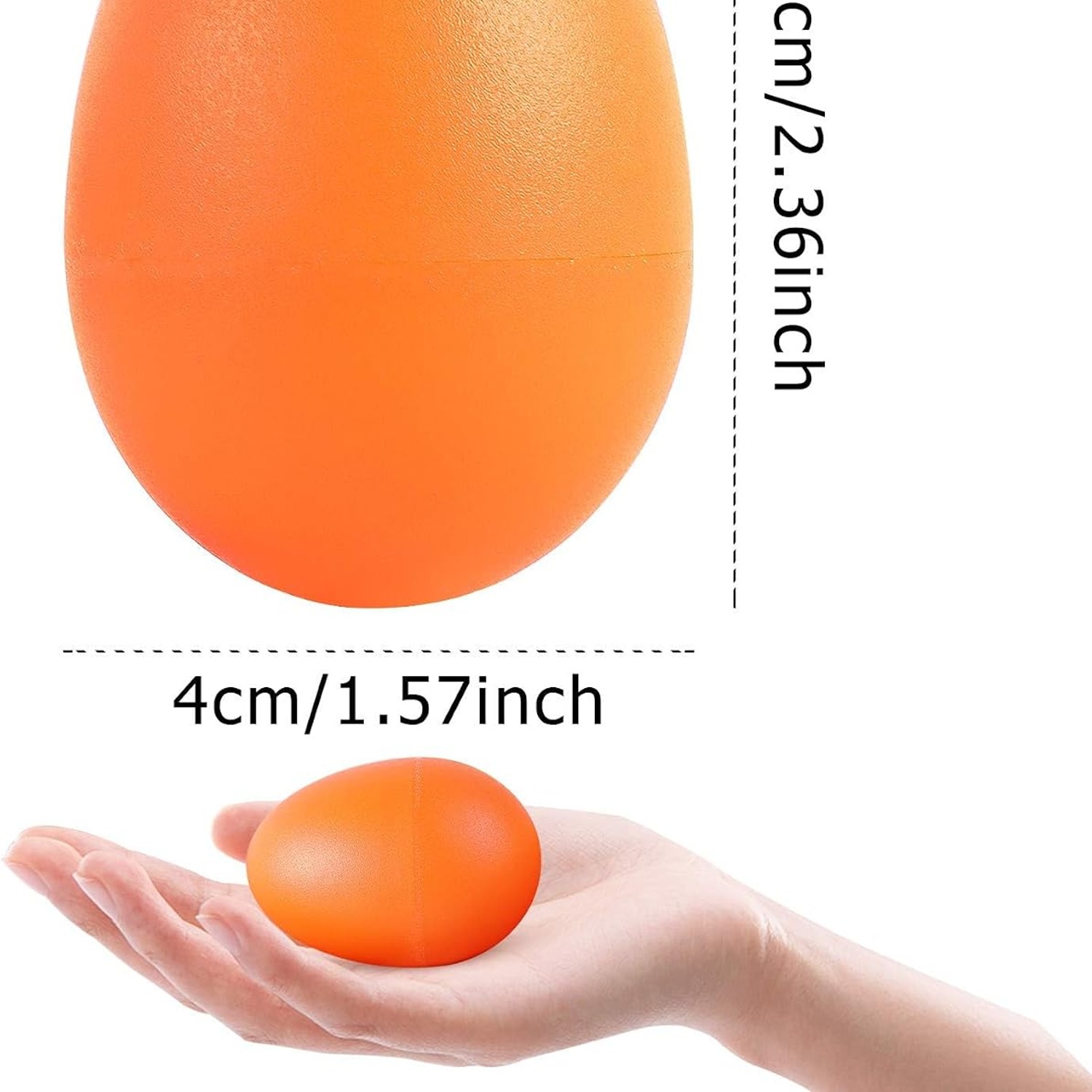
The egg shape matters too. A round ball rolls away. A stick is awkward for a three year old. An egg sits in a closed fist with the ends poking out, which is exactly how small hands want to hold things.
Who this set suits
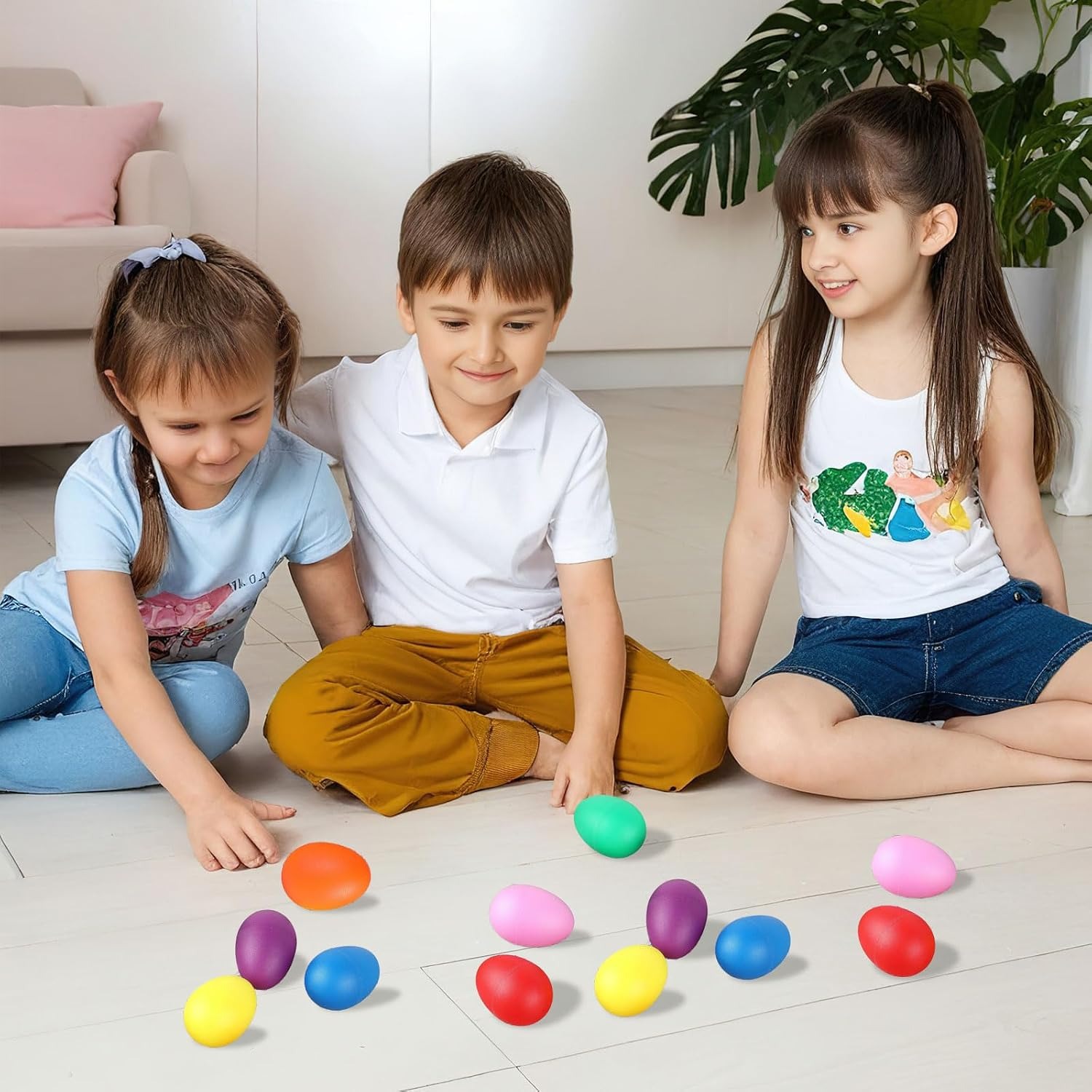
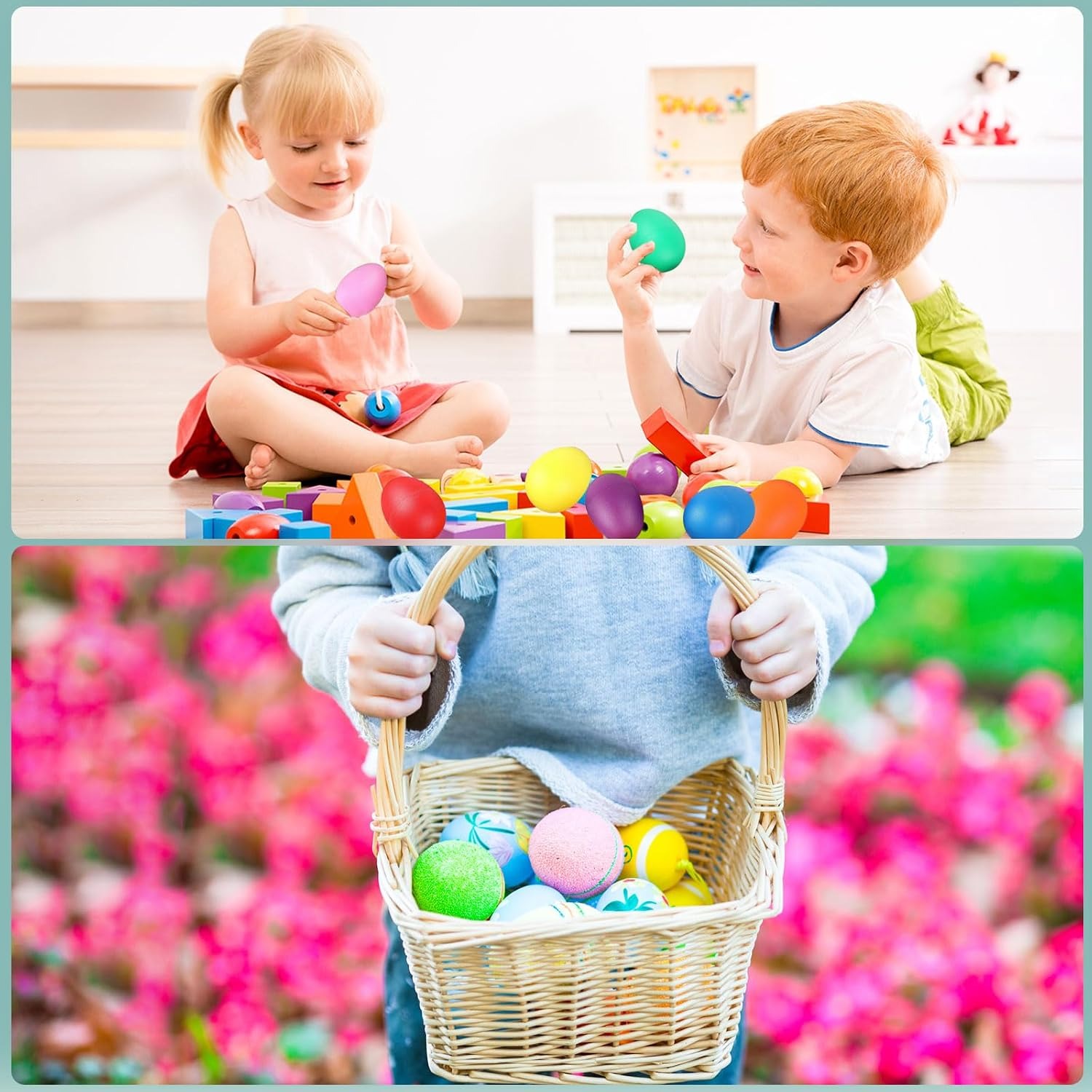
Parents with more than one child. Fourteen pieces means nobody is waiting their turn. Two of each colour means a sibling fight over "the green one" has a built-in solution.
Preschool and early years teachers. This is a classic classroom rhythm instrument. A tub of shakers lets every child in a circle join in at the same moment, which is hard to arrange with most instruments. Colour pairs make group splitting quick.
Anyone running group music. Playgroups, church kids' programs, library story times, and community music sessions all run on gear that needs no setup. These need no setup.
Party hosts. Bulk packs of small instruments make good party bag musical toys. They are light, they cost little per child, and they get used.
Grandparents and relatives. A set like this lives in a cupboard and comes out when the kids visit. It needs no batteries, so it still works in two years.
How to choose a shaker set
A few things separate a good set from one that gets abandoned in a drawer.
Piece count. Think about how many children will use them at once, then add a couple. Pieces do go missing. A 14 piece set covers most home situations comfortably and a small class at a stretch.
Sealed or openable. This set is sealed and cannot be opened. For young children that is usually the preference, because the filling stays inside where it belongs. If you specifically want eggs that open for hiding treats, this is not that product and you want a different one.
Colour variety. Seven colours is doing more than looking nice. Colour is how you give instructions to children who cannot read yet. "Reds shake, blues rest" works instantly.
Size and grip. Shakers scaled for adults are too wide for a toddler's fist, and the child ends up pinching rather than holding. Egg-shaped shakers made for children sit better and get used more.
No electronics. Anything with a battery eventually stops working at the worst time. A manual shaker has nothing to fail.
Getting started in the first ten minutes
Do not organise anything at first. Hand them out and let the noise happen. Children need a few minutes of chaos before they are ready to listen.
Once that settles, try these in order.
Copy me. You shake four times, then stop. They copy. Keep the patterns stupidly short at the start.
Stop and go. Shake while you sing, freeze when you raise your hand. Children love freeze games and it teaches listening fast.
Loud and soft. Whisper-shake, then big-shake. Name each one as you do it so the words stick to the action.
Colour turns. Call a colour, only those shakers play. With pairs, that is two children at a time, which is a gentle way to get a shy child playing in front of others.
Song keeping. Put on a song with a clear beat and shake along. Most children will drift off the beat, which is completely fine. The drifting is the practice.
Beyond rhythm
Shakers end up doing jobs that have nothing to do with music.
They sort by colour, which is early maths. They work as counters for simple addition. They give a restless child something to hold during a story so their hands have a job. In sensory play, the sound and the smooth shell both give feedback that some children find calming and others find exciting, and knowing which is which for your child is useful information on its own.
They also travel well. The whole set weighs 240 g, so it fits in a bag for a long car trip or a holiday without any thought.
Looking after them
This part is short because there is not much to it.
Wipe the shells with a damp cloth when they get sticky, then dry them properly. Do not soak them and keep them out of the dishwasher. Water that gets inside a sealed shaker is nearly impossible to remove and it ruins the sound.
Store them together in a box or bag. A loose shaker under a sofa is a shaker you have lost. Do a quick count when you pack up, which children are usually happy to help with.
Check them over occasionally. Plastic chips if it is thrown hard onto a hard floor. Any piece with a crack should go in the bin rather than back in the box.
Keep them indoors as the listing suggests. Grass, sand, and mud are not friendly to small plastic items with seams.
A note on supervision
These are rated for 36 months and up. That rating exists for a reason and it is worth following. Whatever the product, small hard items and very young children are a combination that needs an adult in the room paying attention. Use the age guidance on the packaging as your starting point and your own judgement about your child on top of it.
The short version
Egg shakers are the cheapest, easiest way to get a child making real music with their own body rather than pressing a button on a speaker. This set gives you 14 sealed plastic shakers in seven colours, two of each, with no batteries and no assembly. The egg shape suits small hands, the pairs make group games easy, and the whole box weighs almost nothing.
If you have one child, you will use them for copy games and shaking along to songs. If you have a classroom or a party, you have enough for everyone at once. Either way, the barrier to starting is a child picking one up and shaking it, and that takes about two seconds.