
The complete guide
The Honest Buyer's Guide to Bongo Drums
The problem with wanting to play drums
Most people who want to play percussion never start. The reason is usually practical rather than musical. A drum kit costs real money, needs a room you can make noise in, and takes twenty minutes to set up and pack down. By the time you have cleared the space, the urge has passed.
Bongos sidestep all of that. They are two small drums joined together, played with bare hands while you sit down. There is no setup, no power, no sticks to lose. You pick them up, you make a sound, and the feedback is immediate. That immediacy is why bongos turn up in beginner music classes, around campfires, in drum circles and in the corner of lounge rooms where someone plays for ten minutes between other things.
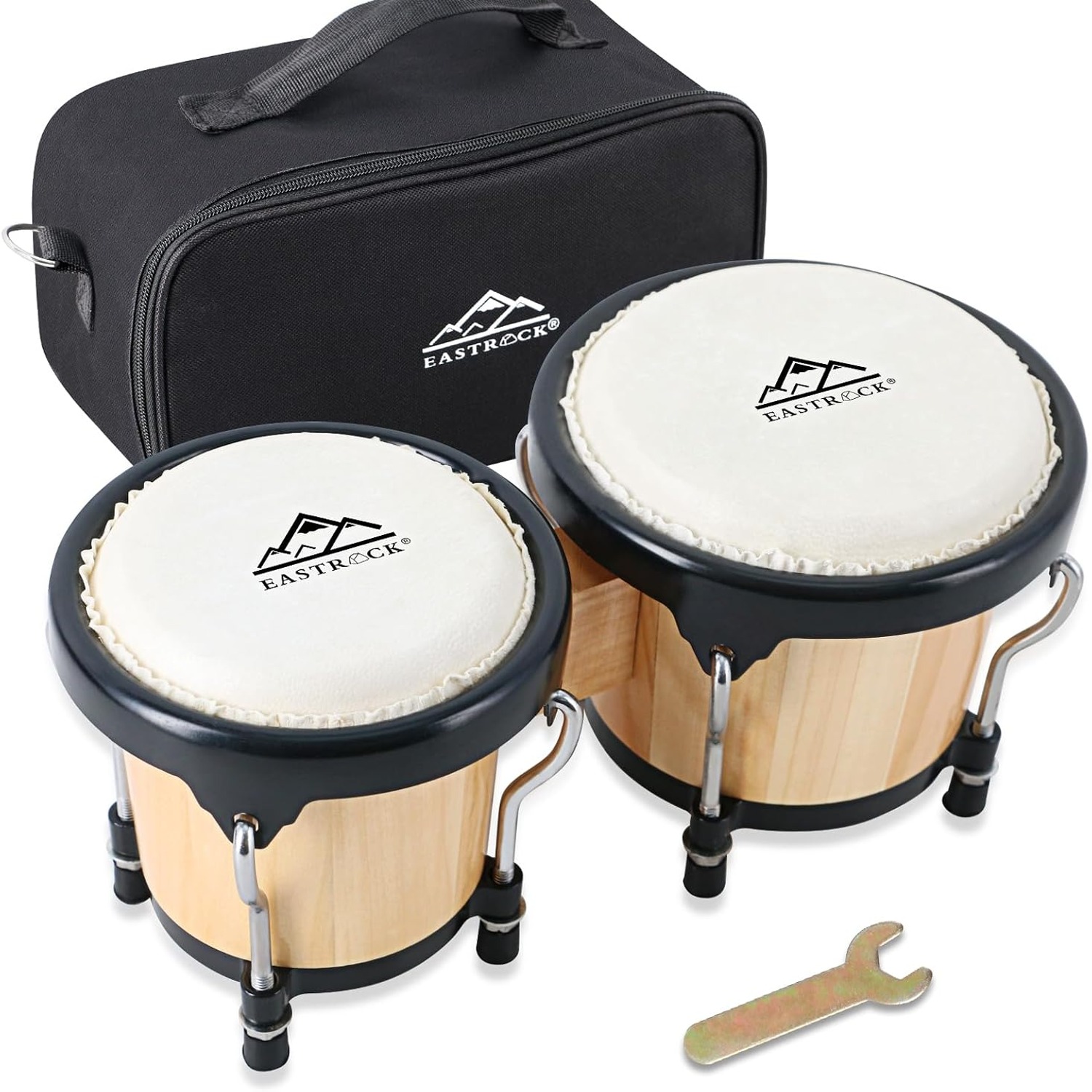
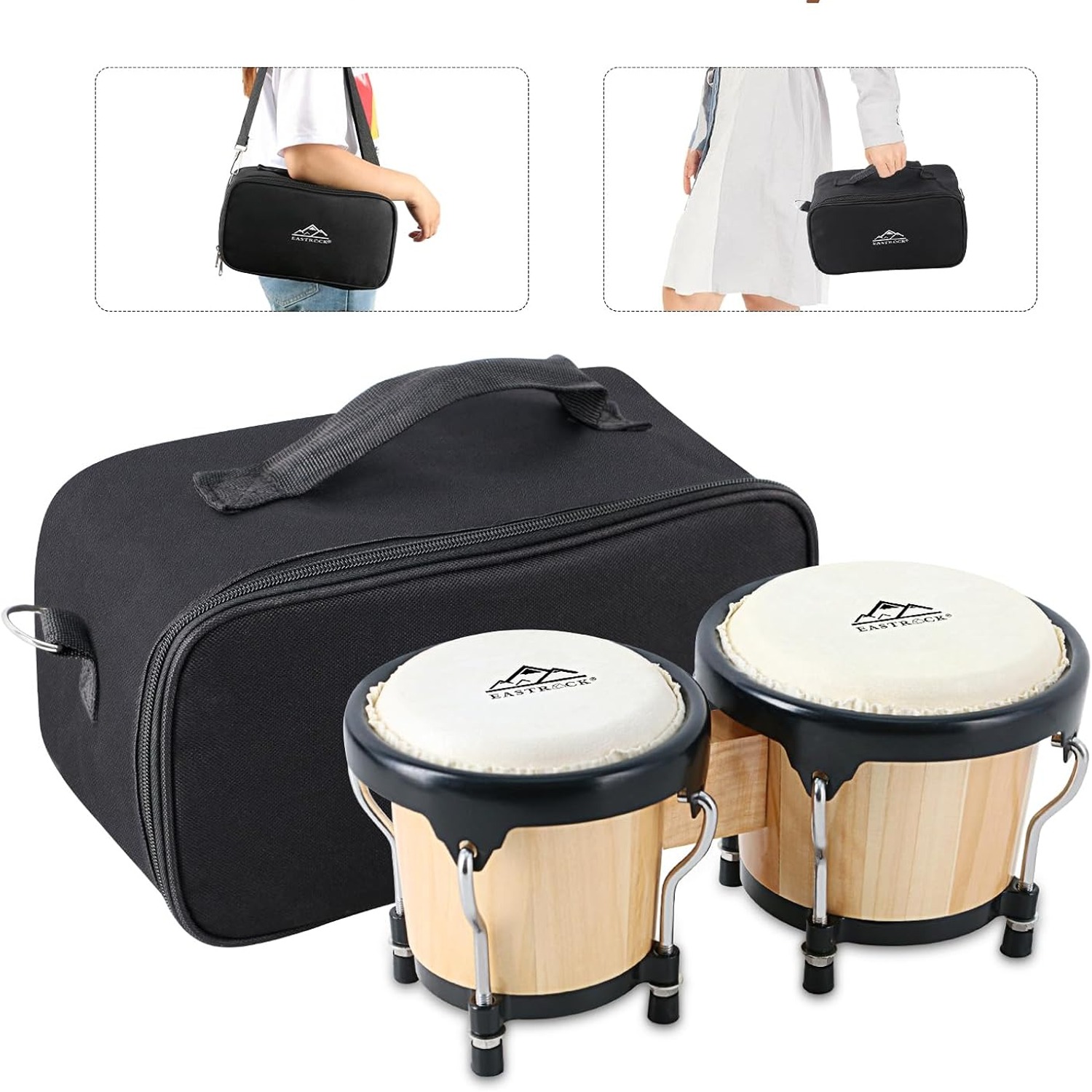
This guide covers what actually matters when choosing a pair, using the EASTROCK 4 and 5 inch set as the reference point.
How bongos actually work
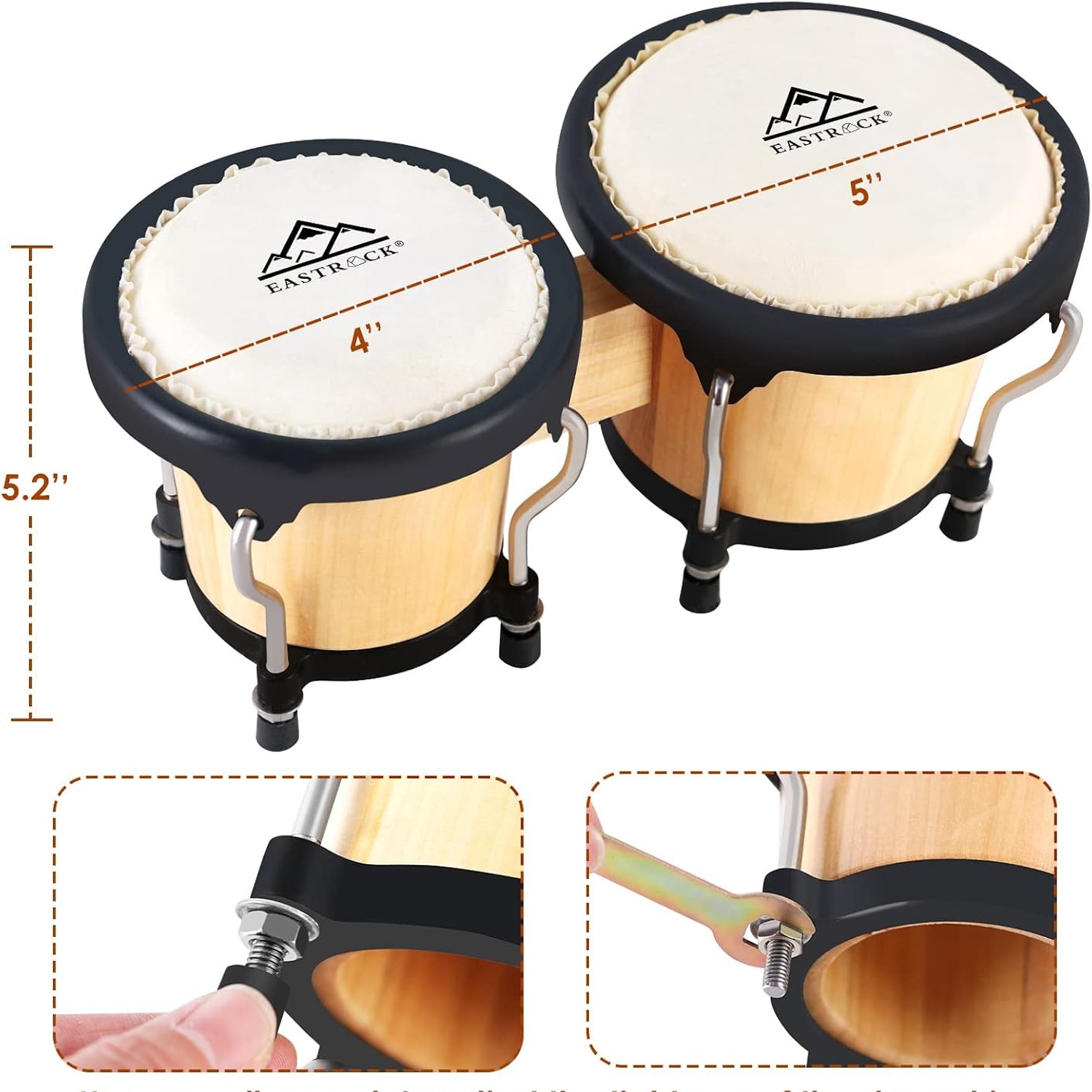
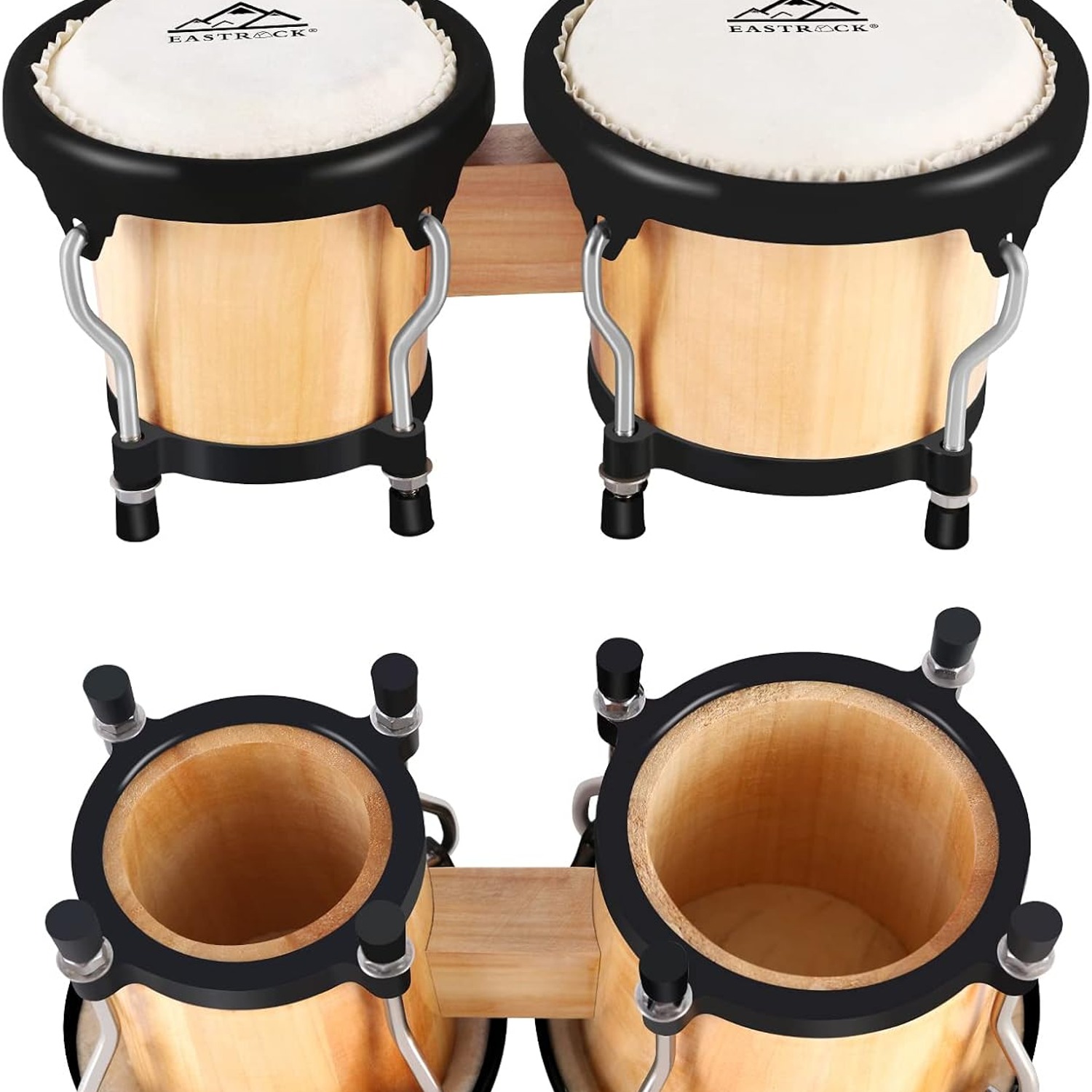
A bongo pair is two drums of different sizes locked together by a bridge. The smaller one is traditionally called the macho and the larger one the hembra. On this set the heads measure 4 inches and 5 inches across, which places them in the compact or travel end of the range.
The size difference is the whole trick. The small head gives you a high, sharp crack. The large head answers with something lower and rounder. Alternating between them is what creates the conversational rhythm bongos are known for. One drum alone would just be a drum. Two in a pair, tuned a sensible distance apart, give you melody as well as time.
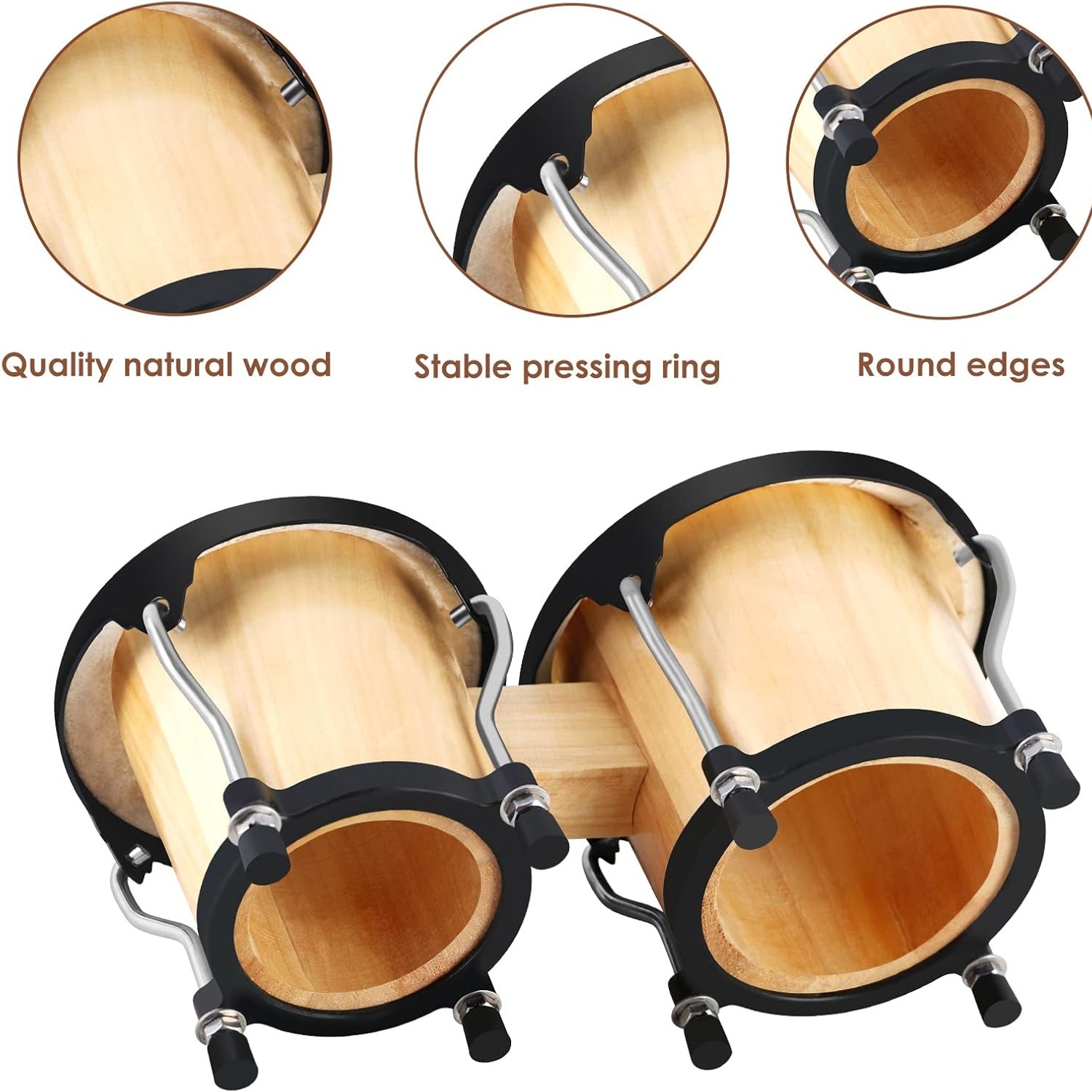
Underneath the heads, the shell does the rest of the work. This set uses a solid wood body with a metal frame holding the tensioning hardware. Wood reflects sound warmly and adds body to the note. The metal frame keeps even pressure around the rim so the head does not go lopsided. EASTROCK sums up the result as crisp, full and grainy, which lines up with what you expect from wooden shells and natural skin.
Skin heads versus synthetic
This is the one specification that changes the feel of the instrument more than anything else, and it is worth understanding before you buy.
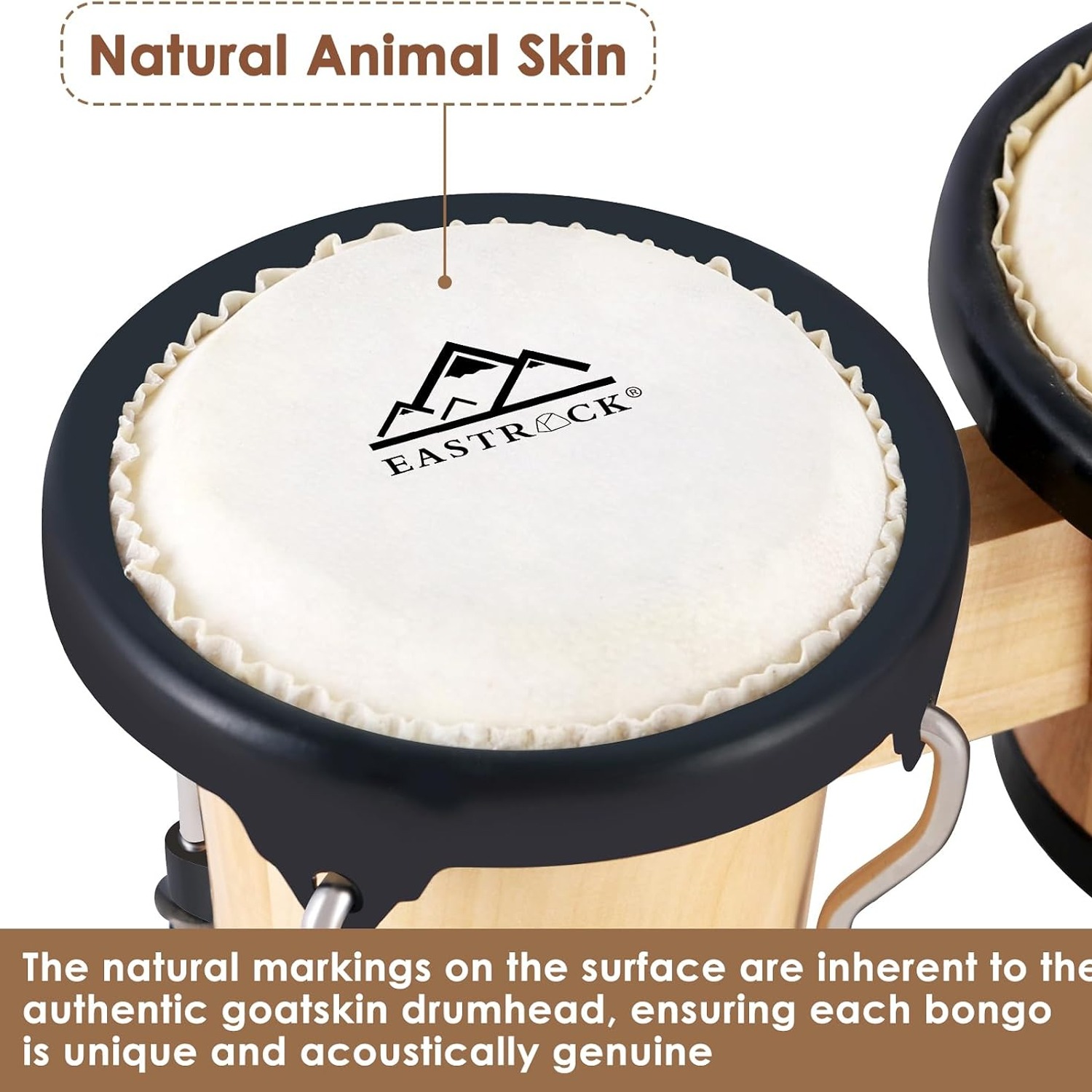
This set uses natural animal skin heads. Skin is warmer and less clinical than plastic. It responds to the heat of your hand, it gives you more variation between a fingertip and a palm, and it rewards technique as you improve. A good slap on a skin head has a crack to it that synthetics struggle to copy.
The trade-off is that skin reacts to its environment. Humidity and temperature shift the tension slightly, so the pitch can drift between a cold morning and a warm evening. This is not a fault. It is simply what natural material does, and it is the reason tunable bongo drums exist.
Synthetic heads hold pitch better and shrug off damp. They also tend to sound brighter and less rich. Most players who stick with hand percussion end up preferring skin once they have learned to tune.
Tuning without the mystery
The included adjustable wrench handles tuning. Around the rim of each drum sit several lugs, and turning them tightens or loosens the head.
The method is simple. Go around the drum in order, giving each lug a small turn, maybe a quarter at a time. Never crank one lug all the way before moving on, because that pulls the head off-centre and can damage it. After each full circuit, tap the head about an inch in from the rim near each lug and listen. When those taps all sound the same pitch, the head is even.
Then set the overall pitch by ear. The small drum should sit clearly above the large one. There is no rulebook. Many players tune the pair roughly a fourth apart, but matching the key of the song or the voice you are playing behind matters more than any interval.
If you have never tuned a drum before, give it a quiet afternoon. It will click faster than you expect, and after that it takes under a minute.
Who this size suits
Compact bongos like these make sense for a few specific people.
Beginners are the obvious group. Bongo drums for beginners should be forgiving, affordable and easy to hold, and a 4 and 5 inch pair ticks all three. The smooth, unfinished timber with no sharp edges or burrs also makes them safer in the hands of students or supervised children.
Travellers and players who move around are the second group. A set that packs into a storage bag and weighs little is one you actually take with you. A full-size pair that lives in a cupboard teaches you nothing.
Teachers and group leaders are the third. Bongos for music class need to survive being passed between hands, need no setup and need to be stored quickly. These do all of that.
The group this size suits least is the player chasing deep, booming low end for a loud ensemble. Larger bongos and congas handle that better. If you want a portable percussion instrument with a bright voice that cuts, these are the right tool.
How to choose between sets
A few things separate a decent set from a disappointing one.
Check whether the heads are tunable at all. Some very cheap bongos have fixed heads glued or tacked in place. They sound how they sound forever, and when the pitch drifts you have no fix. Tunable hardware is worth the small extra cost.
Check what is in the box. A wrench you have to buy separately is a nuisance, and a bag bought later costs more than it should. This set includes both, which means nothing extra to source on day one.
Check the edges and the finish. Smooth, burr-free timber is a sign the maker sanded properly, and it matters because your hands and knees are in contact with the shell the whole time you play.
Finally, think honestly about where you will play. The best wooden bongo drums for a living room are not the same as the ones for an outdoor drum circle. Size and portability should follow your real habits, not your ambitions.
Looking after them
Natural skin heads are not fragile, but they do have preferences.
Keep them dry. Wipe the shells and heads with a dry or lightly damp cloth after playing and let them air before packing up. Skip solvents, oils and polishes entirely on the heads.
Keep them out of extremes. Direct sun, a hot car, a spot beside a heater, or a damp basement will all shorten the life of a skin head. A shaded corner of a normal room is ideal.
Loosen the tension a little if you are putting them away for months. A head left under full tension for a long stretch can stretch out. Tighten it again before you play.
Take rings off before you play hard. Metal on skin is how small nicks become tears. And use the supplied bag, because most damage to drums happens in transit rather than during playing.
The short version
Bongos are the lowest-barrier way into percussion. There is no setup, no amplification and no space requirement, which is why people who buy them actually play them.
This EASTROCK set gives you a 4 inch and a 5 inch head on a solid wood body with a metal tuning frame, natural skin heads for a warmer tone, a wrench so you can tune properly, and a bag so the drums travel. The dimensions are 40 x 5 x 36.5 cm, item weight is listed at 5 kg, the finish is natural and unfinished, and the set is covered by a 2-year warranty.
If you want something portable, honest-sounding and genuinely beginner-friendly, this is a sensible place to start. If you need big low end for a loud band, look at larger drums instead. Either way, the fastest way to learn rhythm is to have an instrument sitting within arm's reach.